
The Genesis of a Digital Legend
The origins of the meme can be traced back to the mid-2018 landscape of Reddit, specifically within communities dedicated to psychological horror and meta-fictional gaming. On July 1, 2018, a user known as spartanboi96 uploaded a graphic to the r/DDLC subreddit. This community is centered around the independent visual novel Doki Doki Literature Club, a game famous for its subversive "fourth-wall breaking" mechanics where characters appear to gain sentience and interact directly with the player’s computer files.
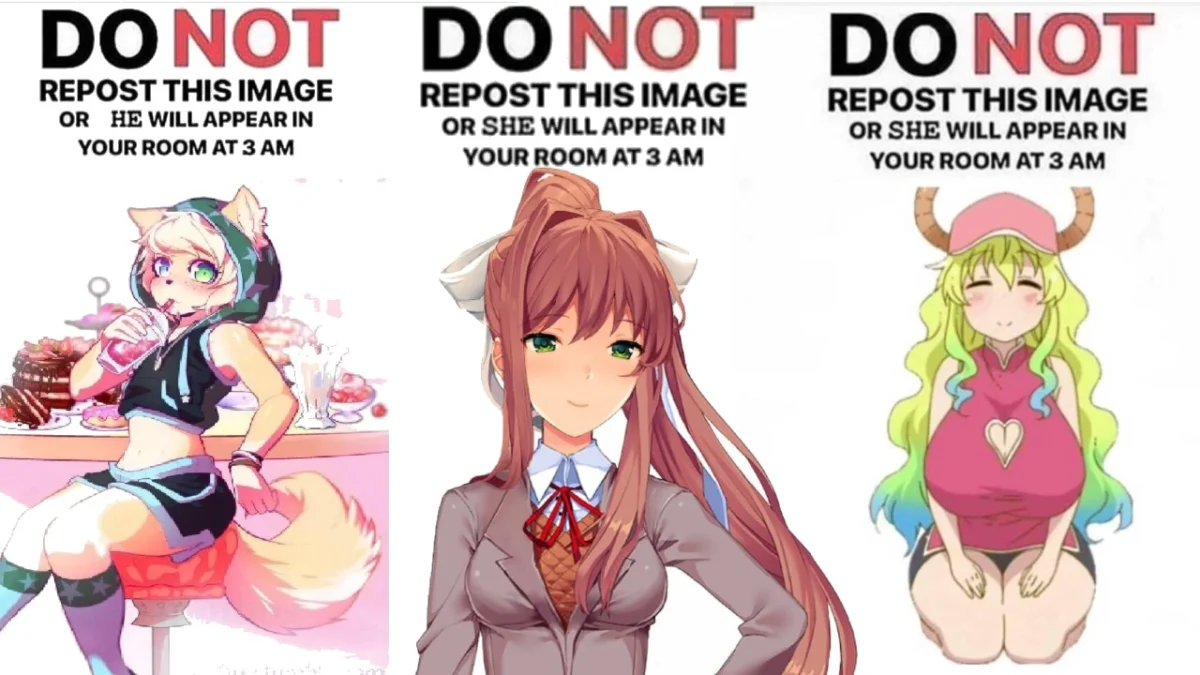
The original image featured Monika, the game’s primary antagonist and the character most associated with digital manipulation. The caption read, "Do NOT repost this image or she will appear in your room at 3 AM." The post initially garnered a modest response of approximately 120 upvotes. However, the choice of Monika was pivotal; because her character arc involves her "haunting" the player’s real-world environment, the meme felt like a natural extension of the game’s lore.
Within hours of the initial post, the meme’s "exploitable" nature was established. Another Redditor, SeanTG246, posted a modified version on the same subreddit. Instead of a warning, this iteration encouraged users to repost the image, claiming that doing so would ensure the character’s appearance. This early subversion—flipping the "threat" into a "reward"—set the precedent for how the format would be utilized over the next several years.
The 3 AM Trope and the Digital Chain Letter
To understand the longevity of the "Do Not Repost" format, one must examine the cultural pillars it rests upon: the "3 AM Challenge" and the history of chain letters. The specific mention of 3:00 AM refers to the "Witching Hour," a concept in folklore suggesting that the veil between the physical and supernatural worlds is thinnest at this time. In the mid-to-late 2010s, this concept was revitalized by YouTube "clickbait" culture, where content creators would film themselves performing rituals or calling "cursed" phone numbers at 3:00 AM to elicit a reaction from their audience.
Furthermore, the meme functions as a modern evolution of the "chain letter." Historically, chain letters relied on "luck" or "curses" to compel recipients to copy and distribute a message. In the digital age, this mechanic has been streamlined. While the "Do Not Repost" text mimics the language of a curse, the internet-literate audience recognizes it as a prompt for engagement. By "breaking the rules" and reposting, or by editing the character in the frame, users participate in a shared cultural ritual that prioritizes community interaction over actual superstition.
Chronology of Spread and Evolution
Following its 2018 debut, the meme entered a period of slow but steady incubation. It transitioned from the niche Doki Doki Literature Club community into broader internet circles, eventually losing its strict ties to horror.
The Shift to Absurdism (2022)
By 2022, the format had been adopted by general "meme" accounts on platforms like X (formerly Twitter) and Tumblr. On August 1, 2022, an account under the handle @CATBRAINCELL applied the template to a close-up, distorted photograph of a domestic cat. This version garnered over 4,900 likes, signaling a shift toward the "absurdist" phase of the meme. Here, the "threat" of a cat appearing in one’s room was viewed as humorous or even desirable, rather than frightening. This expanded the meme’s reach to audiences who had no knowledge of the original gaming subculture.
Integration into Gacha and Live-Service Fandoms (2024)
In early 2024, the meme saw a resurgence within the fanbases of large-scale live-service games. On April 6, 2024, a version featuring a character from the popular RPG Honkai: Star Rail was posted to Reddit, gaining over 1,000 upvotes. The use of the template in these high-traffic communities demonstrated its utility as a "fandom signal." By placing a specific character into the "Do Not Repost" frame, fans could celebrate their favorite characters while participating in a recognizable global trend.
The Meta-Narrative Peak (2026)
In a notable development on July 26, 2026, the meme reached a new level of sophistication through a collaborative meta-joke on X. A user named @FunnyDeiGrunt shared a version featuring the character Sancho from Limbus Company, accompanied by the caption "Why is she not appearing?"—an ironic complaint that the "curse" was not working.
This was met with a viral response from user @0NWARDROCINANT3, who posted a series of images in a thread that simulated the character slowly manifesting in a real-life room. This thread, which garnered over 23,000 likes in a single day, represented the culmination of the meme’s potential: a blend of roleplay, digital editing, and community-driven storytelling.
Technical Analysis of the Exploitable Format
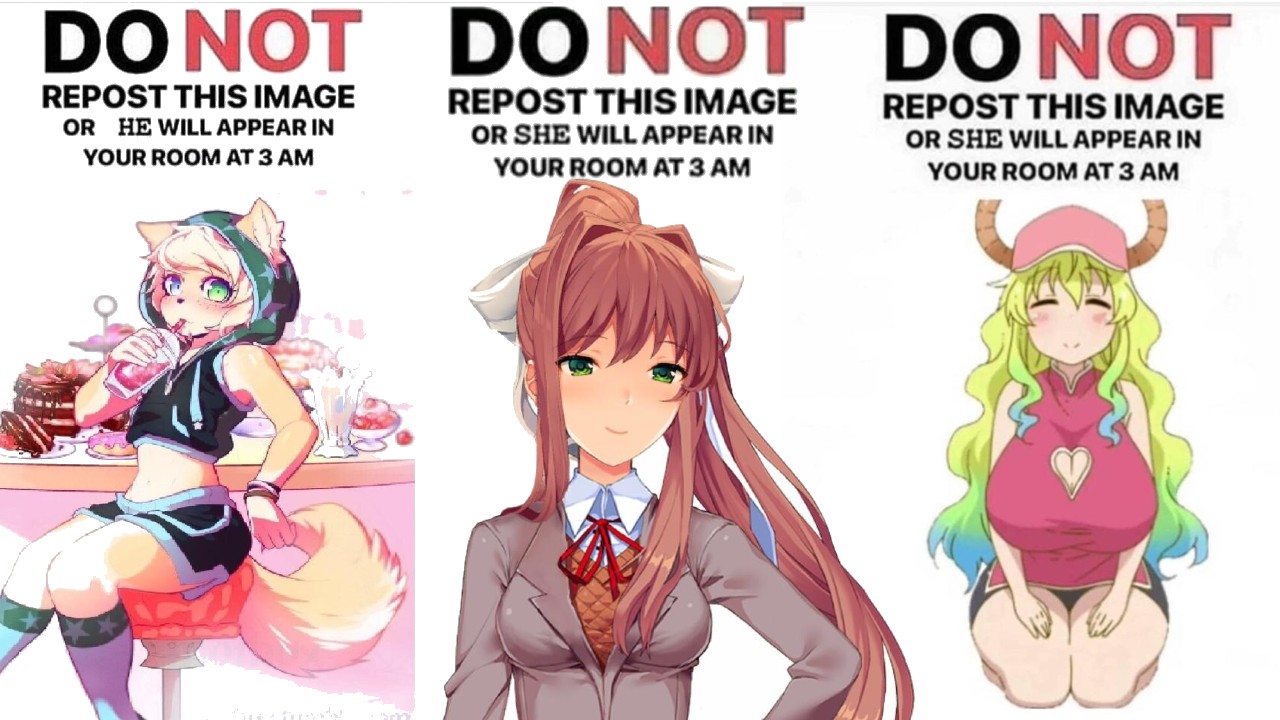
From a media studies perspective, "Do Not Repost This Image Or She Will Appear In Your Room At 3 AM" is a "snowclone"—a type of formulaic cliché or meme template that uses a fixed structure with replaceable parts. The structural elements are:
- The Header: The bold "Do NOT Repost" warning, which provides the hook.
- The Subject: An image, usually centered, that can be swapped out to fit any context.
- The Condition: The "3 AM" time stamp, which provides the "lore" or the "threat."
The simplicity of this structure is what allows for its longevity. It requires minimal graphic design skill to produce; a user only needs to paste a new image over the old one. This low barrier to entry ensures that the meme can be rapidly adapted to respond to current events, new game releases, or trending celebrities.
Psychological Appeal and Audience Reaction
The primary appeal of the meme lies in the "Appearance Paradox." In the original 2018 version, the threat of a character like Monika appearing was genuinely unsettling due to the character’s nature. However, as the meme evolved, the audience’s reaction shifted from fear to a form of ironic "wish fulfillment."
In many fan communities, the "threat" of a favorite character appearing in one’s room is treated as a positive outcome. This has led to a subset of the meme where the text is edited to say "DO Repost" or "Please Repost." This reversal highlights a unique aspect of internet culture: the ability to take a trope rooted in horror (the home invasion) and domesticate it into a joke about fandom and loneliness.
Broader Implications for Digital Culture
The "Do Not Repost" meme serves as a microcosm of how information and humor circulate in the 21st century. It demonstrates the transition from "passive consumption" to "active participation." Users are not merely looking at the image; they are challenged by it. Whether they choose to ignore it, repost it, or edit it, they are engaging in a form of digital performance.
Moreover, the meme highlights the importance of "legacy templates." While the internet is often characterized by its rapid pace and short attention span, formats like this prove that a simple, effective idea can persist for nearly a decade. By maintaining the same font and basic layout since 2018, the meme provides a sense of continuity in an ever-changing digital landscape.
Conclusion
The enduring popularity of "Do Not Repost This Image Or She Will Appear In Your Room At 3 AM" reflects the internet’s fascination with the intersection of horror and humor. What began as a localized joke within the Doki Doki Literature Club fandom has transformed into a versatile tool for social media engagement. Its ability to adapt to different characters—from demonic anime girls to household pets—ensures that it remains a staple of digital discourse. As long as the "3 AM" trope remains a part of the collective consciousness, this template will likely continue to appear on feeds, inviting users to test their luck with the supernatural.

