
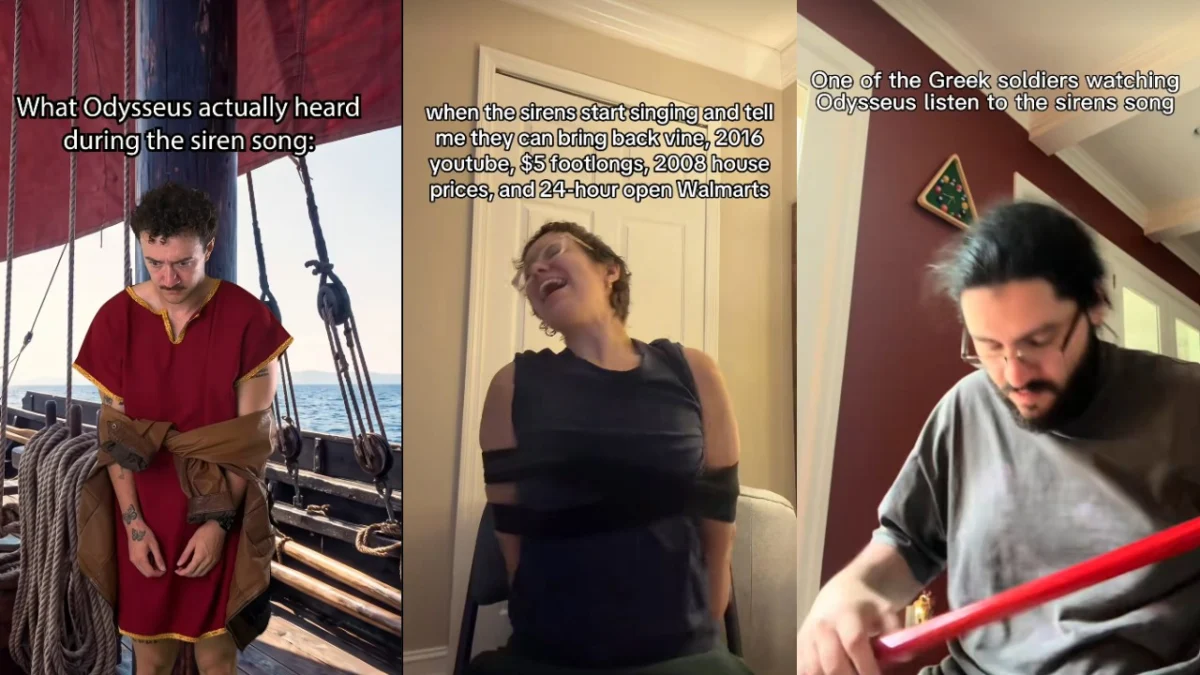
The 2026 theatrical release of Christopher Nolan’s historical and mythological epic, The Odyssey, has triggered an unprecedented wave of digital engagement, centered primarily on a pivotal sequence known colloquially as the Sirens Scene. Featuring Academy Award winner Matt Damon in the lead role of Odysseus, the sequence depicts the hero’s encounter with the Sirens—mythological creatures whose song is so alluring that sailors are driven to leap to their deaths to reach them. While the film was lauded by critics for its technical mastery and Damon’s visceral performance, the internet has repurposed the scene into a versatile meme format. This phenomenon, often titled What Odysseus Actually Heard During The Siren Song, involves replacing the film’s haunting original score with various contemporary songs, absurdist audio, or nostalgic promises, effectively bridging the gap between high-concept cinema and modern internet humor.
The Cinematic Foundation of a Digital Phenomenon
Directed by Christopher Nolan, The Odyssey was one of the most anticipated films of 2026, marking the director’s first foray into classical Greek mythology. Known for his commitment to practical effects and immersive sound design, Nolan reportedly filmed the Sirens sequence using 70mm IMAX cameras on open water. In the scene, Odysseus, following the advice of the sorceress Circe, commands his crew to plug their ears with beeswax while he is lashed to the ship’s mast. This allows him to hear the legendary song without the ability to steer the ship off course or throw himself overboard.
Matt Damon’s portrayal of this moment is characterized by extreme physical and emotional intensity. As the Sirens begin their call, Damon’s Odysseus is seen straining against his bonds, his face contorted in a mixture of agony and ecstasy. This specific visual—Damon yelling and thrashing against the mast—became the primary catalyst for the "Matt Damon Yelling" meme, which surfaced shortly after the film’s premiere on July 17, 2026. The high stakes of the scene, combined with the raw vulnerability of the performance, provided a blank canvas for social media users to project various comedic and relatable narratives.
Chronology of the Meme’s Origin and Evolution
The transition from a cinematic moment to a viral template occurred almost instantaneously upon the film’s release. On July 17, 2026, the day The Odyssey debuted in theaters, X (formerly Twitter) user @Luharchowdary posted a clip featuring the original soundtrack’s interpretation of the Siren song. The post, which expressed a genuine appreciation for the film’s haunting atmosphere, garnered over 6,300 likes within a fortnight, establishing the scene’s visual and auditory potential in the digital space.
However, the meme truly took shape when creators began to experiment with audio replacement. On July 19, 2026, Instagram user @garymeinecke shared one of the earliest known parodies. By dubbing the "Du Bist Gut Genug" (You Are Good Enough) motivational song over the footage of Odysseus’s struggle, the creator established the central irony of the meme: the Sirens are not singing a celestial melody, but rather something jarringly modern or hilariously out of place. This initial edit received modest engagement but set the stage for more expansive variations on TikTok.
By July 20, the meme had migrated to TikTok, where @misteropulent posted a version featuring a cover of "Janice STFU" by Social Repose. This version, captioned "What was actually playing during the sirens scene," accumulated over 117,000 views in less than ten days. The success of this post demonstrated that the meme’s appeal lay in the specific subversion of Nolan’s typically serious and brooding tone.
The "Nostalgia Siren": A Societal Commentary
As the meme continued to spread throughout late July 2026, it evolved from simple audio replacement to a vehicle for collective nostalgia and social commentary. On July 26, TikToker @beaachy published a version that resonated deeply with a broad demographic. In this iteration, the Sirens do not sing a song at all; instead, the caption suggests they are promising the return of cultural relics and more favorable economic conditions.
The Sirens in @beaachy’s video supposedly offer to "bring back Vine, 2016 YouTube, $5 footlongs, 2008 house prices, and 24-hour open Walmarts." This specific post garnered over 206,000 views in just three days, highlighting a shift in the meme’s usage. It transformed Odysseus’s struggle from a mythological trial into a metaphor for the modern consumer’s longing for a perceived "simpler time." The desperation on Matt Damon’s face was no longer interpreted as a response to a magical song, but as the relatable reaction of a person tempted by the impossible return of pre-inflationary prices and defunct social media platforms.
Diversity of Content and Musical Integration
The "What Odysseus Actually Heard" trope has proven remarkably resilient due to its adaptability across different musical genres. By late July, the meme had permeated various "stans" and music subcultures:
- Hip-Hop and Rap: On July 28, Instagram user g0ldilock utilized the track "Throw Away" by Future to represent the Siren song. This version gained over 13,700 likes in 24 hours, appealing to fans who humorously suggested that the emotional weight of Future’s discography would be enough to drive a Greek hero to madness.
- Electronic and Pop: TikToker @sean.daly92 used Zedd’s "Clarity," while @nathanlust opted for Travis Scott, each accumulating tens of thousands of views. These edits often time the "drop" of the song with the moment the camera zooms in on Damon’s screaming face, creating a rhythmic synergy that is highly effective for short-form video algorithms.
- Absurdist and Niche Humor: Some creators, such as @thehatman763, replaced the Siren song with audio related to food, specifically "kebab" culture, further pushing the meme into the realm of the surreal.
Technical and Cultural Analysis
The viral success of the Sirens Scene can be attributed to several factors inherent in both the film’s production and the mechanics of internet culture. Christopher Nolan’s films are often characterized by a "larger-than-life" quality that invites parody. Much like the "BWAHM" sound effect from Inception or the muffled dialogue in Tenet, the Sirens Scene provides a distinct sensory hook.
From a psychological perspective, the meme functions through "incongruity-resolution theory." The viewer sees a high-stakes, ancient Greek drama but hears a 2010s pop hit or a meme-heavy audio clip. The resolution of this incongruity produces humor. Furthermore, the physical constraints of Odysseus—being tied to a mast—serve as a perfect visual metaphor for the feeling of being "forced" to listen to a catchy but perhaps annoying song that is currently trending on social media.
Broader Impact on the Film Industry and Streaming
While film studios often take a protective stance regarding their intellectual property, the "Sirens Scene" meme has served as a form of organic, "bottom-up" marketing for The Odyssey. Data from music streaming platforms indicates a minor but notable "bump" in the daily plays of songs featured in the most popular edits, such as Zedd’s "Clarity" and Future’s "Throw Away."
Industry analysts suggest that the meme has helped maintain the film’s relevance in the weeks following its release, particularly among Gen Z and Alpha audiences who may not have been the primary target for a three-hour mythological epic. By turning Matt Damon’s performance into a relatable "reaction" image and video, the internet has ensured that The Odyssey remains a central part of the cultural conversation throughout the summer of 2026.
Conclusion and Future Outlook
The Sirens Scene or What Odysseus Actually Heard During The Siren Song stands as a definitive example of how modern audiences consume and re-contextualize cinema. What was intended as a harrowing depiction of temptation and willpower has become a versatile toolkit for digital expression. Whether used to lament the loss of 24-hour grocery stores or to celebrate a favorite rap artist, the meme leverages Matt Damon’s intense performance to capture the universal experience of being overwhelmed by an irresistible—if sometimes ridiculous—force.
As The Odyssey continues its theatrical run and prepares for digital distribution, it is expected that the Sirens Scene will continue to spawn new variations. The meme’s ability to evolve from simple audio dubbing to complex social commentary suggests it will have a lasting legacy, potentially becoming the most remembered aspect of Nolan’s 2026 epic in the digital archive. For now, the image of Odysseus tied to the mast remains the internet’s favorite way to describe the feeling of being captivated by the "siren songs" of modern life.

