
The e-commerce landscape, particularly for direct-to-consumer (DTC) brands, has become increasingly competitive and complex, driving many scaling businesses to seek advanced solutions like Shopify Plus. However, the decision to migrate to or build on Shopify Plus, and critically, the choice of agency to execute this transition, represents a significant strategic and financial undertaking. According to industry expert Jay Neyer, founder and CEO of Lantern Sol, a Shopify Plus and e-commerce agency with over a decade of experience helping brands process more than $100 million in online sales across 500+ Shopify stores, the process is fraught with potential pitfalls. Neyer highlights a recurring problem: brands often find themselves with half-finished migrations, unstable checkouts during peak sales periods like Black Friday, or substantial invoices with little tangible value to show for it. This situation underscores a critical need for a robust vetting process when selecting a Shopify Plus agency, a process Neyer argues is surprisingly straightforward once the key indicators are understood.
The Expanding Realm of E-commerce and Shopify Plus
The rapid acceleration of digital commerce, particularly in the wake of global shifts, has cemented e-commerce as a primary revenue channel for businesses of all sizes. Shopify, a dominant player in this space, has evolved its offerings to cater to businesses ranging from startups to large enterprises. Shopify Plus, its enterprise-level solution, is designed for high-volume merchants requiring advanced customization, scalability, and operational efficiency. Data from Statista indicates that global retail e-commerce sales are projected to reach trillions of dollars annually, with platforms like Shopify facilitating a significant portion of this trade. Shopify itself holds a substantial market share in the e-commerce platform sector, emphasizing the broad ecosystem of agencies and developers supporting its users.
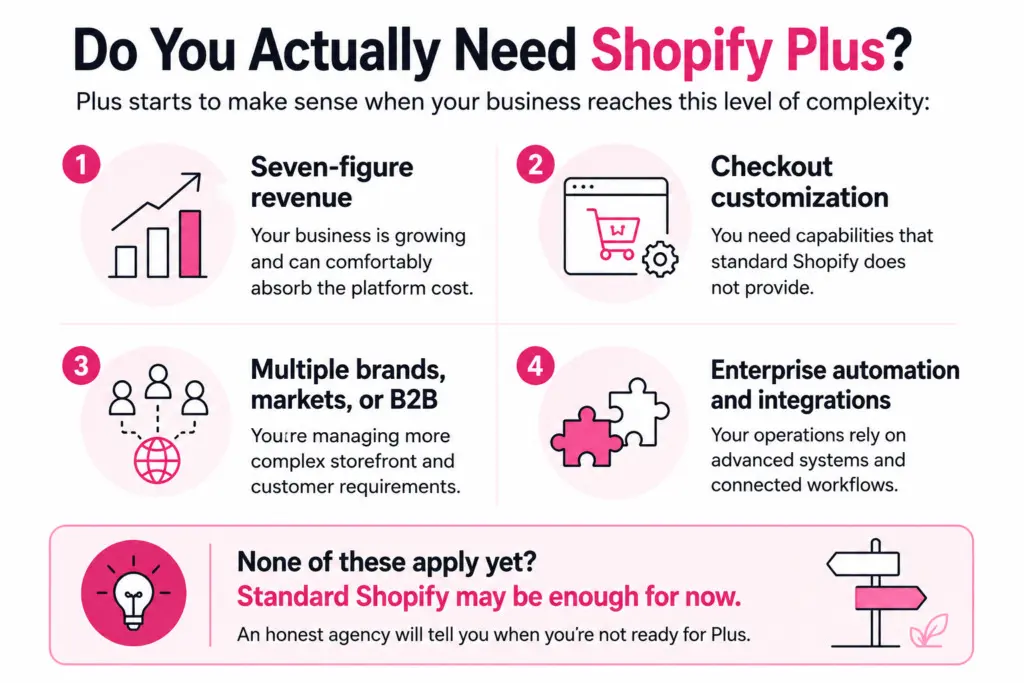
The move to Shopify Plus is often necessitated by growth that pushes the limits of standard Shopify plans. These signals typically include managing high traffic volumes, executing complex marketing campaigns, integrating multiple third-party systems, handling international sales with multi-currency and multi-language requirements, or operating sophisticated B2B functionalities. However, Neyer cautions against premature adoption, advising brands to honestly assess whether their current scale warrants the increased investment. Shopify Plus subscriptions begin in the low four figures monthly, with costs escalating based on revenue tiers—a significant jump from standard plans. As Neyer explains, "paying for headroom you won’t use for two years is not a growth strategy." A financially astute agency, he suggests, will even recommend against Plus if a brand isn’t ready, prioritizing sustainable growth over immediate project acquisition.
Defining the Scope of a Specialized Shopify Plus Agency
The term "agency" in the digital realm can encompass a wide spectrum of services and capabilities. For a Shopify Plus migration or build, a true e-commerce agency should offer a comprehensive suite of services. This typically includes:
- Strategic Planning: Aligning the platform capabilities with business objectives.
- User Experience (UX) and User Interface (UI) Design: Crafting intuitive and engaging online storefronts.
- Theme Development and Customization: Tailoring the visual and functional aspects of the store.
- Data Migration: Seamlessly transferring product data, customer information, and order history from previous platforms.
- App Integration: Connecting essential third-party applications for functionalities like ERP, CRM, marketing automation, and shipping.
- Custom Feature Development: Building unique functionalities leveraging Shopify’s APIs and SDKs.
- Quality Assurance and Testing: Rigorous testing to ensure stability, performance, and security.
- Launch and Post-Launch Support: Overseeing the go-live process and providing ongoing assistance.
Neyer emphasizes a crucial distinction often overlooked by founders: Shopify development services and Shopify marketing are distinct skill sets. An agency proficient in building a technically sound and aesthetically pleasing store may lack the expertise to drive traffic and optimize conversions, and vice versa. Brands must identify their primary need—whether it’s a robust platform build or a growth engine—before engaging agencies. Furthermore, expectations regarding project timelines must be realistic. A proper Shopify Plus migration is rarely a quick endeavor, often requiring anywhere from a month to a full quarter, depending on the complexity of the catalog, integrations, and custom requirements. Agencies promising rapid turnarounds for intricate projects should be viewed with skepticism, as this often indicates corner-cutting that leads to future issues.
An Expert’s Six-Point Vetting Framework
To mitigate the risks associated with hiring a Shopify Plus agency, Jay Neyer proposes a rigorous six-point vetting process. Adhering to this framework can significantly narrow down the field to truly capable partners.
1. Proven Plus-Specific Expertise
The distinction between standard Shopify and Shopify Plus is significant, encompassing different checkout capabilities, scripting options, and operational limits. An agency claiming general Shopify expertise may not possess the specialized knowledge required for Plus. Founders should directly inquire about the number of Shopify Plus migrations completed in the past year and the typical revenue scale of those clients. A lack of specific Plus experience suggests the agency might be learning on the client’s dime, leading to inefficiencies and potential errors.
2. Verifiable Client Success and Metrics
While case studies are common marketing tools, their claims require validation. Neyer advises requesting two to three client references from brands of comparable size and making direct contact. During these reference calls, founders should inquire about concrete outcomes such as conversion rate improvements, revenue growth in the quarter following migration, and page load times. Crucially, asking about challenges encountered during the project and how the agency addressed them can reveal much about their problem-solving capabilities and transparency. A reliance on vague buzzwords instead of measurable metrics in case studies is a red flag.
3. Demonstrable Technical Proficiency
The technical demands of Shopify Plus projects are substantial. Agencies should demonstrate expertise in advanced functionalities such as customizing checkout using Shopify Functions, implementing headless commerce architectures, leveraging native B2B features, and handling complex third-party integrations without compromising store stability. Neyer suggests presenting a real technical problem during the vetting process and observing who responds and how. A direct, detailed explanation from a developer regarding technical tradeoffs and solutions is a positive indicator, while a generic, rehearsed response from an account manager signals potential technical shallowing.
4. Transparent Process and Dedicated Communication
Effective project management and clear communication are paramount. Founders should ask about the agency’s project scoping methodology, their release cycles, and, critically, who their day-to-day contact will be once the contract is signed. It is not uncommon for impressive senior staff to conduct initial pitches, only for the actual work to be delegated to less experienced juniors without proper introduction. Obtaining the name and role of the primary contact in writing ensures accountability and consistency throughout the project lifecycle.
5. Clear and Predictable Pricing Structures
Ambiguous pricing models are a frequent source of client frustration. Whether an agency offers fixed fees, monthly retainers, or hourly rates, the structure should be transparent and easily understood without legal interpretation. Founders must clarify what is explicitly included within the project scope and what constitutes a change order, triggering additional costs. Agencies that intentionally underquote to secure a project, then levy numerous charges for items they retroactively deem out-of-scope, are a common source of conflict and budget overruns. Clarity in pricing generally correlates with clarity in the working relationship.
6. Strategic Acumen and Collaborative Judgment
The most valuable agency partners act as strategic advisors, not just order-takers. An agency that agrees with every suggestion during a sales call might be signaling a lack of independent judgment. Neyer advocates for partners who are willing to challenge ideas, such as suggesting a homepage concept might harm conversion rates or that a requested feature’s build cost outweighs its potential benefit. This strategic pushback indicates a team invested in the client’s success and capable of protecting their revenue and long-term interests.
Navigating Potential Pitfalls: Red Flags to Heed
Beyond the six-point vetting framework, Neyer identifies several red flags that should prompt immediate caution:
- Absence of a robust portfolio or relevant case studies.
- Claiming expertise across too many platforms or services, suggesting a "jack-of-all-trades, master-of-none" approach.
- Lack of clear senior oversight or direct access to lead developers/strategists.
- Vague project scopes or an unwillingness to detail deliverables.
- No provision for post-launch support or ongoing maintenance.
- Pressure tactics to close a deal quickly without adequate due diligence.
These indicators often precede significant problems, from project delays and budget overruns to technical debt and a store that fails to perform as expected.
The Broader Implications: A Strategic Decision for E-commerce Growth
The selection of a Shopify Plus agency transcends a simple purchasing decision; it is a critical risk management exercise. The objective is not merely to find the cheapest quote or the most visually appealing pitch deck, but to identify a partner least likely to introduce operational disruptions or long-term technical debt. The right agency can become a catalyst for substantial growth, enabling brands to scale efficiently, innovate with new functionalities, and capitalize on market opportunities. Conversely, a poor choice can derail growth trajectories, leading to significant financial losses, reputational damage, and months of recovery efforts.
Jay Neyer’s guidance emphasizes the importance of thorough due diligence. By verifying Plus-specific experience, meticulously checking references, scrutinizing project scopes line by line, and valuing honest, strategic feedback over agreeable compliance, founders can significantly improve their chances of securing a partnership that truly contributes to their e-commerce success. The long-term impact of this decision on a brand’s scalability and profitability cannot be overstated.

