
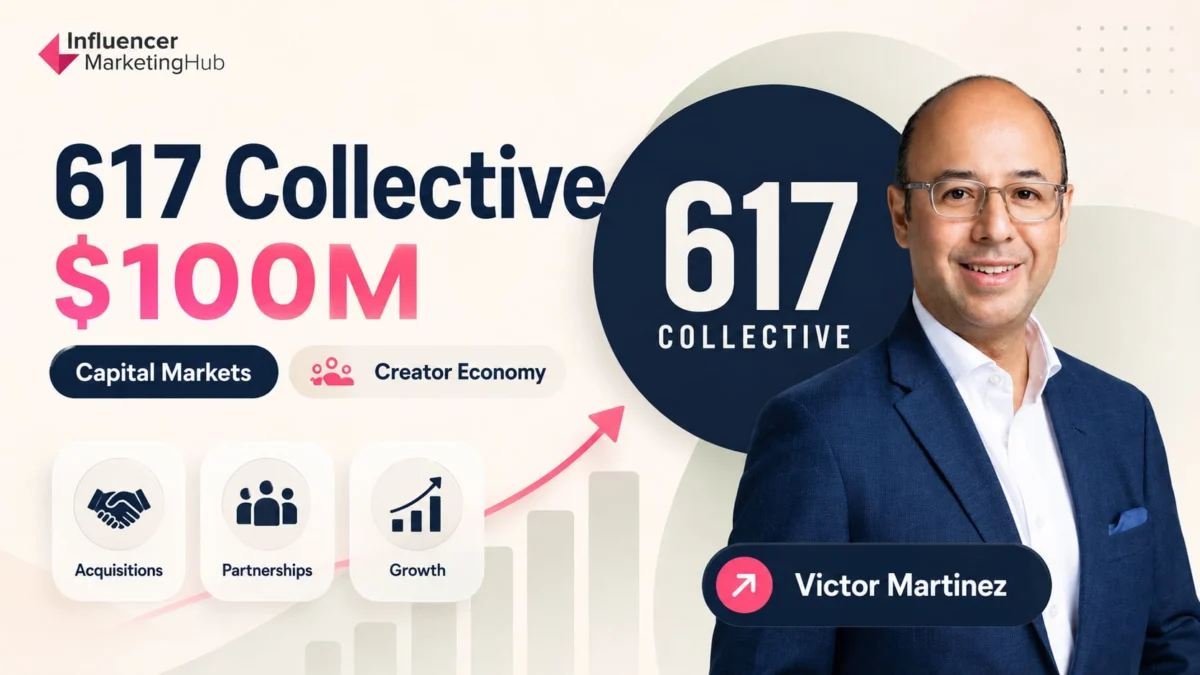
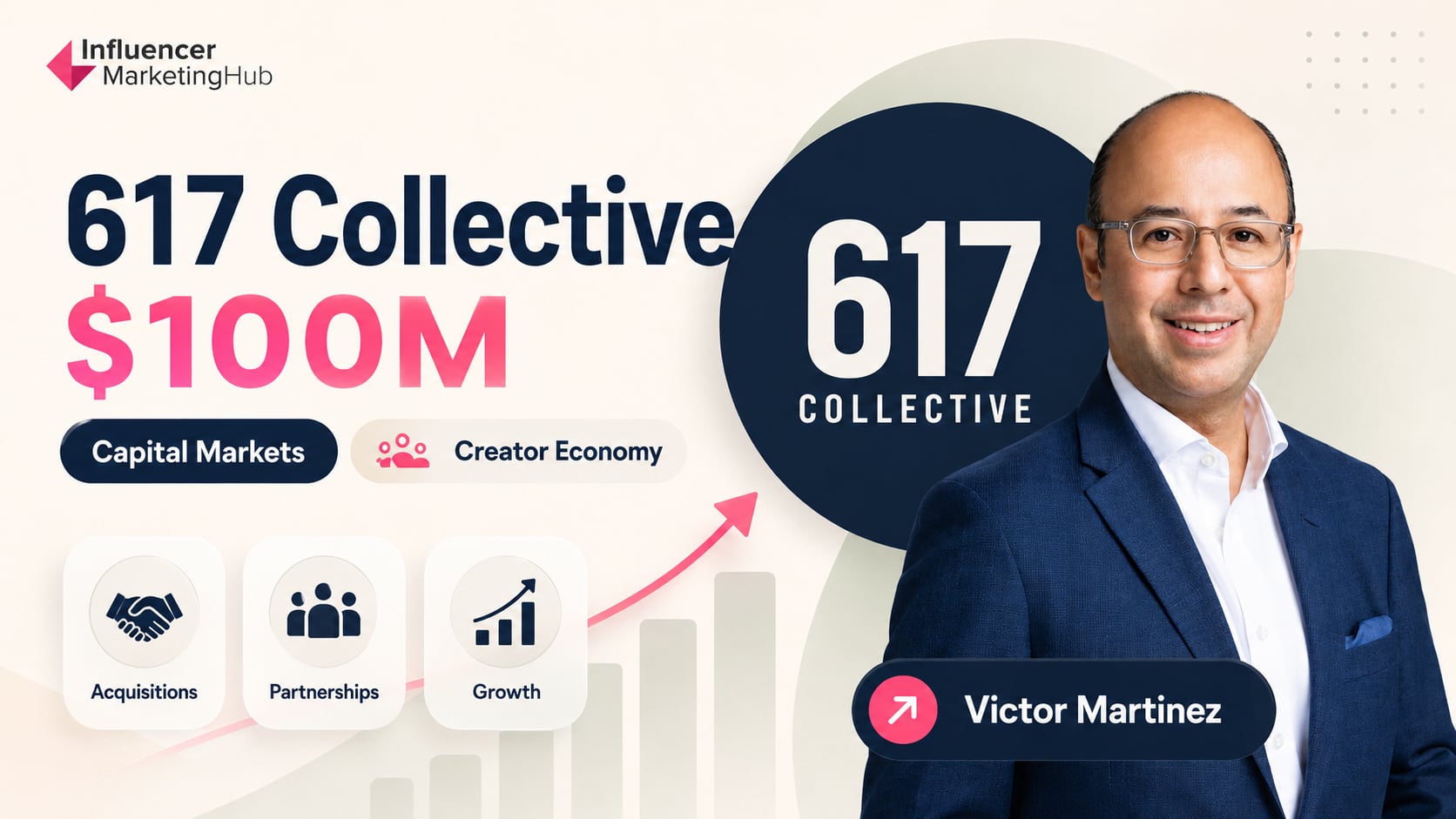
In a significant strategic move that signals an ambitious expansion, 617 Collective LLC, a New York-based acquisition platform focused on founder-led agencies, has appointed Victor Martinez as Partner and Head of Capital Markets. This hire, bringing over two decades of institutional finance experience from Citi and JPMorgan, positions 617 Collective to deploy up to $100 million into acquisitions and partnerships this year, marking a decisive shift from its nascent two-deal history towards becoming a formidable player in the rapidly consolidating creator economy. Martinez’s mandate is clear: to construct the robust lender relationships, sophisticated financing structures, and comprehensive corporate development pipeline necessary to fuel this substantial capital deployment, aiming to compete directly with larger, better-capitalized rivals in the marketing services sector.
Strategic Appointment Signals Institutional Intent
The arrival of Victor Martinez is more than a standard executive announcement; it is a profound declaration of intent from 617 Collective. With a career spanning investment banking, capital formation, and public-market positioning for technology, media, and consumer companies at top-tier financial institutions, Martinez brings an unparalleled level of financial acumen to the relatively young platform. His expertise will be instrumental in forging relationships with banks, private investment firms, and family offices, establishing the financial infrastructure required to successfully execute competitive acquisition processes. This is particularly crucial as 617 Collective seeks to differentiate itself in a market increasingly dominated by established holding companies and private equity-backed platforms, which inherently possess superior access to capital.
Martinez’s appointment also complements the recent addition of Cynthia Monroy, who joined as Managing Partner in January 2026 to oversee day-to-day operations and integration. Monroy, a CPA with prior experience as CFO at the agency Band of Insiders, provides the operational backbone, while Martinez now provides the financial muscle. This dual leadership structure—an experienced operator alongside a seasoned dealmaker—is designed to instill market confidence in 617 Collective’s ambitious acquisition pipeline. The firm, which publicly announced its first acquisition just five months prior to Martinez’s hiring, is clearly signaling its readiness to move beyond opportunistic, one-off deals and into a sustained, institutional-grade acquisition strategy.
617 Collective’s "Partner-Holdco" Model: A Differentiated Approach
Launched in August 2025, 617 Collective initially positioned itself as a holding company backed by family offices and private investors, targeting Northeast-based agencies with revenues between $1 million and $5 million and strong ties to Gen Z and millennial audiences. However, its initial two acquisitions have already demonstrated a willingness to expand beyond these initial geographic and demographic parameters, showcasing the adaptability of its "partner-holdco" model.
In January 2026, 617 Collective acquired Nominee Design, an Oklahoma-based brand and creative studio founded in 2010. This was followed by the acquisition of Zanahoria Azul in April 2026, a Miami-based influencer talent management agency with a strong focus on the U.S. Hispanic and Latin American markets. These deals, geographically diverse and serving distinct market segments, were consistently framed as exemplars of 617 Collective’s unique approach, explicitly designed to contrast with traditional agency roll-ups.
Unlike conventional models that often centralize operations, integrate acquired teams into a single brand, and impose standardized processes, 617 Collective’s philosophy is predicated on preserving the distinct leadership, culture, and client relationships of its acquired agencies. Instead of full integration, the platform aims to layer in capital, shared infrastructure, and strategic support, allowing founders to retain autonomy while benefiting from the resources of a larger entity. Cynthia Monroy articulated this vision when the Nominee deal closed, stating, "We built 617 Collective to be the opposite of a roll-up." Her subsequent comment upon Martinez’s hire, referring to it as "the continued institutionalization of 617 Collective," is a candid acknowledgement that the firm is simultaneously building a founder-friendly brand and a sophisticated Wall Street-grade financial apparatus, positioning these two elements as complementary rather than contradictory.
The Fragmented and Fast-Growing Creator Economy: A Landscape Ripe for Consolidation
617 Collective’s timing is anything but accidental; it capitalizes on the dynamic and rapidly evolving landscape of the creator economy. While precise estimates vary by research firm and methodology, the sector’s impressive growth is undeniable. Recent figures for 2026 suggest a market size ranging from approximately $250 billion to over $320 billion. Influencer Marketing Hub further projects the addressable market to reach an astonishing $480 billion by 2027. Crucially, nearly all market analyses concur that this category is compounding at an annual rate exceeding 20% and remains highly fragmented, characterized by thousands of small-to-medium-sized agencies competing for a comparatively limited pool of institutional capital.
This fragmentation, coupled with robust growth, has inevitably spurred a significant uptick in mergers and acquisitions (M&A) activity. Quartermast Advisors’ 2026 Creator Economy M&A report documented 81 transactions within the creator economy in 2025, marking a 17.4% increase from 69 deals in the preceding year. Agencies accounted for roughly a fifth of these deals, trailing only software businesses. Broader trends in marketing services M&A also underscore this momentum, with Capstone Partners reporting a 14% year-to-date increase in 2025, even as overall U.S. deal activity saw a decline. The Drum further highlighted a 22% year-over-year rise in marketing and communications M&A.
Within this burgeoning market, the competitive bar for buyers is exceptionally high. Major industry players have been aggressively consolidating and building out their creator economy capabilities. Omnicom’s monumental $13.5 billion merger with Interpublic Group in November 2025 created a roughly $25 billion-revenue holding company, marking the largest agency deal in history. Publicis Groupe has strategically assembled its own creator-economy stack, including a reported $500 million acquisition of the influencer platform Influential in 2024 and the acquisition of BR Media Group, Latin America’s largest influencer agency, in early 2025. Stagwell has also made significant moves, acquiring the AI-driven influencer firm LEADERS. Furthermore, in January 2025, Later paid $250 million to acquire Mavely, an affiliate-commerce platform, from Nu Skin Enterprises. Against this backdrop of multi-billion-dollar deals and strategic consolidations, a firm like 617 Collective, planning a $100 million deployment, requires more than just conviction; it needs the same sophisticated lender relationships and deal-structuring capabilities that its larger, more established competitors already possess. This is precisely the critical gap that Victor Martinez has been brought in to close.
The Influx of Permanent Capital into Madison Avenue
617 Collective’s "long-term holding" pitch—a strategy centered on buying businesses with the intent to hold them indefinitely, preserving their unique identity rather than integrating them—is not an entirely novel concept but rather a familiar model now finding fertile ground in a new industry. This approach echoes the "permanent capital" model famously employed by firms like Constellation Software in niche software markets for decades. It also bears resemblance to the smaller-scale version practiced by Tiny, the holding company led by Andrew Wilkinson, which acquires profitable internet businesses at modest multiples while empowering founders to remain in charge. What is genuinely innovative is the application of this permanent capital philosophy to the agency sector, where the historical playbook has typically involved centralizing back-office functions, standardizing service delivery, and planning an exit to a larger buyer within a relatively short three-to-five-year timeframe.
The fundamental question remains whether this "founder-friendly" framing can genuinely survive contact with the realities of institutional scale and the demands of significant capital deployment. This is a challenge not unique to 617 Collective but one that resonates across the evolving M&A landscape for agencies. Ebiquity, the marketing consultancy, has notably raised concerns regarding the broader trend of holding companies building out influencer and creator capabilities. Their analysis points to potential risks for brand clients, including conflicts of interest, exposure to data-sharing across competing accounts, and a shrinking pool of genuinely independent agencies from which to choose. These concerns are applicable to any acquirer accumulating multiple agencies under one organizational umbrella, regardless of how it chooses to brand its internal structure.
A holding company that pledges to leave ten agencies operationally independent today could, in practice, functionally begin to resemble the very consolidated network it claims to avoid once shared services, cross-referrals, and a centralized capital markets office are established to support all of them. The tension between preserving individual agency autonomy and achieving the efficiencies and synergies typically sought by institutional investors will be a key dynamic to watch as 617 Collective scales.
Chronology of 617 Collective’s Development and Acquisitions:
- August 2025: 617 Collective LLC is officially launched as a holding company, backed by family offices and private investors, with an initial focus on agencies generating $1 million to $5 million in revenue in the Northeast U.S., particularly those with strong ties to Gen Z and millennial audiences.
- January 2026: Cynthia Monroy, a seasoned CPA and former CFO, joins 617 Collective as Managing Partner, taking charge of day-to-day operations and integration across the platform. In the same month, 617 Collective makes its first publicly announced acquisition, Nominee Design, an Oklahoma-based brand and creative studio founded in 2010, demonstrating an expansion beyond its initial geographic focus.
- April 2026: 617 Collective announces its second acquisition, Zanahoria Azul, a Miami-based influencer talent management agency. This acquisition further diversifies the platform’s portfolio, targeting the U.S. Hispanic and Latin American markets. Both acquisitions are presented as proof points for the "partner-holdco" model.
- Mid-2026 (Implied): Victor Martinez is appointed as Partner and Head of Capital Markets. This critical hire brings institutional finance expertise from Citi and JPMorgan, signaling 617 Collective’s intent to rapidly scale its acquisition efforts with substantial financial backing.
- Future Outlook (2026): With Martinez in place, 617 Collective sets an ambitious target to deploy up to $100 million into acquisitions and partnerships throughout the remainder of 2026, aiming to solidify its position in the competitive creator economy M&A landscape.
Broader Impact and Implications for the Agency Landscape
The strategic evolution of 617 Collective, epitomized by Martinez’s hire and the $100 million deployment target, carries significant implications for the broader agency landscape. It underscores a growing demand among founders for alternatives to traditional exit strategies that often involve a loss of identity and control. If 617 Collective successfully demonstrates that it can provide institutional-level capital and strategic support while genuinely preserving agency culture and autonomy, it could inspire a new wave of "partner-holdco" models. This, in turn, might reshape founder expectations and acquisition dynamics across the marketing services industry.
Conversely, the challenge lies in balancing the inherent need for financial discipline and return on investment—expected by institutional backers—with the commitment to operational independence and cultural preservation. The pressure to achieve synergies, optimize performance, and potentially cross-sell services among portfolio companies could gradually erode the very "founder-friendly" ethos that initially attracted agencies to the model. How 617 Collective navigates this tension will be a closely watched experiment, offering valuable lessons for both acquirers and agency founders alike.
Moreover, the increasing institutionalization of players like 617 Collective, even with a differentiated model, contributes to the overall consolidation of the creator economy. While presented as an alternative to the "roll-up playbook," the aggregation of multiple agencies under a single capital markets umbrella inevitably contributes to a market with fewer truly independent entities. This trend raises important questions for brands and marketers seeking diverse, unbiased agency partners, as highlighted by Ebiquity’s concerns about potential conflicts of interest and data-sharing implications.
What’s Next for 617 Collective
For now, 617 Collective’s interpretation of the current market moment is straightforward: founders in a maturing, capital-hungry industry are seeking scale and infrastructure without having to relinquish the culture and client relationships that define their businesses and generate their value. The firm believes there is a distinct lane for a buyer willing to provide both. Victor Martinez’s hire is the clearest evidence yet that 617 Collective intends to aggressively compete for that lane, backed by genuine institutional financial power rather than relying solely on opportunistic, one-off deals.
With $100 million earmarked for deployment this year and a fully operational capital-markets division now in place to source and structure these deals, 617 Collective’s next moves will be critical. How closely its future acquisitions adhere to the "founder-first" script that has defined its initial identity, and whether it can truly maintain its differentiated model amidst the pressures of rapid growth and institutional demands, are questions that will unfold as the 2026 wave of creator-economy consolidation continues to build. The journey of 617 Collective will serve as an important case study in the evolving intersection of Wall Street finance and Madison Avenue creativity.

