
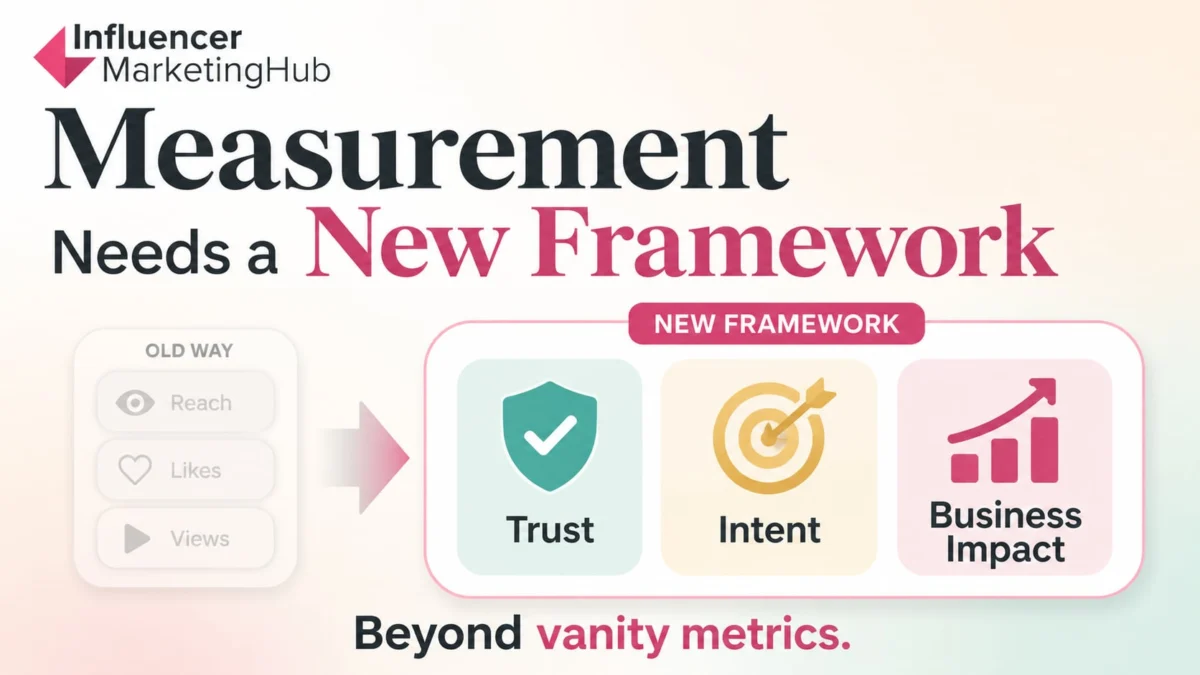
Over the past few weeks, a critical conversation has re-emerged within the creator economy, focusing intensely on the inadequacy of traditional measurement strategies as the industry barrels towards 2026. This dialogue underscores a widespread consensus that standard platform metrics, while not entirely obsolete, no longer capture the full, multifaceted value generated by creator content. The imperative for a more sophisticated, contextual, and layered measurement framework is growing, driven by expanding budgets, increasing program sophistication, and the transformative impact of artificial intelligence on consumer discovery.
The Genesis of the Measurement Challenge: A Historical Perspective
The journey of creator economy measurement has been one of continuous evolution, mirroring the rapid growth and professionalization of the industry itself. In its nascent stages, roughly from the late 2000s to the mid-2010s, influencer marketing was largely characterized by simple reach and vanity metrics. Brands primarily focused on follower counts, likes, and basic comment volumes, believing that a large audience guaranteed influence. These metrics, while superficial by today’s standards, offered a rudimentary way to gauge visibility and initial audience engagement, particularly when campaigns were experimental and budgets relatively modest. The simplicity often masked the true impact, or lack thereof, on core business objectives.
As the industry matured through the mid-2010s into the early 2020s, a demand for more robust data led to the adoption of slightly more nuanced platform metrics. Views, completion rates, and engagement rates became the standard. These provided a better understanding of content distribution efficiency and attention capture: how far content traveled, and crucially, how many people actually stayed with it. These signals were, and remain, vital for assessing top-of-funnel performance. A video with high views and a strong completion rate indicates effective content delivery and audience retention, crucial for initial brand exposure. However, even these improved metrics began to show their limitations as creator partnerships became more strategic, integrating deeper into comprehensive marketing funnels. The problem was not that these metrics were wrong, but that their application often stopped there, leading to incomplete and frequently misleading conclusions about campaign efficacy.
Where Traditional Measurement Breaks Down: The "Single Scorecard" Fallacy
The fundamental flaw in many current measurement approaches lies in the pervasive use of a single scorecard, regardless of the content’s strategic objective. This oversight consistently leads to misinterpretations and undervalued creator initiatives. Consider a top-of-funnel awareness video, designed to introduce a new product or concept to a broad audience. Its primary goal is reach, impressions, and perhaps a subtle shift in brand sentiment or recall. Judging this content by the same metrics as a shoppable post, which aims for direct conversions or product page clicks, is akin to comparing apples and oranges. The awareness video might excel at generating broad visibility and positive sentiment, but if evaluated solely on direct sales, it would appear to underperform, masking its foundational contribution to the sales funnel.
Similarly, a narrative endorsement, where a creator genuinely integrates a product into their lifestyle and shares an authentic story, cannot be accurately assessed using the same short-term, direct-response metrics applied to a quick product demonstration. The former builds trust and long-term affinity, often leading to delayed but significant impact, while the latter aims for immediate action. When teams fail to differentiate between these distinct objectives and apply uniform evaluation criteria, they walk away with conclusions that are not only incomplete but can actively misguide future strategy and budget allocation. This scenario highlights the urgent need for a new framework – one that respects the diverse roles creator content plays and places platform metrics within their proper, contextualized place, rather than allowing them to dictate the entire narrative.
A Layered Measurement Stack: A Path to Holistic Understanding
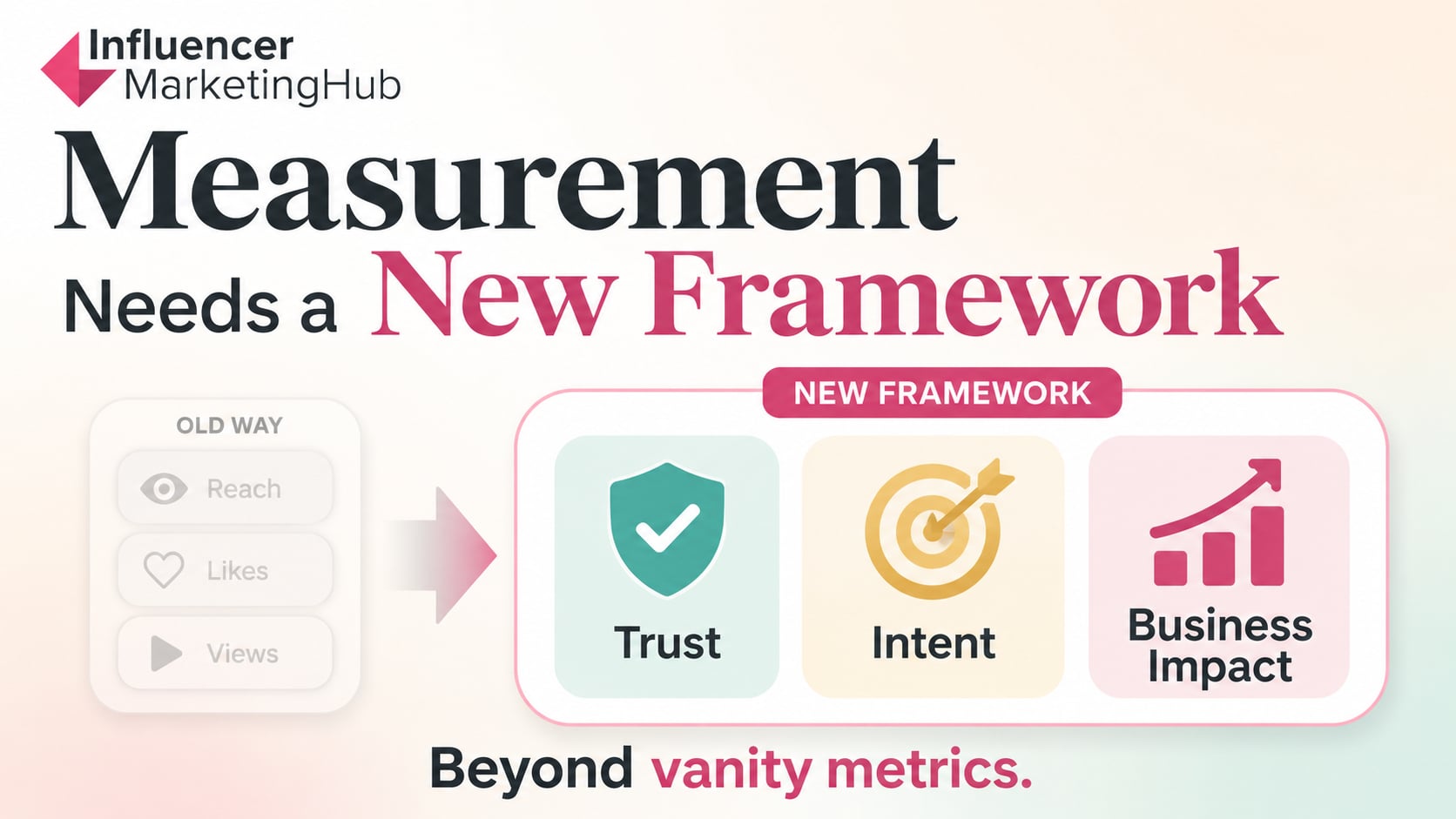
The most effective creator programs moving forward into 2026 are adopting a layered approach to measurement, where each layer is designed to answer a distinct, critical question about content performance and business impact. This multi-dimensional framework moves beyond superficial metrics to provide a comprehensive understanding of value.
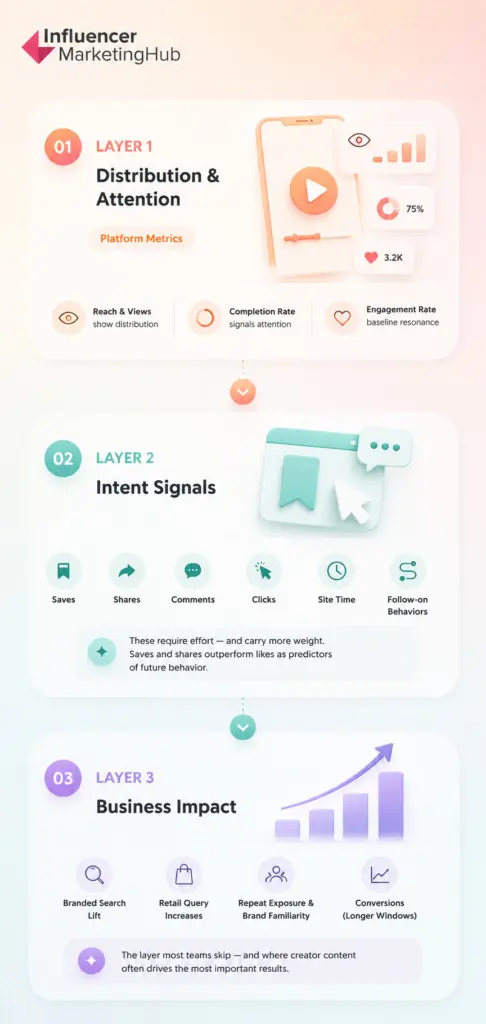
Layer 1: Distribution & Attention (Platform Metrics)
These foundational metrics are indispensable for understanding whether content successfully cleared the initial hurdle of visibility and engagement. They tell us: Did anyone see it? Did they stay? Key metrics include:
- Views/Impressions: The sheer volume of times content was displayed or seen. Essential for top-of-funnel reach.
- Reach: The unique number of individuals who saw the content.
- Completion Rate/Watch Time: For video content, this indicates how much of the content was consumed. A high completion rate suggests the content was engaging and held the audience’s attention, even if the absolute view count is moderate.
- Engagement Rate (basic): Likes, comments, and shares relative to reach or follower count. While basic, it provides an initial pulse check on audience interaction.
These metrics confirm the efficiency of distribution and the initial capture of audience attention. For instance, a video campaign might achieve 5 million impressions with a 60% completion rate, indicating strong initial audience interest and content resonance within the platform’s algorithm.
Layer 2: Intent Signals
Moving beyond passive consumption, intent signals carry significantly more weight because they require a conscious effort from the audience, indicating a deeper level of interest and potential future action. These metrics serve as powerful predictors of future behavior and are often overlooked in favor of simpler engagement metrics.
- Saves/Bookmarks: When a user saves content, it signifies a strong intent to revisit it, suggesting perceived value or utility. Industry analysis from Q3 2025 suggests that content receiving a high volume of saves translates to a 2.5x higher likelihood of follow-up brand engagement (e.g., website visit, branded search) compared to content primarily driven by likes.
- Shares/Forwards: Sharing content with others indicates active advocacy and peer-to-peer recommendation, a potent form of social proof. This is particularly valuable for educational or endorsement-driven content, as it expands reach organically to trusted networks.
- Direct Messages (DMs) / Qualitative Comments: Analyzing the nature and volume of DMs or thoughtful comments can reveal specific questions, purchase intent, or deeper emotional connections with the brand or product.
- Clicks on Links (where applicable): While bridging towards business impact, a click on a creator’s bio link or swipe-up link indicates a direct step towards engaging with the brand’s owned properties.
We consistently observe that saves and shares outperform likes as predictors of future behavior, especially when content is designed to educate, inspire, or endorse. They represent an active decision by the consumer to engage further or share value, making them invaluable indicators of deeper impact.
Layer 3: Business Impact
This is arguably the most crucial layer, and ironically, the one most frequently skipped or poorly measured by marketing teams. It’s where creator content’s true value to the business is realized, often quietly and through multi-touchpoint journeys.
- Direct Sales & Conversions: Tracked via unique promo codes, affiliate links, or custom landing pages. This is the most straightforward measure of ROI for performance-driven campaigns.
- Website Traffic & Referrals: Measuring direct traffic from creator content to brand websites, product pages, or specific campaign landing pages.
- Brand Lift Studies: Surveys measuring changes in brand awareness, perception, consideration, and purchase intent among exposed vs. unexposed audiences. A creator campaign driving a 15% increase in branded search queries post-exposure, even without direct click-throughs from the platform, demonstrates significant mental availability and brand resonance.
- Search Lift (Branded & Non-Branded): Monitoring increases in search queries for brand-specific terms or product categories following creator content exposure, indicating enhanced recall and curiosity.
- Retailer Queries/Foot Traffic: For CPG or retail brands, tracking mentions or searches for products on retailer websites or physical store visits post-campaign.
- Customer Acquisition Cost (CAC) / Return on Ad Spend (ROAS): Advanced metrics that directly tie creator spend to tangible business outcomes, often requiring sophisticated attribution models.
This layer often reveals where creator content is quietly doing its most important work, influencing decisions far beyond the immediate platform interactions.
Not All Creator Content Plays the Same Role: The Imperative of Segmentation
The failure of the old framework is most visible in its inability to segment content roles. Custom success criteria are no longer optional; they are fundamental to accurately assessing performance.
- Awareness Content: Designed to maximize reach and initial exposure. Success is measured by impressions, unique reach, brand recall, and sentiment analysis. Penalizing this content for lacking direct conversion signals completely misses its strategic purpose of building mental availability.
- Consideration/Engagement Content: Aims to deepen audience interest and prompt exploration. Metrics include intent signals (saves, shares), website clicks, time spent on brand pages, and qualitative feedback.
- Conversion Content: Directly drives sales, sign-ups, or leads. Success is measured by direct sales, lead generation, customer acquisition cost, and ROI.
- Loyalty/Advocacy Content: Fosters community, repeat purchases, and brand love. Metrics might include repeat engagement, user-generated content, positive sentiment, and brand sentiment scores.
Judging all content against the same benchmark fundamentally misses the point. Awareness content should not be penalized for low conversion rates, just as performance content should not be overvalued based solely on reach without tangible business outcomes. The measurement framework must rigorously match the intent and role of the content within the broader marketing funnel.
What’s Accelerating the Need for Change in 2026: The AI Catalyst
Two powerful forces are converging to accelerate this shift in measurement strategy for 2026. Firstly, as creator economy budgets continue to grow—projected to exceed $50 billion globally by 2027—and creator programs become more deeply embedded in core business operations, the demand for sophisticated, transparent, and defensible ROI measurement intensifies. Stakeholders require clearer justification for significant investments, pushing marketers beyond vanity metrics.
Secondly, and perhaps more profoundly, is the rapid rise of AI-driven discovery. Consumers are increasingly turning to large language models (LLMs) and AI tools to describe their problems, needs, and aspirations, often before they have a specific product or brand in mind. Recent industry research from Q4 2025 indicated that 55% of US consumers already leverage AI tools as part of their shopping research, a figure projected to exceed 70% by 2027. This signifies a fundamental shift in how consumers discover and evaluate products and services.
In these crucial moments, AI isn’t fabricating opinions or inventing new information; it is synthesizing what already exists across vast, trusted, and high-quality content ecosystems. Creator content, with its inherent authenticity, relatability, and often deep dives into product utility or lifestyle integration, serves as a vital input for these AI models. It contributes to the "knowledge base" from which AI draws its recommendations.
This creates two significant shifts for brands:
- Creators as Inputs for AI: Creator content becomes a foundational element shaping AI’s understanding and subsequent recommendations. Brands that invest in high-quality, trustworthy creator content are effectively "training" the AI to recommend their products or solutions.
- Indirect Influence on the Purchase Path: The path to purchase becomes less linear and more mediated by AI. A consumer might ask an AI, "What’s the best moisturizer for sensitive skin?" The AI, having processed countless creator reviews and endorsements, might recommend a specific brand. The consumer then proceeds to search for that brand directly, potentially bypassing traditional platform-based clicks or direct referrals from the original creator content.
The measurement implication of this AI-driven landscape is profound: creator and editorial content can now exert significant influence on purchasing decisions even when the visible action—the final click or conversion—occurs elsewhere. This means tracking metrics like branded search lift, retailer website queries, or even offline conversions becomes essential, even if they never appear within a platform’s dashboard. Platform metrics, in this context, haven’t become irrelevant; they have simply become undeniably insufficient on their own to tell the complete story of creator impact.
Forging the New Measurement Framework: A Path Forward
The teams successfully navigating the complexities of creator economy measurement in 2026 are not abandoning platform metrics. Instead, they are integrating them into a more sophisticated, holistic approach:
- Combining Platform Metrics with Business Impact: They are meticulously connecting top-of-funnel reach and engagement data with bottom-of-funnel outcomes like sales, lead generation, and brand equity shifts. This requires advanced attribution models that go beyond last-click to understand multi-touchpoint influence.
- Customizing Success Criteria: They are rigorously defining KPIs tailored to each piece of content’s specific role within the marketing funnel. An awareness campaign will have different success metrics than a conversion-focused campaign, preventing misjudgment and ensuring accurate strategic insights.
- Leveraging Diverse Data Sources: Beyond platform analytics, these teams are integrating first-party data (CRM, sales data), market research (brand lift studies, sentiment analysis), and increasingly, AI-driven insights to paint a comprehensive picture of creator content performance.
- Embracing Holistic Attribution: Moving away from siloed reporting, they are developing attribution models that credit creator content for its role across the entire customer journey, recognizing its indirect and compounding effects, especially in an AI-mediated environment.
The new measurement framework, while initially seeming more complex, is ultimately more honest and accurate about what marketers are truly trying to measure and why. It acknowledges the nuanced, multi-layered impact of creator content in a rapidly evolving digital ecosystem.
Intuition Media Group, a leader in the influencer marketing space, actively assists global brands in constructing creator ecosystems that not only achieve cultural relevance but are also built for measurable business impact. Paula Bruno, founder and CEO of Intuition Media Group, emphasizes that "the new framework isn’t more complicated; it’s simply more honest about what we’re actually trying to measure and why. It reflects the true complexity and value of creator partnerships in a digitally integrated world." As the creator economy continues its trajectory of growth and integration, adapting measurement strategies to these new realities will be paramount for unlocking the full, transformative potential of creator partnerships. The conversation around measurement is not just renewed; it is foundational to the future success of brand-creator collaborations.

