
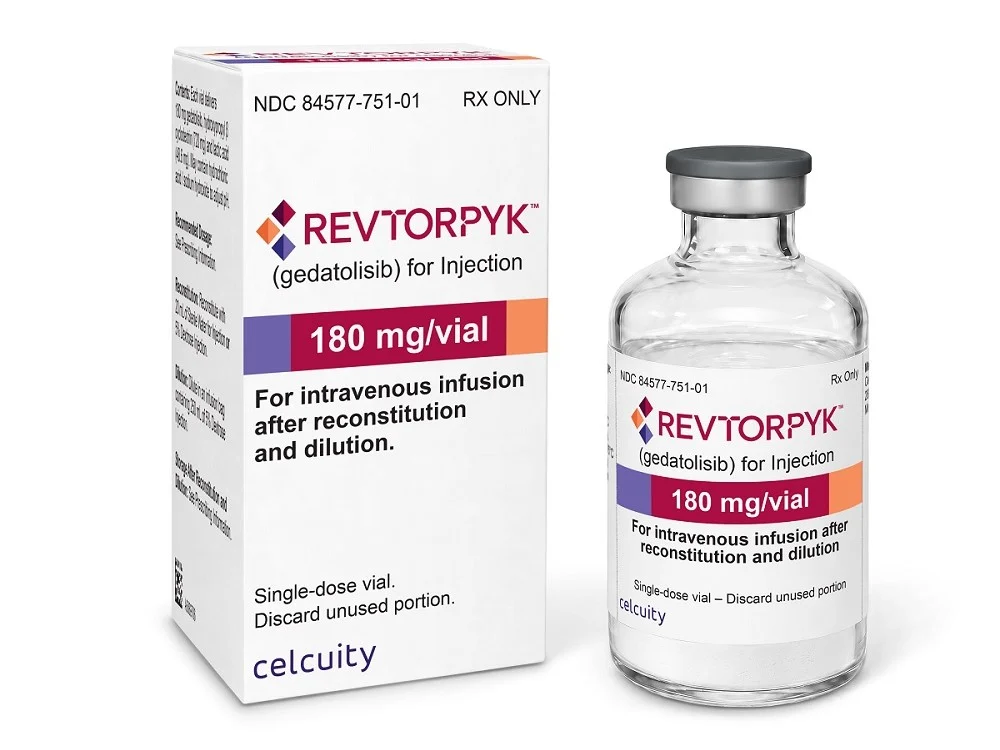
The U.S. Food and Drug Administration (FDA) has officially granted approval for gedatolisib, a novel therapeutic developed by Minneapolis-based biotechnology firm Celcuity, marking a significant milestone in the treatment of advanced breast cancer. Marketed under the brand name Revtorpyk, the drug represents a first-in-class dual inhibitor targeting the PI3K/mTOR pathway, specifically for adult patients diagnosed with hormone receptor (HR)-positive, human epidermal growth factor receptor 2 (HER2)-negative locally advanced or metastatic breast cancer. This regulatory milestone specifically addresses the second-line treatment setting for patients whose tumors do not harbor the PIK3CA mutation, a population that has historically faced limited therapeutic options after progressing on initial endocrine-based therapies.
The approval of Revtorpyk, an intravenously administered small molecule, transitions Celcuity from a clinical-stage research organization to a commercial-stage pharmaceutical entity. According to the company’s commercialization roadmap, the drug is slated for a commercial launch in the late third quarter of this year. The timing of the rollout is designed to ensure a robust supply chain and adequate inventory levels to meet the anticipated demand from oncology centers across the United States.
Understanding the HR-Positive HER2-Negative Landscape
Breast cancer remains one of the most prevalent malignancies globally, and the HR-positive, HER2-negative subtype is the most common form of the disease, accounting for approximately 70% of all new diagnoses. Within this subtype, the genetic profile of the tumor plays a critical role in determining the course of treatment. While much research has focused on the 40% of patients who possess PIK3CA mutations, the remaining 60% of patients—those without these specific mutations—have required new innovative strategies to overcome treatment resistance.
The PI3K/AKT/mTOR (PAM) signaling pathway is a central regulator of cell growth, proliferation, and survival. In many breast cancers, this pathway becomes dysregulated or hyperactivated, serving as a primary driver of tumor progression and a key mechanism of resistance to standard endocrine therapies and CDK4/6 inhibitors. By targeting this pathway, Revtorpyk aims to disrupt the intracellular signaling that allows cancer cells to bypass traditional treatments.
Mechanism of Action: A Dual-Targeting Approach
What distinguishes Revtorpyk from existing therapies is its dual-inhibitory mechanism. Currently available treatments often target either the PI3K enzyme or the mTOR protein individually. However, single-node inhibition frequently triggers compensatory feedback loops within the cell, where the inhibition of one protein leads to the activation of another, allowing the tumor to continue growing.
Revtorpyk is designed to inhibit all four isoforms of PI3K as well as the mTOR complex 1 (mTORC1) and mTOR complex 2 (mTORC2). This comprehensive blockade leads to the downstream inhibition of AKT, effectively shutting down multiple points of the PAM pathway simultaneously. This "vertical" inhibition strategy is intended to provide more durable suppression of tumor growth compared to older, single-target agents.
The administration protocol for Revtorpyk involves a 30-minute intravenous infusion. The treatment follows a structured 28-day cycle, with patients receiving the drug on days 1, 8, and 15, followed by a one-week rest period.
Clinical Trial Data and Efficacy
The FDA’s decision was underpinned by data from a comprehensive Phase 3 clinical trial that evaluated the safety and efficacy of gedatolisib in various combination regimens. The trial primarily focused on the drug’s performance when paired with Faslodex (fulvestrant), an estrogen receptor antagonist developed by AstraZeneca, which is a foundational treatment in the advanced breast cancer setting.
The study included two primary arms: a doublet combination of gedatolisib and fulvestrant, and a triplet combination that added Ibrance (palbociclib), a CDK4/6 inhibitor from Pfizer. Both treatment arms demonstrated statistically significant improvements in progression-free survival (PFS) compared to standard-of-care benchmarks. PFS is a critical endpoint in oncology, measuring the length of time during and after treatment that a patient lives with the disease without it getting worse.
While the PFS data provided a clear signal of clinical benefit, the company noted that the overall survival (OS) data—the gold standard for measuring a drug’s impact on life expectancy—were not yet mature at the time of the primary analysis. Long-term follow-up continues to determine the full extent of the drug’s impact on patient longevity.
Safety Profile and Clinical Management
As with all potent oncology treatments, the clinical trials for Revtorpyk revealed a specific profile of adverse reactions. The most frequently reported side effects included stomatitis (inflammation of the mucous membranes in the mouth), various skin reactions, and hyperglycemia (elevated blood sugar levels).
The incidence of stomatitis, in particular, has drawn the attention of market analysts. In the triple combination arm of the trial, a 12% treatment discontinuation rate was observed, largely attributed to the severity of mucous membrane inflammation. Andrew Berens, an analyst at Leerink Partners, noted in a communication to investors that managing these side effects would be paramount for the drug’s real-world adoption.
"Once the drug launches, we think the ability of community doctors to effectively manage the mucositis and keep patients on drug will be critical to commercial success," Berens stated. The medical community anticipates that proactive management strategies, such as the use of steroid mouthwashes and dose adjustments, will be essential components of the Revtorpyk treatment protocol to ensure patient adherence and optimal outcomes.
Chronology of Development and Regulatory Path
The journey of gedatolisib from a laboratory concept to an FDA-approved therapy spans several years of rigorous clinical investigation.
- Early Phase Development: Initial Phase 1 and 2 trials established the safety profile and identified the optimal dosing schedule for the dual PI3K/mTOR inhibitor.
- Expansion into Combinations: Researchers recognized the potential for gedatolisib to work synergistically with endocrine therapies, leading to the design of the pivotal Phase 3 trials.
- June Annual Meeting: Data regarding the cohort of patients with PIK3CA mutations were presented at the annual meeting of the American Society of Clinical Oncology (ASCO), showing promising results that extended beyond the initial non-mutated patient population.
- July Regulatory Approval: The FDA granted approval for the non-PIK3CA mutant population, recognizing the significant unmet need in this specific demographic.
- Upcoming Milestones: Celcuity has signaled its intention to file a supplemental New Drug Application (sNDA) to expand the label to include patients with PIK3CA mutations, potentially broadening the patient base significantly.
Market Potential and Commercial Outlook
The financial implications of the Revtorpyk approval are substantial for Celcuity. The company estimates that the total U.S. market opportunity for the drug in the first- and second-line settings for advanced breast cancer exceeds $10 billion. This valuation reflects the high prevalence of HR-positive, HER2-negative disease and the lack of robust second-line options for patients without the PIK3CA mutation.
To prepare for the launch, Celcuity has engaged in extensive pre-approval discussions with major healthcare payers. In a recent investor presentation, the company emphasized that these proactive engagements were designed to facilitate smooth insurance coverage and patient access immediately following the commercial launch. While specific pricing details have not yet been disclosed, the company is expected to position Revtorpyk competitively within the high-value oncology therapeutic market.
The delay of the launch to the late third quarter, while unexpected by some analysts, was framed by Celcuity executives as a strategic move. By ensuring that manufacturing and distribution networks are fully operational, the company aims to avoid the supply shortages that have occasionally plagued other high-profile drug launches in the biotech sector.
Broader Implications and Future Research
The approval of Revtorpyk is not the end of the road for gedatolisib; rather, it serves as a foundation for broader applications in oncology. Because the PAM pathway is a common driver in various solid tumors, Celcuity is aggressively pursuing additional indications.
A Phase 1b/2 clinical study is currently underway to evaluate the drug’s efficacy in treating prostate cancer, another malignancy where PI3K and mTOR signaling play significant roles. Furthermore, early-stage clinical research has been conducted to explore the drug’s potential in ovarian cancer and other solid tumors that exhibit dysregulated PAM signaling.
The success of Revtorpyk also validates the dual-inhibition strategy, potentially influencing future drug development across the pharmaceutical industry. By demonstrating that a single molecule can safely and effectively inhibit two major nodes of a signaling pathway, Celcuity has provided a template for tackling complex resistance mechanisms in cancer.
For patients and clinicians, the arrival of Revtorpyk offers a new line of defense against advanced breast cancer. As the oncology community moves toward more personalized medicine, the ability to target specific signaling pathways in patients who lack common mutations represents a major step forward in the quest to turn advanced cancer into a manageable chronic condition. With its launch imminent, the focus now shifts to the real-world clinical setting, where the drug’s impact on patient lives will be fully realized.

