
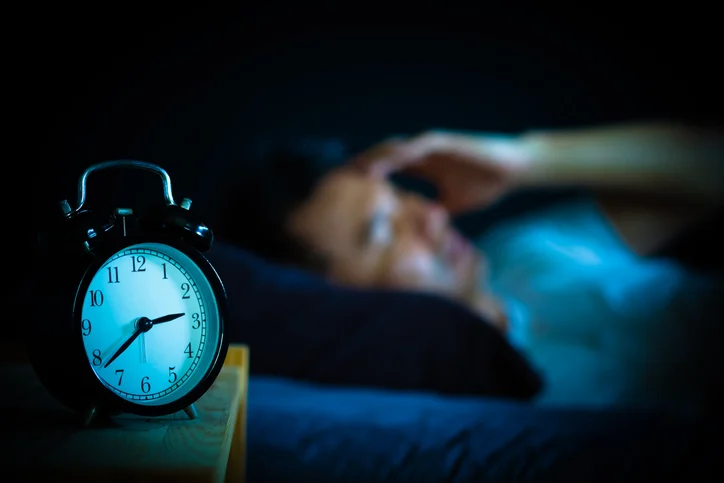
A comprehensive new report from the U.S. Centers for Disease Control and Prevention (CDC) has revealed a burgeoning public health crisis: nearly half of all American adults report that they do not wake up feeling rested on most days of the week. The data, published by the National Center for Health Statistics (NCHS), signals a disconnect between the booming "sleep wellness" industry and the clinical reality of chronic sleep deprivation and undiagnosed medical conditions. While consumers spend billions on supplements, specialized pillows, and wearable technology, medical experts warn that these retail solutions often mask underlying biological disorders that require professional intervention rather than lifestyle "optimization."
The CDC’s findings come at a time when the American public is more aware of sleep hygiene than ever before. However, the data suggests that despite the ubiquity of sleep-tracking apps and social media trends, the fundamental quality of rest for the average American remains dangerously low. This discrepancy highlights a critical need for clinicians to move beyond cursory questions about bedtime routines and begin implementing rigorous screening tools to identify the one in five Americans living with a chronic sleep disorder.
The Scope of the National Sleep Deficit
According to the CDC’s Data Brief No. 559, approximately 49.3% of adults in the United States reported feeling unrested on at least four of the past seven days. This exhaustion is not merely a matter of inconvenience; it is a systemic issue with profound implications for public safety, economic productivity, and long-term health outcomes. The report indicates that the prevalence of non-restorative sleep is consistent across various demographics, though it remains particularly acute among working-age adults and those managing high-stress environments.
The consumer sleep wellness industry has stepped into this void, currently valued at an estimated $80 billion globally. From "sleepy girl mocktails" trending on TikTok to magnesium oil and weighted blankets, the market is flooded with products promising to "bio-hack" the human sleep cycle. Yet, as the CDC data implies, these products are often used as Band-Aids for conditions that are fundamentally medical. The narrative framed by influencers—that sleep is a commodity to be optimized through purchase—frequently overlooks the reality of sleep apnea, narcolepsy, chronic insomnia, and restless legs syndrome.
A Chronology of Missed Diagnoses: The Patient Experience
The path to a sleep disorder diagnosis is often marked by years of frustration and self-doubt. For many, the symptoms begin subtly, often attributed to the "normal" fatigue of modern life. Julie Flygare, JD, President and CEO of the nonprofit Project Sleep, provides a quintessential example of the diagnostic odyssey many patients face. Her experience highlights the systemic gaps in both public awareness and medical education.
The timeline of a typical undiagnosed sleep disorder often follows a specific trajectory:
- The Early Onset: Symptoms frequently emerge in late adolescence or early adulthood. For Flygare, this began at age 18 as a Division I athlete at Brown University. Initial symptoms—such as heavy eyelids in class—are often dismissed as the result of a rigorous academic or athletic schedule.
- The Adaptation Phase: Patients often implement their own "wellness" strategies, such as increasing caffeine intake, using energy drinks, or splashing cold water on their faces to stay alert. These actions provide a temporary reprieve but fail to address the underlying neurological or physiological issues.
- The Cognitive Decline: As the disorder progresses, cognitive impairment becomes more pronounced. Law students and professionals may find themselves unable to retain information they have just read, leading to a loss of confidence in their intellectual abilities.
- The Crisis Point: Eventually, the disorder manifests in dangerous ways. For some, this involves "automatic behavior"—performing tasks like driving or walking without any memory of doing so. It is often only at this point of physical danger that patients recognize their fatigue is not "normal."
- The Clinical Barrier: When patients finally seek help, they often encounter a medical community that is under-equipped to help. Statistics show that the average medical student receives less than two hours of total education on sleep health throughout their entire multi-year curriculum. Consequently, primary care physicians may dismiss serious symptoms as "lifestyle-related" or "stress."
Supporting Data: The Hidden Prevalence of Sleep Disorders
The 20% of the population living with chronic sleep disorders represents millions of individuals who are often invisible to the healthcare system. The implications of leaving these conditions untreated are staggering.
Sleep Apnea: An estimated 25 million adults in the U.S. suffer from obstructive sleep apnea. If left untreated, it significantly increases the risk of hypertension, stroke, and heart failure.
Narcolepsy: A neurological condition affecting the brain’s ability to regulate sleep-wake cycles, narcolepsy affects approximately 1 in 2,000 people. Due to the "Hollywood" tropes of people suddenly falling over, the actual symptoms—such as fragmented nighttime sleep and intense daytime sleepiness—are frequently misunderstood or missed for a decade or more.
Restless Legs Syndrome (RLS): Affecting up to 10% of the U.S. population, RLS can lead to severe insomnia and depression, yet it is often mocked or dismissed in popular culture.
The CDC report emphasizes that non-restorative sleep is a precursor to a host of comorbid conditions. For teenagers, the stakes are even higher; undiagnosed sleep disorders are associated with a 300% increase in the risk of suicidal ideation. Furthermore, the economic cost of sleep deprivation in the U.S. is estimated at over $411 billion annually due to lost productivity and workplace accidents.
The Gap in Medical Education and Clinical Response
The primary obstacle to closing the diagnosis gap is the lack of clinical training. Because most physicians receive minimal instruction on sleep, the burden of proof often falls on the patient. When a patient reports being "tired," a physician may run standard blood tests for anemia or thyroid function. When those tests return normal results, the investigation often ends, leaving the patient to return to the "wellness" market for solutions.
To combat this, sleep advocates and medical researchers are calling for the integration of standardized screening tools in primary care settings. One such tool is the Sleep Disorders Symptom Checklist-25 (SDSCL-25). This validated screening instrument is designed to help clinicians identify signs of 13 major sleep disorders quickly. By moving toward objective screening rather than subjective questioning, the medical community can bypass the "everyone is tired" trope and identify those in need of specialized care.
Industry reactions to the CDC report have been swift. Sleep specialists argue that the focus must shift from "sleep wellness" to "sleep health." While a better pillow might help a healthy sleeper feel slightly more comfortable, it will do nothing to assist a patient whose airway collapses dozens of times per hour (apnea) or whose brain lacks the orexin necessary to stay awake (narcolepsy).
Broader Impact and the Future of Public Health
The CDC’s report serves as a vital reminder that the "optimization" of sleep is a luxury that assumes a healthy biological foundation. For a significant portion of the American population, that foundation is fractured. The implications of this report suggest that public health policy must evolve to treat sleep with the same level of seriousness as nutrition and exercise.
The broader impact of undiagnosed sleep disorders extends to the very safety of our infrastructure. Drowsy driving is responsible for thousands of motor vehicle accidents every year, with some studies suggesting that being awake for 18 hours produces impairment levels similar to a blood alcohol concentration (BAC) of 0.05%. At 24 hours, the impairment is equivalent to a BAC of 0.10%, which is above the legal limit for driving in all 50 states.
As the U.S. continues to grapple with a mental health crisis, addressing sleep disorders becomes even more critical. There is a bi-directional relationship between sleep and mental health; sleep deprivation can exacerbate depression and anxiety, while those mental health conditions can, in turn, make sleep more difficult. Breaking this cycle requires clinical intervention that addresses the biological roots of sleep disruption.
The path forward requires a two-pronged approach: increasing public awareness about the symptoms of medical sleep disorders and mandating more robust sleep health education for medical professionals. The CDC data proves that the status quo—relying on the consumer market to solve a public health crisis—is failing. True sleep optimization cannot be bought at a boutique; it must be diagnosed in a clinic. For the millions of Americans currently driving, working, and living in a fog of exhaustion, the shift from "wellness" to "medicine" cannot come soon enough.

