
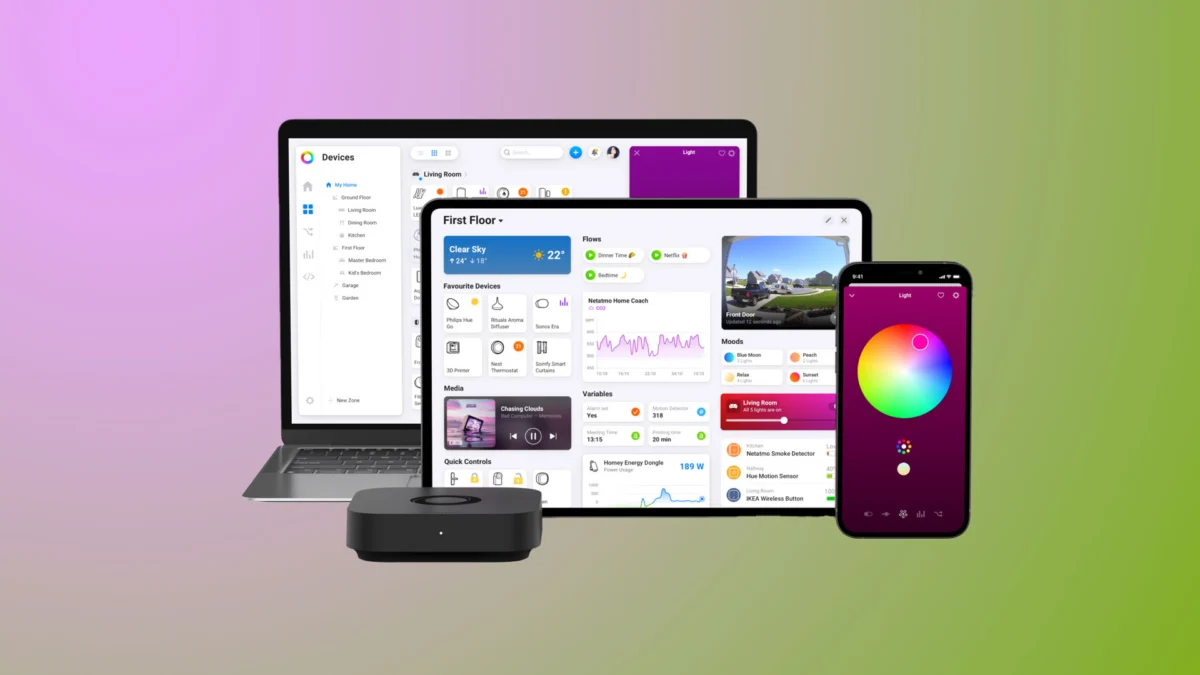
The smart home hub manufacturer Homey has announced a significant milestone in its commitment to interoperability and advanced home automation, achieving Matter 1.5 certification. This pivotal certification extends the capabilities of Homey devices to include the control of electric vehicle (EV) chargers, solar panels, and heat pumps, integrating these critical energy management components into the existing smart home ecosystem. The certification is retroactively applied to Homey Pro models manufactured between 2023 and 2026, as well as the Homey Pro mini and the Homey Self-Hosted Server, effectively unifying the entire current Homey product line under a single, certified software standard.
This latest certification signifies Homey’s proactive approach to evolving smart home technology and its dedication to providing users with a comprehensive and future-proof platform. Matter, the industry-standard connectivity protocol developed by the Connectivity Standards Alliance (CSA), aims to simplify smart home device integration and enhance cross-brand compatibility. Homey’s adoption and certification of Matter 1.5 underscore its role in bridging the gap between existing smart home infrastructure and the emerging demands of energy-conscious households.
Expanding the Smart Home Frontier: New Device Categories Embrace Energy Management
Matter 1.5 introduces support for a significantly expanded range of device categories, moving beyond the initial focus on lighting, locks, and basic sensors. For Homey users, this translates to native control over a more diverse array of smart devices. The inclusion of EV chargers, heat pumps, solar panels, and major appliances marks a substantial leap forward in integrating energy generation, storage, and consumption into the smart home. This development positions Homey at the forefront of the growing trend towards energy-aware smart homes, an area where competitors like Apple Home and Google Home are also beginning to make inroads.
The ability to seamlessly integrate EV chargers allows users to automate charging schedules based on off-peak electricity rates, solar energy availability, or grid demand. Similarly, the control of solar panel systems and heat pumps enables homeowners to optimize their energy usage, potentially reducing electricity bills and their carbon footprint. This comprehensive approach to energy management not only enhances convenience but also empowers users to make more informed decisions about their energy consumption and production. The implications for a more sustainable and efficient home environment are substantial, as users can now orchestrate complex energy workflows across various devices and systems.
Bridging the Gap: Homey’s Matter Bridge App Connects Legacy Devices
A crucial aspect of Homey’s strategy to maintain universal compatibility lies in its innovative Matter Bridge app. This application addresses a significant challenge in the smart home landscape: the vast number of devices already in use that do not natively support the Matter standard. The Matter Bridge app allows devices connected via older protocols such as Zigbee, Z-Wave, infrared, Bluetooth, 433MHz, Wi-Fi, or proprietary manufacturer APIs to appear as standard Matter accessories within other Matter-compatible ecosystems.
This bridging functionality ensures that users are not forced to replace their existing smart home devices to benefit from the broader Matter ecosystem. The app effectively acts as a translator, allowing older devices to communicate with newer Matter-compliant systems. Currently, the Matter Bridge app supports a wide array of device types, including lights, sockets, thermostats, locks, window coverings, and various sensors. This broad compatibility extends to major smart home platforms such as Apple Home, Google Home, Amazon Alexa, Samsung SmartThings, and Home Assistant, while Homey itself retains full control over the original device’s functionality. This dual functionality – acting as both a Matter bridge and a central controller – provides unparalleled flexibility for users.
A Vision for Universal Interoperability: CEO’s Perspective
Stefan Witkamp, CEO of Athom, the company behind Homey, articulated the company’s vision for the future of smart homes. He emphasized that Matter is fundamentally simplifying the process of choosing and integrating smart home products across different brands. Witkamp acknowledged that a significant portion of smart home devices currently in use will likely never support Matter natively. However, he stressed that these existing devices should remain as functional and usable as any newly purchased Matter-certified product. This commitment to backward compatibility and seamless integration of older technologies is a cornerstone of Homey’s philosophy.
"Matter is making it easier than ever for consumers to choose smart home products without worrying about brand lock-in," Witkamp stated. "Our focus with the Matter Bridge is to ensure that the investments people have already made in their smart homes remain valuable and continue to work seamlessly alongside new Matter devices. No one should have to abandon their existing setup to embrace the future of smart home connectivity."
A Legacy of Innovation and Expansion
Athom’s journey in the smart home sector began in the Netherlands in 2014. The company has consistently pushed the boundaries of home automation, culminating in its acquisition by LG Electronics in 2024. This acquisition is expected to further accelerate Homey’s development and global reach. Currently, Homey boasts an impressive compatibility list, supporting over 50,000 devices from more than 1,000 different brands, a testament to its long-standing commitment to open integration.
The company’s product evolution reflects its strategic foresight. The initial Homey Pro, known for its robust capabilities, has been complemented by the more compact and accessible Homey Pro mini. The introduction of the Homey Self-Hosted Server further caters to users who prefer greater control over their data and local network operations. By ensuring that all these platforms receive the Matter 1.5 certification, Athom demonstrates a unified approach to delivering cutting-edge smart home technology across its entire product portfolio.
Availability and Technical Specifications
The Matter 1.5 support is immediately available for Homey Pro, Homey Pro mini, and Homey Self-Hosted Server users. For users of the Homey Pro and Homey Pro mini, a built-in Thread Border Router is included, which is essential for enabling Matter-over-Thread devices to communicate effectively. Users of the Homey Self-Hosted Server will need to ensure they have a separate Thread Border Router integrated into their home network for similar functionality.
The official certification for Matter 1.5 was issued on June 29, 2026, for firmware version 13.3.0. This ensures that Homey devices are compliant with the latest standards and specifications. Furthermore, Homey’s commitment to backward compatibility means that it continues to support devices certified under earlier versions of Matter. This ensures a smooth transition for existing users as the Matter standard evolves, guaranteeing that their current smart home setups will continue to function without interruption.
Broader Implications for the Smart Home Industry
The successful Matter 1.5 certification by Homey has several significant implications for the broader smart home industry. Firstly, it reinforces the importance of the Matter standard as a unifying force in a historically fragmented market. As more manufacturers adopt and certify their devices under Matter, consumers will benefit from increased choice and simplified setup processes.
Secondly, Homey’s focus on energy management devices, such as EV chargers and solar panels, signals a growing demand for smart homes that are not only convenient but also sustainable and cost-effective. This trend is likely to drive further innovation in the development of smart energy solutions.
Thirdly, Homey’s Matter Bridge app sets a precedent for how to address the challenge of legacy device support. By enabling older devices to participate in the Matter ecosystem, manufacturers can reduce e-waste and provide greater value to existing customers, fostering loyalty and trust.
Finally, the integration of Homey into LG Electronics’ ecosystem highlights the strategic importance of smart home technology for major electronics conglomerates. This consolidation can lead to more integrated product offerings and enhanced user experiences, potentially accelerating the adoption of smart home technology on a global scale. The continuous evolution of smart home hubs like Homey, driven by standards like Matter, is paving the way for a more interconnected, intelligent, and efficient future for our homes. The ability to seamlessly integrate energy generation and consumption with everyday smart devices represents a significant step towards realizing this vision. As the smart home market matures, the emphasis on interoperability, energy efficiency, and user-centric design, as exemplified by Homey’s latest achievement, will undoubtedly shape the direction of future innovation.

