
Google’s recent update to its "Crawling infrastructure" documentation, specifically the addition of the "Optimize your crawl budget" section, signifies a more granular approach to how websites can ensure their content is discovered and indexed by the search giant’s bots. This guidance is paramount for any online entity aiming for visibility in Google’s search results, as pages must first be successfully crawled to be considered for inclusion in the search index. The concept of a "crawl budget" acknowledges the immense scale of the global internet and the finite resources Google allocates to surveying it. A website’s structure, efficiency, and the quality of its content directly influence how effectively Googlebot can navigate and process its pages, ultimately impacting the breadth of its indexation.
The introduction of this comprehensive guidance comes at a time when the digital landscape continues to expand at an unprecedented rate. With billions of web pages online, search engines like Google face the perpetual challenge of efficiently cataloging this ever-growing information repository. The "crawl budget" can be understood as the set of resources, primarily time and processing power, that Googlebot dedicates to a specific website. A well-optimized website can maximize this budget, leading to more pages being discovered and indexed, thereby increasing its potential for search visibility. Conversely, a poorly organized or technically deficient site will consume more of its allotted budget on less critical aspects, potentially leaving valuable content undiscovered.
Historically, while Google has provided general advice on website structure and technical SEO, the explicit focus on "crawl budget" represents a shift towards empowering website owners with more actionable strategies to influence how their sites are crawled. This is not a new concept in the abstract, as SEO professionals have long understood that site architecture, loading speed, and internal linking play crucial roles in crawlability. However, Google’s formalized documentation on optimizing this budget provides a clearer roadmap and underscores the importance of these technical aspects for organic search success.
The Genesis of Crawl Budget Optimization
The evolution of search engine technology has always been driven by the need for efficiency and accuracy. In the early days of the internet, crawling was a relatively simpler task. However, as the web exploded in size and complexity, search engines had to develop sophisticated algorithms and resource allocation strategies. The concept of a crawl budget emerged as a natural consequence of this scaling challenge. Googlebot, like any automated system, operates within constraints. It cannot crawl every page on the internet simultaneously or infinitely. Therefore, it must make intelligent decisions about which pages to visit, how often to visit them, and how much effort to expend on each.
The "Optimize your crawl budget" section in Google’s updated documentation is not a sudden revelation but rather a more structured and detailed articulation of principles that have been implicitly understood and applied by SEO practitioners for years. The inclusion of such explicit guidance suggests that Google is keen to help website owners improve their crawlability, recognizing that a better-crawled web is ultimately a better web for users. This move also implicitly encourages developers and site owners to address technical inefficiencies that might be hindering their site’s performance in Google’s eyes.
Key Principles for Optimizing Your Crawl Budget
Google’s updated guidelines lay out several fundamental principles that website owners can leverage to enhance their site’s crawlability and ensure more of their content is discoverable. These principles are designed to help Googlebot allocate its resources more effectively to a given website.
1. Initial Crawl Budget: A Conservative Starting Point
For any new website, Google assigns a "conservative" crawl budget. This means that Googlebot will initially visit a limited number of pages and with a moderate frequency. This cautious approach is a protective measure, designed to prevent newly launched sites from overwhelming server resources or experiencing performance degradation. It allows Google to assess the site’s stability, technical setup, and content quality before committing more resources. As the documentation states, the goal is to ensure that "Google can cover all the important content without overloading your servers." This initial phase is critical for establishing a positive first impression with Googlebot.

2. Growth Through Engagement and Updates
The crawl budget is not static; it is dynamic and can increase over time based on a website’s size and the regularity of its updates. Websites that are frequently updated with fresh, valuable content are more likely to see their crawl budgets expand. This is because Googlebot is incentivized to revisit these sites more often to discover new information. The documentation emphasizes that "Regular updates (especially if automatically included in its XML sitemaps) encourage the Googlebot to return and likely increase the crawl budget over time."
A practical application of this principle is the strategic rollout of new content. Instead of publishing a large volume of new products or articles all at once, a gradual, consistent release can be more effective. For instance, introducing new products at a rate of three per day over a month, rather than a sudden launch of 100, can create a steady stream of updates that signals ongoing activity and fresh content to Googlebot, fostering a more consistent and potentially larger crawl budget. This approach also allows for better monitoring of server load and user engagement with new content.
3. The Impact of Site Speed on Crawl Frequency
Website performance, particularly load time, has a direct correlation with crawl budget. Faster websites are more efficient for Googlebot to crawl. When a page loads quickly, Googlebot can process it and move on to the next, thus covering more ground within its allocated time. The updated guidelines reiterate this well-established SEO principle: "Improving your site’s load time may increase its crawl budget." Website owners are encouraged to actively monitor their site’s performance using tools like Google PageSpeed Insights and strive to "improve its speed." This involves optimizing images, minifying CSS and JavaScript, leveraging browser caching, and utilizing a Content Delivery Network (CDN). Each millisecond saved in load time contributes to a more efficient crawling process.
4. Popularity and Inbound Links as Crawl Accelerators
Pages that garner significant attention and are well-linked tend to receive more frequent crawls. Googlebot prioritizes revisiting pages that are popular and likely to have fresh content or updates. This popularity is often indicated by the number of inbound links. The documentation notes that "Popular pages receive more frequent crawls. Googlebot crawls pages with many inbound links (external and internal) more frequently."
Both external links from reputable websites and internal links from within the same website signal to Google that a page is important and valuable. A robust internal linking strategy ensures that Googlebot can easily discover and navigate through related content, while a strong backlink profile from authoritative sources indicates the page’s credibility and relevance. By focusing on building high-quality backlinks and implementing a logical and comprehensive internal linking structure, website owners can effectively signal the importance of their pages to Googlebot, leading to increased crawl frequency.
5. Other Avenues for Enhanced Crawl Efficiency
Beyond the core principles, the guidelines implicitly encourage a holistic approach to site management that impacts crawl efficiency. This includes:
- Sitemap Optimization: Ensuring that XML sitemaps are up-to-date, accurate, and submitted to Google Search Console is crucial. Sitemaps act as a roadmap for Googlebot, helping it discover all important URLs.
- Robots.txt Management: While not directly about increasing budget, proper
robots.txtdirectives are essential to avoid inadvertently blocking Googlebot from crawling important sections of the site. Incorrectly configuredrobots.txtfiles can severely limit crawlability. - Redirect Management: Efficiently handling redirects, particularly avoiding redirect chains, ensures that Googlebot doesn’t waste crawl budget navigating through multiple redirects to reach a final destination.
- Canonicalization: Correctly implementing canonical tags prevents Google from wasting resources crawling duplicate or very similar content on different URLs.
The Nuance of "URL Caching" and HTTP Status Codes
A notable addition to Google’s guidelines is the recommendation concerning "URL caching" and the support of the 304 (Not Modified) HTTP status code. The documentation advises, "Support 304 (Not Modified) HTTP status codes. If a page hasn’t changed since Google last crawled it, returning a 304 code tells Google to reuse the cached version, saving your server bandwidth and resources."
From a technical standpoint, this is an efficient mechanism. When a server responds with a 304 Not Modified status, it indicates that the content at the requested URL has not changed since the last retrieval. Googlebot can then simply use its cached version of the page, conserving server resources and bandwidth for both the website owner and Google.
However, as noted in the original text, there is a strategic consideration here. While technically efficient, relying heavily on 304 responses for certain types of pages might have implications for their perceived freshness and, consequently, their visibility in search engine results pages (SERPs). For pages where freshness is a key ranking factor, or where even minor changes might be significant (e.g., product availability, pricing updates, or time-sensitive news), signaling that a page hasn’t changed could potentially lead to it being crawled less frequently or being perceived as stale by Google’s algorithms. Therefore, a balanced approach is recommended: utilize 304 codes for static or infrequently updated content like privacy policies or terms of service, while ensuring that pages requiring frequent checks for updates are managed in a way that encourages re-crawling.
Broader Implications for Website Owners and SEO Professionals
The explicit emphasis on crawl budget optimization by Google carries significant implications for website owners and SEO professionals. It underscores that technical SEO is not merely about satisfying algorithms but about ensuring the fundamental accessibility and discoverability of content.
For businesses, a better-crawled website translates directly to greater potential for organic traffic and customer acquisition. If a significant portion of a company’s product catalog or informative articles are not being indexed due to crawl budget limitations, those pages are effectively invisible to potential customers searching on Google. This can lead to missed sales opportunities and reduced brand reach.
SEO professionals will need to integrate crawl budget optimization as a core component of their strategies. This involves:
- Technical Audits: Regularly conducting thorough technical SEO audits that specifically assess crawlability, site architecture, site speed, and redirect management.
- Content Prioritization: Understanding which content is most critical for business objectives and ensuring that it is easily discoverable and prioritized for crawling.
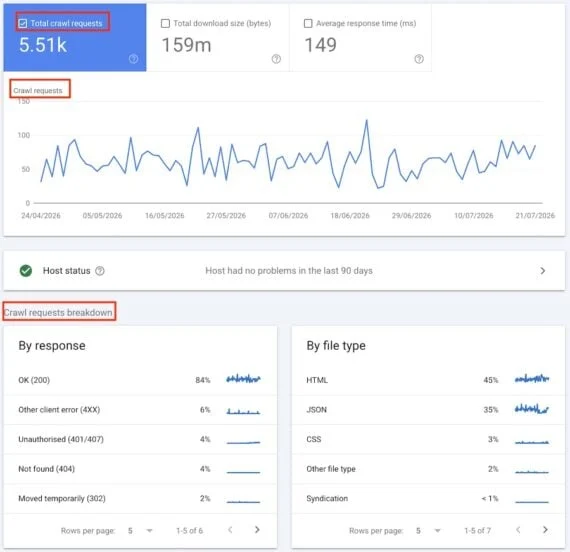
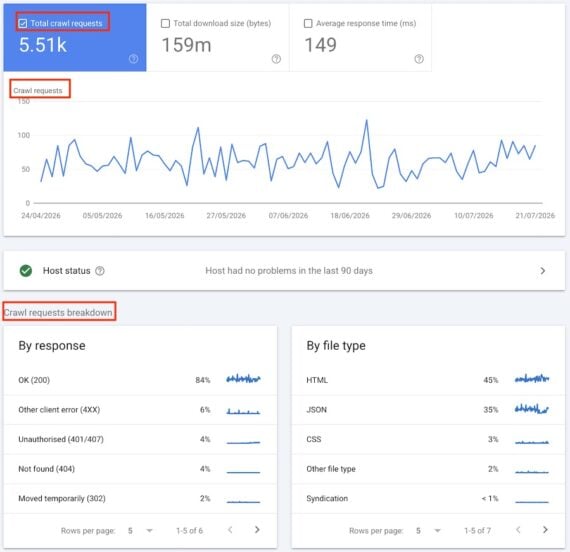
- Data Analysis: Utilizing tools like Google Search Console’s "Crawl stats" report (as illustrated in the accompanying image) to monitor crawl frequency, identify errors, and understand how Googlebot is interacting with the site. This report provides valuable insights into the number of requests made by Googlebot, the average response time, and any issues encountered during crawling.
- Collaboration: Working closely with web developers to implement technical optimizations that enhance crawl efficiency and server performance.
The evolution of Google’s documentation on crawling infrastructure, particularly the detailed guidance on crawl budget optimization, signals a maturing of search engine technology and a continued effort to empower website owners. By adhering to these principles, businesses can ensure that their valuable content is not lost in the vast expanse of the internet but is instead efficiently discovered, indexed, and presented to users seeking information, products, and services. The ongoing dialogue between search engines and website creators, facilitated through such documentation, remains a cornerstone of a healthy and accessible web.

