
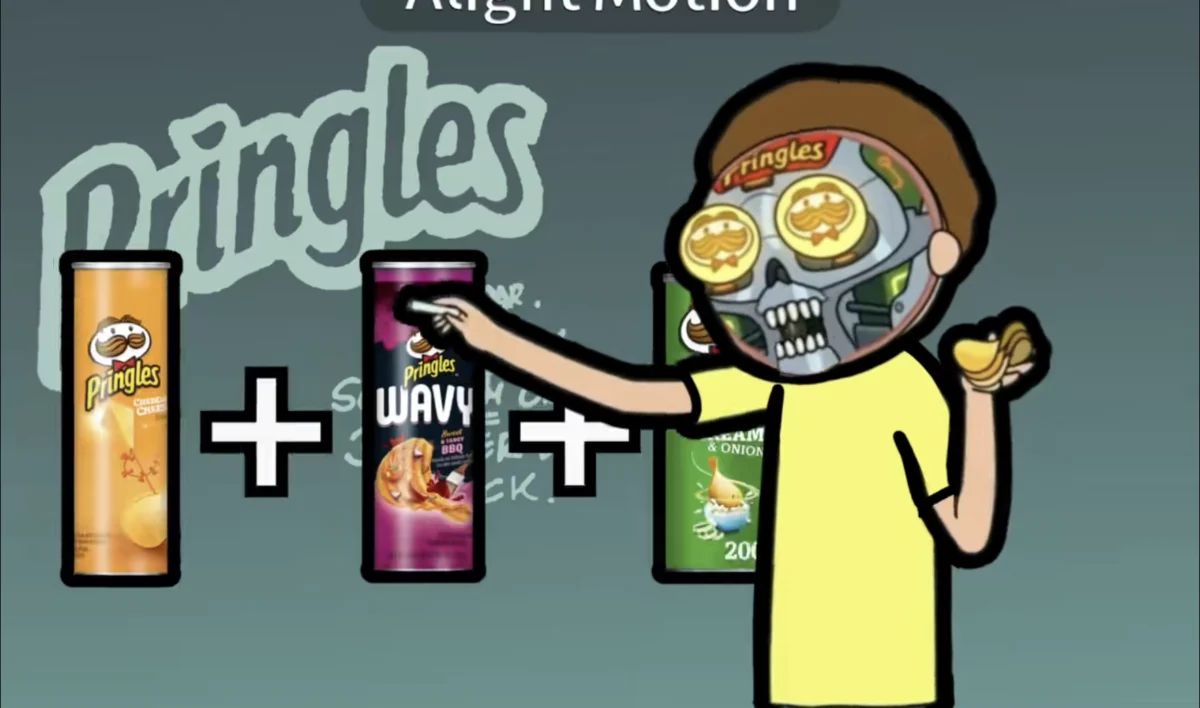
The digital landscape of 2026 has witnessed an unexpected revival of a six-year-old advertising campaign, as the "Three Layer Dip Stack" meme has transitioned from a commercial curiosity into a cornerstone of contemporary "brainrot" culture. Centered on a 2020 Pringles Super Bowl advertisement featuring characters from the Adult Swim animated series Rick and Morty, the meme utilizes a specific, rhythmic line of dialogue delivered by a robotic version of the character Morty Smith. The phrase—"Cheddar and barbecue wavy and sour cream and onion equals a three-layer dip stack"—has become a ubiquitous auditory staple on TikTok and other short-form video platforms, illustrating the unpredictable lifecycle of corporate marketing in the age of algorithmic virality.
The Genesis of Flavor Stacking: The 2020 Super Bowl Campaign
To understand the current cultural saturation of the Three Layer Dip Stack, one must look back to the marketing strategies of the early 2020s. In late 2019 and early 2020, Kellogg’s (the then-parent company of Pringles) partnered with Adult Swim to produce a high-profile cross-promotion for Super Bowl LIV. The campaign focused on "flavor stacking," a consumption method encouraged by Pringles where consumers are urged to combine different chip varieties to create unique flavor profiles.
The centerpiece of this campaign was a 30-second commercial titled "Pringles Rick and Morty," which aired during the second quarter of the game. The narrative of the ad involved Rick Sanchez realizing he and his granddaughter Summer were trapped in a Pringles commercial, only to be confronted by a "Morty Bot"—a robotic duplicate of his grandson with Pringles logos for eyes. Prior to the full ad’s release, a teaser was distributed online showing a classroom of identical Morty clones being instructed on the mechanics of flavor stacking. The instructor, a Morty Bot, delivers the now-iconic line: “Cheddar and barbecue wavy and sour cream and onion equals a three-layer dip stack.” The students then repeat the phrase in a high-pitched, monotonous unison. While the ad was successful in its initial run, garnering millions of views and significant social media engagement in 2020, it eventually faded into the archives of branded content.
The 2025-2026 Resurgence: From Commercial to Brainrot
The transformation of the advertisement into a 2026 viral sensation began in late 2025, when the original audio started appearing in niche corners of TikTok. By mid-2026, the clip had been fully embraced by the "brainrot" subculture—a term used to describe internet content characterized by extreme repetition, nonsensical humor, and high-energy editing. The appeal of the Three Layer Dip Stack lies in its inherent absurdity: the robotic delivery of specific snack food flavors combined with the surreal visual of a "Morty Bot" classroom.
A pivotal moment in the meme’s timeline occurred on July 8, 2026, when TikTok creator @spaceshrimp_78 (SpaceShrimp) uploaded a high-tempo remix of the original audio. By layering the dialogue over a rhythmic beat, SpaceShrimp transformed a commercial instruction into a "song of the summer." This post alone secured over 776,000 views and 70,000 likes within a single month. The momentum continued on August 9, 2026, when another creator, @tobias_ft_124 (tobiasFT), released a secondary remix. This version achieved even greater reach, amassing 1.8 million views and nearly 320,000 likes in less than ten days. These musical adaptations provided the necessary infrastructure for a wide-scale "sound" trend, allowing other users to easily incorporate the audio into their own content.
Chronology of Viral Milestones
The spread of the Three Layer Dip Stack can be charted through several key phases of content creation:
- The Musical Phase (July 2026): Remixes by SpaceShrimp and tobiasFT establish the audio as a catchy, albeit repetitive, musical track.
- The Practical Application (Late July 2026): On July 28, 2026, TikToker @thejessicate posted a video actually constructing the physical chip stack mentioned in the audio. This bridged the gap between digital humor and real-world consumer behavior, gaining over 119,000 likes.
- The Retail Sightings (August 2026): Users began documenting Pringles displays at major retailers like Target. On August 4, 2026, @leomewtq10z posted a video of Pringles cans set to the "Ethanol" version of the audio, garnering 756,000 views. This signaled that the meme had moved beyond the animation and into the brand’s actual product line.
- The Creative Evolution (August 2026): On August 7, 2026, creator @slime.148 released an "Alight Motion" animatic—a stylized animation using the audio. This video became one of the most successful iterations of the trend, receiving 3.5 million views and 466,900 likes in ten days.
- Mainstream Documentation: On August 6, 2026, the influential YouTube channel Lessons in Meme Culture (LIMC) released a dedicated analysis of the phenomenon. This video, which received 330,000 views in 11 days, served to formalize the meme’s status within the broader internet lexicon.
VRChat Raids and the "Ugandan Knuckles" Comparison
Perhaps the most significant evolution of the Three Layer Dip Stack meme occurred within the virtual reality social platform VRChat. In a development reminiscent of the 2018 "Ugandan Knuckles" phenomenon, groups of players began adopting 2D, cardboard-style avatars of the Pringles Morty Bot.
These players would organize "raids" on various VRChat servers, specifically targeting sleep worlds and roleplay environments. The participants would surround other users and chant the "Three Layer Dip Stack" phrase in unison, mimicking the classroom scene from the 2020 teaser. The comparison to Ugandan Knuckles is frequently cited by internet historians and digital analysts, as both memes involve the use of a specific, low-fidelity avatar and the repetitive chanting of a nonsensical catchphrase to disrupt or dominate social spaces. This behavior highlights the "brainrot" aspect of the meme, where the humor is derived from the sheer exhaustion of the joke through repetition.
Analytical Implications: The Longevity of Branded Content
The Three Layer Dip Stack phenomenon offers a fascinating case study in modern marketing and digital archaeology. It demonstrates that branded content, even when designed for a specific historical event like the Super Bowl, can possess a "latent virality" that may be triggered years later by shifting aesthetic preferences.
In 2020, the Pringles ad was a high-budget attempt to merge a popular IP with a product. In 2026, that same ad is viewed through a lens of "post-ironic" humor. To Gen Alpha and younger Gen Z users, the commercial is not an advertisement, but a source of "raw material" for creative expression. The fact that the "song" associated with the meme is a remix of a corporate script suggests a breakdown in the traditional barriers between consumer and brand.
Furthermore, the surge in interest has had a measurable impact on search data and social media engagement for the Pringles brand. While it is unclear if this has resulted in a direct, long-term increase in sales for the specific flavors mentioned (Cheddar, Barbecue Wavy, and Sour Cream and Onion), the brand has received millions of organic impressions that far exceed the reach of many contemporary paid campaigns.
Conclusion and Future Outlook
As of late August 2026, the Three Layer Dip Stack meme remains in a high-saturation phase. The combination of infectious musical remixes, VRChat community involvement, and high-quality fan animations has ensured its longevity beyond the typical one-week lifecycle of most TikTok trends.
While the "brainrot" label implies a certain level of intellectual vacuity, the phenomenon actually represents a complex interplay of nostalgia, digital creativity, and the subversion of traditional advertising. Whether the Three Layer Dip Stack will eventually follow the path of its predecessors and fade into obscurity, or if it will leave a lasting mark on the "flavor stacking" legacy of the Pringles brand, remains to be seen. For now, the phrase continues to echo across social media, a testament to the power of a single, absurdly delivered line of dialogue.

