
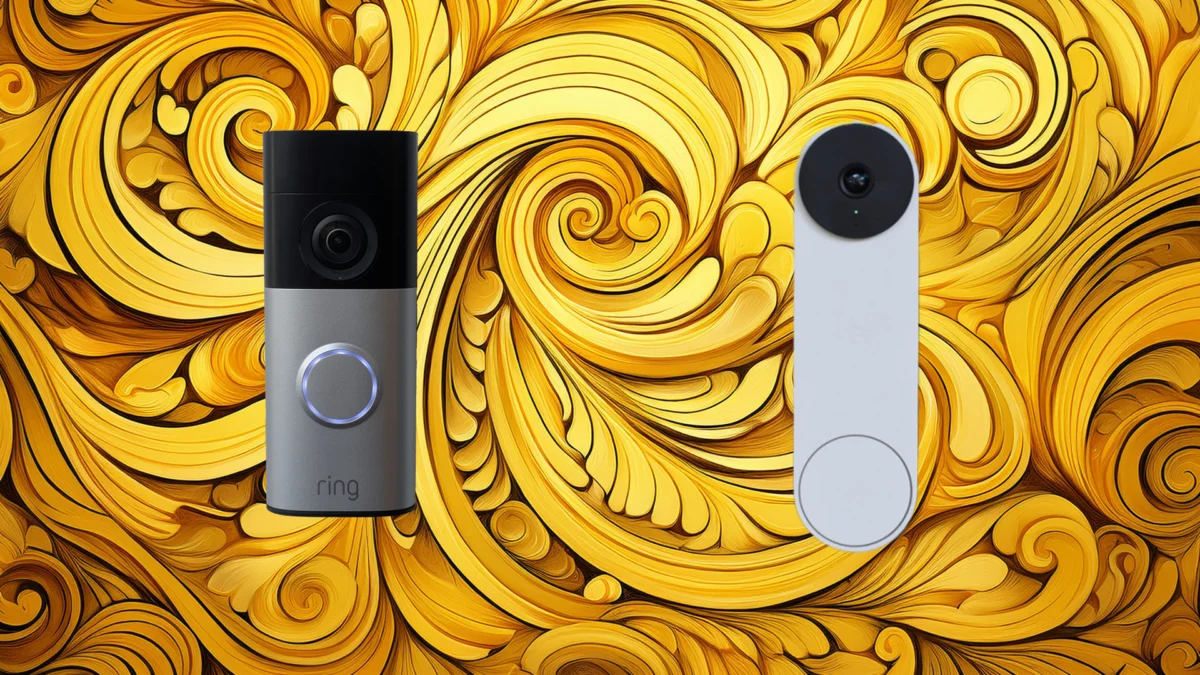
The landscape of smart home security is a battlefield of innovation, with Ring and Nest consistently at the forefront, vying for the attention of homeowners seeking to enhance their security and convenience. Both brands have recently undergone significant hardware refreshes, introducing advanced camera technologies and intelligent features. Ring has launched its 2K and 4K lineups, while Nest has unveiled its third-generation 2K cameras, now integrated with Gemini for Home. This comprehensive comparison delves into the critical factors that influence a purchase decision: video quality, artificial intelligence capabilities, subscription models, ecosystem integration, and privacy track records. For those still exploring broader doorbell options, consulting a guide to the best smart video doorbells is advisable before committing to a specific brand.
Evolving Hardware and Feature Sets: A Comparative Overview
The latest iterations from both Ring and Nest represent a significant leap forward from their predecessors. Ring’s current offerings span a diverse range, catering to various power preferences and resolution demands. The Ring Battery Doorbell series includes models with integrated or removable batteries, such as the 2K and 2K Plus variants, with the latter boasting adaptive night video. A flagship option, the Ring Battery Doorbell 4K Pro, introduces 3D Motion Detection, a radar-based technology that allows users to define specific motion detection ranges, a feature particularly beneficial for doorbells facing busy thoroughfares by enabling them to ignore motion beyond a set perimeter, such as a front gate. This granular control over motion alerts offers a distinct advantage in reducing nuisance notifications.
Ring also offers a comprehensive suite of wired doorbells, mirroring the resolution and feature sets of their battery-powered counterparts. These models eliminate the need for battery management, relying on existing electrical wiring. For professional installations, the Ring Video Doorbell Elite stands out, incorporating Power over Ethernet (PoE) for a robust and reliable connection.
Nest, on the other hand, presents a more streamlined product portfolio. The company currently offers two primary models: the Nest Doorbell (Battery) and the Nest Doorbell (Wired, 3rd Gen). Notably, the newer wired version is exclusively available in the US market, while the UK market primarily features battery-powered options. The Nest Doorbell (Battery) captures video at a resolution of 960 x 1280 with a 3:4 aspect ratio, designed for a vertically oriented view. The Nest Doorbell (Wired, 3rd Gen) steps up to a 2K resolution (2048 x 2048) with a 1:1 aspect ratio, offering a squarer field of view. While Nest has made strides with its AI integration, it currently does not offer 4K video resolution in its doorbell lineup.
Pricing Strategies and Subscription Models: Unpacking the True Cost
The initial purchase price is often just one piece of the puzzle when evaluating smart doorbells; the long-term cost of subscription services plays a crucial role. Nest’s Battery Doorbell generally carries a higher upfront cost compared to Ring’s entry-level battery models. However, this price differential significantly narrows when ongoing subscription fees are factored into the equation.
Ring’s subscription plans, under the Ring Home umbrella, offer tiered options. The Solo plan, priced at $4.99 / £4.99 per month, covers a single camera with AI-powered alerts for persons, people, and packages, with event history stored for up to 180 days. The Multi plan, at $9.99 / £7.99 per month, extends coverage to all cameras at a given location. The Pro plan, costing $19.99 / £15.99 per month, encompasses all features of the Multi plan and adds AI-driven video descriptions and powered search capabilities, allowing users to find specific events, such as a fox knocking over a bin. All these plans include cellular backup, ensuring continued functionality even during internet outages. For an additional layer of security, Ring offers Ring Virtual Security Guard at $99.99 per month and Ring Guard Response at £29.99 per month in the UK, which provides professional monitoring services integrated with the Ring Alarm system. It’s important to note that advanced features like 3D Motion Detection are often bundled with the higher-tier Ring products and subscriptions.
Nest’s subscription service, formerly Nest Aware, has been superseded by Google Home Premium. This service offers two tiers: Standard and Advanced. The Standard plan, priced at $10 / £8 per month, provides 30 days of video history and intelligent alerts, including familiar face detection, garage door detection, alarm detection, and package detection. The Advanced plan, at $20 / £16 per month, enhances this with 60 days of video history, 24/7 continuous recording for wired devices (limited to 10 days), and AI-powered video descriptions and search.
A key differentiator lies in the free offerings. Nest provides three hours of free event-based cloud storage and basic person and package detection without any subscription requirement. In contrast, Ring typically gates most of its advanced smart alert and extended video history features behind at least its basic subscription tier. This free tier from Nest can be appealing for users who prioritize essential functionality without ongoing monthly fees.
Ecosystem Integration and Smart Home Synergy
The choice between Ring and Nest is often intrinsically linked to a user’s existing smart home ecosystem. Ring has strong native integration with Amazon’s Alexa platform and the broader Amazon smart home ecosystem. This means that users with an Echo Show device can seamlessly answer their Ring doorbell directly from the smart display.
Nest, conversely, is built around the Google Home ecosystem and is increasingly leveraging Google’s advanced AI assistant, Gemini for Home, as its integration deepens across hardware. For users invested in Google Assistant and Nest Hub devices, a Nest Doorbell offers a comparable level of integration, allowing for direct responses and visual feeds on their smart displays. The decision here often boils down to which voice assistant and which suite of smart home devices a household has already adopted.
Video Quality: A Matter of Resolution and Detail
The video quality offered by both brands varies significantly depending on the specific model chosen. Ring’s latest range starts with 2K resolution (2560 x 1440 or 1920 x 1920, depending on the device), as seen in the Ring Wired Video Doorbell 2nd Generation. However, their higher-end models push this to a remarkable 4K resolution, providing exceptionally detailed footage.
Nest’s offerings, while improved, do not currently reach the 4K benchmark. The Nest Battery Doorbell captures video at a resolution of 960 x 1280, which, in today’s market, can be considered somewhat dated. The Nest Doorbell (Wired, 3rd Gen) offers a better 2K resolution (2048 x 2048). While Nest’s video quality is generally sufficient for identification purposes, Ring’s wider product selection means it offers models that deliver superior video clarity and detail, particularly at higher resolutions.
AI Features: Intelligence at Your Doorstep
The realm of artificial intelligence is where both Ring and Nest are making significant advancements, aiming to provide smarter, more context-aware notifications. Ring’s Alexa+-powered smart alerts were among the first to reach general availability, giving them an early lead in AI-driven notifications. These alerts can distinguish between different types of motion events, such as people, packages, and vehicles.
Nest’s integration with Gemini for Home is rapidly closing the gap and brings its own unique strengths. Gemini for Home excels in features like named-person identification, allowing the doorbell to recognize familiar faces and alert users accordingly, and daily recap functionality, which provides a concise summary of events throughout the day. While Ring has not fully matched these specific capabilities, its AI features are continuously evolving.
It is crucial to acknowledge that the AI capabilities of both systems are in a constant state of flux. The rapid pace of development means that any current assessment of AI features is a snapshot in time, rather than a definitive, permanent ranking. Both companies are heavily investing in enhancing their AI algorithms to provide more accurate and useful insights.
Installation, Design, and Durability: Aesthetics and Practicality
When it comes to physical design, Nest doorbells generally adopt a minimalist aesthetic. They feature a rounded, understated profile that aims to blend discreetly with the facade of a home. Ring’s latest wired models also lean towards a sleeker design, but their battery-powered units tend to be slightly bulkier to accommodate the removable Quick Release battery packs.
Ring offers a more extensive range of power options, including battery, wired, solar, and plug-in solutions, providing greater flexibility for different installation scenarios. Nest’s wired models require existing doorbell wiring, while the battery version offers a wire-free installation.
In terms of durability, neither brand has a consistently reported edge over the other based on widespread owner feedback. Durability is often influenced by environmental factors and the specific installation. Therefore, the choice in this category often comes down to personal aesthetic preferences and the specific installation requirements of a particular home.
Conclusion: Which Smart Doorbell is Right for You?
The ultimate decision between Ring and Nest hinges on a confluence of factors, with existing smart home infrastructure playing a pivotal role. For households deeply integrated into the Google Home ecosystem, a Nest Doorbell offers seamless compatibility and leverage of advanced Google AI features. However, for those in the UK, the availability of the latest Nest products might be a consideration.
Ring presents a compelling option for a wider audience due to its extensive product selection, beginning at a more accessible price point and extending to high-resolution 4K video capabilities. Its broader ecosystem of security cameras and the integration with the Ring Alarm system make it a more comprehensive smart home security solution. For users seeking an all-encompassing security setup that can be scaled from a single doorbell to a full home alarm system, Ring often emerges as the superior choice.
However, for budget-conscious consumers who prioritize avoiding cloud subscription fees altogether, alternative brands like Reolink or Eufy may offer more suitable solutions, often with robust local storage options. The smart doorbell market is dynamic, and continuous innovation ensures that consumers have an ever-expanding array of choices to meet their specific security and convenience needs. The ongoing competition between Ring and Nest, fueled by advancements in video technology and AI, promises further enhancements and more compelling options for homeowners in the years to come.

