

The landscape of digital accessibility is undergoing a significant shift as researchers move beyond physical and sensory impairments to address the most prevalent yet often overlooked category of disability: cognitive impairment. In the summer of 2024, a working group of expert researchers, led by the Vice President of Innovation at the accessibility platform Fable, convened to establish a standardized framework for performing usability testing with individuals with cognitive disabilities. This initiative was born from the recognition that while web accessibility standards like WCAG provide a foundation, they often lack the granular, practical guidance required to support users who process information differently.
Cognitive disability serves as an umbrella term for a wide range of conditions—including ADHD, Autism, Dyslexia, and various forms of dementia—that impact memory, focus, and learning. According to the Centers for Disease Control and Prevention (CDC), cognitive disability is the most prevalent form of disability in the United States, affecting approximately 13.9% of the adult population. Furthermore, a recent study from Yale University indicates that these numbers are increasing rapidly, driven by both greater diagnostic awareness and an aging population experiencing age-related cognitive decline. Despite these statistics, user experience (UX) research has historically prioritized "general population" (gen pop) participants, often excluding those with cognitive challenges under the assumption that their needs are too specialized or difficult to measure.
The Chronology of the Cognitive Usability Initiative
The journey toward a more inclusive research methodology began with the formation of the Fable-led working group in mid-2024. The group established four primary objectives: to define best practices for recruitment, to optimize interview facilitation for neurodivergent participants, to develop a quantitative survey tool tailored for cognitive accessibility, and to document these findings for the broader tech industry.
The initial phase involved a comprehensive review of existing academic literature to identify established best practices for working with cognitive testers. This was followed by a pilot study involving 25 participants. This pilot allowed researchers to iteratively fine-tune their approach, leading to the creation of a specialized interview guide and a survey designed to quantify digital experiences.
By late 2024 and early 2025, the research moved into a validation phase. To test the hypothesis that cognitive participants would uncover more significant usability insights than standard participants, a joint study was launched in collaboration with the University of California, Irvine (UCI). This study, spearheaded by Fable’s innovation team and UCI researcher Syed Fatiul Huq, sought to provide empirical evidence for the value of cognitive inclusion in the software development lifecycle.
Methodology and Study Design
The joint study utilized three distinct websites generated by an artificial intelligence prototyping tool to ensure a variety of design languages, content types, and user goals. These sites included:
- Strong Snacks: A high-protein recipe site featuring a "brutalist" design with bright colors and heavy imagery.
- Turning Pages: A sophisticated bookstore platform with complex filtering, shopping carts, and a personalized "book matching" feature.
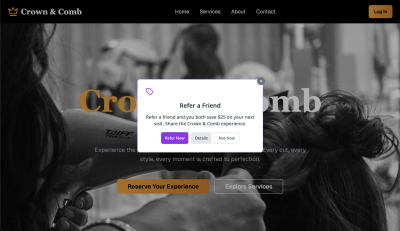
- Crown & Comb: A professional hair salon site designed with a clean, high-contrast aesthetic, featuring complex appointment booking and membership tiers.
The research team recruited 30 participants, divided equally between a "general population" group and a "cognitive" group. The latter consisted of individuals who self-identified as having challenges related to memory, focus, and learning, including those who are neurodivergent. Researchers facilitated 30 individual user interviews, during which participants performed specific tasks—such as subscribing to a newsletter, filtering book results, or finding a specific bridal service package.

To quantify the results, the study employed the Accessible Usability Scale (AUS), a 10-question survey designed to evaluate the usability of digital products through an accessibility lens. Scores on the AUS range from 0 to 100, with higher scores indicating superior usability.
Comparative Data Analysis: The 1.8x Factor
The results of the study validated the researchers’ hypothesis with striking clarity. Across all three platforms, participants with cognitive disabilities identified 1.8 times more usability issues and provided 1.8 times more suggestions for improvement than the general population group. In total, the cognitive group identified 197 unique issues compared to the 113 found by the gen pop group.
Site-Specific Findings
The data revealed that the gap between cognitive and gen pop experiences widened as the complexity of the digital interface increased:
- Strong Snacks (Simple Design): On this relatively straightforward site, cognitive participants found 9.8 issues on average, while gen pop participants found 6.4. The AUS score for the cognitive group was 76.8, significantly lower than the 90.5 reported by the gen pop group.
- Turning Pages (Varied Functionality): As the site became more interactive, the cognitive group identified an average of 17 issues per person, compared to 11 for the gen pop group. The usability score plummeted to 60.8 for cognitive users, while remaining a respectable 78.0 for others.
- Crown & Comb (Intentional Complexity): This site was designed to be difficult. Interestingly, while the cognitive group found more issues (12 per person vs. 5), they actually gave the site a higher median AUS score (68.0) than the gen pop group (35.0). Researchers hypothesize that the gen pop group was more frustrated by the "clunky" design, whereas the cognitive group may have appreciated certain clear visual elements despite the difficulty of the tasks.
Issue Categorization
When the data was categorized by the type of friction encountered, cognitive participants consistently surfaced more problems in the following areas:

- Content and Language: Cognitive users were more sensitive to jargon, ambiguous instructions, and dense blocks of text.
- Affordances (Buttons and Links): The cognitive group identified 25 issues related to button function and link clarity, compared to only 10 in the gen pop group.
- Visual Elements and Media: Icons that were not clearly labeled or animations that could not be paused created significant barriers for those with focus-related disabilities.
Qualitative Insights and Emotional Impact
Beyond the raw numbers, the study highlighted a profound difference in the emotional and psychological impact of poor UX. Qualitative transcripts showed that while gen pop participants described their difficulties as "frustrating" or "annoying," cognitive participants used language that suggested a deeper toll on their well-being.
One cognitive participant noted that excessive pop-ups, ads, and convoluted options made them feel "drained and less able to focus." This suggests that for neurodivergent users, poor design is not merely an inconvenience; it is an accessibility barrier that can lead to "cognitive overload," effectively locking them out of a service.
Broader Impact and Industry Implications
The implications of this research extend far beyond the niche of accessibility testing. As the U.S. Census Bureau projects that one in four Americans will be aged 65 or older by 2060, the prevalence of cognitive decline will become a primary concern for every digital business. The "Silver Tsunami" means that a significant portion of any given user base will eventually require the clarity and predictability that cognitive inclusion research provides.
Industry experts argue that cognitive accessibility serves as an "on-ramp" for broader inclusive design. By solving for cognitive load, clarity, and predictability, UX teams naturally create better products for everyone. This includes users who are temporarily impaired by stress, fatigue, or multitasking—situations that mirror many of the challenges faced by those with permanent cognitive disabilities.
From a business perspective, the study suggests that relying solely on gen pop participants for research is inefficient. As a UX Manager at Bell Media noted during the study’s review, "Two sessions with cognitive users feel like 200 because of the volume of insights we get." By identifying 1.8 times more issues, companies can patch bugs and improve flows more rapidly, reducing the risk of customer churn and increasing brand loyalty.
Conclusion and Future Directions
The joint study by Fable and UC Irvine provides a compelling case for the integration of cognitive diversity into the research process. While the study had limitations, including a small sample size and the use of different recruitment platforms for the two groups, the consistency of the data across three different website archetypes is significant.
The research concludes that cognitive inclusion is no longer optional for teams striving to build high-quality digital products. By focusing on the needs of those with memory, focus, and learning challenges, developers can ensure their products are not only compliant with legal standards but are truly usable for the full spectrum of human cognition. As the digital world becomes increasingly complex, the move toward simplicity and clarity—driven by the insights of cognitive testers—may well be the most important trend in the next decade of user experience design.

