
The integration of Large Language Models (LLMs) into the product design workflow has introduced a new set of challenges for design teams, primarily centered around the fidelity and consistency of AI-generated prototypes. As generative AI tools increasingly attempt to interpret design systems to build functional mock-ups, the industry is witnessing a phenomenon known as "design drift"—a gradual deviation from established brand standards and technical specifications. This drift is frequently the result of microscopic inconsistencies within design systems, undocumented decisions, and the presence of hard-coded values that AI cannot accurately parse. To address these systemic issues, a new methodology has emerged, focusing on making design systems "AI-ready" through structured documentation and rigorous auditing.
The Problem of Semantic Inconsistency in Generative Design
Traditional design systems are built for human consumption. Designers use visual cues, shared intuition, and tribal knowledge to navigate components in tools like Figma. However, LLMs lack this contextual awareness. When an AI is asked to generate a prototype based on a design system, it often makes assumptions about component usage, accessibility requirements, and layout logic. Without explicit guidance, these assumptions lead to "hallucinations" in the UI—such as using a primary button for a destructive action or ignoring established spacing tokens.
Recent industry observations, including those from Atlassian design lead Hardik Pandya, suggest that the bottleneck in AI-driven design is not the capability of the AI itself, but the quality of the data it consumes. Design systems that rely heavily on visual mock-ups without corresponding metadata force AI to decode patterns through visual inference, a process that is both computationally expensive and prone to error. By shifting toward a machine-readable infrastructure, organizations can significantly reduce the "technical debt" generated by AI tools.
Chronology of the Shift Toward AI-Interpretable Systems
The evolution of design systems has moved through several distinct phases over the last decade, leading to the current necessity for AI readiness:
- 2013–2016: The Rise of Atomic Design: Introduction of modular components (atoms, molecules, organisms) to manage design at scale.
- 2017–2020: The Tokenization Era: The adoption of design tokens (variables for color, typography, and spacing) to create a bridge between design and code.
- 2021–2023: The Generative AI Boom: Rapid integration of LLMs into design tools, highlighting the failure of traditional documentation to guide automated processes.
- 2024–Present: The AI-Ready Transition: A movement toward "Design Decisions as Infrastructure," where documentation is treated with the same rigor as production code.
This timeline illustrates a clear trajectory from visual management to semantic management. The current phase requires designers to act as "context engineers," ensuring that every decision—from accessibility priorities to component hierarchies—is documented in a format that an LLM can ingest and execute.

Design Decisions as Infrastructure: The Technical Framework
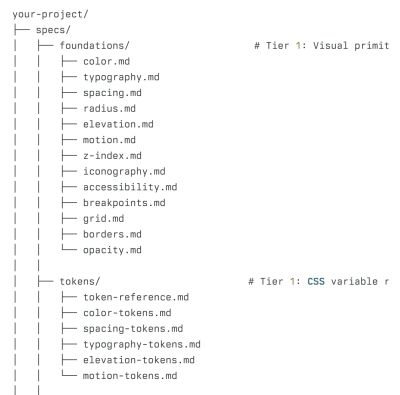
To mitigate AI drift, experts advocate for treating design decisions as fundamental infrastructure rather than static documentation. This means that every time a design team reaches a consensus on a pattern or a priority, that decision must be codified into a "spec file."
These spec files are typically structured as Markdown documents. Unlike complex visual files, Markdown is lightweight, cost-effective for LLMs to process, and provides a clear hierarchical structure. A robust AI-ready design system utilizes three distinct layers of information:
1. The Spec File Layer
Spec files serve as the "brain" of the system. They contain the "do’s and don’ts" of the design language. For example, a spec file for a modal component would not just describe its dimensions, but also the logic of when it should be used versus a side panel. By providing AI with these principles in a text-based format, the model no longer has to guess the intent behind a design; it follows a set of explicit rules.

2. The Token Layer
The token layer acts as the "DNA" of the system. It consists of a closed set of named variables. Instead of an AI inventing a "plausible" hex code for a background (e.g., #F3F3F3), it is restricted to choosing from established tokens (e.g., color-bg-subtle). This ensures that the generated code is immediately compatible with the existing production environment.
3. The Auditing Layer
The final layer is a feedback loop. Automated scripts and auditing tools scan AI-generated prototypes to flag discrepancies. This layer identifies hard-coded values, detached component instances, or violations of accessibility standards. This "immune system" for the design system ensures that errors are caught before they are integrated into the codebase.
Tooling and Automation: The Role of FigmaLint
A critical component in the transition to AI-ready systems is the use of specialized auditing tools. FigmaLint, a free plugin, has become a standard for designers looking to clean up their files for AI consumption. The tool performs several vital functions:
- Token Auditing: Detects where hard-coded values are used instead of design tokens.
- State Detection: Identifies missing interactive states (hover, focus, active) that AI might overlook.
- Layer Organization: Flags unnamed or poorly organized layers that confuse LLM interpretation of the DOM (Document Object Model) structure.
- Accessibility Checks: Ensures that contrast ratios and touch targets meet WCAG (Web Content Accessibility Guidelines) standards.
By utilizing tools like FigmaLint, design teams can ensure that the "training data" they provide to an AI is clean and consistent. For organizations working with third-party vendors, such auditing tools are indispensable for maintaining quality control over external design deliveries.
Context Engineering and the Five Levels of Implementation
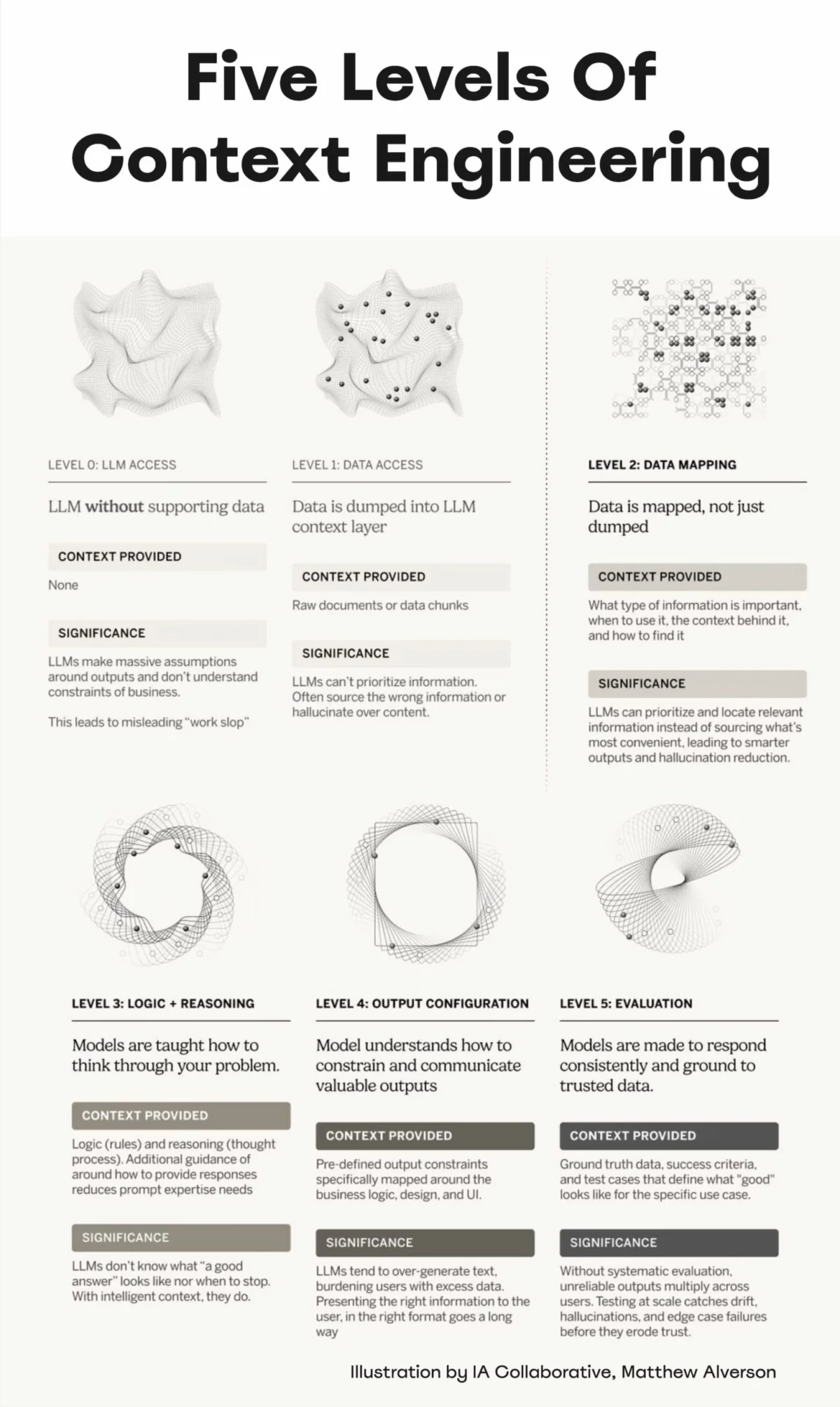
The success of AI-generated prototypes depends on "context engineering"—the practice of providing the right amount of information to the model at the right time. Design experts, including Matthew Alverson and Addy Osmani, have outlined a hierarchy of context that must be managed:
- Level 1: Component Specs: Basic properties and variables of individual elements.
- Level 2: Pattern Guidelines: How components interact within a specific flow (e.g., form validation).
- Level 3: Brand Principles: High-level emotional and aesthetic goals (e.g., "minimalist," "bold").
- Level 4: Technical Constraints: Framework-specific limitations (e.g., React vs. Vue implementation details).
- Level 5: Project Context: The specific user problem the prototype is intended to solve.
When a design system is AI-ready, it provides clear data for each of these levels, allowing the AI to generate results that are not only visually correct but also functionally relevant.

Broader Implications for the Design Industry
The shift toward AI-interpretable design systems has significant implications for the future of the profession. As AI takes over the "execution" phase of prototyping—generating layouts and writing CSS—the role of the product designer is evolving into that of a "Systems Architect."
Impact on Technical Debt
Historically, technical debt was viewed as a developer’s problem. However, "design debt"—the accumulation of inconsistent UI patterns—now directly impacts the efficiency of AI tools. Organizations that fail to clean up their design systems will find themselves spending more time correcting AI errors than they would have spent designing manually. Conversely, teams with AI-ready systems can see a dramatic reduction in the time from ideation to high-fidelity prototype.
Accessibility as a Default
One of the most promising aspects of AI-ready systems is the potential for automated accessibility. If accessibility rules are baked into the spec files and enforced by the auditing layer, AI-generated prototypes will inherently follow inclusive design practices. This moves accessibility from an "afterthought" to a foundational requirement of the design process.

Economic Efficiency
From a business perspective, text-based spec files are significantly more cost-effective than image-based processing. LLMs charge based on "tokens" (units of text), and processing a structured Markdown file is vastly cheaper than using a vision model to analyze complex Figma canvases. This makes the "AI-ready" approach not just a technical best practice, but a financial necessity for companies operating at scale.
Conclusion: The Path Forward
The integration of AI into design is not a "set-it-and-forget-it" solution. AI cannot magically resolve years of technical and design debt without human intervention. The quality of AI output remains a direct reflection of the clarity of human input.
To stay competitive, design teams must begin the process of auditing their existing systems, removing hard-coded values, and translating tribal knowledge into structured Markdown specifications. While this requires a significant upfront investment of time and resources, it is the only way to ensure that the AI tools of tomorrow can deliver the consistency and quality required for modern product development. As Vitaly Friedman and other industry leaders have noted, the work of cleaning up and maintaining these systems will keep designers busy for years to come, but the result will be a more robust, efficient, and accessible digital landscape.

