
The integration of generative artificial intelligence into the product design workflow has introduced a new set of technical challenges for design teams, primarily centered on the fidelity and consistency of AI-generated prototypes. While Large Language Models (LLMs) and AI-driven design tools have significantly accelerated the prototyping phase, the output often suffers from "design drift"—a phenomenon where AI-generated mock-ups deviate from established brand guidelines, accessibility standards, and interaction patterns. Recent research and industry frameworks, notably those developed by Hardik Pandya of Atlassian and UX expert Vitaly Friedman, suggest that the solution lies not in more powerful models, but in the structural transformation of design systems into machine-readable infrastructure.
The core issue stems from the fact that most design systems are built for human consumption rather than machine processing. Traditional design systems rely on visual cues and implicit knowledge that a human designer intuitively understands. However, when an AI attempts to generate a prototype based on these systems, it often encounters undocumented decisions, hard-coded values, and inconsistent naming conventions. To mitigate these errors, design systems must evolve into a three-layered architecture consisting of structured specification files, a robust token layer, and automated auditing protocols.
The Evolution of Design Infrastructure
Historically, design documentation has transitioned through three distinct eras. In the early 2010s, design "style guides" were largely static PDFs or internal wikis intended for manual reference. By the mid-2010s, the rise of tools like Figma and Sketch ushered in the era of "living design systems," where components were linked directly to code libraries. As of 2024, the industry is entering the "AI-ready" era, where design systems must function as a data source for LLMs to interpret and execute.
Hardik Pandya, a Lead Product Designer at Atlassian, posits that design decisions must now be treated as infrastructure. This means that every decision—from the priority of a call-to-action button to the specific spacing logic of a modal—must be documented in a format that an LLM can consume without ambiguity. When these decisions are not explicitly defined in the underlying data, the AI is forced to make assumptions. These assumptions are the primary source of inconsistencies that lead to technical and design debt.
Implementing the Three-Layer Framework
To ensure that AI-generated prototypes maintain high quality and adhere to organizational standards, experts recommend a specialized structural framework. This framework moves away from relying on the AI to "see" a design and instead provides it with a logical map to "build" the design.

1. Spec Files and Machine-Readable Markdown
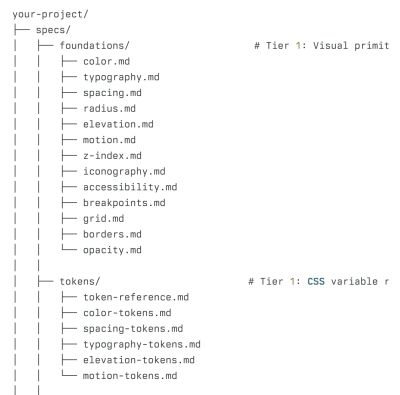
The first layer involves the creation of "spec files." These are structured Markdown files that define the "how" and "why" of a design system. Unlike traditional documentation, which may be verbose and conversational, spec files for AI are concise and rule-oriented. They include specific guidelines on spacing, color logic, and component hierarchy.
The technical advantage of using Markdown-based spec files is twofold: cost-effectiveness and accuracy. Processing text through an LLM’s context window is significantly cheaper and faster than processing high-resolution images of mock-ups. Furthermore, text-based rules provide a deterministic framework for the AI, reducing the likelihood of "hallucinations" where the AI invents design patterns that do not exist in the company’s library.
2. The Token Layer: Eliminating Hard-Coded Values
Design tokens—small, atomic pieces of design information such as hex codes or pixel values—serve as the "source of truth" for the system. In an AI-ready environment, the token layer must be strictly enforced. If an AI is given a choice between a named variable (e.g., --color-brand-primary) and a hard-coded value (e.g., #0052CC), it must be programmed to always choose the token.

By providing the AI with a closed set of named variables, organizations ensure that prototypes are not only visually consistent but also ready for development. This reduces the "friction of translation" that typically occurs when a developer has to replace an AI’s arbitrary values with actual system tokens during the handoff process.
3. Automated Auditing and FigmaLint
The third layer is the implementation of automated auditing tools to catch errors that the AI might miss. One such tool gaining traction in the design community is FigmaLint, a free plugin designed to audit tokens, states, and accessibility markers within Figma files.
FigmaLint serves as a quality control gate. It scans AI-generated prototypes for detached component instances, missing interactive states (such as hover or disabled states), and hard-coded values. By using an audit script, teams can create a feedback loop: the auditor flags an error, and the AI uses that feedback to regenerate the prototype with the necessary corrections. This mimics the traditional human-led "design critique" but operates at the speed of software.
Supporting Data: The Impact of Design Consistency
Industry data suggests that the cost of fixing a design-related bug increases exponentially as a project moves from prototyping to production. According to research from the Systems Sciences Institute at IBM, fixing an error found in the implementation phase can cost up to six times more than fixing it during design. In the context of AI, where prototypes can be generated in seconds, the volume of potential errors increases.
Furthermore, a study on design system maturity found that teams using a highly structured, tokenized system reported a 35% increase in speed-to-market for new features. When integrated with AI, this efficiency is expected to double, provided the underlying design system is "AI-ready." The reduction in "drift" ensures that the speed gained from AI generation is not lost during the inevitable cleanup phase.
Context Engineering and the Human Element
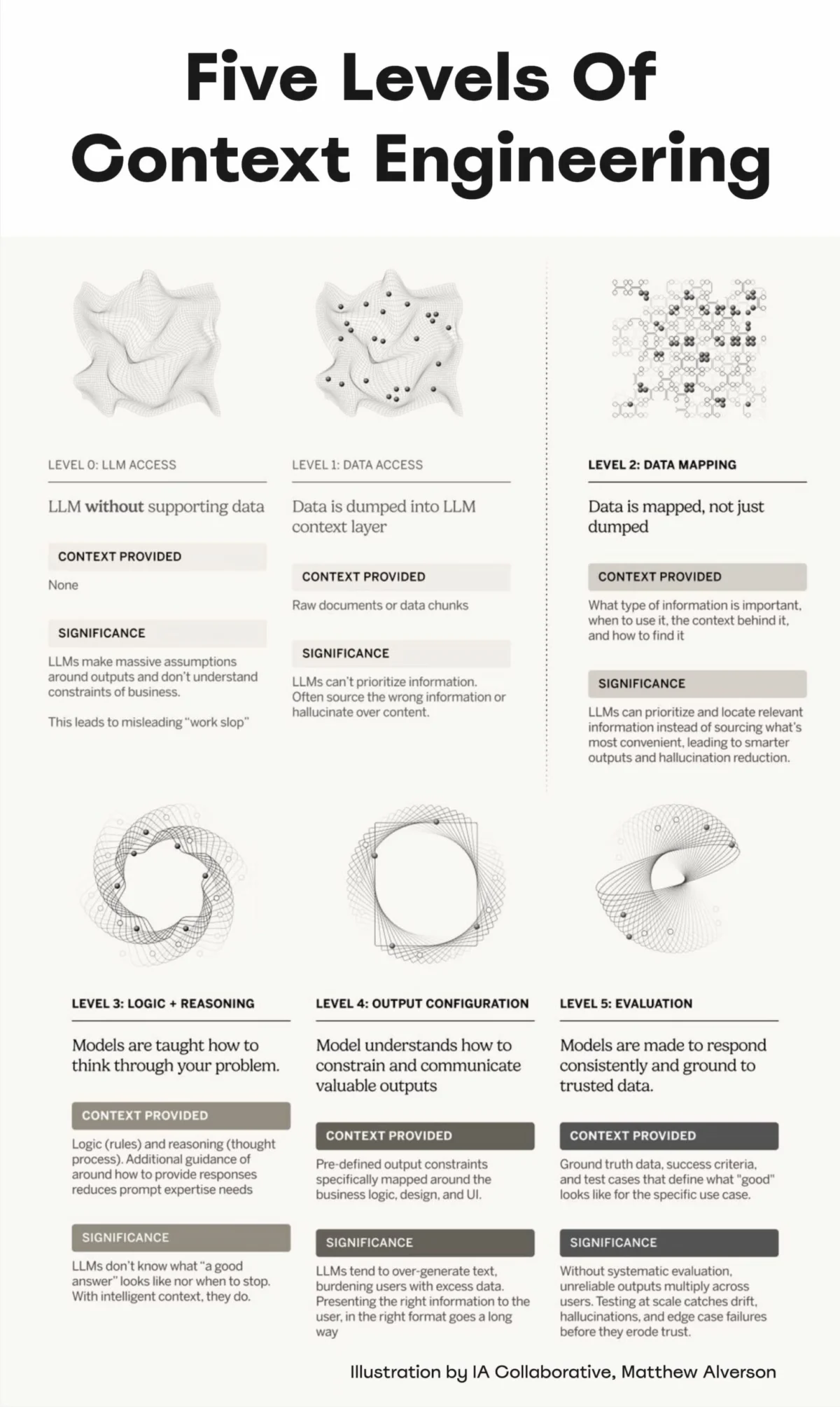
The transition to AI-ready systems also introduces the concept of "Context Engineering." As highlighted by Matthew Alverson and Addy Osmani, context engineering is the practice of providing the AI with the right level of background information to make informed decisions. This includes five levels of context:

- Global Context: Company-wide design principles.
- Project Context: The specific goals of the current prototype.
- Component Context: How specific UI elements should behave.
- User Context: Accessibility needs and user personas.
- Technical Context: The constraints of the codebase where the design will live.
By embedding these levels of context into the design system’s documentation, designers act more as "curators" and "engineers" of the system rather than manual pixel-pushers. This shift requires a new set of skills focused on systems thinking and technical writing.
Industry Implications and Future Outlook
The broader impact of making design systems AI-ready extends beyond simple efficiency. It represents a fundamental shift in the relationship between design and engineering. As AI becomes more capable of generating production-ready code directly from design specs, the "handoff" as we know it may disappear. Instead, we move toward a "continuous synchronization" model where design and code are two views of the same underlying data.
However, this transition is not without its challenges. Maintaining these systems requires a disciplined approach to documentation. As design systems ship updates, sync routines must be established to ensure the AI is reading the latest spec files. If the documentation lags behind the visual library, the AI will continue to generate prototypes based on outdated versions, leading to a new form of "versioning debt."

The emergence of specialized educational resources, such as Vitaly Friedman’s "Design Patterns for AI Interfaces," indicates a growing recognition that AI requires its own unique UX guidelines. Designers are no longer just designing for users; they are designing the systems that allow AI to design for users.
Conclusion
The promise of AI-generated prototyping is the ability to explore more ideas in less time. However, this potential can only be realized if the AI is guided by a robust, machine-readable design system. By treating design decisions as infrastructure, utilizing spec files and design tokens, and employing automated auditing tools like FigmaLint, organizations can drastically reduce design drift and improve the quality of their digital products.
As the industry continues to evolve, the role of the designer will increasingly focus on the maintenance and governance of these intelligent systems. The work of cleaning up technical debt and documenting design logic is no longer a secondary task; it is the essential groundwork for the future of automated design. The move toward AI-readiness is not a one-time project but a continuous commitment to precision and clarity in design documentation.

