
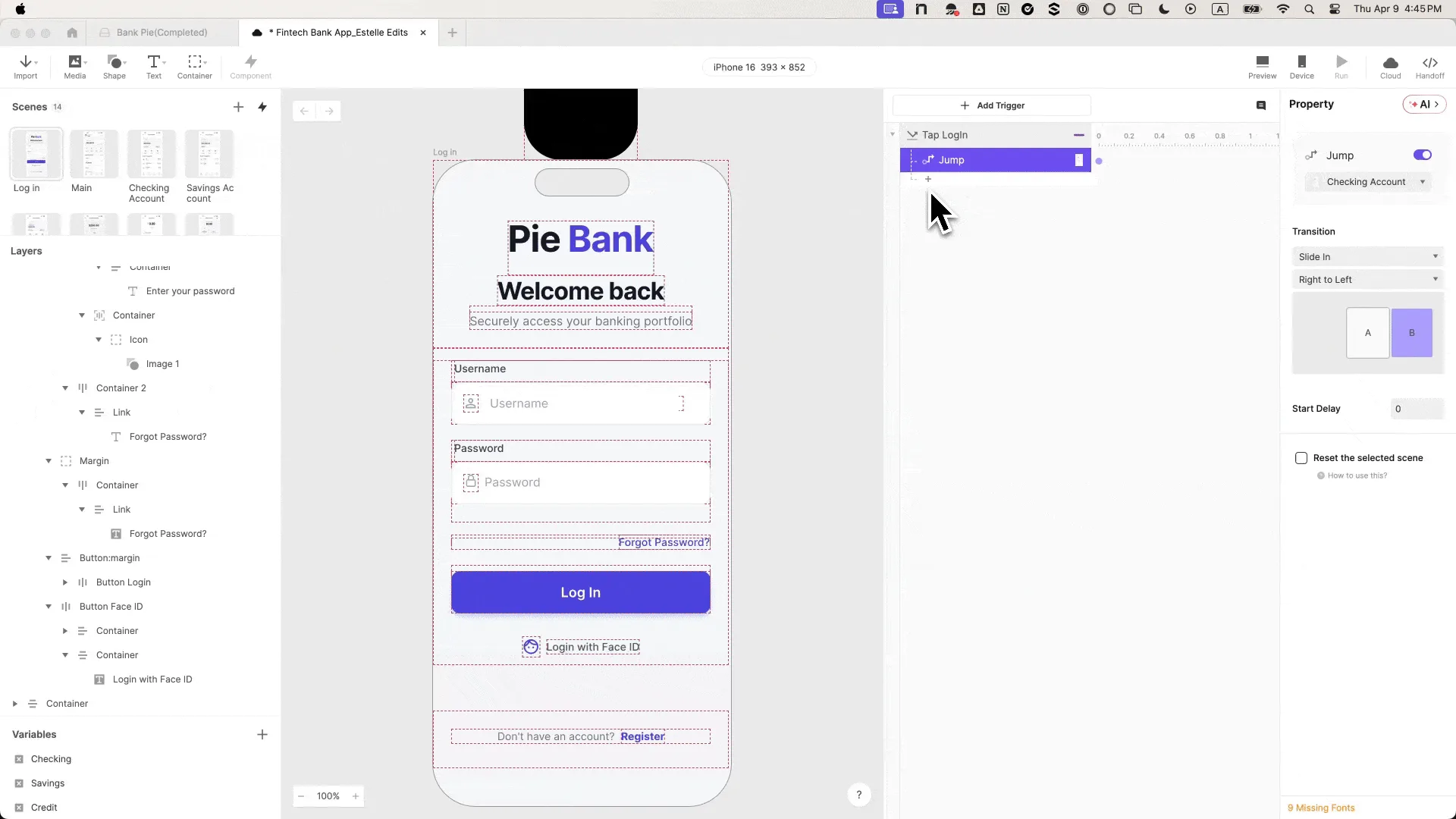
The efficacy of user experience (UX) research often hinges on a singular, fragile element: the participant’s suspension of disbelief. In the context of modern software development, particularly within the sensitive sector of financial technology (FinTech), researchers frequently encounter a phenomenon known as "prototype fatigue" or the "demonstration wall." This occurs when a user, during a usability session, recognizes the artificial nature of a testing environment and subsequently alters their behavior to match what they believe the researcher expects, rather than acting as they would in a real-world scenario. For FinTech applications, where security and precision are paramount, the stakes of this behavioral shift are exceptionally high.
The "moment of pause" at a login screen—where a participant hesitates, looks at the moderator, and asks if they are "doing it right"—signals a breakdown in data integrity. Once a user realizes they are interacting with a non-functional mockup, every subsequent data point is filtered through the awareness that their actions have no real-world consequences. This tutorial-driven analysis examines how high-fidelity prototyping, specifically through tools like ProtoPie, can bridge the gap between static design and functional reality, ensuring that user feedback remains grounded in authentic behavior.
The Critical Role of Fidelity in Financial UX Testing
In the financial services industry, user trust is a commodity that is earned through consistency and technical reliability. Research indicates that users are significantly more critical of banking and investment applications than they are of social media or entertainment platforms. According to industry benchmarks, financial applications that fail to provide immediate, logical feedback during the authentication process see a 35% higher abandonment rate during the onboarding phase.
When a banking prototype utilizes "faked" authentication—such as a static image that navigates to a dashboard regardless of what is typed—it fails to test the user’s response to friction, errors, or security protocols. In a real environment, a typo in a username triggers an error state that requires cognitive processing. In a low-fidelity prototype, that same typo might be ignored by the system, leading the user to enter the app with a false sense of success. The findings from such a session do not reflect how a user interacts with a product; they reflect how a user interacts with a demonstration.
To address this, product teams are increasingly moving toward "logic-based prototyping." This approach involves creating interfaces that not only look like the final product but behave like it, utilizing variables, conditional logic, and native device sensors to simulate a "shipped" experience.
A Chronological Framework for High-Fidelity Prototyping
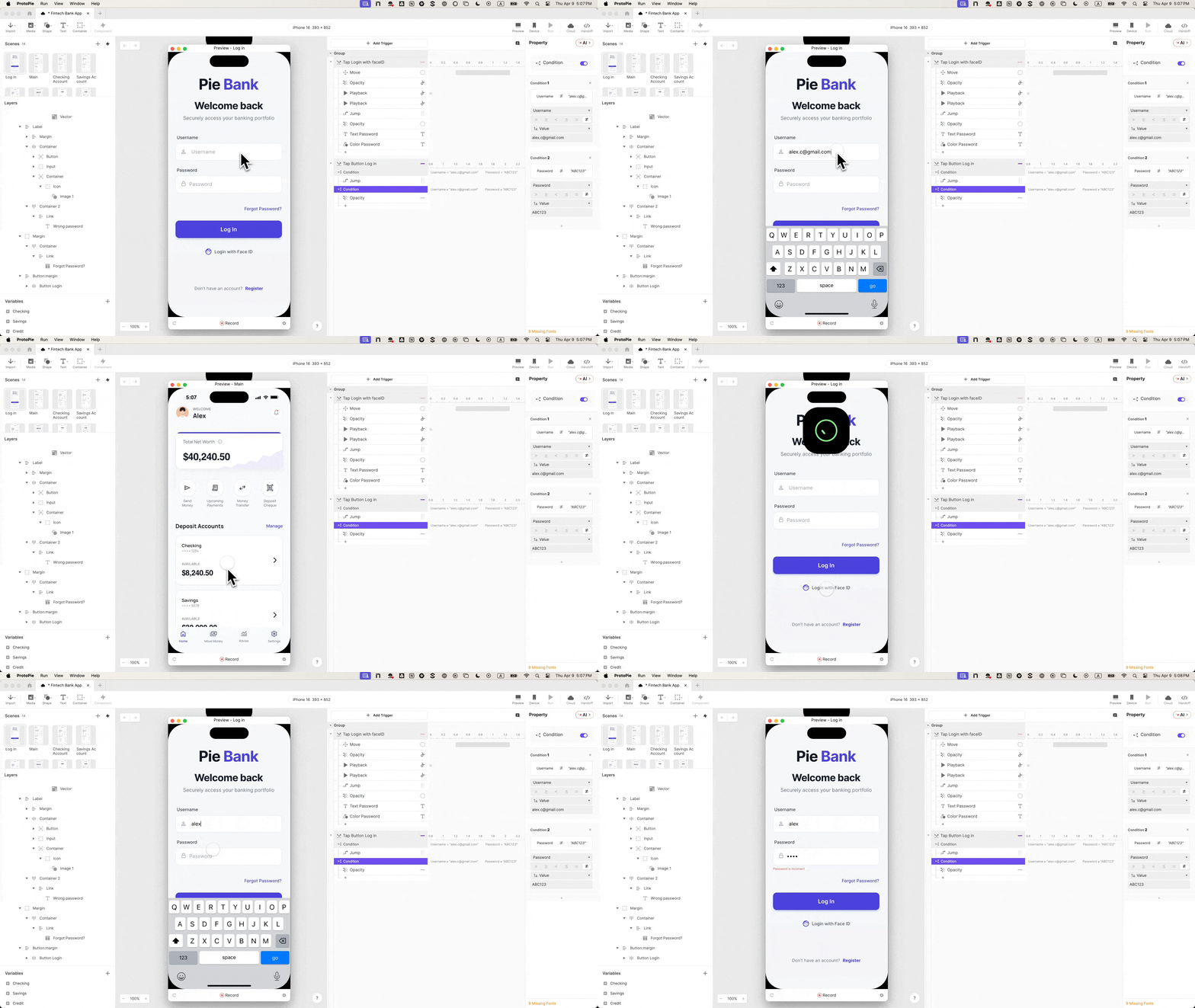
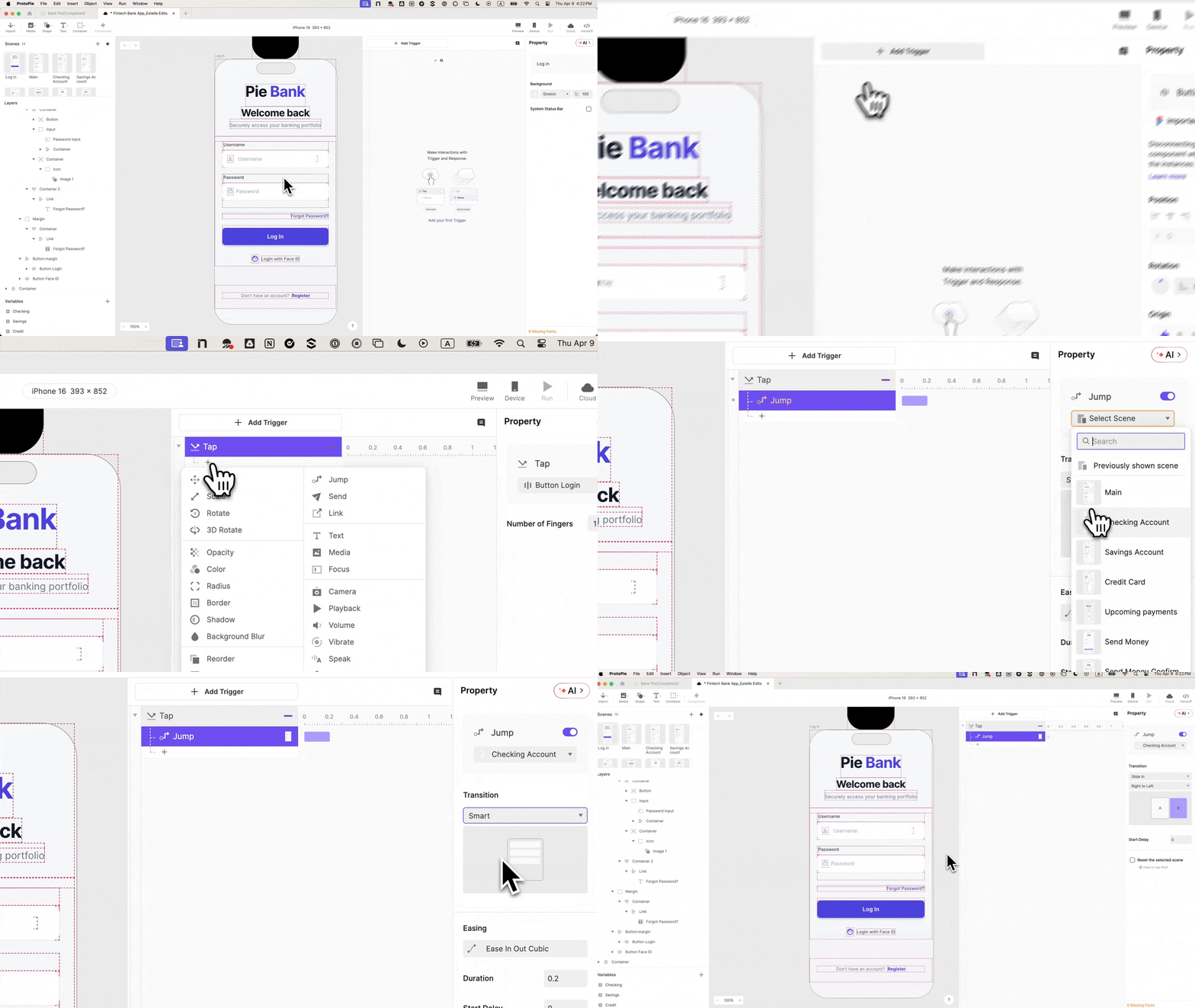
The transition from a static design to a functional prototype follows a specific technical trajectory. Using the "Pie Bank" mobile banking prototype as a case study, the following chronology outlines the development of a high-fidelity login sequence designed to withstand the scrutiny of professional user testing.
Phase I: Preservation of Design Intent
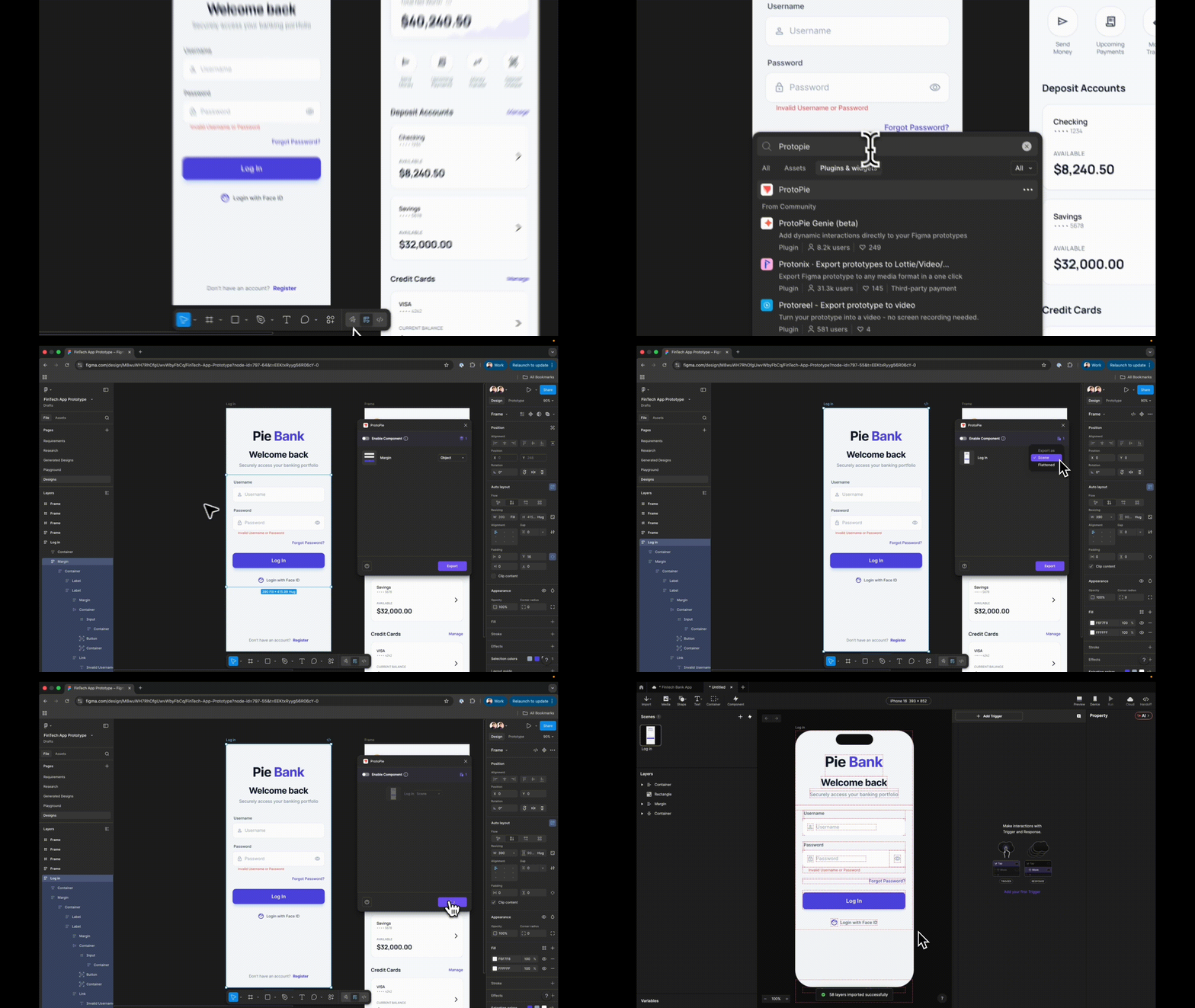
The process begins with the transition from design tools like Figma to interaction engines. A common pitfall in this stage is the "flattening" of layers, which reduces a complex UI into a single image. Professional workflows now prioritize scene-based exports that preserve layer hierarchies. This allows each element—the username field, the password field, and the login button—to remain a distinct, targetable object within the interaction logic.
Phase II: Transitioning from Static to Dynamic Inputs
Standard prototyping tools often rely on "hotspots" where a tap triggers a transition. In high-fidelity testing, this is replaced by native input layers. By utilizing the device’s actual keyboard, participants can type their real (or preferred) credentials. This subtle shift significantly increases the user’s psychological investment in the task. When a participant sees their own typing appear on the screen, the prototype moves from being a "picture of an app" to being a "functioning tool."
Phase III: Implementation of Masking and Security Logic
In the financial sector, the masking of sensitive data is not merely a visual preference but a functional requirement. Modern prototyping environments allow for the automatic masking of password fields. By setting an input type to "Text Password," the system handles the conversion of characters to obscured dots. This satisfies the user’s expectation of privacy, preventing the "unlocked" feeling that often accompanies low-fidelity mocks.
Phase IV: Establishing Variable Bindings and Conditional Logic
The core of a functional prototype lies in its ability to "remember" and "evaluate" user input. This is achieved through variables—placeholders that store the text entered by the user. By binding the username and password inputs to specific variables, the prototype can then apply conditional logic:
- Condition A: If the username is "Admin" and the password is "1234," navigate to the Dashboard.
- Condition B: If the fields are empty or incorrect, trigger an error state.
This logic ensures that the prototype only "unlocks" when the correct actions are taken, forcing the user to engage with the interface exactly as they would with a live banking app.

Supporting Data on Prototyping ROI
The investment in high-fidelity prototyping is often justified by the reduction in "rework" costs during the engineering phase. A study by the Software Engineering Institute suggests that the cost of fixing an error after a product has been shipped is up to 100 times higher than fixing it during the design phase.
Furthermore, high-fidelity prototypes serve as a more accurate "source of truth" for engineering handoffs. When developers are provided with a prototype that includes conditional logic and timed animations, the ambiguity of "design intent" is removed. The interaction panel serves as documentation, showing exactly how long an animation should last and how the system should respond to various input scenarios.
Official Responses and Industry Perspectives
UX Leads at major FinTech firms have noted that high-fidelity prototypes are essential for stakeholder buy-in. "When you present a static flow to an executive, they have to imagine the experience," says one senior product designer at a leading digital bank. "When you hand them a phone and the Face ID animation plays exactly like the real iOS, the conversation shifts from ‘how will this work’ to ‘how soon can we ship this.’"
Researchers also report a "higher signal-to-noise ratio" in testing sessions. When the prototype handles authentication realistically, the feedback gathered focuses on the actual user journey—such as the clarity of error messages or the ease of biometric integration—rather than the limitations of the testing tool itself.
Technical Analysis: The Psychology of Biometric Fidelity
One of the most advanced elements of the Pie Bank tutorial is the integration of Face ID animations via Lottie files. In the iOS ecosystem, the Face ID "whir" and "tick" are deeply ingrained in the user’s mental model of security.
By staggering the timing of these animations—incorporating specific delays for the move, seek, and play functions—the prototype mimics the processing time of a real device. A "Jump" response that happens too quickly feels "fake" to a seasoned smartphone user. By adding a 0.5-second delay to the animation and a 1-second delay to the scene transition, the prototype achieves a "native feel" that is indistinguishable from a shipped product. This level of detail is what prevents the participant from "clocking" the prototype and ensures the research remains valid.

Broader Implications for the Development Lifecycle
The move toward high-fidelity prototyping represents a broader shift in the technology industry toward "interaction-first" design. As digital products become more complex, the static wireframes of the past are no longer sufficient to communicate the nuances of user experience.
- Enhanced User Trust: Especially in finance, seeing a prototype that respects security conventions (like masked passwords and biometric checks) validates the user’s sense of safety.
- Reduced Development Friction: Functional prototypes act as a bridge between design and code, providing engineers with a clear roadmap of conditional states.
- Data Integrity: By eliminating the "moment of pause," researchers can collect authentic behavioral data, leading to better product decisions.
- Stakeholder Confidence: High-fidelity mocks provide a tangible preview of the final product, reducing the risk of mid-development pivots.
As the FinTech landscape continues to evolve with the integration of AI and more complex transactional logic, the tools used to test these experiences must keep pace. High-fidelity prototyping is no longer a luxury for well-funded teams; it is a fundamental requirement for any organization that prioritizes user-centric design and technical accuracy. By investing in the "realness" of the login flow, teams ensure that the foundation of their user research is built on trust rather than artifice.

