
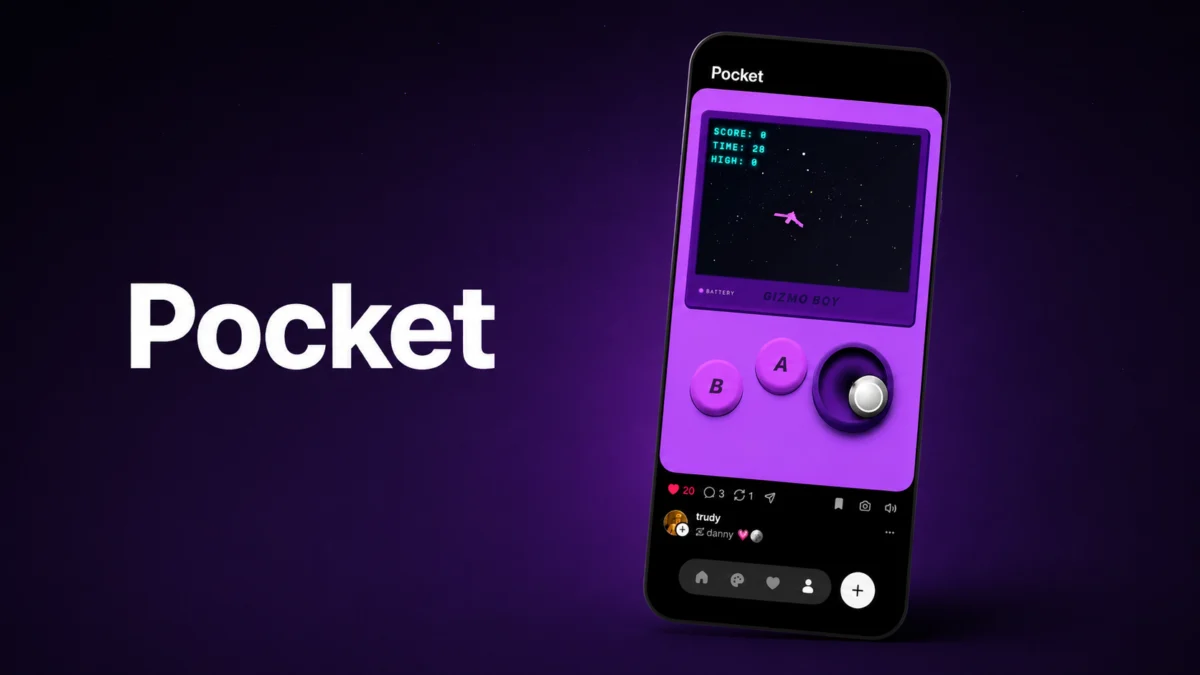
Meta’s experimental vibe-coding gaming application, Pocket, is now officially rolling out to all users across the United States, marking a significant expansion of the company’s ambitious foray into AI-powered creative tools and user-generated content. This nationwide launch follows a quiet test market debut in Brazil last month, and positions Pocket as a new frontier for interactive entertainment, allowing individuals to generate small, personalized games using intuitive AI prompts, which are then published to a dynamic, scrollable feed. The move underscores Meta’s accelerated strategy to leverage artificial intelligence for rapid product development and to diversify its ecosystem of standalone applications, as articulated by CEO Mark Zuckerberg.
The Genesis of Pocket: From Gizmo to a Meta Innovation Hub
Pocket’s development is rooted in Meta’s strategic acqui-hire of the team behind the innovative vibe-coded gaming platform Gizmo earlier this year. Gizmo, developed by Atma Sciences, had garnered attention in early 2026 for its novel approach to interactive mini-apps, often described as a "TikTok for interactive content." The platform allowed users to create and share bite-sized, engaging experiences that responded to various inputs, a concept that clearly resonated with Meta’s vision for the future of digital interaction. The acqui-hire, which saw former Snapchat engineers integral to Gizmo’s creation join Meta’s Superintelligence Labs in March 2026, was not merely an acquisition of technology but a strategic infusion of talent and a proven framework for building engaging, interactive content.
The interactive experiences and games within Pocket, affectionately termed "gizmos" by Meta, extend beyond traditional mobile gaming paradigms. They are designed to be deeply responsive and immersive, reacting to user touch and the tilt of a smartphone. Furthermore, these mini-apps can incorporate rich multimedia elements, including custom sound effects and even clips of users’ favorite songs, adding a layer of personal expression and auditory engagement. Critically, gizmos can also tap into a user’s device capabilities, utilizing photos from their camera roll or accessing the camera in real-time, blurring the lines between personal media and interactive creation. Once created, these unique games can be prominently displayed on a user’s profile, where they can be saved by others, remixed into entirely new creations, or simply reposted, fostering a vibrant ecosystem of user-generated content and collaborative creativity.
A Timeline of Meta’s AI-Powered App Spree
The rollout of Pocket is not an isolated event but rather the latest manifestation of a broader, aggressive strategy by Meta to inundate the market with new AI-driven applications. This flurry of activity highlights a significant shift in Meta’s product development cycle, enabled largely by advancements in AI-powered software development tools.
- February 2026: Gizmo, the predecessor to Pocket, gains traction for its innovative "vibe-coded" mini-apps.
- March 2026: Key engineering talent from Gizmo (Atma Sciences), including former Snapchat engineers, are acqui-hired by Meta and integrated into its Superintelligence Labs, signaling Meta’s interest in the underlying technology and creative approach.
- April 2026: Meta launches its Meta AI app, which rapidly climbs app store charts, offering advanced AI-generated image capabilities and demonstrating Meta’s commitment to making generative AI tools accessible to mainstream users. This period also sees the testing of "Instants," an Instagram-linked app for sharing disappearing photos, directly challenging rival platforms like Snapchat.
- May 2026: Meta quietly launches Forum, a standalone "Groups app" designed to foster community discussions, reminiscent of Reddit, and Seller, a dedicated app to streamline transactions on its Marketplace platform. These apps signify Meta’s intent to unbundle core functionalities into more focused experiences.
- June 2026: Early experiments emerge with "Vibes," a standalone application focused on AI-generated video content, pushing the boundaries of generative AI beyond static images. Meta also begins testing an AI bedtime stories experiment, showcasing the versatility of its AI research for diverse user segments.
- July 2026: Pocket makes its initial, quiet debut in the Brazilian market, serving as a critical testbed for user engagement and technical stability before a broader rollout. During Meta’s Q2 earnings call, CEO Mark Zuckerberg publicly acknowledges the company’s accelerated pace of app development, crediting AI.
- August 2026: The official U.S. rollout of Pocket commences, making the app widely available. Concurrently, Meta launches a dedicated Meta AI app for Mac, extending its AI ecosystem beyond mobile devices. Significantly, with Pocket’s launch, the original Gizmo app is officially shut down, with founder Josh Siegel expressing a bittersweet sentiment while acknowledging excitement for Pocket’s future.
This rapid succession of launches paints a clear picture of a company aggressively innovating and experimenting, leveraging its vast resources and newfound AI capabilities to explore new avenues of digital interaction.
Meta’s Strategic Imperative: AI-Enabled Software Development
CEO Mark Zuckerberg has openly credited the surge in new app launches to the transformative impact of AI-enabled software development. During Meta’s Q2 earnings call in July, Zuckerberg stated, "Earlier this year, we shipped Instagram Instants. We also just launched Forum, a stand-alone Groups app, and Seller, a stand-alone Marketplace app. I expect it to become a lot easier to ship new apps. So we are planning to build out more ideas and use our recommendation systems to scale them."
This statement highlights a fundamental shift in Meta’s engineering philosophy. AI is no longer merely a feature within products but a foundational layer enabling faster, more efficient product iteration. This includes:

- Accelerated Prototyping: Generative AI tools can quickly create initial codebases, UI elements, and even functional prototypes, drastically reducing the time from concept to testable product.
- Automated Testing and Debugging: AI can identify bugs, suggest optimizations, and even self-correct code, improving software quality and shortening development cycles.
- Personalized Feature Development: AI-driven analytics can quickly discern user preferences and engagement patterns, allowing developers to prioritize and build features that resonate most with target audiences.
- Scalability via Recommendation Systems: Meta’s established expertise in recommendation algorithms, honed over years with Facebook and Instagram feeds, can be immediately applied to new apps like Pocket, ensuring discoverability and sustained engagement for user-generated content. This allows Meta to quickly scale adoption for new ideas without starting from scratch.
The strategy appears to be a multi-pronged approach: test many ideas quickly, identify those with traction, and then leverage Meta’s unparalleled distribution and recommendation infrastructure to scale them. This "build-measure-learn" cycle, supercharged by AI, allows Meta to remain agile and competitive in a fast-evolving tech landscape.
Deep Dive into Pocket’s User Experience and Potential
Pocket’s "vibe-coding" approach promises to democratize game creation, moving it beyond specialized coding knowledge. Users can input natural language prompts, perhaps describing a desired mood ("a chill game about clouds"), a theme ("a frantic pixel-art game about dodging space invaders"), or specific mechanics ("tap to make a bird fly, avoid pipes"). The AI then interprets these "vibe codes" and generates a basic interactive experience. Users can further customize these gizmos by:
- Visual Customization: Uploading personal photos from their camera roll to serve as backgrounds, characters, or interactive elements, or using the live camera feed for augmented reality-like experiences.
- Audio Integration: Incorporating short sound effects or snippets of popular music, allowing creators to set the emotional tone or enhance gameplay feedback.
- Interactive Elements: Defining how elements respond to touch (e.g., tap to jump, swipe to move) and device tilt (e.g., steer a vehicle, balance an object).
The social feed aspect is crucial. Like TikTok, Pocket encourages continuous scrolling and rapid consumption of diverse, short-form interactive content. The ability to "remix" other users’ gizmos is a powerful viral mechanism, fostering a collaborative culture where ideas evolve and spread organically. This could lead to emergent trends and challenges, similar to dance crazes or meme formats seen on other platforms. For instance, a user might create a simple "tap-to-avoid" game, and others could remix it with new themes, sound effects, or even slightly altered mechanics, leading to countless variations.
Competitive Landscape and Broader Implications
Pocket enters a crowded digital ecosystem, but it carves out a unique niche. While TikTok focuses on short-form video and Snapchat on ephemeral messaging, Pocket targets short-form interactive gaming and creative expression. It also indirectly competes with platforms like Roblox and Minecraft, which empower user-generated games, but Pocket’s emphasis on rapid, AI-driven creation with minimal effort sets it apart. The low barrier to entry could attract a new demographic of creators who might be intimidated by traditional game development tools.
For Users: Pocket offers an accessible gateway to creative expression and interactive entertainment. However, the use of camera roll and live camera access raises important privacy considerations that Meta will need to address transparently. Clear consent mechanisms and robust data security will be paramount to building user trust.
For Meta:
- Engagement and Retention: Pocket could become a significant driver of user engagement, particularly among younger demographics who are constantly seeking novel and interactive experiences. High engagement translates to more time spent within Meta’s ecosystem.
- Monetization Potential: While Pocket is experimental, future monetization avenues could include in-app purchases for premium "gizmo" assets, templates, or advanced AI features. Advertising, potentially integrated subtly within the feed or as part of sponsored "gizmo" creation challenges, is also a long-term possibility.
- AI Data and Feedback Loop: Every interaction within Pocket provides valuable data for training Meta’s AI models, refining its understanding of user preferences, creative prompts, and effective interactive design. This feedback loop is crucial for the continuous improvement of Meta’s foundational AI capabilities.
- Diversification and Future-Proofing: By exploring new app categories and fostering user-generated interactive content, Meta is attempting to diversify its revenue streams and reduce its reliance on its core social media platforms. This strategy is vital for future-proofing the company against evolving user habits and competitive pressures.
- Content Moderation Challenges: The ease of creation also brings challenges in content moderation. Ensuring that user-generated gizmos adhere to community standards and are free from harmful or inappropriate content will require significant investment in AI-driven moderation tools and human oversight.
The bittersweet shutdown of the original Gizmo app, as expressed by founder Josh Siegel, highlights the inherent dynamics of the tech industry where promising startups are often integrated into larger corporations. While the independent vision may evolve, the underlying technology and talent gain the resources and scale of a giant like Meta. "It’s bittersweet to shut down Gizmo, a labor of love by so many people for the last couple years, but I’m excited for Pocket and what’s next," Siegel noted, reflecting a common sentiment among acquired founders.
Conclusion: A Glimpse into Meta’s AI-Powered Future
Pocket’s nationwide launch is more than just another app release; it is a tangible demonstration of Meta’s strategic pivot towards an AI-first future. By empowering users with intuitive tools to create interactive experiences, Meta is not only aiming to capture new segments of user attention but also to continuously refine its underlying artificial intelligence capabilities. The rapid deployment of a diverse array of standalone applications, from social forums to AI-powered creative suites, signals a new era of aggressive experimentation and deployment for the tech giant. As Pocket takes root in the U.S. market, its performance will offer critical insights into the viability of AI-driven, user-generated interactive content, and serve as a bellwether for Meta’s broader ambitions in shaping the next generation of digital engagement.

