
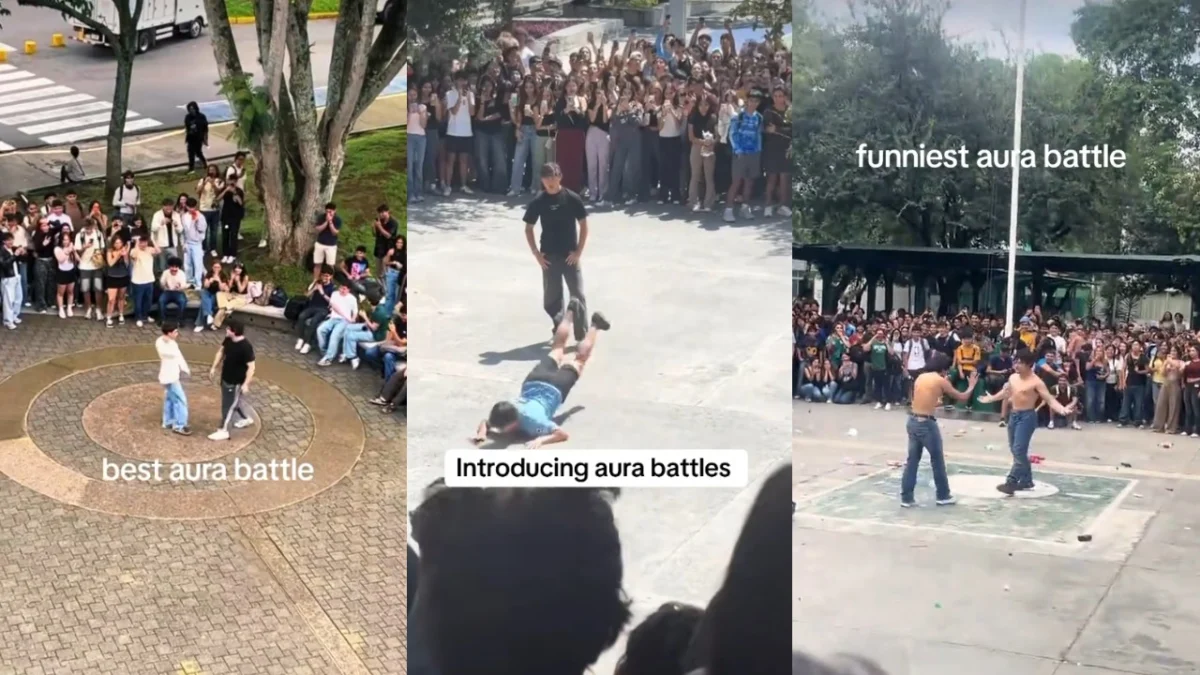
Aura Battles have emerged as a dominant social media trend, characterized by public, loosely organized competitions where participants engage in "aura farming" to determine who possesses the superior "aura"—a slang term used to describe an individual’s charisma, presence, or perceived level of coolness. These events, which gained significant momentum throughout August 2026, function similarly to traditional dance or rap battles but prioritize visual aesthetics, posturing, and non-verbal communication. Distributed primarily through short-form video platforms such as TikTok and Instagram Reels, the trend has transitioned from a niche internet subculture into a global performative movement, involving a complex system of "aura points" and specific behavioral tropes including "mogging," "posing," and the "rizz face."
The Linguistic and Cultural Foundations of Aura
To understand the mechanics of an Aura Battle, one must first analyze the linguistic framework established by Gen Z and Gen Alpha. The term "aura" in this context does not refer to spiritual energy but rather to a person’s social capital and effortless style. Closely related is the concept of "aura farming," which involves performing specific actions intended to increase one’s perceived status or coolness. Conversely, making a social gaffe or appearing uncoordinated results in "losing aura."
The battles also incorporate "mogging," a term derived from "AMOG" (Alpha Male of Group), which refers to physically or aesthetically dominating another person in a shared space. In an Aura Battle, mogging is achieved through superior height, posture, fashion, or facial expressions. These expressions often include the "rizz face"—a squinted, intentional look intended to project romantic charm—and the "67 hand gesture," a specific manual signifier that has become synonymous with the trend’s visual language. While some participants approach these battles with sincerity, a significant portion of the community engages in "ironic aura farming," using humor and self-deprecation to parody the obsession with digital status.
Chronology of the Trend’s Development
While the exact inception of the Aura Battle remains difficult to pinpoint due to the decentralized nature of social media, digital forensic analysis indicates that the trend reached a critical mass in early August 2026.
On August 9, 2026, the official Instagram page for Unitel Bolivia, a major television network, posted one of the first high-engagement recordings of an Aura Battle. The footage depicted a young boy in a public square, surrounded by a large crowd, performing a series of calculated moves including the 67 gesture and the rizz face. This video, which garnered over 267,000 likes within three weeks, signaled the trend’s move into the mainstream media landscape. The presence of a traditional news organization covering the event suggested that Aura Battles were no longer confined to private social circles but were becoming public spectacles.
By mid-August, the trend had diversified. On August 24, 2026, TikTok creator @dymrstore uploaded a video showcasing a more structured battle, which achieved 144,000 views in seven days. This was followed by the emergence of dedicated accounts such as @aura_battle67, which began documenting and "refereeing" these exchanges. On August 28, 2026, a video from this account explained the rules of the trend to a broader audience, defining the "aura points" system where viewers act as judges, awarding "+10,000 Aura" for successful moves or deducting "-50,000 Aura" for perceived failures.
The trend reached its peak in late August. On August 30, 2026, an Instagram user known as uncrider_official posted what was described as the "biggest" aura battle to date. The video captured a large-scale gathering that generated 240,000 views and 21,000 likes in less than 24 hours, illustrating the rapid scalability of the phenomenon.
Mechanics, Scoring, and Digital Production
Aura Battles are defined by their specific "turn-based" structure. Unlike dance battles, which require high levels of physical exertion, or rap battles, which require verbal dexterity, an Aura Battle is often static. Participants take turns making an entrance, striking a pose, or maintaining eye contact with the camera or an opponent.
The "scoring" of these battles is entirely subjective and crowdsourced. In the comments section of these videos, users engage in a democratic form of judging. This has led to the "Aura Points" economy, a gamified social metric. The fun and engagement of the trend are amplified by dramatic editing techniques. Content creators typically use:
- CapCut Templates: Standardized editing formats that allow for quick cuts and dramatic zooms.
- Slowed + Reverb Audio: Music tracks, often from the "phonk" or "synthwave" genres, are slowed down to create an atmosphere of gravitas.
- Text Overlays: Large, bold text indicating the gain or loss of points (e.g., "Max Aura," "Aura Check," or "Infinite Aura").
This digital layer is essential to the trend; a live Aura Battle without the accompanying music and editing is often viewed as "cringe," a term used by the community to describe social awkwardness. The "aura" is, therefore, as much a product of the video editor as it is the performer.
Institutional Responses and Social Controversy
As Aura Battles moved from the digital realm into physical spaces like schools, malls, and public squares, they began to attract the attention of authorities and institutions. Reports emerged in late August 2026 of schools in various jurisdictions implementing bans on Aura Battles during school hours.
Administrators have cited several concerns regarding the trend. First is the issue of "mogging" as a potential precursor to bullying. While the trend is largely performative and aesthetic, the emphasis on physical dominance can, in some instances, lead to the marginalization of students who do not fit certain aesthetic standards. Second, the "public" nature of these battles often leads to loitering and the disruption of foot traffic in commercial and educational environments.
Conversely, some youth advocates argue that Aura Battles provide a creative outlet for non-verbal expression and social bonding. Unlike previous trends that required expensive equipment or specific talents, "aura farming" is accessible to anyone with a smartphone and a sense of timing. The irony inherent in many of the videos suggests a high level of self-awareness among participants, who are often mocking the very concept of "coolness" they appear to be pursuing.
Broader Impact and Sociological Analysis
The rise of the Aura Battle reflects a broader shift in how digital-native generations perceive identity and social status. In an era dominated by the "Main Character" trope—a psychological phenomenon where individuals view their lives as a scripted narrative—Aura Battles serve as a live-action manifestation of this mindset.
Sociologists have noted that these battles represent the "aestheticization of everyday life." Where previous generations might have sought status through professional achievement or material wealth, Gen Z and Gen Alpha increasingly find value in "presence." The ability to command attention through a single look or pose is a form of social currency that is highly liquid in the attention economy.
Furthermore, the trend highlights the globalized nature of modern internet culture. A trend can be documented by a news station in Bolivia, refined by a creator in the United States, and soundtracked by a musician in Eastern Europe, all within the span of a few weeks. The "67 gesture" and the "rizz face" have become a universal non-verbal language, transcending traditional linguistic barriers.
Conclusion and Future Outlook
As of late 2026, the Aura Battle remains a significant cultural touchstone, though like all viral trends, its longevity is subject to the rapid cycles of internet interest. Its legacy, however, is likely to persist in the continued gamification of social interactions. The "Aura Points" system has provided a template for how social status can be quantified and contested in real-time.
Whether the trend evolves into a more formalized competitive sport or fades into the archive of internet memes, it has successfully highlighted the power of visual storytelling in the 21st century. The Aura Battle is a testament to a generation that values charisma as a measurable asset and views the public square as a stage for digital performance. As platforms continue to evolve, the desire to "farm aura" will likely find new expressions, further blurring the line between the physical self and the digital persona.

