
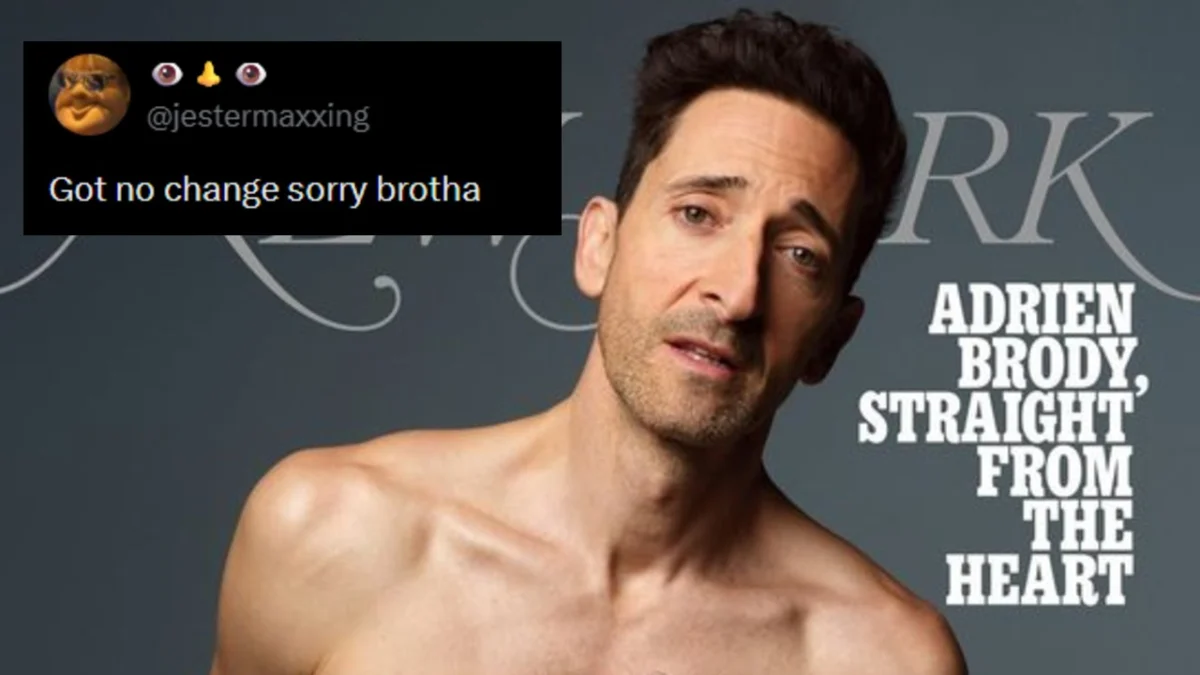
The digital landscape of social media is frequently defined by the rapid ascension of brief, punchy linguistic artifacts that capture a specific cultural "vibe" or aesthetic. Among the most prominent examples to emerge in the mid-2020s is the phrase "Got no change sorry brotha," a catchphrase and copypasta that originated on the social media platform X (formerly Twitter). What began as a singular, humorous observation regarding a high-fashion magazine cover transformed into a versatile tool for digital dismissal, used to characterize celebrities and public figures as appearing nonchalant, detached, or inadvertently resembling someone avoiding an interaction on a city street. This phenomenon provides a unique case study in how internet subcultures reinterpret professional portraiture through the lens of everyday urban experiences.
The Genesis of a Viral Archetype
The origin of the phrase can be traced back to December 23, 2024, a period when celebrity profile features often dominate year-end media cycles. On this date, the film news account @FilmUpdates shared a promotional image for a New York Magazine cover story featuring Academy Award-winning actor Adrien Brody. The profile, written by E. Alex Jung, was titled "Adrien Brody, Straight from the Heart," and aimed to explore the actor’s career trajectory since his historic Best Actor win for The Pianist. The accompanying photography, however, struck a different chord with the online public.
In the cover photo, Brody is depicted with a lean, weathered expression, characterized by his signature prominent features and a look that suggests a mixture of intensity and weary detachment. X user @jestermaxxing responded to the post with the simple caption: "Got no change sorry brotha." The post immediately resonated with the platform’s user base, garnering over 111,000 likes and 4.4 million views within a relatively short timeframe.
The humor of the original post relied on the stark contrast between the prestige of a New York Magazine cover—typically reserved for elite cultural icons—and the mundane, often awkward social interaction of declining a request for spare change. By projecting this specific dialogue onto Brody, @jestermaxxing effectively reframed the actor’s high-fashion "smolder" as the universal facial expression of a pedestrian attempting to maintain momentum while avoiding a solicitation.
Evolution and the 2026 Resurgence
While many viral tweets enjoy a brief period of relevance before fading into obscurity, "Got no change sorry brotha" demonstrated significant staying power, evolving into a "generational tweet"—a term used by internet historians to describe posts that remain culturally cited for years. After its initial 2024 debut, the phrase entered a period of latent circulation, appearing sporadically in niche circles before experiencing a massive resurgence in 2026.
A pivotal moment in the phrase’s expansion occurred on May 12, 2026, when X user @dyinlevi applied the caption to a photograph of actor Sebastian Stan. In the image, Stan appeared with a shaved head and a neutral, somewhat vacant expression. The application of the Brody-originated phrase to Stan demonstrated the meme’s versatility; it was no longer tied to Brody’s specific physiognomy but had become a label for a specific "energy" of dismissiveness. This post garnered over 12,000 likes in just a few months, signaling that the phrase had successfully transitioned into a copypasta—a block of text that is repeatedly copied and pasted across the internet.
The momentum continued into the summer of 2026. On June 5, user @davidefinitely applied the phrase to a screenshot of musical artist Malcolm Todd during an appearance on The Tonight Show Starring Jimmy Fallon. Todd’s relaxed, almost slumped posture and steady gaze during his performance were interpreted by the audience as the quintessential "no change" look. This iteration was exceptionally successful, earning over 85,000 likes and further cementing the phrase as a standard reaction to celebrity media.
Analytical Framework: Why the Phrase Resonates
To understand the success of "Got no change sorry brotha," one must analyze the intersection of celebrity culture and urban survival tactics. The phrase taps into a shared social reality for many people living in major metropolitan areas, where the act of saying "I have no change" is a frequent, often reflexive habit.
- Subversion of Prestige: High-end magazine photography is designed to evoke a sense of mystery, importance, and "cool." By applying a phrase associated with the street-level avoidance of a panhandler, the audience strips away the artifice of the celebrity. It humanizes the subject while simultaneously mocking the self-seriousness of the photography.
- The "Nonchalant" Aesthetic: The meme identifies a specific facial expression that is common in modern acting and modeling: a look of total emotional unavailability. In the context of a film, this might be read as "brooding" or "mysterious," but in the context of the meme, it is read as the face of someone who is "clocked out" or unwilling to engage with their surroundings.
- Linguistic Simplicity: The lack of punctuation and the use of the colloquial "brotha" contribute to the meme’s effectiveness. It mimics the rushed, informal nature of a passing comment, making it easy to replicate and adapt to various visual contexts.
Statistical Engagement and Reach
Data from various social media analytics tools indicate that the "Got no change" meme follows a pattern of "long-tail" engagement. Unlike "flash-in-the-pan" memes that peak in 48 hours, this catchphrase saw a steady increase in usage over a 20-month period.
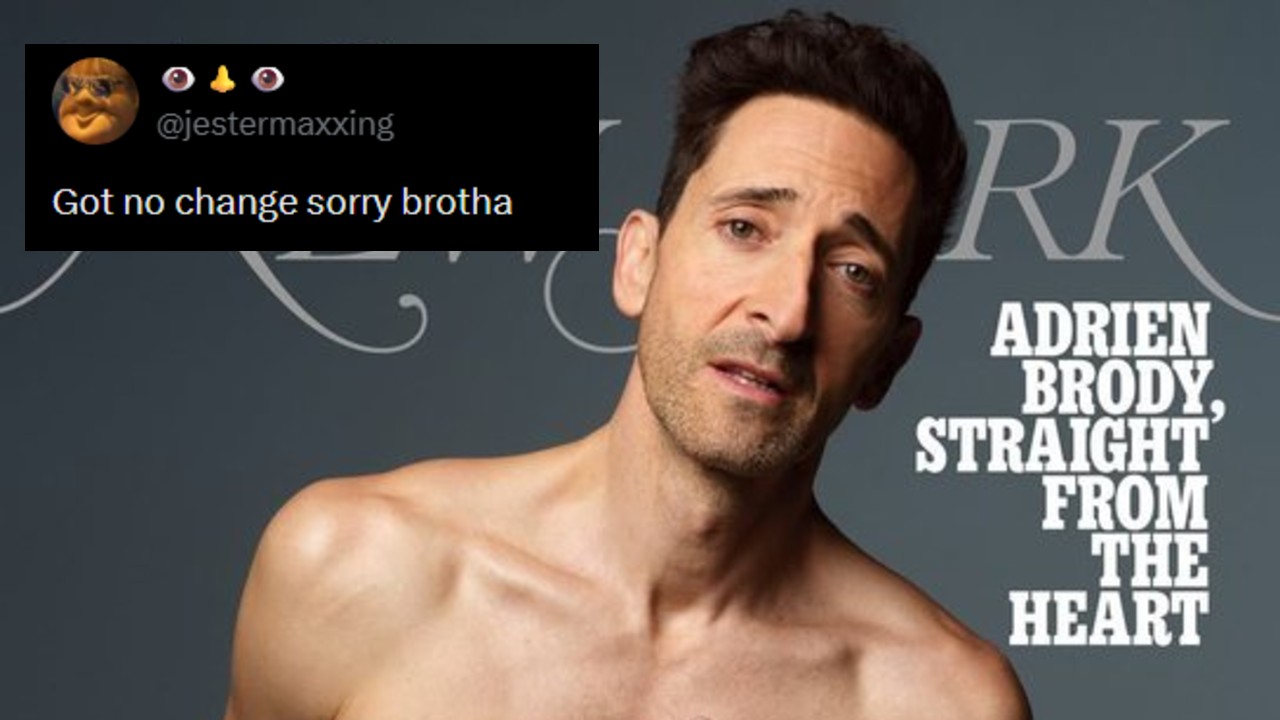
- Original Brody Tweet (Dec 2024): 111k Likes, 4.4M Views.
- Sebastian Stan Iteration (May 2026): 12k Likes, 204k Views.
- Malcolm Todd Iteration (June 2026): 85k Likes, 2M Views.
- Meta-Commentary (Sept 2026): A post by user @H11mGuy calling the original tweet "generational" received 41,000 likes in a single day, indicating that the meme had reached a level of self-awareness where the history of the meme itself was now a topic of discussion.
These figures suggest that the meme has a high "conversion rate" for engagement, particularly among Gen Z and Millennial demographics who are most active in "Stan Twitter" and film-centric digital communities.
Diversity of Application: Beyond Hollywood
As the meme matured, its application expanded beyond mainstream actors. It began to be used in political and controversial contexts, demonstrating its utility as a general tool for dismissal.
In August 2026, the phrase was used in response to a post by politician Hakeem Jeffries regarding legal proceedings involving the "Trump Cartel." By replying "Sorry brotha got no change," the user effectively signaled a lack of interest or a refusal to engage with the political gravity of the post, using the meme to "low-post" or dismiss a serious topic with a joke.
Similarly, the phrase was applied to images of Andrew Tate and Jeremy Allen White. In the case of White, the meme was used to humorously acknowledge his "gritty" public persona, which often features him in disheveled or "street-ready" attire. The application to Joe Biden in a vintage 2019 photo—where a bystander is seen ignoring the then-Vice President at a cafe—further showcased the meme’s ability to retroactively explain old images through a modern lens.
Cultural and Psychological Implications
The "Got no change sorry brotha" phenomenon reflects a broader trend in internet humor: the "vibe check." In the digital age, users are less interested in the literal content of an image and more interested in the emotional or social "vibe" it projects.
Psychologically, the meme provides a way for users to navigate a world saturated with celebrity content. By reducing a multi-millionaire actor to the level of a guy on a street corner, the audience asserts a form of cultural dominance. It is a way of saying, "You may be famous, but to me, you just look like a guy I’d avoid at a bus stop." This leveling of the social playing field is a hallmark of 21st-century digital satire.
Furthermore, the meme highlights the evolution of the "copypasta." Traditionally, copypastas were long, nonsensical stories. Modern copypastas, like "Got no change sorry brotha," are shorter and more surgical. They function as a "tag" that can be applied to any visual data to instantly categorize it within a specific comedic framework.
Conclusion and Future Outlook
As of late 2026, "Got no change sorry brotha" remains a staple of the social media vocabulary. Its journey from a single reply to Adrien Brody to a ubiquitous cultural shorthand illustrates the unpredictable nature of digital fame. While the actors and celebrities featured in these memes continue their professional careers, their public images are now inextricably linked to this specific brand of digital humor.
The longevity of the phrase suggests that it has filled a specific void in the internet’s "reaction" toolkit. As long as photographers continue to capture celebrities with expressions of brooding detachment, and as long as those celebrities are presented to a public that values relatability and humor over prestige, the "no change" meme will likely persist. It stands as a testament to the power of a well-timed observation and the enduring appeal of the urban "everyman" perspective in an increasingly curated digital world.
In the final analysis, "Got no change sorry brotha" is more than just a joke; it is a linguistic marker of a generation that views the world with a mixture of irony, weariness, and a sharp eye for the absurdities of fame. Whether it is Adrien Brody, Sebastian Stan, or a world leader, no one is immune to being "vibe-checked" by the internet’s most resilient dismissal.

