
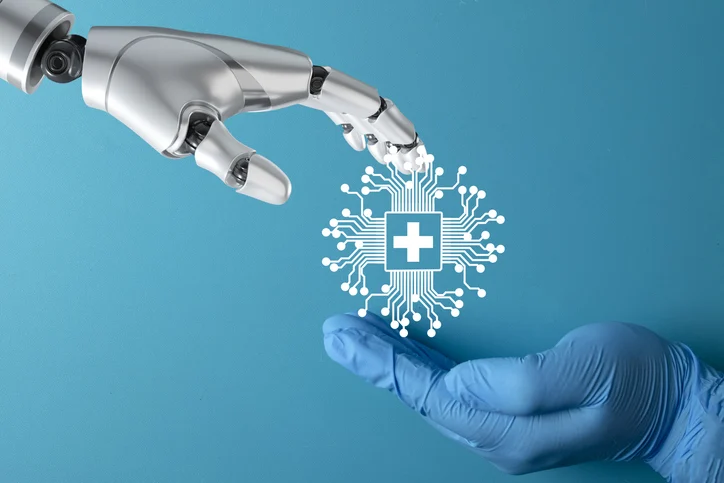
The landscape of healthcare investment is undergoing a seismic shift as artificial intelligence moves from the back office to the front lines of clinical diagnosis and longevity science. According to the 17th Healthcare Investments and Exits report released by Silicon Valley Bank, AI-driven initiatives accounted for nearly half of all healthcare investment activity in 2025. While the initial wave of AI integration focused heavily on administrative and operational efficiencies—such as ambient notetaking, automated scheduling, and revenue cycle management—a new generation of "signal catchers" is emerging. These technologies aim to move beyond the "plumbing" of healthcare delivery to fundamentally alter clinical outcomes by identifying the earliest physiological markers of disease, potentially closing the widening gap between human lifespan and healthspan.
The Shift from Administrative Evolution to Clinical Transformation
For the past decade, digital health innovation has been largely synonymous with workflow optimization. The primary goal of many AI startups was to alleviate the "broken" components of the American healthcare system: reducing provider burnout through automated documentation and lowering unsustainable operational costs. These tools, while essential for the economic survival of healthcare systems, have functioned as an evolution in delivery rather than a revolution in health outcomes.
The current inflection point, however, suggests a pivot toward "anticipatory medicine." Visionary founders and institutional investors are increasingly prioritizing AI models capable of understanding the body’s subtle signals before they manifest as symptomatic disease. This movement, often referred to as the emergence of "signal catchers," involves AI standing amidst a field of biological noise to intercept data points that can prevent late-stage diagnoses. The objective is to save patients from the "twin cliffs" of chronic disease and premature mortality by recognizing signals that the human eye or traditional diagnostic tools might miss.
The Longevity Paradox: Lifespan vs. Healthspan
The urgency behind this technological shift is underscored by a sobering reality in public health statistics. While global life expectancy has increased by approximately five years over the last two decades, much of this progress is attributed to declining infant mortality rather than fundamental improvements in adult longevity. When infant mortality is removed from the equation, the gain in life expectancy drops to roughly 1.5 years per decade—a slower rate of improvement than that seen during the majority of the 20th century.
Furthermore, the ratio of healthspan—the period of life spent in good health—to total lifespan has remained stagnant or, in some regions, declined. On average, individuals currently spend a dozen years in a state of diminished health. Former U.S. Surgeon General Dr. Rich Carmona recently noted that while a healthy infant born today has the biological potential to live 120 years, current life expectancy remains closer to 80. This represents a forfeiture of one-third of the potential human lifespan, largely due to late-stage recognition of preventable or manageable conditions such as Stage 4 cancer, kidney disease, and hypertension.
Maternal Health: A Case Study in Systemic Failure
The need for AI signal detection is perhaps most visible in the realm of maternal health. Despite the United States spending more on healthcare per capita than any other nation, maternal mortality rates are higher today than they were 20 years ago. Data published in the Journal of the American Medical Association (JAMA) indicates that severe complications and the frequency of C-sections have risen steadily.
The failure to improve maternal outcomes is frequently cited by experts as a failure of signal detection. Subtle indicators of fetal hypoxia or neonatal distress often go unrecognized until an emergency intervention is required. By applying AI to fetal monitoring, researchers aim to identify these "invisible" signals in real-time, allowing for earlier, less invasive interventions that could reduce brain injuries and the necessity of emergency surgical births.
The Technology of Signal Detection: Historical Context
The concept of "catching signals" is not entirely new to medicine; rather, AI represents the latest evolution in a long history of sensory augmentation.
- The Stethoscope: Introduced in the early 19th century, it allowed physicians to interpret signals carried through sound waves from the heart and lungs.
- X-Rays: At the turn of the 20th century, these revealed signals embedded in bone and dense tissue.
- Ultrasound: Mid-20th-century innovation used high-frequency sound wave echoes to capture signals in soft tissue.
AI-driven scientific innovation differs from these predecessors by its ability to process patterns that are too complex, multidimensional, or subtle for human recognition. By analyzing vast datasets of biomarkers and vital signs, AI can create "digital biomarkers" that weren’t previously observable or actionable.
Clinical Breakthroughs: The Case of Pancreatic Cancer
One of the most significant validations of the AI "signal catcher" model recently emerged from the Mayo Clinic. In a study published in the journal Gut, researchers demonstrated an AI model capable of detecting pancreatic cancer on routine abdominal CT scans up to three years before a clinical diagnosis would typically occur.
Pancreatic cancer is notoriously difficult to detect in its early stages, often remaining asymptomatic until it has metastasized. By the time most patients present with symptoms, the window for effective treatment has largely closed. The Mayo Clinic’s ability to use AI to "see" the cancer years in advance represents a paradigm shift from reactive to proactive oncology. This level of anticipatory medicine is what investors believe will drive the next decade of healthcare growth.
Emerging Frontiers in AI Biomarkers
The application of AI signal detection is expanding across the care spectrum, from predisposition and prediction to ongoing monitoring. Several key areas are currently attracting significant venture capital and academic interest:
The Eye as a Window to Systemic Health
Ophthalmological AI is being developed to analyze retinal images not just for eye disease, but for markers of cardiovascular health, diabetes, and even neurological decline. The microvasculature of the eye provides a non-invasive look at the body’s circulatory system, offering signals that can predict strokes or heart attacks years before they occur.
Voice as a Digital Biomarker
The nuances of human speech—pitch, cadence, and vocal cord vibration—contain subtle signals related to respiratory health, psychiatric conditions like depression, and neurodegenerative diseases such as Parkinson’s. AI models are now being trained to detect these vocal "tells," providing a low-cost, continuous monitoring tool for at-risk populations.
Advanced Fetal and Neonatal Monitoring
New AI-driven sensors are moving beyond traditional heart rate monitoring to analyze complex physiological data in utero. By catching the earliest signals of distress, these tools aim to lower the rates of neonatal complications and maternal mortality that have plagued the U.S. healthcare system.
Economic and Systematic Implications
The shift toward signal-catching AI has profound implications for the economics of healthcare. The current "fee-for-service" model often rewards volume over outcomes, but the transition to value-based care requires systems to keep populations healthy. Late-stage disease management is the primary driver of healthcare insolvency; the cost of treating Stage 4 cancer or end-stage renal failure is exponentially higher than the cost of early-stage intervention or prevention.
By intercepting signals early, AI enables a move toward "precision prevention." This not only improves the patient experience but also addresses the labor shortages currently crippling the industry. If AI can handle the "signal detection" at scale, clinicians can focus their time on high-value interventions and personalized care plans, rather than being buried in the "noise" of raw data.
Chronology of AI Integration in Healthcare
To understand where the industry is headed, it is helpful to view the timeline of AI’s role in medicine:
- 2010–2018 (The Digitization Era): Focus on Electronic Health Records (EHR) and the migration of data to the cloud. AI was largely experimental.
- 2019–2023 (The Administrative Era): Rise of "plumbing" AI. Tools focused on billing, scheduling, and basic clinical documentation (ambient listening) gained widespread adoption.
- 2024–2025 (The Signal Catcher Inflection): Clinical AI begins to outperform traditional diagnostics in specific use cases (e.g., Mayo Clinic pancreatic cancer study). Investment shifts toward longevity and early detection.
- 2026 and Beyond (The Anticipatory Era): Predicted widespread use of continuous, non-invasive monitoring where AI provides a "real-time dashboard" of human health, moving medicine from episodic to continuous.
Conclusion: The Path to 120 Years
The ultimate goal of healthcare innovation is to expand both the length and the quality of human life. The current trajectory, characterized by marginal improvements and widening gaps between lifespan and healthspan, suggests that traditional methods have reached a plateau. The emergence of AI as a "signal catcher" offers a new path forward.
By providing the sensory apparatus to detect and the intelligence to interpret the body’s hidden signals, AI is poised to usher in an age of anticipatory medicine. This transformation will likely be driven by venture-backed startups and academic medical centers working in tandem to make invisible physiological signals actionable. As these technologies move from the laboratory to the bedside, the potential to reclaim the "forfeited third" of the human lifespan becomes an attainable clinical objective rather than a theoretical possibility. The "revolution" in healthcare is finally moving past the paperwork and into the very fabric of human biology.

