
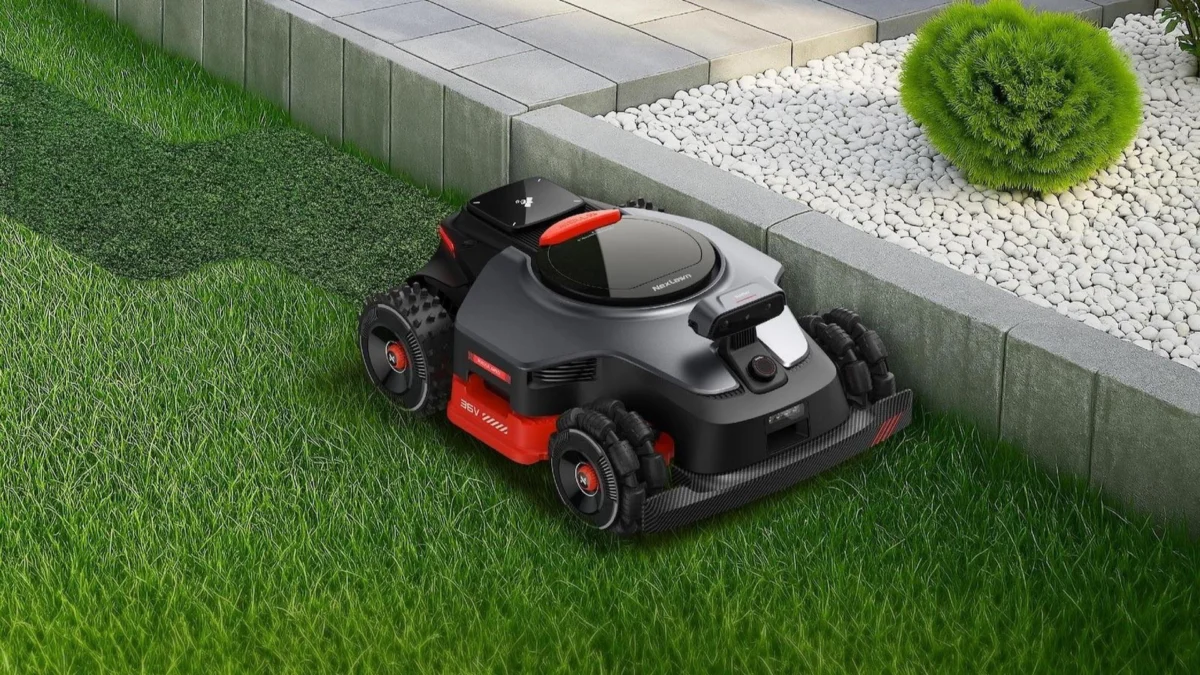
Robot lawn mowers, once a niche concept, are rapidly becoming a mainstream solution for lawn maintenance, offering a compelling blend of convenience and advanced technology. These autonomous, battery-powered machines are designed to navigate and trim grass without direct human intervention, operating on pre-set schedules and returning to their charging stations when power levels dip. Unlike their traditional push-mower counterparts, robot mowers employ a "little and often" cutting strategy, repeatedly removing minuscule amounts of grass. This approach allows the fine clippings to decompose directly on the lawn, acting as a natural fertilizer, rather than being collected in cumbersome bags. The sophistication of these devices lies in their diverse navigation systems, each with its own strengths and weaknesses, determining how they accurately define and adhere to the boundaries of your garden.
The Four Pillars of Robotic Navigation: From Wires to Waves
The critical challenge for any robot mower is understanding the precise limits of its operational area. Over the years, four primary navigation methodologies have emerged, with many modern mowers incorporating a hybrid approach for enhanced accuracy and reliability:
1. The Traditional Boundary Wire: A Physical Perimeter
The most established method involves a physical boundary wire. This low-voltage wire is meticulously laid around the perimeter of the lawn and can also be strategically routed to delineate flower beds, tree surrounds, and other features that the mower should avoid. The mower detects the electromagnetic field generated by the wire, interpreting it as an invisible barrier. Early models, such as the entry-level Husqvarna Automower Aspire A4, rely heavily on this system.
Challenges and Limitations: The primary drawback of the boundary wire system is the labor-intensive installation process. The wire must form a continuous, unbroken loop that returns to the charging station. Accidental damage from gardening tools, burrowing animals, or severe weather can interrupt the signal, rendering the mower inoperable until the break is repaired. Furthermore, any significant alteration to the garden’s layout necessitates the reinstallation or adjustment of the boundary wire, which can be a considerable undertaking.
2. GPS/RTK Positioning: The Wire-Free Frontier
A significant advancement in wire-free navigation is the integration of GPS with Real-Time Kinematic (RTK) positioning. An RTK system augments standard GPS by employing a fixed reference station, either physically located within the garden or accessed via an internet-based "cloud" service. This reference station provides crucial corrections to satellite positioning data, enabling compatible mowers to determine their location with centimeter-level accuracy under optimal conditions.
Virtual Boundaries and Cloud Connectivity: This precision allows users to define virtual boundaries and designated mowing zones through a smartphone application, eliminating the need for buried wires. The Mammotion Luba 3 AWD exemplifies this wire-free approach. Cloud RTK systems are increasingly popular as they reduce the hardware requirements, relying on the mower’s persistent internet connection (Wi-Fi or cellular) to communicate with the reference station.

Advantages and Constraints: The flexibility of virtual boundaries is a major advantage, allowing for easy adjustments via the app without any physical disruption to the garden. However, satellite-based positioning can be susceptible to signal interference from tall buildings, dense tree canopies, or other significant obstructions, potentially impacting the mower’s accuracy and operational consistency.
3. Camera-Based Vision AI: The Eyes of the Machine
Emerging as a sophisticated alternative, camera-based vision AI systems equip robot mowers with the ability to "see" and interpret their surroundings. These advanced mowers utilize cameras to identify objects, recognize patterns, and understand the environmental context, reducing their sole reliance on physical wires or satellite signals.
Applications and Scalability: While simpler camera-based systems are adept at navigating basic garden layouts, they may not be suitable for larger or more complex areas. Crucially, cameras play a vital role in many robots for detecting and avoiding unexpected obstacles, and for providing fallback navigation when primary positioning systems, such as RTK, experience signal loss.
4. LiDAR Navigation: Precision Through Laser Scanning
LiDAR (Light Detection and Ranging) represents another cutting-edge navigation technology. Similar to the sensors found in advanced robot vacuum cleaners, LiDAR employs laser pulses to create detailed 3D maps of the environment. This enables highly precise navigation and obstacle detection.
Integrated Systems and Enhanced Mapping: Robots like the Ecovacs GOAT O1200 utilize LiDAR as their primary navigation system. Other models, such as the Mammotion Luba 3 AWD, integrate LiDAR with RTK for even more robust and accurate navigation and mapping capabilities. This technology allows for a granular understanding of the terrain and the precise placement of virtual boundaries.
Mastering Obstacle Avoidance: A Multi-Sensory Approach
Effective obstacle avoidance is paramount for the safe and efficient operation of any robot mower. The sophistication of these systems varies significantly between models, but the core principle involves using a suite of sensors to detect obstructions in the mower’s path.
Sensor Fusion for Comprehensive Awareness: When an obstacle is detected, the mower can be programmed to slow down, come to a complete stop, or alter its course to navigate around it. Advanced systems employ a combination of sensing technologies. LiDAR, as mentioned, uses laser measurements to build a detailed environmental model, while cameras leverage computer vision to identify specific objects and the overall shape of the terrain. This fusion of sensor data provides a more comprehensive understanding of the mower’s surroundings.

Practical Considerations: Despite advancements in obstacle detection, maintaining a relatively clear lawn remains advisable. Objects such as garden furniture, children’s toys, fallen branches, and even pets can present challenges. While modern systems are remarkably capable, ensuring a clear path optimizes performance and minimizes the risk of the mower becoming stuck or encountering damage.
The Art of Robotic Grass Cutting: Continuous Maintenance
The fundamental difference between robot mowers and traditional mowers lies in their cutting philosophy. Robot mowers are not designed for infrequent, heavy cuts. Instead, they operate on a principle of constant, gentle maintenance.
Mulching and Fertilization: By making frequent passes and removing only a tiny fraction of the grass blade each time, robot mowers ensure that the grass is always at an optimal height. The fine clippings are naturally mulched and left on the lawn. This process not only eliminates the need for a grass collection bag but also enriches the soil with nutrients, promoting healthier and more resilient turf.
Complementary Roles: This continuous maintenance approach means that a robot mower is best viewed as a lawn maintainer rather than a complete replacement for all lawn care equipment. Areas close to walls, fences, or edges may still require a string trimmer or edger for a perfectly manicured finish. Furthermore, if a lawn becomes significantly overgrown, a conventional mower may be necessary for an initial cut before the robot can assume regular maintenance duties.
The Self-Sufficient Cycle: Automatic Charging
A cornerstone of the robot mower’s autonomous operation is its ability to manage its own power needs. When the battery charge begins to deplete, the mower automatically navigates back to its designated charging station.
Seamless Recharging and Resumption: Upon reaching the station, the mower docks itself, initiates the charging process, and, once sufficiently powered, can resume its mowing schedule from where it left off. This eliminates the need for users to constantly monitor battery levels or manually return the mower to a charger, embodying the true "set it and forget it" convenience. The specific charging and mowing behaviors can vary between models, but automatic docking is a universal feature of these intelligent machines.
Navigating Terrain and Weather: Performance Considerations
While robot mowers offer remarkable autonomy, their performance can be influenced by external factors such as terrain and weather conditions.

Slope Capability and All-Wheel Drive: The ability of a robot mower to handle slopes varies considerably. Most are best suited for relatively smooth and accessible lawns. However, premium models are engineered to tackle significantly steeper inclines than standard units. For optimal performance on uneven ground and steeper hills, a robot mower equipped with All-Wheel Drive (AWD) is highly recommended, providing enhanced traction and stability.
Rain Sensors and Weather Resilience: The impact of rain on robot mower operation is also model-dependent. Some advanced mowers are equipped with rain sensors that detect wet conditions and automatically return them to their charging stations. Whether it is advisable to operate a particular mower in wet grass depends on its specific design and the manufacturer’s recommendations. Some are built to withstand light rain, while others are best kept dry.
The Value Proposition: Are Robot Mowers a Worthwhile Investment?
The decision to invest in a robot lawn mower hinges on individual needs, garden characteristics, and the perceived value of saved time and effort.
The Ultimate Convenience: For individuals with suitable lawns, the primary benefit of a robot mower is the liberation from the routine chore of mowing. It tirelessly maintains the grass, freeing up valuable weekend time for other activities or tasks that the robot cannot perform, such as edging or clearing debris from difficult-to-reach areas.
A Shift in Lawn Care Paradigm: It is important to note that a robot mower may not entirely eliminate the need for other lawn care tools. While it can handle the bulk of regular cutting for many gardens, occasional manual mowing or trimming might still be required, depending on the complexity of the landscape and the desired level of precision.
Beyond Mowing: Security and Garden Complexity: Practical considerations extend beyond mowing performance. Robot mowers represent a significant financial investment and are often left outdoors for extended periods, raising security concerns. While GPS functionality is standard on many models, it should not be automatically assumed that a stolen mower can be tracked indefinitely, especially once its battery is depleted or its signal is lost.
The Garden’s Influence on Automation: Ultimately, the perceived level of automation a robot mower provides is heavily influenced by the garden it operates within. An open, relatively unobstructed lawn with manageable slopes is ideal for autonomous operation. Conversely, gardens characterized by intricate pathways, narrow passages, or numerous obstacles present greater challenges for even the most advanced robotic systems. While the technology has moved far beyond simple random mowing patterns, selecting a navigation system that is well-suited to the specific topography and layout of your garden is the most crucial factor in achieving the promised hands-off lawn care experience. The ongoing innovation in sensor technology, AI, and connectivity promises to further refine these capabilities, making robotic lawn care an increasingly accessible and effective solution for homeowners.

