
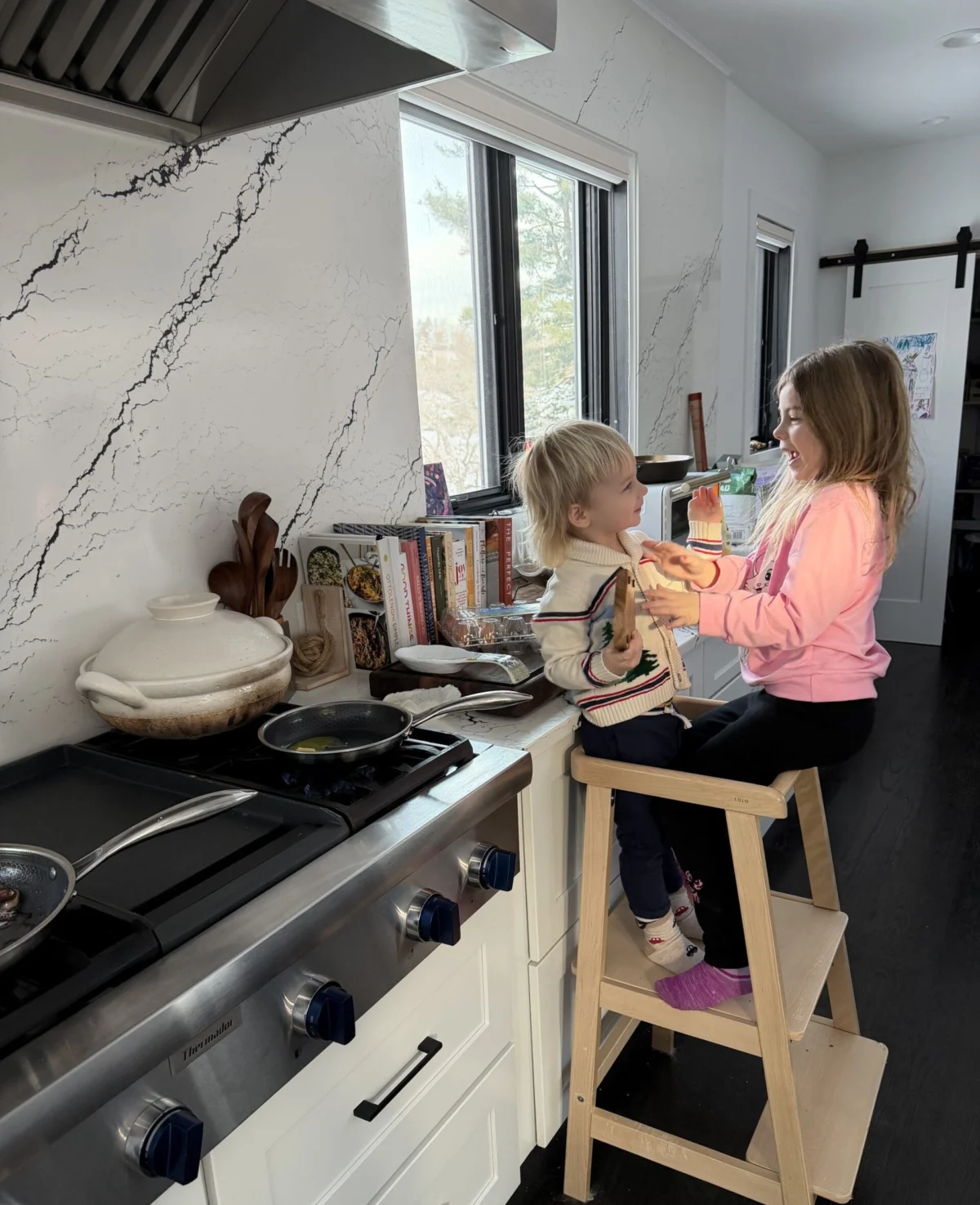
The contemporary family landscape, often characterized by demanding professional schedules and a myriad of digital distractions, presents unique challenges to fostering genuine connection and skill development within the home. Amidst these pressures, the simple act of cooking together is emerging as a powerful, yet often underestimated, tool for holistic family enrichment. Insights from public figures, such as ESPN anchor Laura Rutledge, underscore a growing recognition of the profound benefits derived from inviting children into the kitchen, transforming mundane tasks into meaningful opportunities for bonding, learning, and personal growth. This perspective, while rooted in personal experience, aligns with extensive research and expert consensus on child development, nutrition, and family psychology.
The Genesis of Family Culinary Engagement: A Natural Evolution
For many parents, the journey of cooking with children begins organically, often out of necessity. As Rutledge notes, her earliest memories involved preparing meals with an infant on her hip, a testament to the integrated nature of parenting and household duties. This early immersion establishes the kitchen not merely as a functional space but as a central hub of family life. From infancy, children are exposed to a rich sensory environment: the aromas of spices, the vibrant colors of fresh produce, the sounds of chopping and sizzling, and the textures of ingredients. This natural exposure is crucial for sensory development and can lay the groundwork for a positive relationship with food.
Historically, children’s involvement in meal preparation was a given, an integral part of daily life and intergenerational knowledge transfer. In agrarian societies and even through the mid-20th century, children learned practical skills from their parents and grandparents in the kitchen, contributing to the family’s sustenance. The latter half of the 20th century, however, saw a shift with the rise of processed foods, dual-income households, and an emphasis on formal education over practical life skills. Yet, in recent decades, there has been a resurgence of interest in home cooking, driven by health consciousness, a desire for authentic experiences, and a renewed appreciation for family traditions. The integration of children into this process represents a return to foundational principles of family life and skill acquisition.
Nurturing Connection: Quality Time Unscripted
One of the most frequently cited benefits of cooking with children is the creation of authentic, pressure-free quality time. Unlike structured activities or dedicated "talks," the shared task of preparing a meal allows conversation to flow naturally. As children like Reese measure ingredients or Jack stands on a step stool beside a parent, discussions organically emerge about their day, their burgeoning ideas, or even humorous anecdotes involving family pets. This unforced interaction fosters an environment where children feel comfortable sharing their thoughts and feelings without the perceived pressure of a formal interrogation.
Child development specialists consistently emphasize the importance of unstructured play and shared activities for fostering deep emotional connections between parents and children. Such moments, devoid of a specific agenda, allow for genuine presence and reciprocal engagement. Research by organizations like The Family Dinner Project highlights that regular family meals, often prepared together, are associated with a range of positive outcomes, including higher academic achievement, lower rates of substance abuse, and stronger parent-child communication. The kitchen, in this context, becomes a unique social laboratory where family members learn to collaborate, communicate, and simply "be" together, reinforcing bonds that extend far beyond the meal itself. The willingness to embrace imperfection—the slightly askew cake or the flour-dusted countertops—transforms the process from a culinary chore into a joyful, shared experience, often punctuated by laughter, singing, and impromptu dance moves, as Rutledge recounts. This acceptance of mess and imperfection allows everyone, including the parent, to relax and fully engage in the moment.
Cultivating Palates: The Psychology of Ownership
A common challenge for parents globally is navigating children’s picky eating habits. The energy expended in coaxing children to consume certain foods can be considerable, often with limited success. However, a significant shift occurs when children become active participants in the meal preparation process. The principle of "ownership" proves to be a powerful motivator, even for preschoolers. When children contribute to making dinner, their investment in the outcome—and consequently, their willingness to try new foods—increases dramatically.
Pediatric nutritionists and child psychologists frequently advocate for involving children in food preparation as a strategy to combat food neophobia (the fear of new foods) and encourage healthier eating habits. When children stir the soup, sprinkle the cheese, or carefully pour pasta into a pot, they develop a sense of agency and accomplishment. This hands-on involvement demystifies food and transforms it from an intimidating unknown into something they have personally crafted. Studies have shown that children who participate in cooking are more likely to eat vegetables and a wider variety of foods. This is not merely anecdotal; it is rooted in psychological principles where perceived control and active participation reduce resistance. A child who previously declared an aversion to vegetables might, after helping prepare a dish, proudly consume the very ingredients they once shunned, driven by the pride of creation.
The Kitchen as a Classroom: Developing Essential Skills
Beyond fostering connection and adventurous eating, the kitchen serves as an invaluable, real-world classroom where children acquire a diverse array of practical life skills without even realizing they are learning. This experiential learning environment offers tangible lessons in cognitive, motor, and socio-emotional development.
- Cognitive Skills: Measuring ingredients (cups, spoons, fractions) introduces fundamental mathematical concepts. Following a recipe develops sequencing abilities, logical thinking, and early literacy skills (reading instructions). Problem-solving skills are honed when an ingredient is missing or a step needs adjustment.
- Fine and Gross Motor Skills: Tasks such as stirring, pouring, kneading, chopping (with age-appropriate tools), and cracking eggs refine fine motor coordination and dexterity. Carrying bowls or moving pots develops gross motor skills and spatial awareness.
- Socio-Emotional Development: Learning gentleness while cracking an egg, patience while waiting for dough to rise, and cooperation when working alongside a parent or sibling are critical socio-emotional lessons. Children develop confidence in their abilities to follow instructions and create something tangible for the family. The kitchen also provides a safe space to learn about hygiene, food safety, and the importance of cleanliness.
Early childhood educators consistently champion hands-on learning as the most effective method for skill acquisition. The kitchen provides a multi-sensory, practical context for these lessons, making abstract concepts concrete. Investing in child-safe tools—such as blunt knives, sturdy mixing bowls with handles, and reliable step stools—is paramount to creating an accessible and secure environment. This thoughtful preparation alleviates parental anxiety about sharp edges and hot surfaces, allowing parents to genuinely share their passion for cooking and empower their children to contribute meaningfully and safely.
Mindfulness in Motion: Reclaiming Parental Presence
In an era defined by rapid communication, constant demands, and the pressure to perform at high levels—a reality acutely experienced by professionals like an ESPN anchor who is "wired to move fast, think faster, and be ready for anything"—the act of cooking with children offers a powerful counter-narrative. It necessitates a deliberate deceleration. The pace of a toddler meticulously spooning tomato sauce into a pot, one tiny spoonful at a time, cannot be rushed. This forced slowness becomes a form of mindfulness, anchoring the parent firmly in the present moment.
Family therapists and mindfulness practitioners emphasize the profound benefits of cultivating presence in parent-child interactions. When a parent is fully engaged in a child’s pace, celebrating small victories like remembering to "stir slowly," the mental chatter of work deadlines, emails, and future commitments recedes. This dedicated, undivided attention strengthens the parent-child bond and allows parents to collect precious "tiny wins"—a new food tried, a small skill mastered, a shared laugh over a culinary mishap. These moments, often captured candidly on phones, become cherished memories, underscoring the truth that despite the inevitable chaos and mess, cooking with children is a deeply rewarding and joyful experience. It is a vital antidote to the relentless pace of modern life, offering a sanctuary of calm and connection.
Empowerment Through Contribution: Building Self-Efficacy
Beyond the tangible skills and emotional benefits, cooking provides children with a unique platform to feel like important, contributing members of the family unit. The act of slicing fruit, kneading dough, or squeezing tomatoes for a sauce is not merely pretend play; it is real work with a tangible outcome. Watching a child stand taller, beaming with pride because they have genuinely helped create a meal, is a powerful affirmation of their capability.
Developmental psychologists highlight that fostering a sense of competence and autonomy is crucial for building a child’s self-esteem and self-efficacy. When children are given real responsibilities, rather than just superficial tasks, they learn that their contributions matter and have a direct impact. Allowing children to "own" their tasks completely, even if the outcome isn’t perfectly restaurant-quality—a slightly overcooked scrambled egg made by a proud child, for instance—is far more valuable than strict adherence to culinary perfection. This empowerment through genuine contribution instills confidence, resilience, and a sense of belonging. The kitchen, therefore, transcends its functional role to become one of the most effective environments for nurturing a child’s intrinsic motivation and belief in their own abilities.
The Enduring Value of Family Cooking: Broader Implications
The cumulative benefits of cooking with children extend beyond individual family units, contributing to broader societal well-being. By fostering communication, teaching essential life skills, promoting healthy eating, and building self-esteem, family culinary engagement plays a crucial role in raising well-adjusted, capable individuals. It helps transmit cultural heritage through recipes and food traditions, strengthens community bonds as families share meals and knowledge, and encourages a more mindful approach to consumption and lifestyle.
In an increasingly complex world, the simple, tangible act of creating food together offers a grounding experience, connecting families to fundamental human needs and joys. It is an investment not only in the present happiness of a family but also in the long-term health, development, and resilience of its youngest members. The spaghetti carbonara recipe, or any other family favorite shared in the kitchen, becomes more than just a meal; it transforms into a vehicle for love, learning, and indelible memories, proving that the chaos and mess are indeed a small price to pay for such profound and lasting enrichment.

