
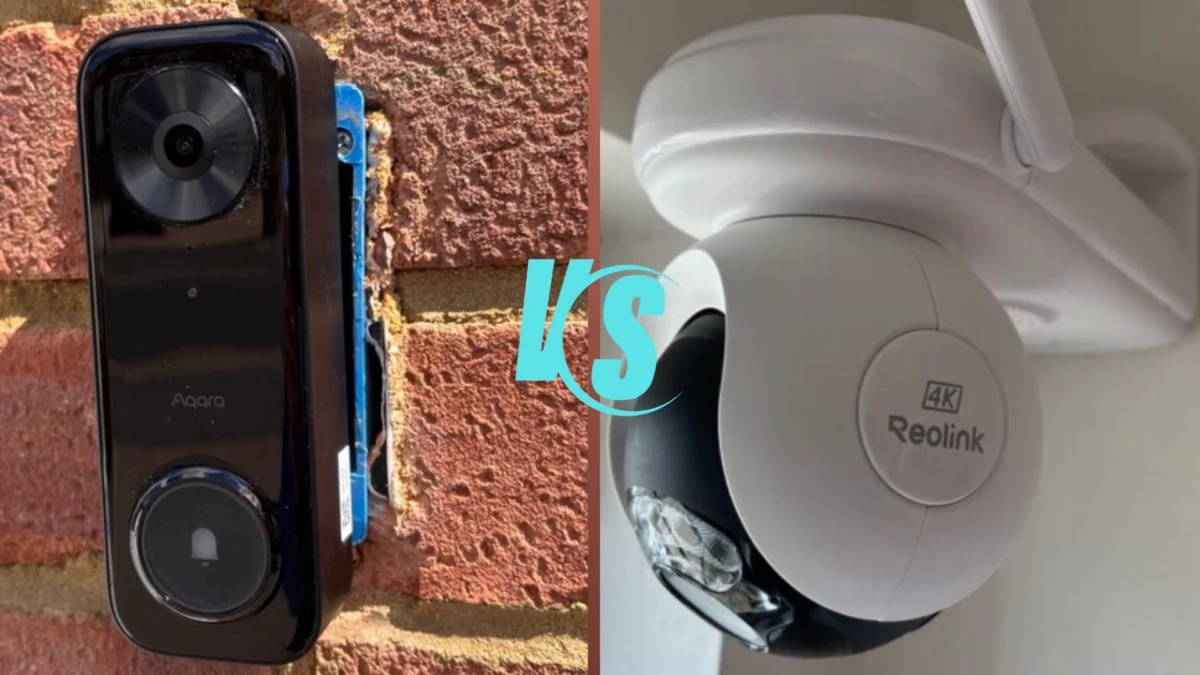
The landscape of smart home security is increasingly dominated by video doorbells, offering homeowners enhanced peace of mind and convenient interaction with visitors. However, navigating the market can be complex, with manufacturers adopting distinct philosophies. Aqara and Reolink, both recognized for offering compelling alternatives to subscription-reliant security systems, present starkly different approaches to video doorbell technology. Aqara integrates its doorbells within a broader smart home ecosystem, while Reolink prioritizes standalone security camera functionality with extensive local recording and network protocol support. This comparison delves into the nuances of their offerings, specifically examining Aqara’s G4, G410, and G400 Wired models against Reolink’s Video Doorbell WiFi and Video Doorbell PoE, to determine which best suits varying consumer needs and technical preferences.
Understanding the Core Philosophies: Ecosystem vs. Standalone Security
The fundamental divergence between Aqara and Reolink lies in their strategic positioning within the smart home market. Aqara, known for its comprehensive range of Zigbee and Matter-enabled smart home devices, views its video doorbells as integral components of a connected living environment. This means the doorbell often doubles as a hub or gateway, facilitating communication and automation with other Aqara products and compatible smart home platforms like Apple HomeKit, Google Home, and Amazon Alexa. The emphasis is on seamless integration and the doorbell’s role in orchestrating broader smart home functionalities.
Conversely, Reolink treats security cameras, including its video doorbells, as the primary focus. Its philosophy centers on providing users with maximum control over their video footage and network integration. This is evidenced by built-in support for local recording via microSD cards and Network Video Recorders (NVRs), alongside industry-standard protocols such as Real-Time Streaming Protocol (RTSP) and ONVIF. This approach appeals to users who prioritize data privacy, granular control over storage, and the ability to integrate cameras into existing or custom-built surveillance systems, particularly those employing open-source platforms like Home Assistant.
Rigorous Testing Methodologies: Beyond the Spec Sheet
Evaluating smart home devices, especially those critical for security like video doorbells, demands more than a cursory glance at technical specifications. The Ambient’s testing methodology emphasizes long-term, real-world usage. This involves assessing not only the initial setup process and everyday reliability but also the responsiveness and accuracy of notifications, the clarity and detail of video quality under various lighting conditions, the depth of smart home integrations, and the sustained performance as an integral part of a functioning household.
The comparison between Aqara and Reolink highlights that apparent similarities in price and headline features can mask vastly different user experiences. The choice between these brands significantly hinges on a user’s existing smart home infrastructure—whether they rely on Apple Home, Google Home, Home Assistant, a proprietary NVR, or one of the companies’ own ecosystems. This contextual understanding is crucial for making an informed decision.
Detailed Model Breakdown: Aqara’s Ecosystem-Centric Approach
Aqara offers a tiered approach to its video doorbells, catering to different power requirements and feature sets, all while maintaining its ecosystem focus.
Aqara G4: This model stands out for its flexibility in power options, operating on six AA batteries or through wired connections (12-24V AC or 8-24V DC). It boasts a 162-degree field of view. A key component of the G4 system is its indoor repeater, which not only provides the network connection but also supports local microSD storage for up to 512GB of footage. This design allows for installation even in locations without readily accessible power.
Aqara G410: Positioned as a more advanced offering, the G410 maintains the dual power option (battery or wired) but elevates video quality to 2K resolution. It features dual-band Wi-Fi (2.4GHz and 5GHz) for more robust connectivity, an expanded 175-degree field of view, and an integrated mmWave radar sensor for enhanced presence detection. Crucially, the G410’s indoor chime functions as a smart home hub, natively supporting Aqara Zigbee devices, Matter, and Thread protocols. This makes it a potent central point for a broader Aqara smart home setup, acting as a Matter controller and potentially a Thread border router.
Aqara G400 Wired: For users who prefer a dedicated wired connection, the G400 offers 2K video resolution (1536 x 2048) with a 165-degree diagonal field of view. It supports Wi-Fi 6 for superior wireless performance and includes an Ethernet port for Power over Ethernet (PoE) capabilities (802.3af), ensuring a stable connection and power supply. This model is designed for those committed to a hardwired installation.
Detailed Model Breakdown: Reolink’s Security-First Design
Reolink’s video doorbell lineup simplifies the approach, focusing on delivering high-quality security features and extensive local storage options.
Reolink Video Doorbell WiFi: This model is equipped with a 5MP sensor, capturing video at a resolution of 2560 x 1920. It supports dual-band Wi-Fi (2.4GHz and 5GHz) and can be powered by existing doorbell wiring (12-24V AC or 24V DC). Its primary appeal lies in its robust camera capabilities and direct network connectivity without the need for a separate hub.
Reolink Video Doorbell PoE: This variant shares the same 5MP resolution as the WiFi model but distinguishes itself by using a single Ethernet cable for both power and data transmission. This PoE capability is ideal for users who have existing Ethernet infrastructure at their front door or are planning a wired camera system. It is particularly suited for integration with NVRs and advanced home surveillance setups.
Comparative Analysis: Key Differentiating Features
| Feature | Aqara G4 | Aqara G410 | Aqara G400 Wired | Reolink Video Doorbell WiFi | Reolink Video Doorbell PoE |
|---|---|---|---|---|---|
| Resolution | 1080p | 2K | 2K (1536 x 2048) | 5MP (2560 x 1920) | 5MP (2560 x 1920) |
| Field of View | 162° | 175° | 165° diagonal | 180° diagonal | 180° diagonal |
| Power | Battery or wired | Battery or wired | Wired / PoE | Wired | PoE / wired |
| Wi-Fi | 2.4GHz | 2.4/5GHz | Wi-Fi 6 | 2.4/5GHz | N/A (Ethernet only) |
| Local Storage | microSD up to 512GB | microSD up to 512GB | microSD | microSD up to 256GB | microSD up to 256GB |
| RTSP Support | Limited | Wired mode only | Yes | Yes | Yes |
| ONVIF Support | No | No | Not listed | Yes | Yes |
| HomeKit Support | Yes | Yes | Yes | No official | No official |
| Home Assistant | Via integrations | RTSP when wired | Yes | Yes | Yes |
| Smart Home Hub | No | Zigbee/Matter/Thread | Chime/hub functionality | No | No |
| Weather Resistance | IP-rated | IP-rated | IP-rated | IP65 | IP65 |
Price Point and Value Proposition
From a cost perspective, Reolink often presents a more budget-friendly entry point, especially when considering the raw camera hardware and local storage capabilities. Their pricing is generally competitive, and the absence of mandatory subscription fees for core functionality is a significant draw. However, a direct price comparison can be misleading. Aqara’s G410, while potentially more expensive upfront, offers substantial added value through its integrated smart home hub features. If a user is already invested in or planning to build an Aqara ecosystem, the G410 can consolidate functionalities, potentially offsetting the higher initial cost by negating the need for a separate smart home hub.
It’s crucial for consumers to compare exact package deals, as both brands offer bundles that may include chimes or expanded storage options. The primary shared advantage across both Aqara and Reolink doorbells is their liberation from recurring subscription fees, a key differentiator from many competitors and a significant factor driving consumer interest.
Smart Home Ecosystem Integration: Aqara’s All-Encompassing Vision
Aqara’s most significant competitive advantage lies in its ability to seamlessly integrate its video doorbells into a comprehensive smart home infrastructure. The G410, in particular, embodies this philosophy. Its native support for Zigbee, Matter, and Thread connectivity transforms it from a mere doorbell into a pivotal smart home controller. It can function as a Matter controller, enabling communication between diverse smart devices, and as a Thread border router, extending the reach of the Thread network throughout the home. This means the doorbell positioned at the front door can simultaneously manage and connect sensors, lights, and other smart devices located in different parts of the house, offering a level of utility far beyond basic security monitoring.
Furthermore, the G410 exhibits broad compatibility with major smart home platforms, including Apple Home, Amazon Alexa, Google Home, and Samsung SmartThings. Its support for HomeKit Secure Video is a significant boon for Apple users, providing encrypted cloud storage and advanced intelligent detection capabilities. Aqara’s local facial recognition feature can be leveraged to trigger custom automations, and the doorbell’s presence detection can differentiate between various activities occurring near the entrance.
The G4 model also aligns with this ecosystem-first approach, especially for Apple Home enthusiasts. Its wide field of view, often exceeding Reolink’s horizontal coverage in certain comparisons, and its battery-powered operation offer greater installation flexibility where running new wiring is impractical.
Reolink’s Focus on User Control and Open Standards
In contrast to Aqara’s hub-centric model, Reolink prioritizes providing users with direct access and control over their camera feeds. The Reolink Video Doorbell does not aim to replicate smart home hub functionalities. Instead, it empowers users with direct access to camera streams through industry-standard protocols.
Support for RTSP and ONVIF is a cornerstone of Reolink’s strategy. These protocols allow the doorbell’s video feed to be integrated into compatible Network Video Recorders (NVRs) and a wide array of third-party surveillance systems. This is particularly advantageous for users who employ platforms like Home Assistant, enabling them to aggregate camera feeds from various manufacturers into a unified management system. This offers a level of flexibility and interoperability that is less common in more closed ecosystems. Essentially, Aqara embeds more smart home intelligence within the doorbell, while Reolink offers greater freedom in how users manage and utilize their video footage.
Video Quality and Night Vision: A Closer Look
For users prioritizing image clarity and detail, Reolink generally holds an edge due to its use of higher-resolution sensors. The Reolink Video Doorbell features a 5MP sensor, recording at 2560 x 1920 resolution at up to 20 frames per second. Its 180-degree diagonal field of view is extensive, though the precise horizontal and vertical coverage can vary.
Independent reviews have indicated that Reolink’s 5MP feed offers noticeably sharper daytime footage compared to Aqara’s 1080p G4 model, providing superior detail and dynamic range. Night vision performance on Reolink has also been noted as clearer for identifying individuals, although the effectiveness of its infrared illumination can be influenced by the installation angle relative to the door.
Aqara has addressed the resolution gap with its newer G410 and G400 models, both offering 2K video. The G410’s 175-degree view and 4:3 aspect ratio are designed to capture more of the surrounding area, including ground-level details like packages. The G400, with its 165-degree diagonal field of view and 3:4 aspect ratio, follows a similar principle.
However, for a direct, no-frills camera comparison, Reolink’s 5MP sensor provides a higher pixel count than the 2K Aqara doorbells. Furthermore, Reolink’s camera-centric software often provides more granular control over video settings, which can be appealing to advanced users.
Local Storage and Subscription Models: Prioritizing Data Autonomy
A significant shared benefit of both Aqara and Reolink video doorbells is their avoidance of mandatory monthly subscription fees for core functionality. This aligns with a growing consumer demand for privacy and cost predictability.
Aqara supports local microSD card storage, with the G4 and G410 models accommodating cards up to 512GB. The G4 also offers limited free event-based cloud storage, while the G410 supports both local and cloud storage options.
Reolink’s doorbells also feature microSD card support, typically up to 256GB, and can record directly to a Reolink NVR. The critical advantage here is Reolink’s robust support for RTSP and ONVIF, which liberates users from relying solely on Reolink’s proprietary NVR hardware. This is a substantial benefit for those building a comprehensive local security system, allowing integration with third-party NVRs and software solutions.
The independence from cloud storage is a major selling point for Reolink. In testing scenarios, disconnecting a Reolink doorbell from the internet did not impede its ability to record and play back footage, underscoring its commitment to local data autonomy. This is a significant consideration for individuals prioritizing the security and privacy of their footage.
A Reolink doorbell can function as one node within a larger NVR setup, seamlessly integrating with Reolink outdoor cameras, cameras from other manufacturers, and various compatible devices. It also works harmoniously with platforms like Frigate and Home Assistant, further enhancing its versatility for DIY security enthusiasts.
Home Assistant, HomeKit, and Third-Party Platform Compatibility
For users deeply integrated into the Apple Home ecosystem, Aqara is the unequivocally superior choice. The G4 and G410 offer official Apple Home integration, with the G410 further enhancing this by supporting HomeKit Secure Video. Its compatibility extends to Alexa, Google Home, and SmartThings, making it a versatile option for multi-platform users.
The integration with Home Assistant presents a more nuanced picture for Aqara. While the G410 now supports RTSP integration when wired, this functionality is lost when the doorbell operates on batteries. This limitation can be a significant drawback for users who prefer the flexibility of battery power.
Reolink doorbells, on the other hand, consistently offer RTSP and ONVIF support, irrespective of their power configuration. This unwavering commitment to open standards ensures that Reolink devices remain accessible to advanced users and custom integrations.
The Reolink Video Doorbell can effectively expose its live video feed, doorbell press events, and motion/person detection data to Home Assistant. Its RTSP and ONVIF capabilities ensure broad compatibility with a wide array of third-party NVR software.
The Reolink ecosystem is particularly well-suited for users who already employ or intend to use NVR software such as Frigate, Blue Iris, or a dedicated Reolink NVR. The trade-off for this advanced flexibility is the absence of official HomeKit support. While HomeKit compatibility can be achieved through third-party bridges like Scrypted, this adds an extra layer of complexity to the setup.
Therefore, the choice is clear: if Apple Home is the primary smart home platform, Aqara is the recommended route. If Home Assistant or an NVR-based system is the priority, Reolink emerges as the stronger contender.
Reliability and Build Quality Considerations
Physically, Aqara’s G4 and G410 models are noticeably larger than Reolink’s doorbells. This size difference can be a factor if the installation area has limited space or is surrounded by narrow trim. The G410, measuring 141.5 x 65 x 30.4mm, is substantial. However, this larger footprint accommodates Aqara’s integrated chime/hub, which performs more than just audible alerts; it serves as the central smart home controller. Its internal placement can also contribute to a more stable network connection for the doorbell.
Reolink’s doorbell is considerably more discreet, with independent measurements placing it around 133 x 48 x 23mm, making it significantly smaller than the Aqara G4. This compact design can be advantageous for aesthetic integration.
The Reolink WiFi model connects directly via 2.4GHz or 5GHz Wi-Fi, while the PoE model bypasses Wi-Fi entirely, relying on an Ethernet connection. This means Wi-Fi signal strength at the front door is a critical consideration for the WiFi version. In scenarios where the front door is at the periphery of a wireless network, the G410’s indoor hub/repeater approach can provide a more reliable connection.
Installation quirks can affect both brands. Reolink doorbells might require specific wiring configurations depending on the existing doorbell transformer. Conversely, Aqara’s larger physical size can present challenges in confined installation spaces.
Conclusion: Which Doorbell Reigns Supreme?
Ultimately, Reolink emerges as the more versatile and broadly applicable choice for most users seeking a robust video doorbell solution. This assessment is not a critique of Aqara’s capabilities; the Aqara G410, in particular, stands out as an exceptionally innovative smart doorbell. Its integration of a 2K camera with a Zigbee hub, Matter controller, and Thread border router functionalities offers significant value, especially for homes already invested in the Aqara ecosystem and Apple Home. For such users, the G410 can streamline their smart home setup by consolidating hub responsibilities and providing a doorbell with a multifaceted role beyond security.
However, for the primary purpose of security, Reolink’s camera-first philosophy proves more advantageous. Its 5MP doorbells capture higher-resolution video, and both WiFi and PoE models offer essential RTSP and ONVIF support, with the PoE version adding the benefit of a wired network connection. The combination of local microSD recording and NVR compatibility allows users to construct a security system centered on their own storage infrastructure rather than relying on a manufacturer’s cloud services.
This emphasis on local control becomes increasingly important as surveillance systems expand. A Reolink doorbell can coexist with outdoor cameras and an NVR without forcing users into a single, potentially costly, cloud subscription. Furthermore, it provides unparalleled freedom for Home Assistant users and those managing self-hosted camera platforms.
The decision hinges on user priorities:
- Choose Aqara G410 if: Your primary goal is to build or enhance an Apple Home or Aqara-centric smart home, and you desire the doorbell to serve a dual role as a smart home hub.
- Choose Reolink if: Your priority is superior camera quality, robust local recording options, seamless integration with Home Assistant, support for RTSP/ONVIF, or the establishment of an NVR-based security system.
For the majority of consumers, Reolink presents a more compelling proposition. It offers a wider selection of camera models and grants users greater autonomy over their video footage. This focus on user control, combined with strong security features and open standard support, positions Reolink as the default recommendation for those seeking a dependable, feature-rich, and future-proof video doorbell solution.

