
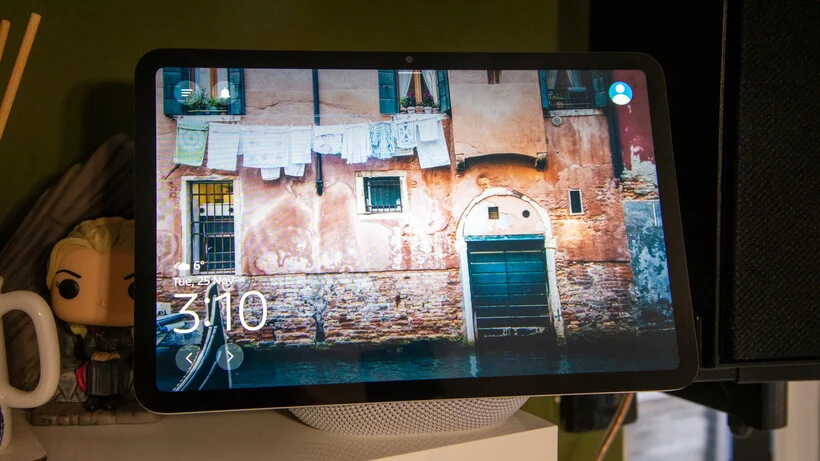
The Amazon Echo Show 11 emerges as a larger iteration of its highly successful predecessor, the Echo Show 8, offering a more expansive Full HD display. While this enhanced visual real estate caters to users who prioritize screen size, a closer examination reveals that the Echo Show 11 largely mirrors the functionality and internal components of the Echo Show 8, positioning it as a less compelling value for the majority of consumers. This review delves into the design, features, performance, and overall market placement of the Echo Show 11, comparing it directly to its smaller, more affordable sibling.
Evolution of Amazon’s Smart Display Lineup
Amazon’s foray into the smart display market has been a strategic evolution, aiming to integrate Alexa’s capabilities into a more visually interactive format. The original Echo Show devices, often characterized by a more utilitarian, wedge-like design, laid the groundwork. A significant development occurred with the introduction of the Echo Show 10, notable for its innovative motorized stand that allowed the screen to swivel and track user movement. While this feature offered a futuristic experience, it also contributed to a higher price point, a factor Amazon has clearly considered in subsequent designs.

The Echo Show 11 represents a deliberate shift away from such complex, cost-increasing mechanisms. By adopting a fixed base identical to that of the Echo Show 8 (4th Generation), Amazon streamlines manufacturing and component sourcing. This common base, available in the same color options and utilizing the same power input, allows for significant economies of scale. The primary differentiator, and indeed the sole functional upgrade over the Echo Show 8, is the larger 11-inch Full HD display. This design choice underscores Amazon’s strategy to cater to distinct user preferences within its smart display ecosystem, with the Show 11 targeting those who explicitly desire a larger screen.
Design and Physical Attributes: Familiarity and Refinements
Visually, the Echo Show 11 presents a sleek and modern aesthetic. The 11-inch screen appears to float above its base, a design element that enhances its contemporary appeal. This contrasts with earlier Echo Show models that featured more pronounced bezels and a bulkier profile. The minimalist approach, with a single power input port at the rear, contributes to a clean countertop presence.
Physical controls are strategically placed on the side of the screen, offering intuitive access to volume adjustments and a dedicated mute button. This mute button doubles as a camera and microphone shut-off, a crucial feature for privacy-conscious users. However, a notable omission from previous generations is the physical camera slider that once provided a tangible visual confirmation of the webcam’s deactivation. While the mute button effectively disables the camera, the absence of a slider may leave some users feeling less assured about their privacy, a sentiment echoed by many who value this explicit physical safeguard. The inclusion of an optional stand is also mentioned, catering to users who might desire adjustable screen tilt, a feature absent in the standard fixed design.

Core Functionality and Processing Power: Shared DNA with the Echo Show 8
Under the hood, the Amazon Echo Show 11 shares its internal architecture with the Echo Show 8. It is powered by the AZ3 processor, which incorporates an AI Accelerator designed to enhance Alexa’s capabilities, particularly in regions where Alexa+ is deployed. The article notes that in the UK, the GenAI assistant was not available for testing, limiting the ability to fully evaluate this specific performance enhancement.
Despite this regional limitation, the device demonstrates robust responsiveness to voice commands. The microphones are highly sensitive, capable of capturing even hushed requests in noisy environments. Alexa’s core functionality remains consistent across Amazon’s smart display range. This includes adept handling of smart home controls and general conversational queries. However, the article points out a persistent limitation in Alexa’s ability to access and present real-time external data, such as up-to-date local restaurant information, where competitors like Google Maps offer a more comprehensive and current database.
Display Enhancements and User Interface
The most significant upgrade in the Echo Show 11 is its 11-inch Full HD (1920×1080) display, a noticeable step up from the Echo Show 8’s resolution. This larger, sharper screen translates to a more detailed visual experience, making on-screen information, including widgets and text, easier to read. While the resolution is higher, the amount of information displayed per screen remains similar, with the primary benefit being increased legibility.

The default home screen configuration typically presents a slideshow of personal photos or curated Amazon content, alongside news headlines and recipe suggestions. Users have the flexibility to customize these displayed sections, tailoring the information flow to their preferences.
A key feature integrated into the Echo Show 11 is Visual ID. This technology leverages the device’s camera to recognize individual users, enabling personalized content delivery. For multi-user households, this means the smart display can present tailored calendar appointments, reminders, and other relevant information specific to the recognized user, enhancing the device’s utility and personalization.
The synergy between voice commands and visual feedback is a strong suit of the Echo Show 11. For instance, a weather query not only provides an audible forecast but also displays current conditions and allows users to swipe through hourly projections. Similarly, controlling smart home devices like thermostats or lighting is streamlined through intuitive on-screen interfaces, offering sliders for brightness adjustments or quick access to pre-set scenes. While voice commands are the primary interaction method, the smart home interface provides direct control, though the article notes some limitations, such as the inability to adjust individual bulb color or temperature settings through a global command, requiring individual adjustments for each device.

Advanced Smart Home Integration and Occupancy Sensing
The Echo Show 11 boasts a comprehensive smart home hub, incorporating support for Zigbee, Thread, and Matter protocols. This broad compatibility ensures seamless integration with a vast array of smart home devices, positioning it as a central control point for a connected home.
A standout feature is the integrated Omnisense technology. This advanced system utilizes both the device’s camera and onboard sensors to accurately detect occupancy within a room. This capability offers a significant advantage over traditional motion sensors, enabling more precise triggering of routines based on a room’s presence or absence. For example, lights can be automatically turned off when a room is vacant or activated upon entry, leading to potential energy savings and enhanced convenience.
Omnisense also powers Adaptive Content, a dynamic display feature. When a user is at a distance, the screen defaults to a slideshow. As the user approaches, the display seamlessly transitions to interactive widgets, providing immediate access to relevant information or controls. This intelligent adaptation enhances the user experience by presenting information contextually.

Multimedia Consumption: Streaming and Video Playback
For multimedia consumption, the Echo Show 11 supports dedicated applications for popular streaming services like Netflix and Amazon Prime Video. Access to other platforms such as Disney+ and YouTube is facilitated through the integrated web browser. While this offers flexibility, the article suggests that the user experience through the browser may not be as seamless as that provided by native applications. For users prioritizing a robust streaming experience, the Echo Show 15, with its full Fire TV platform integration, is presented as a more suitable option.
The display’s Full HD resolution enhances video clarity, making content appear sharper than on the Echo Show 8. While High Dynamic Range (HDR) support is absent, the screen exhibits good brightness and image uniformity. Black levels are noted to be slightly grey, a common limitation in LCD displays, but overall, video playback is described as clear and impactful, particularly for action-packed scenes. Despite these improvements, the article posits that the 11-inch screen is best suited for instructional or cooking videos rather than extended movie or television viewing.
Audio Performance: A Familiar Soundscape
The audio system within the Echo Show 11 is identical to that of the Echo Show 8, featuring a 2.8-inch woofer and dual full-range drivers housed within the base. This shared architecture results in comparable audio performance. The system is capable of delivering a robust sound, with bass-heavy tracks reproducing drums with satisfying power.

While stereo separation is inherently limited due to the close proximity of the drivers, the speakers effectively manage stereo tracks, offering a sense of spatial movement in music. The clarity and impact of the audio remain consistent, contributing to an enjoyable listening experience for music, podcasts, and spoken-word content.
The Webcam: Functionality and User Adoption
The Echo Show 11 is equipped with a 13MP webcam featuring auto-tracking and framing capabilities. The image quality is described as good, primarily benefiting video calls between Echo Show devices. However, the article raises a pertinent question about the actual user adoption of this feature, suggesting that many users may not frequently engage in video calls with their smart displays. While functional, its utility is contingent on individual usage patterns.
Value Proposition and Competitive Landscape
The core of the evaluation for the Amazon Echo Show 11 revolves around its value proposition. The device offers a larger screen and higher resolution compared to the Echo Show 8, but these enhancements come at an increased cost without a commensurate increase in core functionality or performance. The article firmly concludes that for the majority of users, the Echo Show 8 represents a superior value purchase. Its price point, combined with nearly identical feature sets and audio performance, makes it the more pragmatic choice for most consumers.

The Echo Show 11 carves out a niche for those who specifically prioritize screen real estate. Its design, while functional and aesthetically pleasing, does not introduce groundbreaking innovations that justify the price premium over its smaller counterpart. The decision to invest in the Echo Show 11 hinges almost entirely on the desire for a larger display, as the underlying technology and user experience remain largely consistent with the Echo Show 8.
In the broader smart display market, the Echo Show 11 competes with a range of devices from various manufacturers, each offering different strengths and price points. Amazon’s own Echo Show 15, with its full Fire TV integration, continues to be a strong contender for users seeking a more comprehensive media consumption experience. Other competitors offer alternative ecosystems and feature sets, making consumer choice dependent on individual needs and existing smart home infrastructure.
Conclusion: A Niche Upgrade for Specific Needs
The Amazon Echo Show 11 is a well-designed smart display that excels in delivering Amazon’s Alexa experience on a larger canvas. Its Full HD display offers a sharper and more legible interface, and features like Visual ID and Omnisense enhance its personalization and smart home capabilities. The audio performance is robust and mirrors that of the Echo Show 8, providing a satisfying listening experience.

However, the significant caveat remains its value proposition. By largely replicating the Echo Show 8’s internals and core features, the Echo Show 11 positions itself as a premium option solely for those who demonstrably need or desire a larger screen. For a substantial segment of the market, the Echo Show 8 provides a more balanced and cost-effective solution, offering a nearly identical smart display experience at a more accessible price point. The Echo Show 11 is a competent device, but its success will likely be determined by its ability to attract users who see the larger display as an indispensable feature, rather than a mere incremental upgrade.

