

The question of whether blogging can be a viable source of income, transcending a mere hobby to become a sustainable career, is a persistent one in the digital landscape. Amidst a flurry of sensationalized success stories and equally vocal pronouncements of impossibility, the reality of monetizing a blog lies in a more nuanced and pragmatic territory. Drawing from extensive experience in the field, this analysis aims to demystify the process, providing a grounded perspective on the potential and practicalities of earning a living through blogging.
The Dichotomy of Blogging Income Claims
The online sphere is often polarized when it comes to blogging revenue. On one end, there are amplified claims of rapid, multi-million dollar earnings, frequently accompanied by the promotion of digital products or services. These narratives, while attention-grabbing, often serve as marketing tools rather than accurate reflections of the average blogger’s journey. Conversely, a segment of online discourse posits that making significant money from blogging is largely unattainable, labeling those who claim to do so as either disingenuous or merely pushing further monetization schemes. This article seeks to bridge these extremes, asserting that substantial income generation through blogging is indeed achievable, extending beyond the exclusive domain of "make money online" gurus. The spectrum of success ranges from supplementing discretionary income for personal pursuits to establishing full-time, even enterprise-level, online businesses. The common thread across these successes is not serendipity, but a combination of strategic effort, creative adaptation, and a deep understanding of the blogging ecosystem.
The Tangible Reality of Blogging Income: A Decade of Observation
With nearly a decade of direct involvement in the blogging world, a significant portion of which has been dedicated to generating income, the evidence points towards a clear affirmative: blogging can be a lucrative endeavor. The journey often begins with modest earnings, perhaps a few dollars a day, which, with consistent effort and strategic development, can gradually escalate. This progression has been observed to evolve from supplementary income to the equivalent of a part-time job, and subsequently to a full-time professional pursuit. In some instances, this has even transformed into a small business, employing additional staff to manage operations and content creation.
While early in my blogging career, specific income figures were shared to illustrate the growth trajectory, a more mature perspective revealed the limitations and potential misinterpretations of such disclosures. The focus shifted from publicizing personal earnings to disseminating actionable insights applicable to a broader audience. Despite this shift, the underlying trend of consistent annual income growth has persisted.
This growth has been influenced by both favorable timing and strategic positioning. Entering the blogging arena in the early 2000s, when the medium was still nascent, provided an advantage. Furthermore, launching blogs on topics of interest at opportune moments has also contributed to success. However, it is crucial to acknowledge that this is not an isolated phenomenon. A considerable number of fellow bloggers have achieved financial independence through their platforms, many with less tenure in the industry than my own. Their experiences illustrate a wide range of outcomes, from bloggers who generate enough income to fund their hobbies, such as enjoying daily coffee, to those who supplement their primary employment, or those who manage their blogs while fulfilling family commitments. For a select group, blogging has become their sole professional occupation.
Diversified Monetization Strategies: No One-Size-Fits-All Approach
A fundamental aspect of understanding blogging income is recognizing the absence of a singular, universally applicable monetization model. The ProBlogger event in Melbourne, a significant gathering for the blogging community, has consistently featured a diverse lineup of speakers who have successfully navigated the path to part-time and full-time blogging careers. These individuals, hailing from a wide array of niches, demonstrate the multifaceted nature of blog monetization.
In a recent event iteration, speakers included bloggers focused on:
- Travel: Generating income through affiliate marketing for travel products, sponsored content with tourism boards, and selling travel guides.
- Parenting: Monetizing through the sale of digital products like e-books and courses, affiliate partnerships with baby product brands, and sponsored posts from family-oriented companies.
- Food: Earning revenue via recipe e-books, cooking classes, sponsored content with food brands, and affiliate marketing for kitchen gadgets.
- Finance: Generating income through affiliate partnerships with financial institutions, selling financial planning templates, and offering consulting services.
- Technology: Monetizing through affiliate sales of tech gadgets, sponsored reviews, and offering freelance tech support services.
The preceding year’s event showcased further diversity, with speakers who focused on:
- Crafts and DIY: Selling handmade goods, offering online craft workshops, and promoting craft supply affiliate programs.
- Personal Development: Creating and selling online courses, offering coaching services, and affiliate marketing for self-help books.
- Photography: Selling stock photos, offering photography workshops, and affiliate marketing for camera equipment.
- Gardening: Selling gardening guides and courses, affiliate marketing for gardening tools, and sponsored content with plant nurseries.
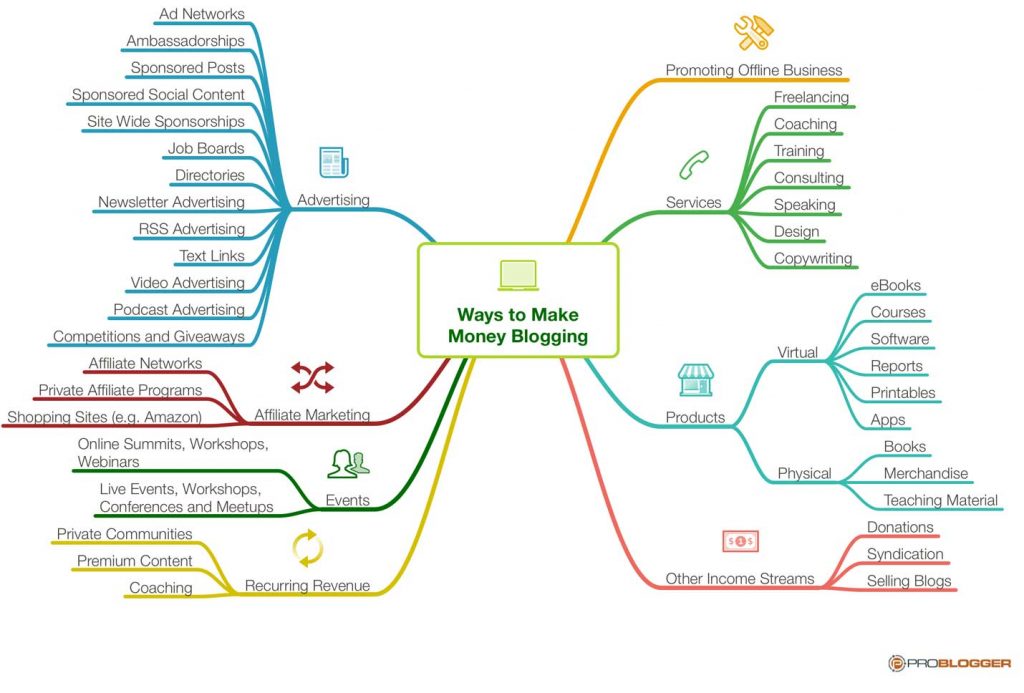
The commonality among these successful bloggers is not a shared monetization method, but rather a tailored approach that aligns with their specific audience and niche. Their strategies encompass a broad spectrum, including direct advertising sales, subscription-based membership models, the sale of digital products such as e-books and courses, affiliate marketing promotions, the endorsement of offline businesses, and leveraging their platform for speaking engagements or book deals. Many integrate multiple revenue streams to create a resilient and diversified income portfolio. These Australian examples represent a fraction of the global trend, illustrating the widespread applicability of these principles.
To provide a more comprehensive overview, a visual "money map" was developed, outlining numerous brainstormed monetization methods. This map, when enlarged, illustrates the breadth of opportunities available to bloggers.
Furthermore, a detailed webinar was recorded, offering an in-depth introduction to the various strategies for monetizing a blog, expanding on the concepts presented here.
The Absence of a Definitive Formula for Blogging Success
In the pursuit of online income, a recurring phenomenon is the emergence of products and programs that purport to offer a definitive "formula" for guaranteed success in making money online. These offerings often present a prescriptive, step-by-step methodology designed to eliminate uncertainty and promise lucrative outcomes. However, based on extensive observation and interaction within the blogging community over the past decade, such rigid formulas are largely illusory.

Each full-time blogger encountered has carved a unique path, characterized by a distinct narrative and a personalized approach to their craft. Their journeys are often marked by intuitive decision-making, serendipitous discoveries, and an adaptive response to evolving market dynamics. While commonalities in strategy and execution are observable, the core of their success lies in their individual brand identity, their ability to connect with a specific audience, and the unique monetization potential inherent in their chosen niche.
The most effective approach involves a continuous process of observation and learning from the successes and challenges of others. However, this should be complemented by a willingness to deviate from established patterns and forge an independent trajectory, tailored to one’s own strengths and circumstances.
The Broad Monetization Potential Across Diverse Niches
A frequent criticism leveled against discussions about blog monetization is the assertion that only those who blog about blogging make significant income. This perspective, however, is demonstrably inaccurate. Examining the profiles of successful bloggers, including those featured at the ProBlogger Melbourne event, reveals individuals operating in a wide array of everyday niches, none of whom primarily focus on teaching others how to make money online.
My personal experience further corroborates this. While ProBlogger, a blog focused on the art and business of blogging, has been a significant undertaking, my photography blog, Digital Photography School, has consistently proven to be the more financially successful venture, estimated to be ten times more profitable. This highlights that even within the same individual’s portfolio, different niches can yield vastly different revenue outcomes.
Interviews conducted for a webinar series with full-time bloggers have consistently reinforced this point. For instance:
- Sarah: Primarily blogs about health and well-being, generating income through affiliate partnerships with health product companies and the sale of her own wellness guides.
- Tsh: Focuses on simple living and homesteading, monetizing through sponsored content with sustainable brands and the sale of e-books on practical living skills.
- Ana: Blogs about woodworking and DIY projects, earning revenue through affiliate marketing for tool retailers and the sale of detailed project plans.
Crucially, none of these individuals derive their primary income from teaching others how to achieve blogging success. Their financial rewards stem directly from providing valuable content and resources within their respective subject areas.
The Statistical Reality: A Minority Earns a Full-Time Living
Despite the aspirational nature of blogging as a profession, statistical data consistently indicates that a majority of bloggers who attempt to monetize their platforms do not achieve a full-time income. Surveys conducted among ProBlogger readers, a demographic generally composed of individuals in the earlier stages of their blogging journey, reveal this trend.
A recent survey involving 1,500 ProBlogger readers provided insights into monthly earnings. The distribution of income among those actively pursuing monetization showed:
- Approximately 10% reported earning nothing.
- A further 28% earned less than $0.30 per day.
- A significant 63% earned less than $3.50 per day.
These figures underscore that the majority of bloggers striving for income are not generating a living wage. This demographic is largely comprised of individuals who have been blogging for less than two years, indicating that the initial phase of building an audience and establishing an income stream is often a prolonged process.
However, the data also reveals a segment of highly successful bloggers. Of the 1,508 surveyed, 4% (approximately 65 individuals) reported earnings exceeding $10,000 per month, translating to over six figures annually. An additional 9% earned over $1,000 per month, which represents a substantial part-time income.
Anecdotal evidence from blogging conferences over the past six years suggests a gradual increase in the number of full-time bloggers. Many more individuals are now achieving an income equivalent to several days of work per week from their blogs. Nevertheless, the overarching reality remains that for the majority, blogging income is modest.
The Chronology of Success: Time as a Critical Factor
A deeper analysis of the income data, particularly focusing on the top earning bracket, reveals a strong correlation between longevity and profitability. A striking 85% of bloggers earning over $10,000 per month had been actively blogging for four years or more. The remaining individuals in this top tier had typically been blogging for three to four years.
This temporal pattern mirrors personal experience. My own blogging journey involved approximately one year of non-monetized content creation. Once monetization strategies were implemented, it took around two years of gradual income increases to approach a full-time earning level. Reaching the top income bracket of over $10,000 per month took approximately four years of consistent effort.
This trajectory highlights that blogging for profit is not a get-rich-quick scheme. Building a substantial audience, establishing a recognizable brand, and cultivating trust and credibility are time-intensive processes. Even after several years of dedicated blogging, there is no absolute guarantee of significant financial returns.
The Indispensable Element: Sustained Effort and Proactive Engagement
Beyond longevity, a consistent and observable characteristic among successful full-time bloggers is their proactive nature and commitment to sustained effort. Passivity and blogging for substantial income are fundamentally incompatible. The notion of blogging as a purely "passive income stream" is largely a mischaracterization.
The past decade of operating online businesses has demanded a level of dedication and hard work that surpasses previous professional endeavors. While often enjoyable and energizing, the process is inherently demanding. It requires consistent content creation, ongoing engagement with the online community, diligent monitoring of business metrics, the development and marketing of products, and continuous efforts to expand audience reach.
The foundational pillars for building a profitable blog can be broadly categorized into four key areas, each requiring focused attention:
- Content Creation: Developing original, engaging, and valuable content that resonates with the target audience. This involves in-depth research, clear communication, and a commitment to quality.
- Audience Acquisition: Implementing effective strategies to attract and retain readers. This encompasses Search Engine Optimization (SEO), social media promotion, email list building, and other traffic generation techniques.
- Audience Engagement: Fostering a community around the blog through interactive elements, responding to comments, and building relationships with readers. This cultivates loyalty and advocacy.
- Monetization Strategies: Identifying and implementing appropriate revenue streams that align with the blog’s niche and audience. This requires experimentation and optimization of various income-generating methods.
The ultimate goal is to create blogs that are not only informative and interesting but also genuinely helpful to their readership. This does not happen organically; it is the direct result of substantial and sustained effort.
A critical, albeit often overlooked, factor is the act of starting. Many individuals harbor aspirations of launching a blog but never transition from dreaming to doing. The most significant hurdle is often the initial step. The process of creating a blog is more accessible than ever, and taking that first action is paramount to embarking on any potential journey towards online income.
Conclusions: The Realistic Path to Blogging Profitability
The evidence conclusively demonstrates that generating income from blogging is achievable. The number of individuals earning a part-time to full-time living from their blogs is steadily increasing. However, it is essential to acknowledge that this group still represents a minority within the broader blogging landscape.
Those who successfully derive a livelihood from blogging come from a diverse array of subject matters. A common denominator among them, however, is their sustained commitment and the significant period they have dedicated to their craft. The journey is often characterized by patience, consistent effort, and a strategic approach to content creation, audience building, and monetization.
Subscribe for Weekly Insights into Building Profitable Blogs
ProBlogger consistently publishes a wealth of articles and tutorials dedicated to the development of successful and profitable blogs. Our content focuses on the four key areas previously outlined: creating exceptional content, attracting and retaining readers, fostering audience engagement, and implementing effective monetization strategies. Additionally, we address the technical aspects crucial for managing a high-performing blog.
Each week, a curated summary of our latest articles and tutorials is disseminated through the ProBloggerPLUS newsletter, a complimentary offering as part of our free membership program. Subscribers have the flexibility to unsubscribe at any time.
To receive these weekly updates, simply provide your email address. Following a confirmation step via email, your first newsletter will arrive shortly, offering continuous guidance on your blogging journey.

