
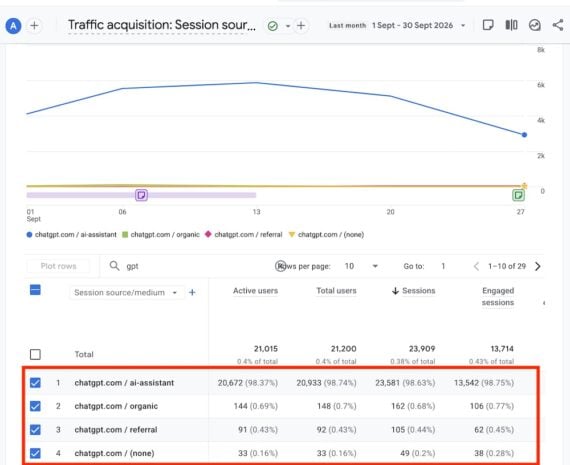
ChatGPT is rapidly evolving into a crucial driver of website traffic, exhibiting engagement levels that frequently surpass even the established power of organic search. While its volume might initially seem modest and sometimes overlooked in standard Google Analytics 4 (GA4) overviews, the quality of this traffic is proving to be exceptionally high, indicating a deeper user intent and interaction with content. This phenomenon is particularly noticeable for businesses and content creators focused on optimizing for AI-generated answers, a burgeoning field experiencing significant growth.
The observations regarding ChatGPT’s impact are based on practical experience in optimizing client websites for AI-driven content discovery. While formal academic studies specifically dissecting the "why" behind ChatGPT’s high engagement rates are still emerging, preliminary analyses suggest several contributing factors. One prevailing theory posits that users interacting with ChatGPT are often in a problem-solving or information-seeking mode. When ChatGPT provides a direct answer, it often links to specific web pages that offer the most comprehensive or relevant solution. This directed traffic, originating from a context where the user has a clear need, naturally leads to higher engagement metrics such as longer session durations, lower bounce rates, and a greater propensity to explore further content on the site.
Another potential driver of high engagement is the novelty and perceived authority of AI-generated recommendations. Users may be more inclined to thoroughly explore a resource provided by an AI, especially if it directly addresses their query, compared to sifting through traditional search engine results. This experimental phase of AI integration into information retrieval could be contributing to the elevated engagement observed. As generative AI tools become more integrated into mainstream user workflows, these engagement patterns may evolve. However, for the present, actively monitoring and understanding AI-driven traffic, particularly from platforms like ChatGPT, is becoming an essential component of digital strategy.
Tracking and Identifying ChatGPT Referrals in GA4
To effectively harness the potential of ChatGPT as a traffic source, businesses need to implement robust tracking mechanisms. Google Analytics 4 offers the tools necessary to identify and analyze this traffic, although it requires a degree of custom configuration.
Within GA4, the primary pathway to identifying referral traffic is through the "Acquisition" section, specifically the "Traffic acquisition" report. This report provides an overview of how users arrive at a website, categorized by various channels and sources. To isolate traffic originating from ChatGPT, a custom filter needs to be applied.

Steps to Track ChatGPT Referrals in GA4:
- Navigate to Traffic Acquisition: In your GA4 property, go to Reports > Acquisition > Traffic acquisition.
- Apply a Filter: At the top of the report, you will see an "Add filter" option. Click on it.
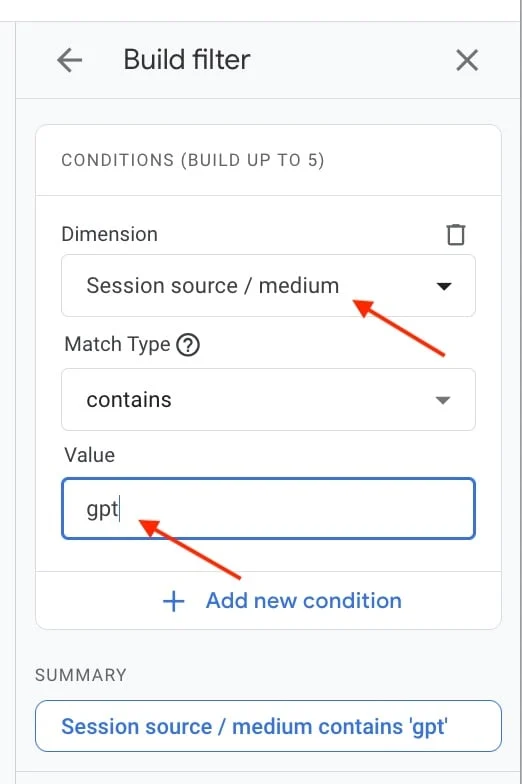
- Configure the Filter:
- Select "Include" as the filter type.
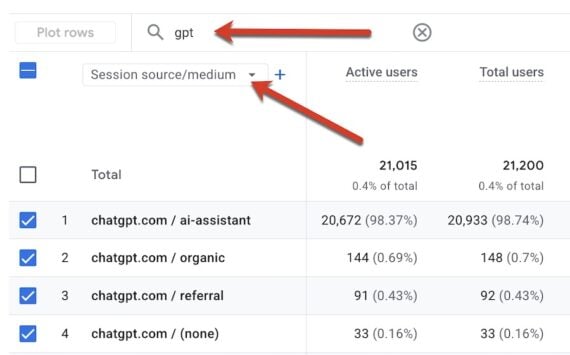
- Under "Dimension," search for and select "Session source / medium."
- Under "Match type," choose "contains."
- In the "Value" field, enter "gpt." This will capture sessions where the source or medium includes "gpt," which is a common identifier for ChatGPT-related traffic.
- Save the Report: Once the filter is applied, you can save this customized report for quick access in the future. This ensures that you can readily view ChatGPT-driven traffic without reconfiguring the settings each time.
By creating such custom reports, marketers and analysts can gain a clearer picture of the volume and performance of traffic directly attributable to ChatGPT. This proactive approach allows for more informed decisions regarding content strategy, SEO optimization, and understanding user intent.
Analyzing the Engagement and Intent of ChatGPT Referrals
Once ChatGPT referrals are identified, the next critical step is to analyze their engagement and infer user intent. While ChatGPT itself does not publicly disclose the specific prompts users employ, valuable insights can be gleaned by examining the landing pages that these users visit.
Analyzing ChatGPT Referrals in GA4:
- Access the Filtered Report: Open the saved "Traffic acquisition" report filtered for "gpt" sources.
- Examine Landing Pages: In the report, ensure that "Landing page" is included as a dimension. This will display the first page a user visited on your site from ChatGPT.
- Sort by Engagement Metrics: Sort the landing pages by key engagement metrics such as "Engaged sessions," "Average engagement time," or "Event count" to identify the most impactful pages.
- Infer User Prompts: For each high-performing landing page, consider the content and the problem it solves. This allows for a reasonable inference about the type of prompt that might have led ChatGPT to cite that particular page as a solution. For instance, if a page offers a detailed guide on troubleshooting a specific software issue, the inferred prompt would likely involve seeking a solution to that particular problem.
- Query ChatGPT Directly: To further validate these inferences, engage with ChatGPT itself. Paste the URL of a high-performing landing page into ChatGPT and ask questions like: "What prompts would trigger ChatGPT to cite this page as a solution?" or "Based on the content of this page, what kind of user query would lead you to recommend it?" This direct interaction can provide direct confirmation or refinement of your understanding of user intent.
Additional Analytical Tools:
Beyond GA4, investigating these high-performing pages through other analytical tools can provide a more comprehensive understanding:
- SEO Tools (e.g., Semrush, Ahrefs): Analyze keyword rankings for these pages. If they rank for informational or problem-solution keywords, it further supports the theory that ChatGPT is surfacing them in response to user queries seeking answers.
- Heatmap and Session Recording Tools (e.g., Hotjar, Crazy Egg): Understanding how users interact with these pages once they arrive can reveal further insights into their behavior and whether they are finding the information they seek.
By combining GA4 data with insights from these supplementary tools, businesses can develop a nuanced understanding of how ChatGPT is driving traffic and what content resonates most effectively with users directed from this AI platform.
Addressing Misattribution: Direct and Unassigned Channels
A significant challenge in accurately tracking ChatGPT traffic lies in how Google Analytics 4 (GA4) attributes referrals. A notable percentage of traffic originating from ChatGPT is often misclassified, appearing in GA4 as either "Direct" traffic or within the "Unassigned" channel. This misattribution primarily occurs because ChatGPT, in its effort to protect user privacy, frequently applies a "noreferrer" attribute to outbound links. This attribute effectively hides the referral source from standard tracking mechanisms, leading GA4 to categorize the traffic as direct if no other source is identifiable or as unassigned if it doesn’t fit any defined channel.
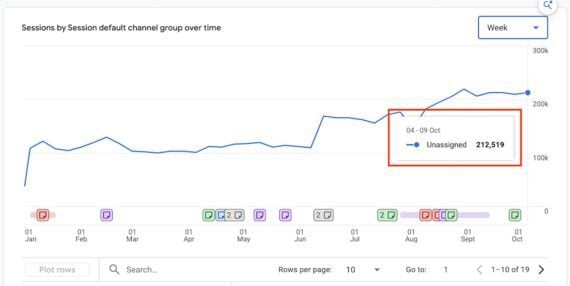
For many businesses, particularly those whose ChatGPT traffic is growing, this misattribution can lead to an underestimation of the AI’s impact. The "Unassigned" channel in GA4, often a repository for traffic that doesn’t fit neatly into predefined categories, can swell with this misclassified ChatGPT traffic, making it difficult to discern its true origin without specific investigative steps.
Example Scenario:
Consider a scenario where a website experiences a surge in traffic from users who have interacted with ChatGPT. If these users click on a link provided by ChatGPT to visit the website, and ChatGPT uses the "noreferrer" tag, GA4 might not record "chat.openai.com" as the source. Instead, it might simply register the visit as a direct entry or place it into the unassigned category. This is particularly problematic if the website relies on accurate attribution models to understand the ROI of different marketing channels. The growing volume of traffic appearing in the "Unassigned" category, as illustrated in some GA4 reports, directly points to this attribution challenge.
Mitigating Misattribution:
While GA4’s default settings may lead to this issue, there are strategies to mitigate the impact:
- Custom Channel Groupings: Advanced GA4 users can configure custom channel groupings to better categorize traffic. This might involve creating a rule that identifies sessions with specific landing pages that are known to be frequently cited by ChatGPT, or by looking for patterns that might indicate AI-driven referral.
- UTM Tagging (Limited Applicability): While UTM parameters are the standard for tracking campaign-specific traffic, they are less effective for identifying traffic originating from a third-party AI platform unless the AI platform itself supports custom parameter appending, which is not currently a widespread feature for direct user links.
- Focus on Behavioral Analysis: Even with misattribution, the high engagement metrics associated with these traffic segments (lower bounce rates, longer session durations) can still serve as an indicator of valuable traffic, even if its precise source is obscured. Analyzing the behavior of users within the "Direct" or "Unassigned" channels for patterns that align with high-engagement traffic can still yield insights.
- Regular Review of Unassigned Traffic: Proactively reviewing the "Unassigned" traffic segment for patterns, such as the landing pages visited or user behavior, can help identify and potentially reclassify significant portions of this traffic.
The challenge of misattribution underscores the dynamic nature of digital analytics in the age of AI. As AI platforms become more prevalent, the need for flexible and intelligent attribution models within analytics platforms will continue to grow. Businesses must remain vigilant and adaptive in their tracking and analysis to accurately reflect the evolving landscape of online traffic generation.
Broader Implications and the Future of AI-Driven Traffic
The emergence of ChatGPT as a potent traffic source has far-reaching implications for digital marketing, content creation, and website optimization. This shift signals a fundamental change in how users discover information online, moving beyond traditional search engine result pages (SERPs) to a more conversational and solution-oriented interaction with AI.
Implications for Content Strategy:
Websites that provide clear, authoritative, and problem-solving content are poised to benefit most from this trend. The emphasis will shift from solely optimizing for search engine keywords to creating content that directly answers complex questions and provides actionable solutions, making it highly valuable for AI models to cite. This necessitates a deeper understanding of user intent and a commitment to producing high-quality, in-depth resources.
SEO Evolution:

Search Engine Optimization (SEO) is likely to evolve beyond its current paradigms. While traditional on-page and off-page optimization will remain important, there will be an increasing focus on "AI SEO" – optimizing content to be easily understood and highly relevant to AI models. This could involve structuring content in a way that facilitates AI comprehension, using clear headings, providing structured data, and ensuring factual accuracy. The ability of a page to be cited by ChatGPT as a definitive answer will become a new metric of success.
Evolving User Journeys:
The user journey is becoming more complex. A user might start with a question posed to ChatGPT, receive a curated answer with a link to a website, engage with that website, and then potentially return to ChatGPT for further clarification or related queries. Understanding and optimizing for these multi-platform journeys will be crucial.
Data Analytics and Attribution Challenges:
As highlighted by the misattribution issues, the sophistication of digital analytics tools will need to advance to keep pace with these changes. Accurately attributing traffic and understanding the ROI of AI-driven channels will require innovative solutions and a willingness to adapt tracking methodologies. The current reliance on referrer data may need to be supplemented with behavioral analysis and potentially new forms of tagging or identification.
The Competitive Landscape:
Businesses that proactively adapt to this new landscape by optimizing for AI-driven discovery will likely gain a competitive advantage. Those that continue to solely focus on traditional SEO may find themselves lagging as user behavior shifts towards AI-powered information retrieval. The ability to be a trusted source within the AI ecosystem will become a significant differentiator.
In conclusion, ChatGPT’s ascent as a high-engagement traffic source is not merely a fleeting trend but a significant indicator of the future of online information discovery. By understanding its mechanics, implementing robust tracking, and adapting content and SEO strategies accordingly, businesses can effectively leverage this powerful new channel to connect with audiences and drive meaningful engagement. The ongoing development and integration of generative AI tools promise to further reshape the digital landscape, making adaptability and foresight paramount for success.

