
ChatGPT is rapidly emerging as a significant and surprisingly engaged source of website traffic, often surpassing even organic search in its ability to capture user attention and drive meaningful interactions. While its volume may not yet dominate Google Analytics 4 (GA4) overviews, the quality of traffic originating from this generative AI platform is proving to be exceptionally valuable, according to observations made by industry professionals specializing in AI-driven content optimization.
The nuanced understanding of ChatGPT’s impact stems from practical experience in optimizing client websites for AI-generated answers. As AI tools like ChatGPT become more sophisticated and integrated into user workflows, their role in directing traffic to online content is becoming increasingly apparent. This phenomenon is particularly noteworthy because it suggests a shift in how users are discovering and interacting with online information, moving beyond traditional search engine paradigms. The data, though sometimes challenging to isolate due to attribution issues, points towards a highly qualified and interested audience arriving via AI interactions.
Understanding the Engagement Phenomenon
While formal academic studies specifically dissecting the engagement metrics of ChatGPT traffic are still nascent, industry practitioners have begun to formulate theories based on observed user behavior. One prevailing hypothesis suggests that users interacting with ChatGPT are actively seeking solutions to specific problems or in-depth information. When ChatGPT provides a relevant answer that directs users to a particular webpage, those users are often already primed with a clear intent and a high level of curiosity. This pre-qualified intent translates into more meaningful engagement, such as longer session durations, more page views, and lower bounce rates, compared to traffic from broader, less targeted sources.

Another contributing factor may be the inherent nature of AI-generated responses. ChatGPT, by its design, aims to provide comprehensive and contextually relevant answers. When it cites external sources, it does so because those sources offer valuable information that directly addresses the user’s query. This curated referral process ensures that the traffic sent is not only relevant but also arrives with a strong expectation of finding the precise information needed, fostering a more engaged browsing experience. The platform’s ability to synthesize information and then point to authoritative sources creates a unique pathway for discovery, differentiating it from serendipitous browsing or broad keyword searches.
The trend of AI-driven traffic is expected to evolve as generative AI tools become more mainstream and their functionalities expand. As these platforms mature, their integration into various user interfaces and workflows will likely increase, potentially leading to a more significant volume of traffic. Consequently, monitoring and understanding AI-generated referrals is no longer a niche concern but an essential component of a comprehensive digital marketing strategy. The proactive approach of tracking and analyzing this traffic allows businesses to adapt to evolving user behavior and capitalize on emerging opportunities.
Tracking ChatGPT Referrals in Google Analytics 4
To effectively harness the potential of ChatGPT as a traffic source, it is crucial for businesses to accurately track these referrals within their analytics platforms. Google Analytics 4 (GA4) provides the tools necessary to identify and analyze traffic originating from AI platforms, although some configuration and interpretation are required.
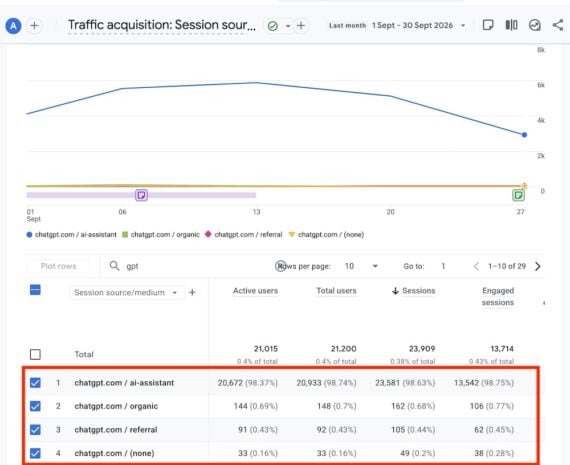
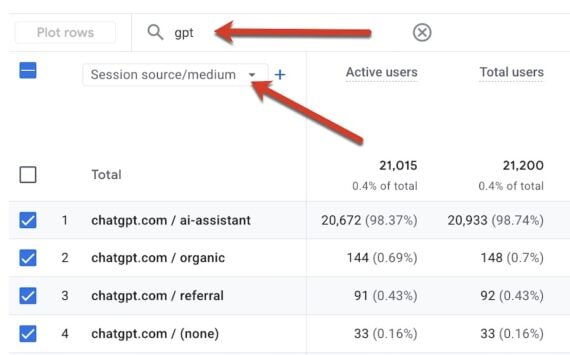
The initial step involves navigating to the "Traffic acquisition" report within GA4. This standard report provides an overview of user acquisition sources. While ChatGPT may not be explicitly listed as a default channel, its traffic can often be identified through its unique referral patterns. By examining the data, particularly the "Session default channel group" or "Source/Medium" dimensions, users can begin to identify traffic that might be attributed to AI interactions.
H2: Configuring Custom Reports for AI Traffic Analysis
To gain more granular insights and quickly access this data, creating custom reports in GA4 is highly recommended. This involves defining specific dimensions and metrics that align with the goal of tracking AI-generated traffic.
One effective method is to create a filter that specifically targets referral traffic containing keywords associated with ChatGPT. While ChatGPT does not publicly disclose the exact prompts users employ, an analysis of landing pages that receive traffic from this source can provide valuable clues. The content of these landing pages often directly addresses a problem or answers a question, implying that the user’s prompt was geared towards seeking that specific solution.
To build such a filter in GA4:
- Navigate to the "Explore" section of GA4.
- Create a new "Free-form" exploration.
- Under "Dimensions," add "Landing page" and "Session source/medium" (or "First user source/medium").
- Under "Metrics," add "Sessions," "Users," "Engaged sessions," and "Engagement rate."
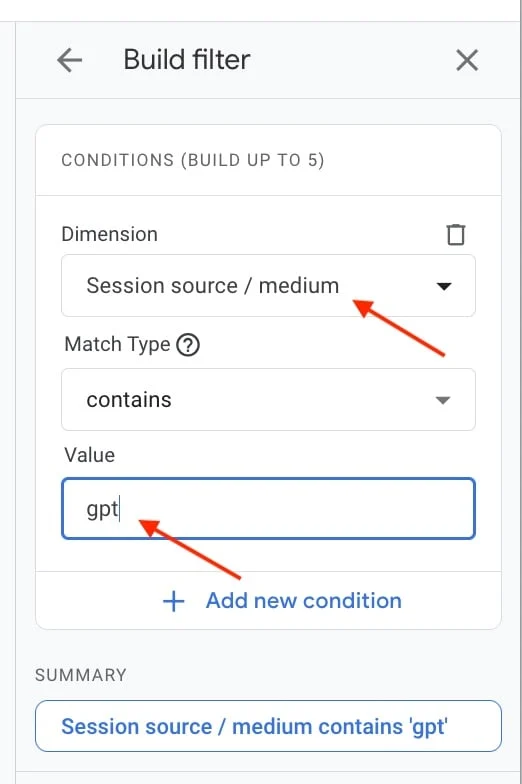
- In the "Filters" section, create a new filter. Select "Session source/medium" and set the condition to "contains" and enter "gpt." This filter will isolate traffic where the source or medium is identified as containing "gpt," a common indicator of ChatGPT referrals.
- Apply the filter and sort the results by "Sessions" or "Engaged sessions" in descending order.
This customized report will then display a list of landing pages that have received traffic from sources containing "gpt," sorted by the volume of sessions. By examining the landing pages, businesses can infer the types of queries ChatGPT users are making and how their content is being leveraged by the AI.
H3: Analyzing the Context of AI Citations
Once these AI-referred landing pages are identified, the next step is to understand the context in which ChatGPT is citing them. This involves a two-pronged approach: analyzing the landing page content and directly querying ChatGPT.
Businesses can examine the identified landing pages to understand what specific problems they solve or what information they provide. This analysis helps in deducing the nature of the prompts that would lead ChatGPT to cite these pages. For example, if a landing page offers a detailed guide on "troubleshooting common software errors," it is likely being cited in response to prompts seeking solutions for such issues.
Furthermore, a direct interaction with ChatGPT can provide invaluable insights. By posing questions like:
"This is my URL: [Insert your URL here]. What types of prompts or questions would likely trigger ChatGPT to cite this page as a solution?"

This direct query can reveal the specific user intents and information needs that ChatGPT is addressing, allowing businesses to align their content strategy more effectively with AI-driven discovery.
It is also prudent to investigate these high-performing pages using other analytical tools. SEO platforms can reveal keyword rankings and search intent related to these pages, while content analysis tools can offer deeper insights into readability, topic coverage, and user engagement patterns. This multi-faceted analysis provides a comprehensive understanding of why these pages are being favored by AI models and the audience they attract.
H3: Addressing Direct and Unassigned Channels
A significant challenge in accurately attributing traffic from AI platforms like ChatGPT lies in how Google Analytics classifies certain referrals. Due to privacy considerations, AI platforms often employ a "noreferrer" attribute when linking to external websites. This attribute instructs browsers not to send referral information to the destination website, effectively hiding the origin of the traffic.
Consequently, GA4, lacking explicit referral data, often misattributes this traffic. A substantial portion of ChatGPT-driven traffic may be incorrectly categorized as "Direct" (users who arrived without a discernible source) or, more commonly, as "Unassigned." The "Unassigned" channel in GA4 serves as a catch-all for traffic that cannot be automatically categorized by the platform’s default channel groupings.
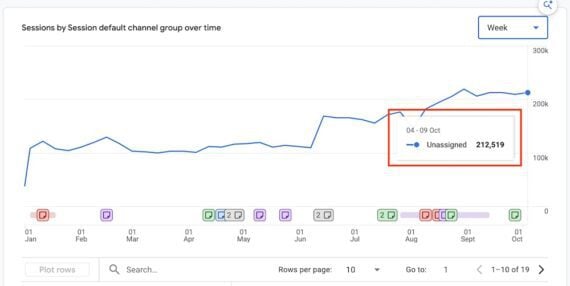
This misattribution can lead to an underestimation of ChatGPT’s actual traffic contribution and engagement. For many businesses, their growing ChatGPT traffic is likely being consolidated within the "Unassigned" segment, making it appear less significant than it truly is. This underscores the importance of the custom reporting and analytical methods outlined earlier to reclaim and understand this valuable, albeit sometimes hidden, traffic source. The increase in "Unassigned" traffic over time can be a strong indicator of a growing, yet unclassified, referral source like ChatGPT.
H2: The Broader Implications of AI-Driven Traffic
The rise of ChatGPT as a traffic driver signifies a fundamental shift in how users interact with the internet and seek information. This trend has several critical implications for businesses and digital marketers:
- Evolving Search Behavior: Users are increasingly leveraging conversational AI to find answers, bypassing traditional keyword-based search engines for certain types of queries. This necessitates a re-evaluation of search engine optimization (SEO) strategies to include optimization for AI answer generation.
- Content Strategy Adaptation: Content creators must focus on developing comprehensive, problem-solving, and authoritative content that is likely to be cited by AI models. This includes creating detailed guides, tutorials, and in-depth explanations that directly address user needs.
- Data Attribution Challenges: The "noreferrer" attribute and GA4’s classification of "Unassigned" traffic highlight the ongoing challenges in accurately attributing digital marketing efforts. Businesses need to develop robust methods for inferring and analyzing these less visible traffic sources.
- Opportunities for Engagement: The high engagement rates observed from ChatGPT traffic present a significant opportunity for businesses to connect with a highly motivated audience. Understanding the intent behind these referrals allows for more targeted content and user experiences.
- Future of AI Integration: As AI tools become more integrated into everyday life, their role as traffic drivers will likely expand. Businesses that proactively adapt to this trend will be better positioned to capture this emerging audience and maintain a competitive edge.
In conclusion, ChatGPT is no longer a fringe technology but a potent source of engaged website traffic. By understanding its mechanisms, employing accurate tracking methods, and adapting content strategies, businesses can effectively leverage this evolving digital landscape to drive meaningful user interactions and achieve their online objectives. The ability to decipher and act upon AI-generated referrals will be a key differentiator for success in the coming years.

