

Spend enough time scrolling through TikTok, and the distinctive messaging of Comfrt becomes ubiquitous. Creators stretch "Cloud Pants," compare adult and children’s sizes of their signature hoodies, or demonstrate a travel hoodie complete with hidden pockets and a built-in eye mask. The cadence is familiar: "buttery soft," "slightly weighted," "selling out fast," "on sale," "link below." This pervasive presence is not accidental but the result of a meticulously engineered system designed to produce, test, distribute, and monetize creator content at an extraordinary volume, transforming a modest launch into a multi-million dollar e-commerce sensation. However, this rapid ascent has not been without its challenges, as demand repeatedly outstripped inventory, cash flow, and customer service capabilities, forcing the brand into a continuous cycle of adaptation and strategic recalibration.
The Precedent: Hudson Leogrande’s Early Foray into Influencer Marketing
The architect behind Comfrt’s impressive trajectory is Hudson Leogrande, an entrepreneur whose previous venture provided invaluable, albeit challenging, lessons in the volatile world of digital influence. Before Comfrt, Leogrande dedicated years to building PurelyWhite Deluxe, an oral-care e-commerce brand. His breakthrough moment arrived when a Snapchat creator’s post reportedly generated approximately $4,000 in a single day, a clear demonstration of the platform’s burgeoning power. Capitalizing on this insight, Leogrande systematically recruited more creators, often engaging them to post daily, which propelled PurelyWhite Deluxe from a nascent operation to a business reportedly generating $10 million in annual revenue. This period of rapid expansion earned Leogrande accolades, including a Forbes 30 Under 30 recognition and a nomination for EY Entrepreneur of the Year in 2026.
However, the ephemeral nature of social media success soon became apparent. Snapchat’s subsequent changes to its algorithm and creator monetization model had a devastating impact. Creator views reportedly plummeted by around 70%, yet PurelyWhite Deluxe continued to incur similar flat fees for its influencer engagements. The fallout was immediate and severe: revenue dropped precipitously to approximately $2 million the following year. This experience underscored a critical vulnerability in relying solely on a single platform’s algorithmic whims.
Beyond platform instability, PurelyWhite Deluxe faced an inherent product limitation. Despite serving an estimated one million customers, Leogrande noted that only about 500 creators had posted themselves using the teeth-whitening product. Teeth whitening, often a private grooming ritual, inherently limited its potential as a visible identity marker or an everyday social behavior suitable for widespread content creation. This realization cemented a crucial insight for Leogrande: for a brand to truly thrive on social media, especially short-form video platforms, its product needed to be inherently demonstrable, shareable, and integrated into daily life and public identity.
Comfrt’s Strategic Genesis: Designing for Shareability
Armed with the hard-won knowledge from PurelyWhite Deluxe, Hudson Leogrande embarked on his next venture, Comfrt, with an initial investment of $50,000 from his previous business. The brand name itself was conceived first, a direct embodiment of the core promise: physical and emotional comfort. The inaugural product was a soft, oversized, slightly weighted hoodie, meticulously designed to evoke feelings of calm, security, groundedness, and being "wrapped in a hug." This design ethos directly addressed the limitations of his previous product; a hoodie is not only visible and wearable but also intrinsically shareable in a way that teeth whitening is not. It invited interaction, display, and personal expression, making it a natural fit for content creation.
Before its official launch, Comfrt distributed prototypes to approximately 15 creators who had previously collaborated with PurelyWhite. Their feedback was overwhelmingly positive, suggesting a strong market fit. Yet, the initial consumer response upon launch told a different story. The very first TikTok video on the Comfrt account garnered over 350,000 views, indicating strong organic interest, but sales did not immediately follow suit. Leogrande reported that Comfrt generated only approximately $10,000 on launch day, falling significantly short of its $100,000 target. The brand had an appealing product and an eager creator base, but it lacked the crucial elements of consumer trust, widespread recognition, and a compelling price point to drive initial conversions.
To bridge this considerable gap, Leogrande initiated a critical pricing experiment. He began testing lower prices, and when the signature hoodie reached approximately $69, demand dramatically improved. A combination of organic TikTok content and strategic Snapchat promotions rapidly amplified the product’s reach, leading to an swift sell-out of the initial inventory. This marked a pivotal moment, solving the brand’s initial conversion problem. However, it simultaneously introduced the next major hurdle: maintaining product availability in the face of explosive, unpredicted demand.
The Product as Content Catalyst: Built for the Feed
Comfrt’s product design inherently fostered content creation, regardless of its original intent. The oversized, tactile nature of the garments provided creators with an abundance of visual and sensory elements to showcase. They could pull at the fabric to demonstrate its stretch, compare adult and kids’ sizes for relatable content, highlight the oversized fit for comfort, reveal cleverly hidden pockets, or visibly react to the product’s weight and softness. Subsequent product lines, such as travel hoodies with built-in eye masks and secure compartments, or "snack hoodies" with insulated pockets, further expanded the content possibilities. Even heated blankets with visible controls offered creators unique features to test and demonstrate on camera.
This inherent demonstrability proved crucial in addressing a persistent challenge for e-commerce brands: effectively communicating sensory experiences through a screen. Traditional product photography often falls short in conveying the "feel" of a fabric or the "comfort" of a garment. Creator demonstrations, however, provided viewers with a human reference point, allowing them to visualize and understand the product’s qualities in a far more engaging and persuasive manner. Every new feature, collection, colorway, and use case became a fresh impetus for creators to generate new content, demanding a far more extensive and sophisticated creator operation.
Scaling the Creator Ecosystem: From 20 to a 500-Person Content Engine

Comfrt’s early growth was significantly powered by a lean but effective creator network. Hudson Leogrande indicated that during this initial period, approximately 20 core creators were responsible for producing at least 10 posts each month, yielding roughly 200 new creative assets for the company to test. These assets were then strategically deployed in Meta and TikTok ads, with increased spending allocated to content that demonstrated superior performance. Leogrande reported an impressive initial return on ad spend (ROAS) of 4 to 5 times, validating the effectiveness of this creator-led advertising approach.
The success of this model prompted a dramatic expansion of the network. Comfrt reportedly scaled to include over 250,000 ambassadors and later grew its affiliate network to approximately 600,000 registered members. While these figures encompass a wide spectrum of activity levels, the core content engine is driven by a more focused group of approximately 500 recurring creators who serve as the visible faces of the brand.
To support and optimize this vast creator network, Comfrt established a comprehensive operational infrastructure. Creators receive guidance and support from a dedicated influencer director, an affiliate manager, Discord moderators, and data scientists. They participate in weekly calls, receive performance feedback, and are provided with regular guidance through platforms like Discord and Notion. Standard ambassadors are incentivized through a commission model, earning 10% of attributable merchandise revenue, directly linking their content creation efforts to tangible financial rewards.
This system provides creators with essential product information, clear creative boundaries, examples of successful content, and data-driven feedback on what converts. Crucially, creators are empowered to translate this guidance through their own authentic voices, personalities, and formats, fostering a sense of "guided creative freedom." This approach ensures a consistent sales structure while maintaining enough individual variation to resonate with diverse audiences.
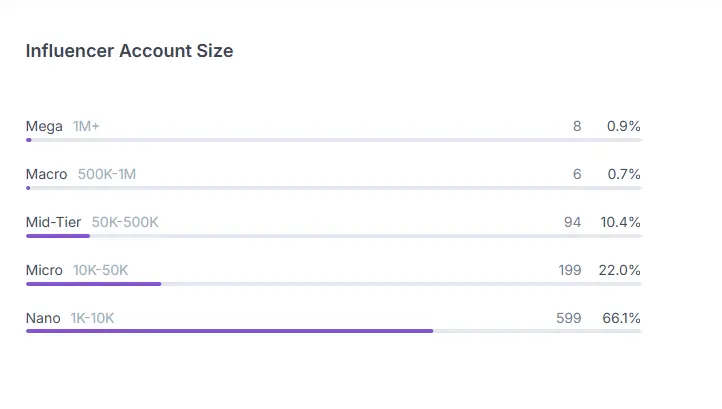
HypeAuditor’s Competitor Analysis Tool further illuminates Comfrt’s strategic creator mix. Nano creators, with their smaller but often highly engaged audiences, accounted for 66% of accounts mentioning Comfrt, followed by micro creators at 22%. Individual accounts represented an overwhelming 98.5% of the brand’s total creator footprint, emphasizing a broad, decentralized approach to organic visibility. For sponsored activities, the strategy shifted, with micro-influencers comprising 50.6% of this group, and "family creators" emerging as the top niche at 16.7%. This bifurcated strategy suggests that Comfrt leverages nano creators for high-volume, relatable organic reach and creative experimentation, while directing more concentrated paid support towards micro-influencers, particularly those in family-oriented niches, for targeted amplification and conversion.
The TikTok Blueprint: Converting Interest into Sales
Comfrt’s creator videos adhere to a proven TikTok formula, seamlessly blending product demonstrations with emotional framing, social proof, timely offers, and clear calls to action. The content typically begins with an immediate "hook," which might announce a new product drop, introduce a surprising feature, highlight a limited-time sale, respond to a common customer question, or even playfully challenge the product’s hype. Dialogue-driven videos are particularly effective, making the recommendation feel like an authentic conversation between trusted friends or family members, thereby building immediate relatability and credibility.
The middle section of the video provides essential practical information. Creators detail the material composition, demonstrate the fit, often stating their own height and size for context, and showcase available colors. Critically, the physical attributes are consistently linked to a deeper emotional benefit: the product "feels like a hug," "makes travel effortless," or offers a comforting retreat after a stressful day. This emotional resonance transforms a simple garment into a solution for daily well-being.
Finally, the content drives towards conversion. Scarcity is often emphasized ("product is discounted," "color is limited," "sizes are disappearing"), and a direct link to purchase is prominently displayed beneath the video. While each creator brings their unique personality and style to the content, this underlying commercial sequence remains remarkably consistent, providing a scalable and replicable framework for sales generation. This structured approach allows Comfrt to produce content at an incredibly high volume while maintaining sufficient variation to sustain audience engagement, and it provides new creators with a proven template for success.
Cross-Channel Amplification: From TikTok to a Multi-Platform Ad Engine
The introduction of TikTok Shop significantly enhanced the financial efficiency of Comfrt’s creator operation. Creators could now earn commission directly from sales generated by their videos, providing a powerful, direct incentive for frequent posting. Hudson Leogrande has notably advised serious TikTok Shop creators to publish five to seven pieces of content daily, a testament to the volume required for sustained visibility. He has stated that Comfrt was producing more than 10,000 creative assets per week, a staggering output that underscores the brand’s commitment to content-driven marketing.
TikTok functions as Comfrt’s primary creative testing ground. A/B testing different content variations allows the brand to quickly identify the strongest-performing assets. These successful videos are then strategically deployed across other major advertising channels, including Meta (Facebook/Instagram), Snapchat, Pinterest, and AppLovin. A smaller, dedicated group of creators specifically produces content for Meta whitelisting, where ads appear under the creator’s authentic identity, further enhancing credibility and performance.
HypeAuditor’s analysis confirms this multi-channel video-centric strategy, revealing that Reels represented 73.1% of Comfrt-related Instagram posts. This extensive creator content footprint generated an estimated reach of 7.6 million over a six-month period on Instagram alone. The short-form video format makes the content highly adaptable, facilitating its seamless transition from TikTok to Instagram and into paid placements while preserving the creator’s authentic voice. Each platform effectively becomes another opportunity to extend the life and reach of a successful video asset. This iterative process—generating variations on TikTok, identifying winners through performance data, and scaling successful campaigns across paid media—forms a powerful feedback loop that continuously refines Comfrt’s marketing strategy and fuels its expanding advertising reach. However, this escalating demand also placed immense pressure on the operational facets of the business.
Navigating the Rapids: Operational Challenges of Hyper-Growth
Comfrt’s journey of explosive growth was not without significant operational turbulence. Hudson Leogrande candidly admitted that while the company’s annual revenue soared from $16 million to $170 million, it "went broke seven times" in the relentless struggle to finance inventory for its rapidly expanding product lines. This experience highlights a common, yet often underestimated, challenge for direct-to-consumer (DTC) brands experiencing hyper-growth: managing cash flow and supply chain logistics when demand far outstrips initial projections and capital.
To mitigate these severe financial strains, Comfrt implemented several innovative strategies. At one point, preorders reportedly accounted for 50% to 55% of website orders. This model allowed customers to pay upfront and await delivery, sometimes for as long as two months, providing Comfrt with crucial working capital to fund future production runs without external financing. The company also introduced dynamic pricing, where product prices fluctuated based on inventory levels—increasing when stock was scarce and decreasing when more products became available. This served as both a conversion tool and a powerful mechanism to manage sales velocity, dampening demand during stockouts and stimulating it when inventory permitted.
The most public and damaging challenge, however, emerged in customer service. Leogrande acknowledged that support operations "collapsed" as the company rapidly reached $40 million in revenue within months. The overwhelming volume of inquiries, complaints, and logistical issues led to widespread dissatisfaction, with customer grievances spilling onto public forums such as Reddit and into the comments sections of paid advertisements. TikTok users specifically reported issues ranging from missing products and unclear tracking information to sizing problems and extreme difficulty in obtaining timely assistance.
Comfrt responded decisively to this crisis by making strategic executive hires, bringing in Ken Stauffer as COO and Leon Korsak as CFO, to inject seasoned operational and financial expertise. The company also engaged outside agencies and rapidly hired dozens of support representatives to scale its customer service capabilities. Furthermore, Comfrt revised its return policy, directing eligible returns toward exchanges or store credit. While this policy aimed to retain revenue, it also offered customers alternative solutions, demonstrating a commitment to resolving issues and improving the overall customer experience. Surviving this turbulent period provided Comfrt with the necessary breathing room to address its next strategic imperative: diversifying its offerings beyond its initial viral hoodie to establish itself as a sustainable lifestyle brand.
Beyond the Hoodie: Evolving into a Lifestyle Brand
Recognizing the inherent risks of being a single-product phenomenon, Comfrt embarked on a significant diversification strategy. The brand now offers an expanded array of products, including travel apparel, lightweight clothing, activewear, blankets, children’s products, pet apparel, bags, and various accessories. Each new category serves to create additional use cases, cater to different seasons, and present new purchase opportunities, broadening Comfrt’s appeal and market reach.
The demographic profile of Comfrt’s audience, as revealed by HypeAuditor’s Competitor Analysis Tool, played a key role in guiding this expansion. The data indicated that over half of the sponsored audience is based in the United States, approximately two-thirds are female, and individuals aged 25 to 34 constitute the largest age group. As previously noted, family creators represented the leading influencer category Comfrt engages with. This demographic insight provided Comfrt with a clear strategic roadmap to position its new products around core lifestyle segments such as travel, parenting, home life, fitness, and general wellness, ensuring resonance with the established customer base that initially propelled the hoodie’s success.
To further enhance customer lifetime value and expand market presence, Comfrt implemented several strategic initiatives. Matching sets and bundles were introduced to increase average order value, while limited-edition colors encouraged collecting and repeat purchases. The "ComfrtClub" membership program offered exclusive benefits such as credits, early access to new drops, referral rewards, and member-exclusive products, fostering a sense of community and loyalty. Strategic collaborations, such as the partnership with Tarte Cosmetics, introduced the brand to adjacent audiences and generated cross-promotional buzz.
Comfrt is also formalizing its brand positioning around mental well-being, moving beyond implicit comfort to explicit wellness advocacy. This involves engaging with therapist content, developing educational resources, and establishing relationships with nonprofit organizations. Its partnership with the Anxiety and Depression Association of America (ADAA) is independently confirmed, signaling a genuine commitment, though the company’s total contribution remains unspecified in public materials. Product pages now carefully attribute anxiety and stress-reducing benefits to customer experiences, adopting a more qualified and responsible language. Collectively, these strategic maneuvers reflect Comfrt’s sophisticated transition from merely selling a feeling through viral content to deliberately building a holistic lifestyle and wellness brand centered around that foundational promise of comfort.
Strategic Insights: The Enduring Machine Behind the Virality
Comfrt’s journey is a compelling case study in modern e-commerce and influencer marketing. It demonstrates the profound impact of connecting a highly demonstrable product with a hyper-scaled network of relatable creators, driven by a robust affiliate commerce model, optimized through paid-media testing, and distributed across multiple digital channels. The brand’s success underscores that true virality, particularly in the DTC space, is rarely accidental; it is often the outcome of a sophisticated, data-driven system.
Crucially, Comfrt’s narrative also highlights the inherent complexities and challenges of managing explosive growth. Each successful strategic move introduced a new operational constraint: better pricing led to stockouts, an expanded creator network generated overwhelming demand, and preorders, while protecting cash flow, heightened customer expectations. The continuous product expansion, while opening new avenues for growth, simultaneously increased the complexity of the business.
This continuous cycle of problem-solving and adaptation is what makes Comfrt’s story particularly valuable for marketers and entrepreneurs. Virality served as the initial engine, but the sustained growth and evolution of the brand have been defined by its relentless efforts to build and refine the underlying "machine" – the operational, financial, and strategic infrastructure – necessary to keep pace with, and ultimately harness, that viral momentum. Comfrt’s real advantage lies not just in its "buttery soft" products, but in its dynamic and resilient business model, capable of translating fleeting social media attention into a lasting market presence.

