
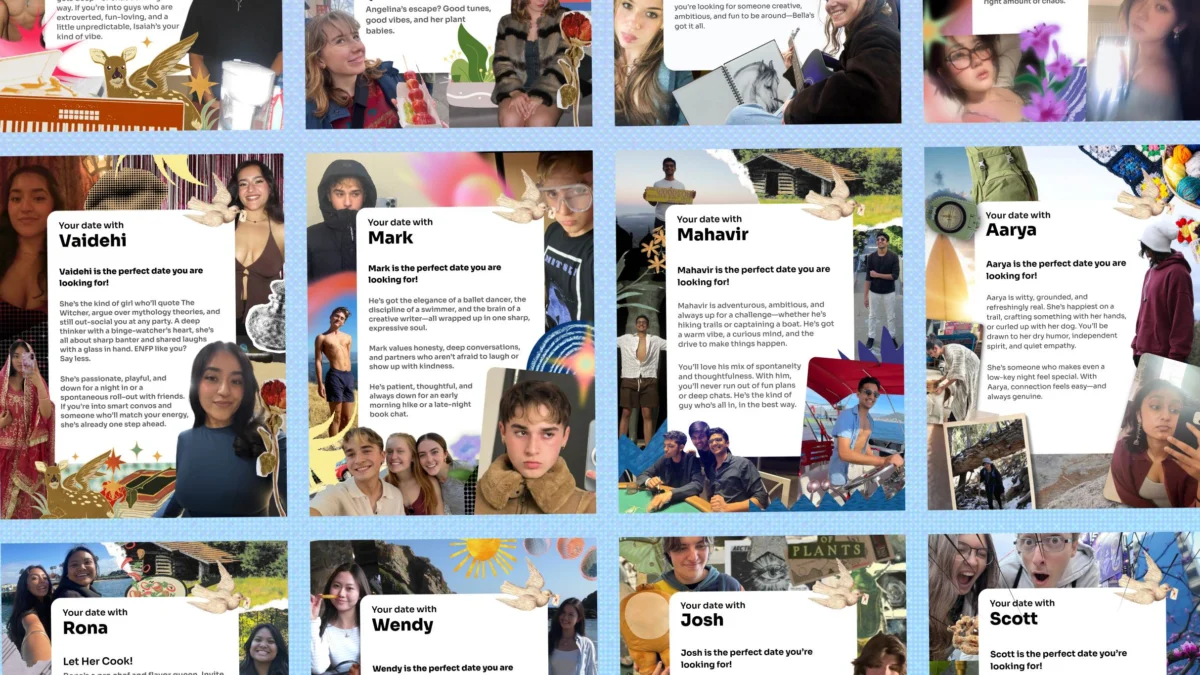
In a significant shift reflecting a growing disillusionment with the prevalent "swipe-based" dating app paradigm, a new artificial intelligence-powered matchmaking service, Ditto, is rapidly gaining traction among college students. Co-founded by UC Berkeley dropouts Allen Wang and Eric Liu, Ditto offers a stark alternative to the endless swiping and superficial interactions characteristic of platforms like Tinder and Hinge, promising to streamline the path to genuine, in-person connections. Having secured an impressive $9.2 million in seed funding from notable investors including Gradient, Peak XV, and Scribble, Ditto represents a bold foray into the future of dating, leveraging advanced AI to predict chemistry and facilitate real-world encounters.
The Genesis of Ditto: A Response to Dating App Burnout
The contemporary digital dating landscape, dominated by applications that prioritize rapid-fire profile evaluations, has increasingly come under fire from its most active users: Generation Z. This demographic, often perceived as digitally native and hyper-connected, is paradoxically reporting significant levels of "swipe fatigue" and burnout. The constant evaluation, the superficial judgment based on a handful of photos and brief bios, and the subsequent "endless small talk" in direct messages (DMs) have led to a pervasive sense of inauthenticity and inefficiency. Many Gen Z individuals feel that these apps, designed for connection, often hinder it, creating a transactional rather than relational experience.
It was this firsthand observation of a behavioral shift, as Allen Wang articulated to TechCrunch, that spurred the creation of Ditto. "As Gen Z ourselves, we were firsthand witnessing the behavioral shift in terms of how people are connecting with each other," Wang explained. "We see that people are getting super tired of all the endless swiping and endless small talk, and they’re really looking for something more genuine in real life." This sentiment resonates deeply within a generation that, despite its digital fluency, yearns for tangible, meaningful human interaction, especially in the realm of romance. The founders, recognizing this unmet need, envisioned a service that would remove the cumbersome digital intermediaries and guide users directly to the point of connection: a real-life date. Their decision to drop out of UC Berkeley underscores their conviction in addressing this pressing societal challenge with an innovative technological solution.
A Novel Approach to Matchmaking: The Ditto Mechanism
Ditto distinguishes itself fundamentally from its predecessors by eschewing the traditional app interface and embracing a more integrated, text-based interaction. College students initiate their Ditto journey by texting a specific iMessage number along with a unique code. This simple, low-friction entry point immediately sets it apart from apps that require downloads, profile creation, and complex onboarding processes. Upon initiation, an AI chatbot introduces itself as Ditto, articulating its core promise: "a dating initiative built by college students who get it… no swiping, no awkward DMs, just real dates every Wednesday at 7 pm." This clear, concise mission statement directly targets the pain points of modern dating, offering a structured, commitment-free path to in-person meetings.
The onboarding process, conducted entirely through text, is designed to be engaging and comprehensive without being overwhelming. Users begin by providing essential biographical details such as their name, gender, and birth date. However, Ditto quickly delves deeper, posing a series of nuanced questions aimed at understanding a user’s personality, interests, and specific dating preferences. This iterative, conversational approach allows the AI to gather rich qualitative data that extends beyond the typical checklist of hobbies or superficial demographic filters. In a testament to the AI’s adaptability and the users’ willingness to engage creatively, some individuals even upload photos of their celebrity crushes, providing the algorithm with visual cues and inferred personality traits that contribute to a more holistic understanding of their "type."
The true innovation lies in Ditto’s matching algorithm. Unlike many dating platforms that pair individuals based on overtly similar interests (e.g., both like hiking, both like cooking), Ditto’s AI delves into the underlying psychological profiles inferred from those interests. Allen Wang elaborated on this sophisticated approach: "If there’s this guy, and he’s really into rock climbing, skydiving, and outdoor sports, and this girl, if she’s into hip hop, streetwear, and skateboarding, then even though those hobbies don’t look similar on the surface, I can tell you deeper down, both are very adventurous; maybe they’re very individualistic." This profound insight forms the bedrock of Ditto’s "chemistry prediction" model. Wang confidently asserts, "our claim is that chemistry is actually predictable with the right signals." By identifying shared core values, personality traits, and life philosophies rather than merely shared activities, Ditto aims to forge connections with a greater potential for genuine chemistry and lasting compatibility.
Operational Flow and User Experience
The operational efficiency of Ditto is one of its most compelling features. Every Wednesday at 7 p.m., users receive a message detailing their match for the week. This message is not merely an introduction; it is a fully orchestrated date proposal. It includes the name of their match, a specific time, and a designated location. The instruction to users is remarkably simple: "the users simply just need to show up and date each other and come back." This streamlined approach significantly reduces the anxiety and logistical burden associated with initiating a date through conventional apps, where users often navigate awkward scheduling, venue selection, and the ever-present fear of ghosting.

Following the date, Ditto continues its engagement by collecting feedback from users. This post-date intelligence is crucial for the AI’s continuous learning and refinement. By understanding what worked and what didn’t, the algorithm can improve its comprehension of each user’s preferences and personality, thereby enhancing the quality of future matches. Wang emphasizes the value proposition: "Right now people’s goal is really just to go out there and meet each other, so it’s actually removing a lot of friction for our users, so that we are doing the heavy lifting for them, and they just simply go there and then meet whoever." This "heavy lifting" concept is a cornerstone of Ditto’s appeal, promising to restore the spontaneity and ease of dating that many feel has been lost in the digital age.
Early Traction and Funding Milestones
Despite its relatively nascent stage, Ditto has demonstrated remarkable early traction, indicative of the profound market need it addresses. The platform has already amassed 150,000 signups, primarily among college students, showcasing a powerful organic adoption rate. Furthermore, the conversion rate from match to actual in-person date stands at approximately 20%. While this figure might seem modest in isolation, it represents a substantial improvement over the notoriously low conversion rates of traditional swipe-based apps, where many matches never translate into a single conversation, let alone a date. For context, industry estimates suggest that less than 10% of matches on popular dating apps ever lead to an actual meeting, highlighting Ditto’s efficacy in prompting real-world interaction.
This compelling early performance has not gone unnoticed by the investment community. Ditto successfully closed a seed funding round totaling $9.2 million, backed by prominent venture capital firms such as Gradient, Peak XV, and Scribble. The investment landscape itself reflects Ditto’s unique appeal; Wang noted that "99% of the investors just reached out to us through inbound, because we were pretty big on LinkedIn and Twitter for a bit." This organic investor interest underscores the market’s recognition of Ditto’s innovative solution and its potential for significant disruption. Notably, Severin Hacker, co-founder of the highly successful language-learning platform Duolingo, personally reached out to Wang, expressing admiration for Ditto’s mission and interest in collaboration. This caliber of inbound investor engagement further validates Ditto’s vision and its execution strategy.
The Aesthetic and Marketing Strategy
Ditto’s success is not solely attributed to its algorithmic prowess; its marketing and brand identity are equally crucial in resonating with its target demographic. The platform employs a distinct, collage-like graphic to introduce users to their matches, visually explaining the AI’s rationale for the pairing. This aesthetic choice aligns perfectly with Gen Z’s preference for visually rich, often curated, and highly shareable content, mirroring trends seen in other youth-focused connection apps like Sonder. This creative approach helps humanize the algorithmic process, making the AI feel more like a trusted, stylish friend than a cold, calculating machine.
Beyond its in-app aesthetics, Ditto’s external marketing campaigns are characterized by an irreverent and often viral sensibility. The company has gained notoriety for its audacious promotional stunts, such as videos featuring robots engaging in unexpected public displays. This unconventional marketing strategy is a deliberate choice, as Wang explains: "Our users are college students, and they can smell corporate marketing from a mile away." By eschewing traditional, polished advertising in favor of authentic, often humorous, and slightly rebellious content, Ditto successfully captures the attention and imagination of its audience. The company even went so far as to list a legitimate job opening for a "chief yacht officer" whose primary responsibility would be to organize promotional parties, a testament to their commitment to unconventional engagement. Wang succinctly summarized their marketing philosophy: "Viral moments get college kids to look; a good first date is what makes them stay." This dual strategy of attention-grabbing marketing and a genuinely effective product underpins Ditto’s rapid growth and user loyalty.
Safety and Scalability Challenges
As with any platform facilitating real-world interactions, especially in the dating sphere, safety and scalability represent significant challenges for Ditto. Currently, the service operates within a few dozen colleges, leveraging a built-in vetting process: users must possess a .edu email address, ensuring that all matches are verified students at their respective universities. This localized, institution-based approach provides a foundational layer of trust and security, as users know they are meeting someone from their immediate academic community.
However, Ditto’s ambitious growth trajectory includes plans to expand to more schools and eventually beyond the college demographic. This expansion will necessitate the development of robust and scalable safety protocols that extend beyond the inherent vetting of a university network. Ensuring user safety, verifying identities, and mitigating risks like misrepresentation or dangerous encounters are complex endeavors, even for the most established and well-funded dating applications. Ditto will need to invest heavily in advanced verification technologies, user reporting mechanisms, and potentially partnerships with safety organizations to maintain a secure environment as it scales. The $9.2 million in seed funding provides a substantial war chest to tackle these critical challenges, but the path to broader, safe expansion will undoubtedly be one of the company’s most demanding undertakings.
Broader Industry Context: The Evolving Landscape of Digital Dating
Ditto’s emergence is not an isolated phenomenon but rather a symptom of a larger evolution within the digital dating industry. The online dating market, valued at over $9 billion globally in 2023 and projected to grow significantly, has seen several transformative phases. From the early days of desktop-based platforms like Match.com and eHarmony, which emphasized detailed profiles and compatibility questionnaires, the industry shifted dramatically with the advent of smartphones and the "swipe left/right" mechanic popularized by Tinder in 2012. This gamified approach led to explosive growth but also introduced issues like "decision fatigue," a perceived devaluation of human connection, and a pervasive sense of superficiality.

Recent studies and user feedback indicate a widespread dissatisfaction with the current dominant model. A 2023 Pew Research Center study found that a significant portion of online daters, particularly younger adults, express frustration with the experience, citing issues like harassment, misrepresentation, and the difficulty of finding genuine connections. This "swipe fatigue" has paved the way for a resurgence of interest in "slow dating" or "intentional dating," where the emphasis is on quality over quantity and meaningful interactions over endless browsing. This trend creates a fertile ground for solutions like Ditto, which prioritize curation and pre-vetted, real-world meetings.
Furthermore, the integration of Artificial Intelligence into dating is a rapidly accelerating trend. Beyond Ditto, other ventures, such as Overtone (founded by the creator of Hinge and funded with $18 million), are exploring AI’s potential to refine matchmaking and user experience. AI offers the promise of moving beyond simple demographic or interest-based matching to truly understand nuanced personality traits, communication styles, and emotional needs. The global AI market within social technology and dating is poised for substantial growth, reflecting the industry’s belief in AI’s capacity to solve the inherent challenges of human connection in the digital age. Ditto’s success in leveraging AI for deeper personality analysis and its direct route to in-person dates positions it at the forefront of this technological and cultural shift.
Implications for the Future of Romance and Technology
Ditto’s innovative model carries significant implications for the future of romance and the role of technology in facilitating human connection. By offloading the "heavy lifting" of matchmaking and date planning to an AI, Ditto liberates users from the often-stressful and time-consuming aspects of online dating. This could lead to a broader adoption of AI-curated experiences, where algorithms act as sophisticated personal assistants for social life.
However, this reliance on AI also raises important considerations. While Ditto aims for "genuineness," the fundamental nature of an algorithmically-driven match may challenge traditional notions of serendipity and organic connection. Questions surrounding algorithmic bias—how the AI’s preferences are learned and whether they inadvertently perpetuate certain social norms or exclude others—will become increasingly pertinent as Ditto scales. Data privacy and security, especially concerning the intimate details users share with the AI, will also remain paramount.
Societally, if Ditto and similar platforms gain widespread adoption, they could redefine courtship rituals. The idea of a weekly, pre-arranged date might become a new norm, shifting expectations around dating initiation and potentially fostering a more proactive, less passive approach to finding partners. It could also lead to a generation more comfortable with trusting AI for significant life decisions, including romantic partnerships.
Ultimately, Ditto represents a fascinating experiment in balancing technological efficiency with the deeply human desire for authentic connection. Its success will depend not only on its ability to accurately predict chemistry but also on its capacity to build trust, ensure safety, and adapt to the evolving needs and expectations of a generation eager for real-life romance without the digital noise. As Ditto continues to grow, it stands poised to not just disrupt the dating app market, but potentially reshape how we meet, connect, and fall in love in an increasingly AI-integrated world.

