
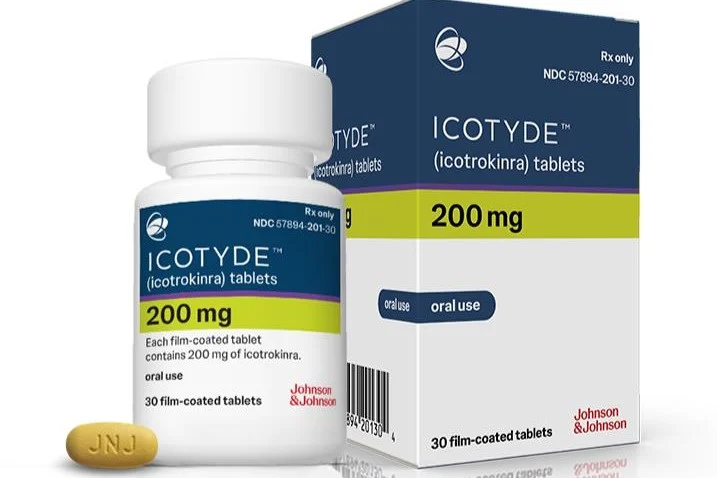
The U.S. Food and Drug Administration (FDA) has granted approval to Icotyde (icotrokinra), a novel once-daily oral peptide developed by Johnson & Johnson, for the treatment of moderate-to-severe plaque psoriasis in adults and pediatric patients aged 12 years and older who weigh at least 40 kg (88 pounds). This regulatory milestone marks a significant shift in the dermatological treatment landscape, offering a potent oral alternative to the injectable biologic therapies that have long dominated the market for systemic psoriasis care. By targeting the interleukin-23 (IL-23) receptor—a pivotal pathway in the pathogenesis of inflammatory skin diseases—Icotyde provides a bridge for patients whose condition is not adequately controlled by topical treatments but who may be hesitant to begin a regimen of self-administered or office-based injections.
Johnson & Johnson has high expectations for the drug’s commercial trajectory, projecting that Icotyde could eventually exceed $5 billion in peak annual revenue. This optimism is rooted in the drug’s unique position as the first oral peptide designed to block the IL-23 receptor, combining the efficacy typically associated with biologics with the convenience of a pill. The approval also represents a successful culmination of a long-term collaboration with Protagonist Therapeutics, the biotechnology firm that originally developed the peptide technology.
The Burden of Plaque Psoriasis and the Shift to Systemic Therapy
Plaque psoriasis is a chronic autoimmune condition characterized by the rapid overproduction of skin cells, resulting in thick, red, scaly patches known as plaques. These lesions are often itchy, painful, and prone to cracking or bleeding. Beyond the physical symptoms, the disease carries a heavy psychological burden, often leading to social withdrawal, anxiety, and depression due to the visible nature of the plaques.
In the United States, approximately 8 million people live with psoriasis, and about 25% of these cases—roughly 2 million individuals—are classified as moderate-to-severe. For patients with limited skin involvement, topical corticosteroids or vitamin D analogues are the standard of care. However, when the disease covers a significant percentage of the body surface area or affects sensitive regions like the face, hands, or feet, topical treatments are often insufficient.
Historically, the next step for these patients involved systemic treatments. For decades, this meant broad immunosuppressants like methotrexate or cyclosporine, which carry risks of organ toxicity. The advent of biologics, such as TNF inhibitors and later IL-17 and IL-23 inhibitors, revolutionized care by providing high rates of skin clearance. However, because these are large-molecule proteins, they must be injected to avoid being broken down by the digestive system. Icotyde breaks this mold by utilizing a stabilized peptide that can survive the gastrointestinal environment to reach its target, offering a "biologic-like" precision in an oral format.
Mechanism of Action: The IL-23 Pathway
The approval of Icotyde highlights the continued importance of the IL-23 signaling pathway in immunology. IL-23 is a cytokine that plays a master regulatory role in the differentiation and maintenance of Th17 cells, which produce inflammatory mediators like IL-17. By blocking the IL-23 receptor, Icotyde prevents the binding of the IL-23 protein, effectively "turning off" the inflammatory cascade at its source.
This mechanism is well-validated. Existing blockbuster injectables like AbbVie’s Skyrizi (risankizumab) and Sun Pharma’s Ilumya (tildrakizumab) also target the IL-23 pathway. Johnson & Johnson is already a leader in this space with its own injectable, Tremfya (guselkumab), which specifically targets the p19 subunit of IL-23. The introduction of Icotyde allows the company to capture a different segment of the patient population—those who prioritize oral administration or who are transitioning from topicals but are not yet ready for needles.
Clinical Evidence: The ICONIC Trial Program
The FDA’s decision was supported by a comprehensive clinical development program known as ICONIC, which included four Phase 3 studies involving approximately 2,500 patients. A central component of this program was the head-to-head comparison between Icotyde and Bristol Myers Squibb’s Sotyktu (deucravacitinib). Sotyktu, approved in 2022, is an oral small molecule that inhibits TYK2, another enzyme involved in inflammatory signaling.
The results from the ICONIC trials demonstrated that Icotyde was not only superior to placebo but also outperformed Sotyktu in achieving significant skin clearance. Efficacy was measured using the Psoriasis Area and Severity Index (PASI) and the Physician’s Global Assessment (PGA). A high proportion of patients treated with Icotyde achieved PASI 75 (a 75% improvement in skin clearance) and PASI 90, with many reaching total clearance (PASI 100).
Furthermore, the safety profile of Icotyde has been a major selling point for clinicians. During a conference call following the approval, Dinesh Patel, CEO of Protagonist Therapeutics, described the drug as having "placebo-like safety." The most common adverse reactions reported in the clinical trials were mild and included:
- Headaches
- Nausea
- Cough
- Fatigue
- Fungal infections (typical of drugs that modulate the immune response)
Notably, the trials did not show the types of severe laboratory abnormalities or cardiovascular concerns sometimes associated with older systemic oral therapies, making it a "compelling choice" for long-term management of a chronic condition.
Strategic Importance for Johnson & Johnson’s Portfolio
The approval of Icotyde comes at a critical juncture for Johnson & Johnson’s innovative medicine division. The company’s immunology powerhouse, Stelara (ustekinumab), is currently facing a "biosimilar cliff." Stelara, which targets both IL-12 and IL-23, was J&J’s second-largest revenue generator, but its sales dropped 41% in 2025 to $6 billion as lower-cost competitors entered the market.
While Tremfya continues to grow—reaching $5.1 billion in sales last year with a nearly 40% year-over-year increase—J&J needs new, patented blockbusters to maintain its dominant market share. Icotyde serves as a strategic successor. Because it is a daily pill, it can be marketed to a broader range of dermatologists and primary care physicians who may be more comfortable prescribing an oral medication than managing the logistics of biologic injections.
The competitive landscape for oral psoriasis drugs is intensifying. While Sotyktu has seen a slower-than-expected uptake, other companies are moving fast. Takeda Pharmaceutical and Alumis are both developing next-generation TYK2 inhibitors. By entering the market with an IL-23-targeted peptide, J&J is betting that the established success of the IL-23 pathway in injectables will translate to a preference for Icotyde over TYK2-based pills.
Partnership and Financial Impact for Protagonist Therapeutics
The journey of Icotyde began in 2017 when Johnson & Johnson entered into a collaboration and license agreement with Protagonist Therapeutics. Protagonist’s proprietary technology platform specializes in the discovery of oral peptides, a feat long considered difficult in drug development due to the fragile nature of peptide chains in the stomach.
Under the terms of the agreement, Protagonist has already received significant financial backing. By the end of 2025, the company had earned $337.5 million in milestone payments. The FDA approval of Icotyde on Wednesday triggered an additional $50 million payment. The biotech stands to earn up to $580 million more in future payments based on the drug’s performance and its expansion into other medical indications. Additionally, Protagonist will receive tiered royalties on net sales, providing a long-term revenue stream that could transform the mid-sized biotech into a major industry player.
Future Indications and Broader Implications
While the current FDA approval is limited to plaque psoriasis, the clinical potential for Icotyde extends far beyond dermatology. Johnson & Johnson is currently conducting Phase 3 trials for several other inflammatory conditions where the IL-23 pathway is known to play a role. These include:
- Psoriatic Arthritis: A condition affecting up to 30% of psoriasis patients, causing joint pain and swelling.
- Ulcerative Colitis: A chronic inflammatory bowel disease (IBD) affecting the colon.
- Crohn’s Disease: Another form of IBD that can affect any part of the digestive tract.
If Icotyde proves successful in these gastrointestinal and rheumatological indications, its market potential would expand significantly. In the IBD space, an oral option with biologic-level efficacy would be particularly disruptive, as many patients with Crohn’s or colitis currently rely on infusions or frequent injections.
The approval of Icotyde represents more than just a new drug for skin disease; it is a proof-of-concept for oral peptide technology. It validates the idea that complex immune pathways can be targeted without the need for needles, potentially setting a new standard for how chronic autoimmune diseases are treated in the coming decade. As J&J prepares for the commercial launch, the medical community will be watching closely to see how quickly "the pill that acts like a biologic" becomes the preferred choice for millions of patients worldwide.

