
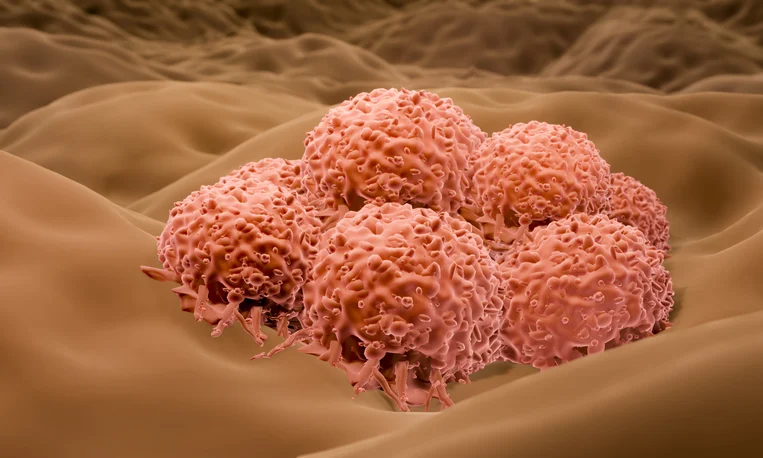
The U.S. Food and Drug Administration (FDA) has officially granted accelerated approval to Replimune’s lead candidate, Tudriqev (codenamed RP1), for the treatment of patients with advanced melanoma that has progressed following prior therapy with a PD-1 checkpoint inhibitor. The decision, announced following the close of market trading on Thursday, represents a landmark achievement for Replimune, marking the company’s first commercial product and a significant comeback after a tumultuous regulatory journey characterized by multiple rejections and shifts in agency leadership.
Tudriqev is an engineered oncolytic viral therapy derived from a proprietary version of the herpes simplex virus 1 (HSV-1). The therapy is designed to be injected directly into the tumor, where it selectively replicates within cancer cells, causing them to rupture and die. This process, known as oncolysis, releases tumor-derived antigens and other signaling molecules that alert the immune system, effectively turning the tumor into its own vaccine. The FDA’s approval specifically covers the use of Tudriqev in combination with Bristol Myers Squibb’s Opdivo (nivolumab), an established anti-PD-1 immunotherapy.
A Turbulent Regulatory Path to Approval
The path to approval for Tudriqev was far from linear. Replimune faced significant headwinds over the past year, receiving two Complete Response Letters (CRLs) from the FDA within a nine-month span. These setbacks initially cast doubt on the viability of the drug and the company’s ability to bring it to market without a new, multi-year clinical trial.
The first rejection occurred in the summer of 2023. At that time, the FDA expressed concerns regarding the design of the company’s Phase 1/2 trial, noting that the study was not sufficiently "adequate and well-controlled" to support a full approval. The agency characterized the initial results as "uninterpretable" due to the lack of a control arm. Despite these critiques, Replimune resubmitted its Biologics License Application (BLA) with additional data analyses intended to address the agency’s concerns.
In April 2024, the FDA issued a second CRL. This time, the agency argued that the data did not sufficiently demonstrate the individual contribution of Tudriqev to the overall patient benefit when compared to the performance of the checkpoint inhibitor alone. Replimune leadership noted at the time that this feedback appeared to contradict previous guidance provided by the agency’s initial review team, suggesting internal shifts within the FDA’s oncology and cellular therapy divisions.
The regulatory climate during this period was heavily influenced by the tenure of then-FDA Commissioner Marty Makary, who had expressed a public preference for randomized, multi-arm trials over the single-arm studies that have historically been used for accelerated approvals in rare or advanced cancers. Following Makary’s resignation in early May 2024, the dynamic between the agency and Replimune shifted. By late May, the company announced it had re-engaged in productive discussions with the FDA, leading to a path for resubmission based on existing trial data.
The final hurdle was cleared last week when the FDA’s Cellular, Tissue, and Gene Therapies Advisory Committee (CTGTAC) voted 10 to 3 in favor of the drug’s benefit-risk profile. The committee’s endorsement paved the way for this week’s accelerated approval.
Clinical Data and the Accelerated Approval Framework
The FDA’s decision is based on data from a cohort of 91 patients enrolled in a Phase 1/2 clinical trial. These patients had advanced melanoma that had failed to respond to, or had recurred after, treatment with anti-PD-1 therapies. The primary metrics for the approval were the Objective Response Rate (ORR)—the percentage of patients whose tumors shrank or disappeared—and the Duration of Response (DOR).
Under the accelerated approval pathway, drugs for serious conditions that fill an unmet medical need can be approved based on a surrogate endpoint that is reasonably likely to predict clinical benefit. To maintain this approval, Replimune is required to conduct a confirmatory Phase 3 trial to prove that the drug improves overall survival (OS).
Replimune has already initiated this confirmatory study, known as the IGNYTE-3 trial. This larger study aims to enroll approximately 400 patients and will compare the Tudriqev-Opdivo combination against a physician’s choice of therapy (typically chemotherapy or another immunotherapy). The primary endpoint is overall survival, with a final data readout currently projected for 2030.
The Science of Oncolytic Viruses: A New Mechanism of Action
Tudriqev represents the next generation of oncolytic viral therapies. While the concept of using viruses to kill cancer has existed for decades, engineering these viruses to be both safe and potent has been a significant hurdle. Tudriqev’s HSV-1 backbone is modified to express a GALV-GP-R- fusogenic protein and human GM-CSF. These modifications are intended to increase the efficiency of tumor cell killing and enhance the recruitment of dendritic cells to the tumor site.
By injecting the virus directly into the lesion, the therapy creates a localized "inflammatory hot zone." When the cancer cells lyse, they release neoantigens that the immune system may not have previously recognized. This "in situ" vaccination effect, when combined with a systemic checkpoint inhibitor like Opdivo, helps the immune system overcome the immunosuppressive environment of the tumor, potentially leading to responses even in tumors that were not directly injected.
Market Competition and Patient Access: Tudriqev vs. Amtagvi
Prior to this approval, the landscape for patients with post-checkpoint inhibitor melanoma was extremely limited. The only other major innovation in recent years was the 2024 approval of Iovance Biotherapeutics’ Amtagvi (lifileucel), a tumor-infiltrating lymphocyte (TIL) therapy.
While both therapies target the same patient population, they differ drastically in administration and logistics. Amtagvi is an autologous cell therapy, meaning it is manufactured specifically for each individual patient. The process involves surgically removing a portion of the patient’s tumor, shipping it to a centralized manufacturing facility to extract and multiply the T-cells, and then shipping the cells back for infusion. This process can take several weeks and requires the patient to undergo "preconditioning" lymphodepleting chemotherapy and post-infusion high-dose Interleukin-2 (IL-2), both of which carry significant toxicity risks.
In contrast, Tudriqev is an "off-the-shelf" biologic. It does not require personalized manufacturing or a waiting period, allowing treatment to begin almost immediately after diagnosis. Furthermore, Tudriqev is administered via injection, which can be performed in community oncology centers rather than the specialized, high-acuity academic hospitals required for TIL therapy.
"We do believe Tudriqev will become a new standard of care for patients who progress on a PD-1-containing regimen," said Replimune CEO Sushil Patel. "Given the size of the patient population and the ease of administration, we believe this represents a significant market opportunity."
Economic Implications and Pricing
Replimune has set the list price for a course of Tudriqev at approximately $450,000. While substantial, this price point is positioned competitively against Iovance’s Amtagvi, which carries a list price of $562,000.
Replimune’s Chief Financial Officer, Emily Hill, clarified that the actual cost of Tudriqev will vary based on the patient’s specific needs, as the dosage is determined by the number and size of the tumors being treated. The $450,000 estimate reflects the median dose level observed during the pivotal IGNYTE clinical trial.
Industry analysts have reacted positively to the pricing and the approval. Leerink Partners analyst Daina Graybosch noted that the approval is "close to a best-case outcome" for the company. Graybosch highlighted that the logistical advantages of Tudriqev—specifically its outpatient-friendly administration—will likely make it the preferred first-line choice for community oncologists before they consider referring a patient for the more intensive TIL therapy.
Iovance reported $220 million in sales for Amtagvi in 2025, demonstrating a healthy appetite in the market for new melanoma treatments. Replimune estimates that there are approximately 10,000 patients in the United States alone who could benefit from Tudriqev annually.
Future Outlook for Melanoma and Viral Immunotherapy
The approval of Tudriqev is a significant win for the field of viral immunotherapy, which has struggled to gain a foothold since the 2015 approval of Amgen’s Imlygic (T-VEC). While Imlygic proved the concept, its commercial success was limited. Tudriqev’s stronger clinical data in combination with modern checkpoint inhibitors suggests a more robust commercial path.
Replimune expects to launch Tudriqev commercially within the next 60 days. As the company transitions from a research-and-development firm to a commercial-stage entity, the focus will shift toward physician education and establishing the infrastructure for direct tumor injections in community settings.
For patients with advanced melanoma, the arrival of Tudriqev provides a much-needed alternative in a treatment landscape where options were once exhausted after the failure of standard immunotherapy. With a confirmatory trial underway and a launch imminent, the oncology community will be watching closely to see if Tudriqev can fulfill its promise as a new pillar of melanoma care.

