
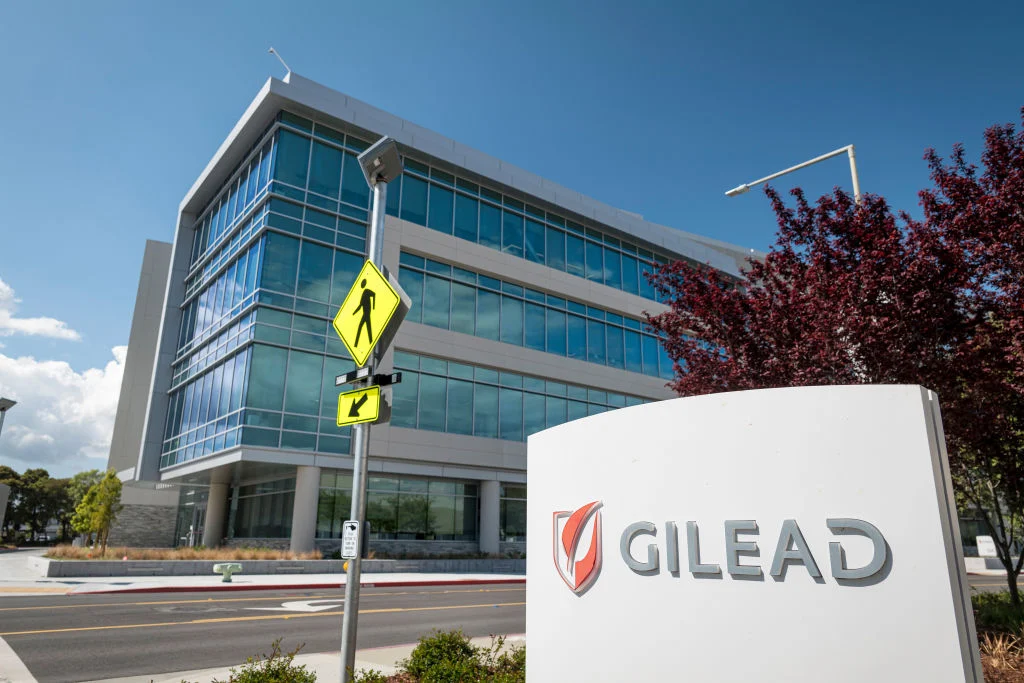
Gilead Sciences has officially announced a definitive agreement to acquire an investigational oral interleukin-23 receptor (IL-23R) inhibitor program from PepStar Therapeutics, a privately held biotechnology firm based in Shanghai, in a deal valued at approximately $1.275 billion. The transaction centers on the lead clinical-stage asset HCXT-2001, a macrocyclic peptide designed to address the significant unmet needs in the treatment of inflammatory bowel disease (IBD), including ulcerative colitis and Crohn’s disease. Under the terms of the agreement, Gilead will pay the $1.275 billion as an upfront payment to gain exclusive global rights to the program. While specific milestone-based payments were not disclosed in the initial announcement, the move signals an aggressive expansion of Gilead’s immunology portfolio as the company seeks to diversify its revenue streams beyond its traditional dominance in virology and its growing presence in oncology.
The acquisition comes at a pivotal moment for Gilead, which has identified inflammation as a core pillar for its long-term growth strategy. The deal for HCXT-2001 is particularly significant due to the drug’s delivery mechanism. While the IL-23 pathway is a well-validated target in the immunology space—currently addressed by several blockbuster injectable biologics—the development of an effective oral peptide has remained a significant hurdle in pharmaceutical engineering. By securing an oral candidate that is already in Phase 1 clinical testing, Gilead aims to disrupt a market currently dominated by subcutaneous and intravenous therapies, offering patients a more convenient, non-invasive alternative for chronic disease management.
The Science of Macrocyclic Peptides and IL-23 Inhibition
Interleukin-23 is a cytokine that plays a central role in the inflammatory response, particularly in the pathogenesis of autoimmune diseases. It is responsible for the differentiation and maintenance of Th17 cells, which produce several pro-inflammatory cytokines that drive tissue damage in the gut and skin. Current gold-standard treatments, such as AbbVie’s Skyrizi (risankizumab) and Johnson & Johnson’s Tremfya (guselkumab), work by blocking the p19 subunit of IL-23. However, these are monoclonal antibodies that must be injected because peptides and proteins are typically degraded by digestive enzymes in the gastrointestinal tract and possess poor permeability across the intestinal wall.
HCXT-2001 utilizes a macrocyclic peptide platform to overcome these biological barriers. Macrocyclic peptides are characterized by a ring-like molecular structure that protects the amino acid sequence from enzymatic degradation. This "locked" configuration not only enhances metabolic stability but also increases the molecule’s surface area for binding, allowing it to interact with complex protein targets with the specificity of an antibody but the convenience of a small-molecule pill. Gilead’s leadership has emphasized that this structural integrity allows HCXT-2001 to pass through the intestinal wall effectively, potentially offering an extended half-life that could support a favorable dosing regimen for patients.
Strategic Realignment: Inflammation as a Growth Engine
The PepStar acquisition is a direct manifestation of the strategy outlined by Gilead CEO Daniel O’Day during the J.P. Morgan Healthcare Conference earlier this year. O’Day noted that while the company’s oncology strategy has focused on acquiring late-stage assets to drive immediate impact, the approach to inflammation would be more foundational, focusing on early-stage, high-potential assets that can be developed internally or in combination with existing pipeline candidates.
"Inflammation, we knew, would always be a little bit of a longer-term strategy for us just because of the nature of the external environment and what medicines were available for us to bring into the company," O’Day stated during the conference. By focusing on Phase 1 and Phase 2 assets in the immunology space, Gilead is attempting to build a differentiated portfolio that can compete with established incumbents like AbbVie, Janssen, and Eli Lilly.
This deal follows a string of similar moves by Gilead to bolster its immunology credentials. In March, the company spent $1.7 billion to acquire Ouro Medicines, which specializes in "immune system reset" technologies for autoimmune disorders. Additionally, Gilead recently acquired an oral STAT6 inhibitor from LEO Pharma, targeting the IL-4 and IL-13 pathways. Collectively, these acquisitions suggest that Gilead is constructing a multi-modal approach to inflammation, targeting various pathways including IL-23, STAT6, and integrins.
Synergy and the Emvistegrast Connection
A critical component of Gilead’s interest in HCXT-2001 is its potential to be used in combination therapy. Gilead Chief Medical Officer Dietmar Berger highlighted that the oral peptide could be paired with emvistegrast (formerly GS-1427), an internally developed oral small molecule that inhibits alpha 4 beta 7 integrin. Integrins are receptors that facilitate the migration of inflammatory cells into the gut tissue, and blocking them has proven effective in treating IBD.
Recent data from Gilead’s Phase 2 SWIFT study of emvistegrast provided a boost to this strategy. In the study involving patients with moderate-to-severe ulcerative colitis, the highest dose of emvistegrast achieved a 66% clinical response rate at 12 weeks, compared to just 37% for the placebo group. Furthermore, 31% of patients in the treatment arm achieved clinical remission, a significantly higher figure than the 8% seen in the placebo arm.
The ability to combine an oral IL-23R inhibitor with an oral integrin inhibitor could represent a paradigm shift in IBD treatment. Historically, combination biologics have been difficult to implement due to cost, delivery complexity, and safety concerns. However, an all-oral combination regimen could provide superior efficacy by hitting two distinct inflammatory pathways simultaneously while maintaining a high degree of patient compliance.
Competitive Landscape and Market Dynamics
The race to bring an oral IL-23 inhibitor to market is highly competitive. Johnson & Johnson is currently the frontrunner with Icotyde (JNJ-2113), an oral peptide developed alongside Protagonist Therapeutics. Icotyde recently received FDA approval for plaque psoriasis and is currently undergoing Phase 3 trials for ulcerative colitis and Crohn’s disease. J&J has projected that Icotyde could generate up to $5 billion in peak annual sales, underscoring the massive financial potential for oral immunology drugs.
Other competitors in the IL-23 space include Eli Lilly’s Omvoh (mirikizumab) and AbbVie’s Skyrizi, both of which are established as high-efficacy injectables. The entry of Gilead into this space with HCXT-2001 places the company in direct competition with these pharmaceutical giants. Analysts suggest that the "oral-first" or "oral-only" approach could capture significant market share from injectables, particularly among patients who are needle-averse or those with milder forms of disease who are not yet ready for systemic biologic therapy.
The global IBD market is expected to grow significantly over the next decade. Estimates suggest the market for ulcerative colitis and Crohn’s disease treatments will exceed $30 billion by 2030, driven by rising prevalence in developing economies and the introduction of novel mechanisms of action. Gilead’s $1.275 billion investment reflects the high premium placed on validated targets that can be delivered orally.
Timeline and Future Outlook
The acquisition of the PepStar program is expected to close by the end of the current year, pending customary closing conditions and regulatory approvals. Once the deal is finalized, Gilead is expected to accelerate the Phase 1 development of HCXT-2001 to establish its safety profile and pharmacokinetics in humans. While no clinical data for HCXT-2001 has been publicly disclosed yet, the company’s willingness to pay over $1 billion upfront suggests a high degree of confidence in the preclinical data and the macrocyclic platform’s performance.
Beyond IBD, Gilead has indicated that HCXT-2001 has potential applications in other IL-23-mediated conditions, such as psoriasis and psoriatic arthritis. This multi-indication potential is a key driver of the asset’s value, as it allows Gilead to maximize the return on its investment across different therapeutic segments.
The success of this acquisition will ultimately depend on how HCXT-2001 performs in upcoming Phase 2 "proof-of-concept" trials. If the drug can demonstrate efficacy comparable to injectable IL-23 inhibitors with a clean safety profile, it will validate Gilead’s "early-stage" inflammation strategy and provide a cornerstone for the company’s post-2030 growth. For now, the deal stands as a bold statement of intent: Gilead is no longer just an "antiviral company," but a burgeoning powerhouse in the highly lucrative and competitive field of immunology.
As the biopharmaceutical industry continues to shift toward more patient-centric delivery methods, Gilead’s bet on oral peptides may prove to be a defining moment in the evolution of IBD care. The industry will be watching closely as Phase 1 results emerge, looking for signs that HCXT-2001 can indeed deliver on the promise of biologic-level efficacy in a once-daily pill.

