
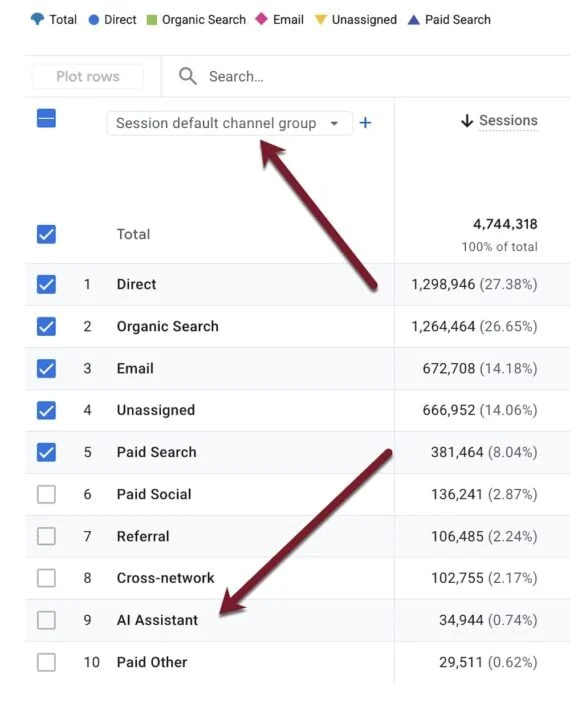
Google Analytics 4 (GA4) has officially launched a new "AI Assistant" channel, a significant development designed to provide businesses with granular insights into traffic originating from generative AI platforms. This feature, rolled out in May, marks a proactive step by Google to help marketers and analysts understand the burgeoning impact of AI on website traffic, allowing for more precise performance measurement and strategic decision-making. The "AI Assistant" channel aims to segment and analyze user journeys initiated through sophisticated AI tools, distinguishing them from traditional search or direct traffic sources.
The core functionality of the "AI Assistant" channel is to measure and analyze traffic specifically driven by generative AI platforms. According to Google’s official "Analytics Help" portal, this new channel is designed to capture interactions originating from popular chatbots such as OpenAI’s ChatGPT, Google’s own Gemini, and Anthropic’s Claude. This dedicated segmentation is crucial for businesses seeking to understand how these advanced AI tools are influencing user acquisition and engagement with their online content.
However, it is important to note that Google has clarified the scope of this new channel. While it encompasses traffic from direct chatbot interactions, it deliberately excludes traffic originating from Google’s AI-powered search features like AI Overviews and its broader "AI Mode." Clicks generated through these integrated search experiences are still being categorized under the existing "Organic Search" dimension. This distinction is vital for users to accurately interpret their data, understanding that AI-driven content discovery via search engines is managed differently from direct queries to AI assistants.
To access and analyze this new data, users can navigate to the "Reports" section within GA4, then proceed to "Acquisition," and subsequently select "Traffic acquisition." Within this report, the "AI Assistant" dimension will appear under the "Session default channel group" metric. This placement allows for direct comparison with established traffic channels such as Direct, Organic Search, and Paid Search, providing a comprehensive overview of a website’s traffic landscape.
The "AI Assistant" channel report offers a suite of performance metrics, mirroring those available for other traffic sources. These include key indicators such as user engagement, the number of events per session, average session duration, and conversion rates. By providing these detailed performance metrics, GA4 empowers businesses to evaluate the quality and effectiveness of traffic generated by AI platforms, enabling them to gauge the return on investment and optimize their content and marketing strategies accordingly.
Understanding Landing Page Performance Driven by AI Assistants
Beyond general traffic analysis, the "AI Assistant" channel also offers valuable insights into which landing pages are being cited in AI-generated answers and subsequently driving clicks. This capability is particularly important for content creators and SEO professionals aiming to understand how their content is being surfaced and leveraged by AI.
To identify these high-performing landing pages, users can access the "Reports" section, navigate to "Engagement," and then select "Pages and screens." This report typically displays the site’s most frequently visited pages. At the top of the graph within this section, users will find an "Add filter" option. By clicking this, they can then select the "Session default channel group" dimension. Subsequently, they would choose "AI Assistant" as the value to apply the filter.
Once the filter is applied, the "Pages and screens" report will dynamically update to display only those pages that have received traffic originating from AI platforms. This allows businesses to pinpoint the specific content that is resonating with AI assistants and effectively driving user engagement. Understanding these AI-cited pages can inform content strategy, helping businesses create more of the content that AI models find valuable and are likely to recommend.
Comparing AI-Assisted Traffic to Other Acquisition Channels
A key advantage of GA4’s "AI Assistant" channel is its ability to facilitate direct comparisons between AI-driven traffic and other established acquisition channels. This comparative analysis is crucial for understanding the relative performance and impact of AI on overall website traffic.
Within the same "Pages and screens" report, users can utilize the "Add comparison" button, located above the graph. Selecting "Create new" will initiate the process of building a comparison group. Similar to applying a filter, users would choose the "Session default channel group" dimension and then select "AI Assistant." To compare this against all website traffic, "All users" can be selected as the primary comparison.
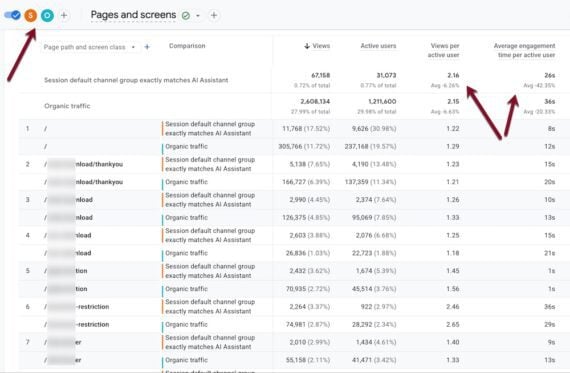
This comparison report will then present a page-by-page breakdown, juxtaposing the performance metrics of AI-assisted traffic against the site’s overall traffic. For a more targeted analysis, users can also compare AI-assisted traffic with specific sources, such as "Organic Search." To achieve this, a new comparison would be created, and "All users" would be removed, allowing for a direct head-to-head performance review between AI-driven traffic and a chosen traditional channel.
By comparing engagement metrics such as views, active users, and engagement time for each page across AI-assisted and other traffic sources, businesses can gain a nuanced understanding of how AI traffic behaves. Initial observations suggest that traffic from top organic search pages and AI-assisted pages may not significantly overlap, indicating distinct user journeys. This highlights the importance of investigating the specific prompts and queries that lead to AI citations, a task that can be further supported by tools like Semrush or similar SEO platforms.
Leveraging Regular Expressions for Granular AI Traffic Tracking
While the "AI Assistant" default channel simplifies the tracking of aggregated AI traffic, it does not provide a detailed breakdown of the specific generative AI platforms contributing to this volume. For businesses that require a more granular understanding of which AI tools are driving their traffic, regular expressions (regex) offer a powerful alternative.
This method involves creating custom segments or filters within GA4 to identify traffic originating from specific AI domains. By defining a regex pattern that encompasses the URLs of various AI platforms, users can effectively isolate and analyze traffic from each source. This approach is particularly useful for identifying traffic from platforms like ChatGPT, Perplexity AI, Microsoft Copilot, Google Gemini, Anthropic Claude, and others.
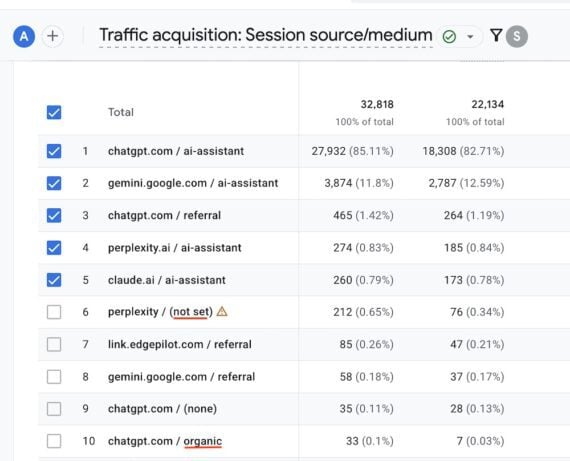
A comprehensive regex pattern designed to capture traffic from a wide array of generative AI sources could include domains such as .*chatgpt.com.*, .*perplexity.*, .*edgepilot.*, .*copilot.microsoft.com.*, .*openai.com.*, .*gemini.google.com.*, .*claude.ai.*, and .*grok.x.ai.*. When implemented in GA4’s "Session source/medium" report, this regex can reveal a detailed breakdown of all AI traffic sources, often categorizing them with an "ai-assistant" medium.
It is worth noting that when using such regex patterns, some data inconsistencies may arise. For instance, "Organic" and "(not set)" sources might appear separately and not be fully captured within the defined "AI Assistant" channel, suggesting that GA4’s default channel grouping might have slight variations in how it attributes traffic compared to a meticulously crafted regex. This highlights the ongoing evolution of analytics in accurately capturing the nuances of AI-driven user behavior.
Background and Context: The Rise of Generative AI and Analytics Challenges
The introduction of the "AI Assistant" channel in GA4 comes at a pivotal moment, as generative AI technologies have rapidly evolved from niche tools to mainstream platforms influencing consumer behavior and information consumption. The proliferation of AI chatbots and AI-powered search features has created a new and complex traffic acquisition channel that traditional analytics frameworks struggled to adequately address.
Prior to this dedicated channel, traffic originating from AI platforms was often miscategorized or merged into broader categories like "Organic Search" or "Direct." This lack of specific attribution made it challenging for businesses to:
- Quantify the impact of AI: It was difficult to determine the actual volume of traffic and leads generated by AI interactions.
- Optimize for AI: Without clear data, marketers couldn’t effectively tailor their content or strategies to be more discoverable and valuable within AI ecosystems.
- Understand user journeys: The distinct paths users took from an AI interaction to a website visit were obscured.
- Measure ROI: It was hard to attribute conversions and revenue to AI-driven traffic, making it difficult to justify investment in AI-related content or optimization.
Google’s decision to introduce the "AI Assistant" channel reflects a broader industry trend towards adapting digital analytics to the evolving technological landscape. As AI continues to integrate into everyday digital interactions, the ability to track and analyze its influence becomes paramount for businesses seeking to maintain a competitive edge.
Timeline of Developments
- Late 2022 – Early 2023: Public release and rapid adoption of advanced generative AI models like ChatGPT, sparking widespread interest and experimentation.
- Throughout 2023: Growing recognition within the digital marketing and analytics communities of the need to track AI-driven traffic. Early attempts at manual tracking and custom segmentation begin to emerge.
- Late 2023 – Early 2024: Google begins to signal its intent to provide more structured support for tracking AI-related traffic within its analytics platforms. Discussions around the future of SEO and content strategy in an AI-dominated search environment intensify.
- May 2024: Google Analytics 4 officially launches the "AI Assistant" channel, providing a dedicated dimension for measuring traffic from generative AI platforms.
- Post-Launch: Users begin to explore, implement, and analyze data within the new channel, with resources and guides emerging to help navigate its features.
Broader Impact and Implications
The introduction of the "AI Assistant" channel has several significant implications for businesses and digital marketers:
- Enhanced Data Granularity: The ability to segment AI traffic allows for a more precise understanding of user acquisition and behavior. This granular data can inform more targeted marketing campaigns and content development.
- Strategic Content Optimization: By identifying which content is being cited by AI assistants, businesses can refine their content strategies to align with AI’s information-gathering and recommendation patterns. This could lead to a renewed focus on creating authoritative, well-structured, and comprehensive content.
- Evolving SEO Landscape: The channel highlights the growing importance of AI as a search intermediary. Businesses may need to adapt their SEO strategies to not only rank in traditional search engines but also to be discoverable and favored by AI models. This could involve focusing on semantic search, structured data, and answering user intent comprehensively.
- Performance Benchmarking: The ability to compare AI-assisted traffic with other channels provides a baseline for evaluating its performance. This will allow marketers to determine the true value of AI-driven traffic and allocate resources accordingly.
- Future-Proofing Analytics: As AI continues to evolve and integrate further into user interfaces, analytics platforms must remain agile. The "AI Assistant" channel is a step towards ensuring that digital analytics can keep pace with technological advancements.
- Potential for New Marketing Channels: As AI assistants become more sophisticated and integrated into user workflows, they could emerge as significant marketing channels in their own right, necessitating new approaches to advertising, content promotion, and customer engagement.
While the "AI Assistant" channel provides a valuable new tool, it is part of an ongoing evolution. The accuracy and completeness of AI traffic attribution will likely continue to be refined as Google and other analytics providers adapt to the dynamic nature of artificial intelligence. Businesses that proactively embrace these new tracking capabilities will be better positioned to understand and capitalize on the opportunities presented by the AI revolution.

