
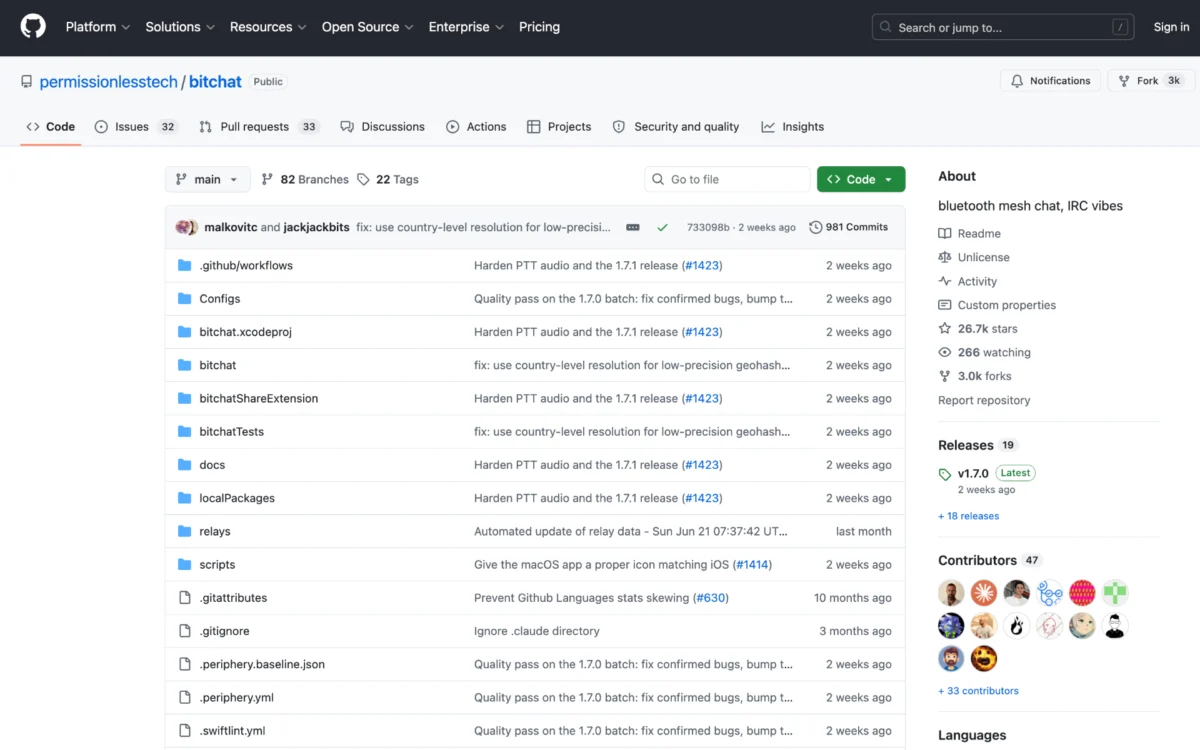
An unprecedented move by the Indian government to compel GitHub to remove repositories associated with Jack Dorsey’s offline Bluetooth-powered messaging application, Bitchat, has ignited a fierce debate concerning the legal parameters for targeting open-source software based solely on its functionality. The incident, brought to public light by Dorsey himself, underscores a significant escalation in governmental attempts to control digital communication, particularly in the wake of widespread student-led protests that have rocked New Delhi.
The Genesis of the Controversy: A Government Directive
The controversy began on a Friday when Jack Dorsey, co-founder of Twitter (now X) and a vocal advocate for decentralized technologies, posted on X what appeared to be an official notice from India’s Ministry of Home Affairs. The directive, reportedly issued by the Indian Cybercrime Coordination Centre (I4C), which operates under the Home Ministry, demanded that GitHub restrict access to three specific Bitchat repositories within a mere three hours. The core argument presented in the notice was that Bitchat’s anonymous, decentralized architecture inherently facilitates "unlawful activity" and empowers users to communicate during internet shutdowns, thereby impeding "lawful interception, attribution, and traceability." This directive marks a departure from conventional content moderation, as it targets the foundational code and design principles of a software project rather than specific instances of illegal content or user activity.
Bitchat, designed as a peer-to-peer messaging service, leverages Bluetooth technology to enable communication even in the absence of traditional internet connectivity or cellular networks. This inherent resilience to network restrictions is precisely what has made it a tool for circumvention in environments where internet access is curtailed, and simultaneously, the subject of governmental concern. Its decentralized nature means there are no central servers to monitor or control, making it a robust platform for private communication but also a challenge for authorities seeking to maintain surveillance capabilities.
India’s Volatile Digital Landscape: Protests and Communication Blackouts
The Indian government’s aggressive stance against Bitchat is inextricably linked to the volatile sociopolitical climate currently gripping the nation. For weeks, New Delhi has been the epicenter of extensive student-led protests, dubbed the "cockroach movement," which have drawn thousands of young people into the streets. These demonstrations were sparked by widespread allegations of examination paper leaks, leading to fervent demands for the resignation of Indian Education Minister Dharmendra Pradhan. In response to the escalating unrest, authorities have employed a range of measures, including imposing restrictions on marches toward the parliament and, crucially, tightening internet access.
India has a documented history of frequently resorting to internet shutdowns as a tool for maintaining public order, particularly during periods of civil unrest or political sensitivity. According to various digital rights organizations, India has consistently led the world in the number of internet shutdowns in recent years. These shutdowns, which often involve disabling mobile data services in specific areas, are intended to disrupt communication and coordination among protesters. However, they inadvertently highlight the critical need for alternative communication channels. Local media outlets have reported that, following these internet suspensions, many protesters have increasingly turned to offline messaging applications like Bitchat and Briar to bypass the restrictions and maintain their ability to coordinate and disseminate information. This direct correlation between internet shutdowns and the surge in Bitchat’s popularity likely spurred the government’s preemptive action.

A Shift in Censorship Tactics: Targeting Open Source Infrastructure
The legal basis and implications of this directive are a focal point of concern for digital rights advocates. Mishi Choudhary, founder of SFLC.in, a prominent Indian digital rights legal advocacy group, observed that while the document’s format was consistent with recent government takedown notices, the legal provisions cited within it do not explicitly authorize authorities to demand the removal of an entire software project based on its operational design, rather than specific illicit content. Prior to 2021, the Indian government typically relied on Section 69A of the IT Act and the 2009 Blocking Rules for nationwide content removal. These provisions generally target specific URLs or pieces of content deemed harmful. The Bitchat directive, however, ventures into uncharted territory by targeting the underlying open-source code on GitHub, a platform fundamental to global software development.
Unlike many previous government requests, the notice shared by Dorsey conspicuously lacks any identification of specific posts, messages, or repositories containing unlawful material. Instead, its condemnation is leveled against Bitchat’s fundamental attributes: its ability to function during internet blackouts and its server-less, decentralized nature, which authorities claim could facilitate illegal activities and obstruct "lawful interception." This approach raises profound questions about the scope of governmental power in regulating technology and the potential for a chilling effect on innovation, especially in the realm of privacy-enhancing tools.
Bitchat’s Meteoric Rise in India: Data-Driven Insights
The government’s crackdown came on the heels of Bitchat experiencing a staggering surge in popularity within India. Data shared by market intelligence provider Sensor Tower with TechCrunch paints a vivid picture of this exponential growth. Between July 17 and July 23, India accounted for approximately 85% of Bitchat’s global downloads, a dramatic leap compared to the mere 1% recorded over the preceding 30 days. Specifically, Bitchat was downloaded more than 91,000 times in India within that five-day window, with downloads skyrocketing thirty-two-fold on July 19 alone, compared to the previous day. Furthermore, the app’s daily active users in India soared to over 330,000 on Thursday, marking an unprecedented peak for the application in the country. This data unequivocally demonstrates that Bitchat became a critical communication lifeline for a significant number of users in India during a period of heightened internet restrictions, validating the government’s stated concerns about its use for circumvention, albeit from a different perspective.
The Open Source Conundrum: A Threat to Transparency and Innovation
The attempt to remove Bitchat’s repositories from GitHub has ignited a broader discussion within the global open-source community. The Internet Freedom Foundation (IFF), a New Delhi-based digital rights advocacy group, swiftly questioned the practical efficacy of such a takedown request. As the IFF pointed out on X, "The order also fails on its own terms as deleting a repository does not delete the application from any phone that carries it, and the mesh keeps functioning without servers. What the takedown actually prevents is scrutiny of the underlying code." This highlights a critical aspect of open-source software: once the code is public, it can be mirrored and distributed, making a complete eradication virtually impossible. The true casualty of such an order, then, becomes transparency and the ability of security researchers and developers to audit the code for vulnerabilities or backdoors.
Raman Chima, global program director at the Association for Progressive Communications, a global digital rights network, further elaborated on this unprecedented move. He told TechCrunch that the apparent notice extends beyond merely targeting a messaging service; it aims to remove its open-source code from GitHub. Chima emphasized, "They’re [the Indian government] not just targeting the designated service provider, but they’re trying to say that open source development of this type of product… should not occur." This perspective suggests a deeper governmental intent to stifle the very creation and availability of technologies that empower users with privacy and resilience against censorship, potentially setting a dangerous precedent for open-source development worldwide.

GitHub’s Position and the Fight for Transparency
As of the immediate aftermath of Dorsey’s revelation, GitHub had not publicly confirmed receipt of the Indian government’s directive. Crucially, the targeted Bitchat repositories remained accessible from India on Friday, indicating that GitHub had either not yet acted on the request or was actively evaluating its legal and ethical obligations. When questioned about the apparent notice, GitHub directed inquiries to its public repository of government takedown requests, which, notably, did not contain any recent entries related to Bitchat.
GitHub’s established policy on government takedown requests emphasizes transparency and due process. Rose Coogan, the company’s principal online safety counsel, stated, "When we receive a complete government takedown request, we notify the affected account owners and give them an opportunity to appeal. We share every government takedown request we take action on publicly." This commitment to transparency is a cornerstone of GitHub’s operations and is designed to inform the public and the affected developers about governmental attempts to influence the platform. The absence of the Bitchat request in this public log, at least initially, suggests either a delay in processing or a potential contestation of the order by GitHub itself. The Indian Home Ministry, when contacted for comment, did not provide a response.
Broader Implications for Digital Rights and Global Precedent
The Bitchat incident carries significant implications for digital rights, freedom of expression, and the future of open-source software development globally. Namrata Maheshwari, Asia Pacific policy manager and encryption policy lead at digital rights group Access Now, articulated a core concern: blocking an offline messaging platform during internet restrictions effectively transforms internet shutdowns into a "communication blackout," which directly infringes upon fundamental rights. She stressed that in any democracy, protesters retain the inherent right to communicate privately and coordinate peacefully.
This episode could establish a dangerous precedent where governments attempt to ban or remove software not because it has been used for illegal activities, but because its inherent design could be used to circumvent state control. Such a stance threatens the principles of network neutrality, freedom of speech, and the right to privacy that are foundational to a free and open internet. It also raises questions about the extraterritorial reach of national laws over global platforms like GitHub, which hosts code from developers worldwide. The incident highlights the ongoing tension between national sovereignty and the borderless nature of digital technology, particularly for tools designed to resist centralized control. For developers working on privacy-enhancing or censorship-resistant technologies, this could usher in an era of increased scrutiny and potential legal challenges, fostering a chilling effect on innovation in critical areas of digital freedom.
Ultimately, the attempt to remove Bitchat from GitHub is more than just a localized content dispute; it is a critical test case in the global battle over digital rights, open-source principles, and the limits of state power in the digital age. As governments worldwide increasingly grapple with dissent and the rapid evolution of communication technologies, the outcome of this particular confrontation could shape future policies and precedents for years to come.

