
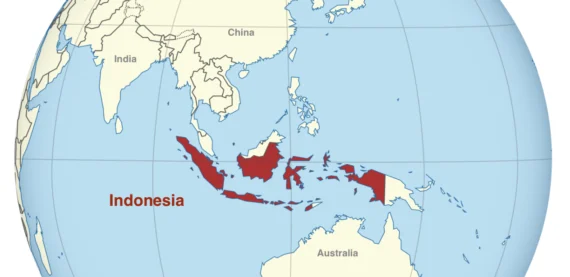
Indonesia, a sprawling archipelago nation and the world’s fourth most populous country in 2026 with an estimated 288 million residents, presents a compelling paradox for global businesses: a vast and increasingly connected consumer base coupled with relatively nascent retail sales figures, signaling immense untapped potential for e-commerce expansion. As India, China, and the United States continue to dominate global retail landscapes, Indonesia stands as a critical emerging market, attracting attention from international brands seeking to diversify their revenue streams and tap into a rapidly evolving digital economy.
The sheer scale of Indonesia’s population, surpassing 288 million in 2026 and trailing only India (1.46 billion), China (1.41 billion), and the United States (345 million), provides a foundational advantage for any market. However, a direct comparison of retail sales across these nations is inherently complex due to discrepancies in data collection methodologies and the varying compositions of their economies. A commonly referenced metric for assessing household purchasing power is the World Bank’s "Household Final Consumption Expenditure," which quantifies the market value of all goods and services acquired by households. Latest available data from 2024 indicates a stark contrast, with the U.S. leading at $19.8 trillion, followed by China at $7.48 trillion, India at $2.4 trillion, and Indonesia significantly behind at $773.6 billion. This substantial disparity underscores the developmental stage of Indonesia’s traditional retail sector.
However, when focusing on the digital realm, a different picture begins to emerge. Data from Reportal, a comprehensive aggregator of global internet statistics, provides crucial insights into online consumer behavior. As of 2025, China boasts an impressive 1.3 billion internet users, representing a 92% penetration rate. India follows with approximately 1 billion users (68% penetration), while the United States maintains a high rate of 323.9 million users (94% penetration). Indonesia, with 230.4 million internet users, achieves an 80% penetration rate, a figure that, while lower than the top-tier nations, is remarkably significant given the country’s economic profile. This high internet penetration, juxtaposed with its comparatively lower retail sales figures, strongly suggests that Indonesia is a fertile ground for accelerated online sales growth. The digital infrastructure is robust enough to support a significant shift in consumer purchasing habits, and businesses that can effectively navigate this transition are likely to reap substantial rewards.
The Digital Landscape: Marketplaces and the Rise of Social Commerce
The Indonesian e-commerce ecosystem is characterized by a strong reliance on local marketplaces, which serve as the primary entry point for many international brands. Companies such as Shopee Indonesia, Tokopedia, and Lazada collectively command an estimated 76% of the online sales market, according to analysis by Asialink, an Australia-based consultancy. These platforms not only facilitate transactions but also often engage in first-party retail, further solidifying their market dominance. Prominent global brands that have successfully established a presence through these marketplaces include L’Oréal Paris, Nivea, Garnier, La Roche-Posay, Maybelline, Adidas, Puma, Samsung, Xiaomi, Philips, Tefal, Nestlé, and Kellogg’s. Their participation highlights the attractiveness of these platforms for reaching a broad Indonesian consumer base.
Beyond traditional e-commerce marketplaces, social commerce is also experiencing a significant surge in popularity. Platforms like WhatsApp, Instagram, Facebook, and TikTok Shop are increasingly being utilized by Indonesian consumers for product discovery and purchases. This trend reflects a broader shift in digital consumer behavior across Southeast Asia, where social interaction and online shopping are becoming increasingly intertwined. The ubiquity of smartphones and the high engagement rates on social media platforms create a dynamic environment for brands to connect with consumers on a more personal level.
Geographically, the Greater Jakarta metropolitan area stands out as the nation’s economic and demographic heartland. With a population of 32 million residents, it represents the largest concentration of consumers and a critical hub for e-commerce activity. This concentration of population and economic activity makes it a strategic starting point for brands entering the Indonesian market.
Navigating the Indonesian Market: Challenges and Entry Strategies
Entering the Indonesian market presents a unique set of challenges for foreign brands. The archipelago’s vast geographical expanse and the linguistic diversity across its many islands can pose logistical and communication hurdles. Furthermore, similar to other emerging markets like India, Indonesia has established regulations governing foreign investment and business operations, which can necessitate careful planning and adherence to compliance requirements.
Despite these complexities, several strategic pathways exist for foreign brands looking to tap into Indonesia’s e-commerce potential. Cross-border sales, direct engagement on marketplaces, and partnerships with local distributors are common approaches. However, each of these methods comes with its own set of considerations regarding compliance, market access, and brand control.
For foreign entities seeking direct and independent control over their Indonesian operations, establishing a PT PMA (Penanaman Modal Asing) company is the most viable legal structure. This requires meeting specific criteria, including having at least two shareholders, one of whom must be foreign, and a minimum capital investment of $150,000, alongside other regulatory stipulations. A PT PMA is essential for obtaining a business identification number (NIB or Nomor Induk Berusaha), a prerequisite for operating an e-commerce business within the country.
An increasingly adopted strategy by foreign e-commerce brands in Indonesia is an omnichannel approach. This typically involves leveraging local distributors to secure broad market access and establish a physical presence, while simultaneously utilizing marketplaces and social commerce channels to capture high-volume demand. The development of a branded website and the establishment of physical retail outlets can significantly enhance brand equity and provide access to valuable customer data, although these strategies entail higher compliance costs and more complex market entry procedures.
Collaborating with local importers can streamline customs procedures and mitigate some of the complexities associated with international trade regulations. In Indonesia, the term "distributor" often refers to entities that purchase sector-specific inventory wholesale and subsequently resell it. Prominent examples of such distributors include DKSH Indonesia and Enseval.
Distinct from distributors are "e-commerce enablers." These specialized service providers manage a brand’s official online store, including marketing initiatives and fulfillment operations on marketplaces. Jet Commerce and SCI Group are recognized players in this burgeoning sector, offering crucial support to brands seeking to optimize their digital presence.

A fundamental legal requirement for all e-commerce activities in Indonesia is the mandatory use of Bahasa Indonesia for product descriptions. This underscores the importance of localized marketing and communication strategies.
Furthermore, a key regulatory obligation for foreign brands involves a minimum wholesale value of $100 per unit for goods entering the country. This policy effectively renders low-cost cross-border trade impractical for many product categories, necessitating a more integrated approach to market entry and distribution within Indonesia itself. This regulation aims to foster domestic economic activity and support local manufacturing and retail sectors by making it more economically viable to import goods through established channels rather than relying on small, direct shipments.
Economic Indicators and Growth Projections
The economic trajectory of Indonesia has been a subject of considerable interest among global analysts. For years, the nation has been categorized as a significant emerging market, often referred to as a member of the "MINT" group (Mexico, Indonesia, Nigeria, Turkey), highlighting its demographic advantages and growth potential. While traditional retail sales have lagged behind its population size, the digital economy presents a compelling counter-narrative.
The World Bank’s "Household Final Consumption Expenditure" data, while showing a lower absolute figure for Indonesia compared to other major economies, also reflects a growing middle class with increasing disposable income. This expanding consumer base is precisely what fuels e-commerce growth. As more Indonesians gain access to financial services, affordable internet, and smartphones, their propensity to shop online is expected to rise dramatically.
The penetration of internet users at 80% is a critical indicator of future e-commerce expansion. This means that out of every 100 Indonesians, 80 are connected to the digital world. The remaining 20% represent a significant pool of potential new online consumers. Industry forecasts suggest that the digital economy in Southeast Asia, with Indonesia as a major contributor, is set to experience exponential growth over the next decade. Projections often point to a market value that could easily double or even triple from its current figures, driven by increased digital adoption, a young and tech-savvy population, and continued investment in digital infrastructure.
The Indonesian government has also been actively promoting digital transformation and e-commerce. Initiatives aimed at improving digital literacy, supporting small and medium-sized enterprises (SMEs) in going online, and developing logistics and payment infrastructure are all contributing to a more favorable environment for online businesses. For instance, the development of robust digital payment gateways and a more efficient postal and logistics network are crucial for facilitating seamless online transactions and timely deliveries, thus building consumer trust and encouraging repeat purchases.
Consumer Behavior and Market Dynamics
Understanding Indonesian consumer behavior is paramount for any brand seeking success in this market. While price sensitivity remains a factor, consumers are increasingly discerning and value authenticity, brand reputation, and convenient shopping experiences. The rise of social commerce indicates a strong preference for personalized interactions and recommendations from trusted sources, whether they be influencers or peers.
The youth demographic, which constitutes a substantial portion of Indonesia’s population, is particularly influential in shaping e-commerce trends. This segment is highly adept at using digital platforms, readily adopts new technologies, and is receptive to online marketing. Their purchasing decisions are often influenced by social media trends, celebrity endorsements, and the perceived value proposition of products.
Furthermore, the concept of "discovery commerce" is gaining traction. Consumers are not always actively searching for specific products; rather, they enjoy browsing and discovering new items through curated content, personalized recommendations, and engaging social media feeds. This presents an opportunity for brands to invest in content marketing, influencer collaborations, and visually appealing product displays on digital platforms.
The geographical spread of Indonesia also means that logistical efficiency is a key differentiator. While Greater Jakarta is a hub, reaching consumers in more remote islands requires a well-developed and cost-effective logistics network. Brands that can ensure reliable and timely delivery, even to less accessible regions, will gain a significant competitive edge. This often involves strategic partnerships with local logistics providers who possess intimate knowledge of regional delivery challenges.
The Future Outlook: Investment and Innovation
The immense growth potential of Indonesia’s e-commerce market has not gone unnoticed by investors. Venture capital funding in Indonesian tech startups, particularly those in the e-commerce, fintech, and logistics sectors, has been robust. This influx of capital is fueling innovation, driving competition, and accelerating the development of the digital ecosystem.
Companies are investing in advanced technologies such as artificial intelligence (AI) for personalized marketing, machine learning for demand forecasting, and blockchain for supply chain transparency. The development of more sophisticated payment solutions, including digital wallets and buy-now-pay-later (BNPL) options, is also crucial for expanding access to online commerce for a wider segment of the population.
The Indonesian government’s commitment to digital transformation, coupled with the burgeoning consumer demand and increasing investor confidence, paints a bright future for the nation’s e-commerce landscape. While challenges remain in terms of infrastructure, regulatory navigation, and cultural nuances, the foundational elements for explosive growth are firmly in place. For international brands willing to invest strategically, adapt to local market dynamics, and embrace innovative approaches, Indonesia offers a significant opportunity to establish a strong foothold in one of the world’s most dynamic and promising emerging markets. The next decade is likely to witness a profound transformation in how Indonesians shop, with e-commerce playing an increasingly central role in the nation’s economic development.

