
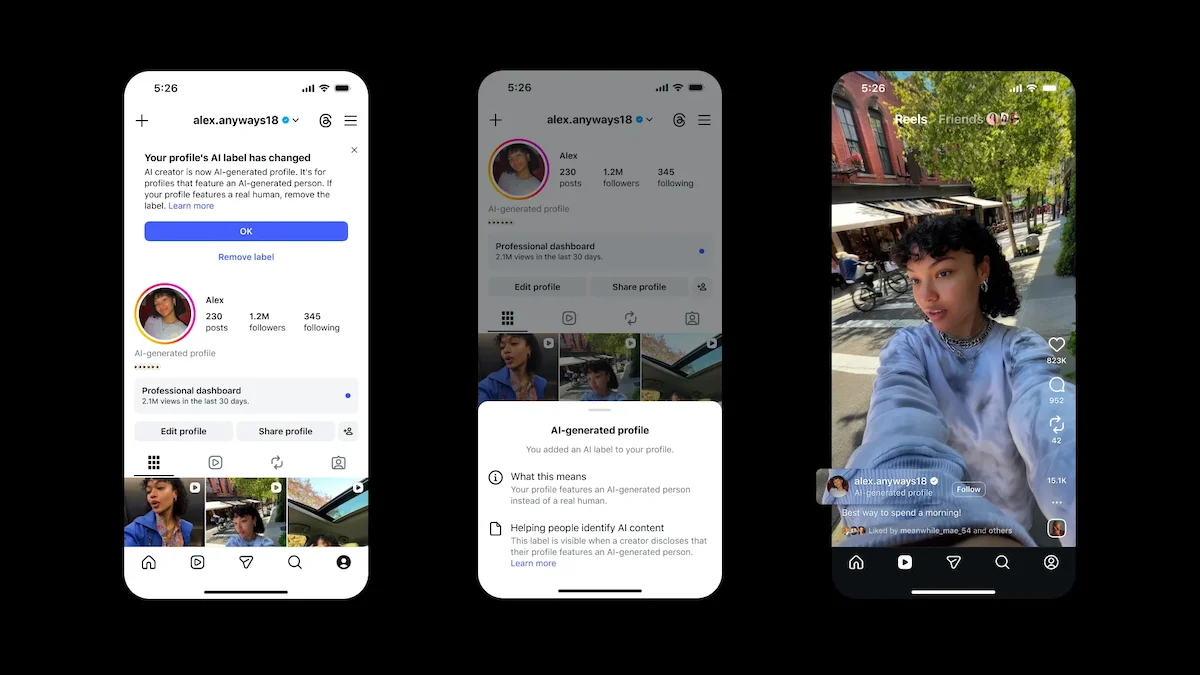
Instagram announced Monday a significant overhaul in its approach to AI-generated profiles, renaming its existing "AI creator" label to "AI-generated profile" and instituting a new policy that will limit the reach of accounts featuring AI-generated individuals without proper disclosure. This move marks a critical step by the social media giant to enhance transparency and combat the growing proliferation of synthetic media that can mislead users. The platform’s decision underscores an escalating industry-wide effort to delineate human-created content from that substantially generated by artificial intelligence, particularly as generative AI technologies become increasingly sophisticated and accessible.
Understanding the New Policy and Its Scope
The core of Instagram’s updated policy revolves around clarity and user trust. The newly dubbed "AI-generated profile" label is designed to be more explicit, informing users unequivocally that the person depicted in a profile was either entirely generated or substantially altered using AI. This distinction is crucial in an era where hyper-realistic AI-generated images and videos can be nearly indistinguishable from genuine human likenesses. The platform states its intention is to make the disclosure "easier to understand" for its vast global audience.
Under the revised guidelines, content creators who fail to appropriately label profiles featuring AI-generated individuals face tangible consequences. Their content’s reach could be significantly reduced, effectively penalizing non-compliance and incentivizing adherence to the new transparency standards. Conversely, creators who conscientiously apply the new label will not experience penalties simply for utilizing AI-generated personas. This dual approach aims to foster responsible AI integration rather than outright censorship, acknowledging the legitimate and creative uses of AI within the platform’s ecosystem.
It is important to note that the policy is precisely targeted and not a blanket requirement for all AI usage. Instagram clarifies that the "AI-generated profile" label is specifically for instances where the person featured on the profile is synthetic. Everyday applications of AI, such as photo editing to enhance images, refining captions for improved clarity, generating graphic elements, or making other creative tweaks that do not fundamentally alter the perceived humanity of the profile’s subject, do not necessitate this specific disclosure. This distinction aims to prevent over-labeling and ensure that the policy addresses the specific concern of deceptive human representation.
The Rationale: Addressing User Concerns and Fostering Trust
Instagram’s motivation for these changes stems directly from user feedback and a recognized need to maintain platform integrity. The company articulated that "As generative AI becomes a bigger part of how people create, we’ve heard that people don’t like seeing a profile that seems human, only to find out later that the person featured is AI-generated." This sentiment highlights a fundamental breach of trust when users encounter what they believe to be a real individual, only to discover it’s an artificial construct. The desire for transparency is paramount; users "want to know when a profile features an AI-generated person."
This move reflects a broader societal conversation about authenticity in the digital realm. As AI models like DALL-E, Midjourney, and Stable Diffusion become capable of producing photorealistic human images, the line between reality and simulation blurs. For platforms like Instagram, which thrive on personal connection and visual storytelling, this ambiguity poses a significant threat to user experience and perceived credibility. The new labeling policy is a proactive measure to address this challenge, aiming to rebuild and preserve trust by providing clear indicators of synthetic content.
The introduction of such a policy is not merely about aesthetic preference; it delves into ethical considerations. Undisclosed AI-generated profiles can contribute to misinformation, create echo chambers, or be used for malicious purposes such as scams or political manipulation. By mandating disclosure, Instagram is attempting to mitigate these risks, empowering users with the knowledge to critically assess the content they consume and the profiles they interact with.
The Rise of AI-Generated Profiles and Influencers: A Growing Phenomenon
The timing of Instagram’s announcement is particularly salient, coinciding with a rapid acceleration in the prevalence and sophistication of AI-generated content across social media platforms. The phenomenon of "virtual influencers" – entirely AI-generated personas with elaborate backstories, distinct aesthetics, and often millions of followers – has exploded in recent years. These digital entities can promote products, create engaging content, and even participate in simulated interactions, blurring the lines between digital marketing and reality.
Reports indicate that the virtual influencer market, though nascent, is experiencing exponential growth, with some estimates suggesting it could become a multi-billion-dollar industry within the next decade. These AI-driven entities offer brands unique advantages, such as complete creative control, immunity to human controversies, and the ability to operate 24/7 across global markets. However, their rise also brings significant ethical dilemmas, particularly when their artificial nature is not explicitly disclosed. Users, especially younger demographics, may struggle to differentiate between genuine human influencers and their AI counterparts, potentially impacting self-perception, consumer behavior, and the understanding of authenticity online.
The technical prowess of generative AI has advanced to a point where creating lifelike human faces, voices, and even personalities is increasingly accessible. Tools are readily available for anyone to generate synthetic media, leading to a proliferation of content that can be difficult for the average user to identify as artificial. This technological leap, while opening new avenues for creativity, simultaneously necessitates robust platform policies to ensure transparency and prevent misuse.
Precedent and Past Controversies: A Pattern of Concern
Instagram’s new policy does not emerge in a vacuum but is rather a response to a series of specific incidents and broader industry trends that have highlighted the risks associated with undisclosed AI content. The platform and its parent company, Meta, have faced increasing pressure to address the ethical implications of generative AI.

One prominent example cited is the controversy surrounding the gay dating app Goose earlier this year. A Wired investigation uncovered a network of seemingly AI-generated male influencers promoting the app on Instagram. The report detailed more than two dozen accounts featuring synthetic personas, some of which reportedly engaged with potential users through direct messages to encourage sign-ups. Such instances exemplify how AI-generated profiles can be weaponized for marketing or engagement, often in a deceptive manner, undermining genuine human interaction. The lack of transparency in these cases sparked considerable concern about manipulation and authenticity.
Another deeply troubling area where AI-generated content has surfaced is in health and wellness. The New York Times reported in July on hundreds of AI-generated "doctors," "healers," and "wellness personalities" active on social media. These synthetic figures were found promoting dubious health supplements or making unsubstantiated health claims to unsuspecting users. The potential for harm in this domain is particularly acute, as misleading health advice from what appears to be a credible source can have serious real-world consequences. This highlights the critical need for platforms to differentiate between genuine expert advice and AI-generated content, especially when it pertains to sensitive topics like health.
Beyond third-party misuse, Meta itself has recently grappled with the fallout from its own AI tools. Earlier, Instagram faced significant backlash over an AI image generator that allowed users to create images using other people’s likenesses, drawing content from public Instagram profiles without explicit opt-in consent. Users raised strong objections to having their personal data utilized in this manner, prompting Meta to swiftly remove the controversial feature. This incident underscored the delicate balance between innovation and user privacy, demonstrating the necessity of clear consent and transparent data practices when deploying AI technologies.
Furthermore, Meta’s broader legal landscape reflects a heightened scrutiny of its platforms’ impact. Just last week, Meta reached an $18 billion settlement with 29 U.S. states over allegations concerning the detrimental effects of Facebook and Instagram on children and teenagers. As part of this sweeping agreement, Meta committed to introducing significant changes, including a default two-hour daily usage limit for teens, a "Night Mode" block, and muted notifications during school hours, among other restrictions. While not directly related to AI-generated profiles, this settlement illustrates the increasing pressure on Meta to implement robust safeguards and assume greater responsibility for the content and user experience on its platforms. These legal and ethical challenges contribute to a climate where transparency regarding AI content becomes not just a user preference, but a regulatory imperative.
Broader Industry Landscape and Regulatory Scrutiny
Instagram’s policy update is indicative of a wider trend within the technology industry towards greater accountability for AI-generated content. As generative AI continues its rapid evolution, governments and regulatory bodies globally are beginning to explore frameworks for AI governance. The European Union, for instance, is advancing its AI Act, which aims to classify AI systems by risk and impose varying levels of regulation. In the United States, various legislative proposals and executive orders are also signaling a move towards greater transparency and safety in AI deployment.
For social media platforms, this translates into a heightened expectation to implement robust content moderation policies that specifically address synthetic media. Many platforms, including TikTok and X (formerly Twitter), have also begun to explore or implement their own labeling systems for AI-generated content, particularly deepfakes and manipulated media that could spread misinformation. The challenge lies in developing scalable and accurate detection mechanisms, as AI-generated content is often designed to evade detection.
The pressure isn’t solely from regulators. Consumer advocacy groups, media organizations, and civil society organizations are increasingly calling for greater transparency, media literacy initiatives, and clear disclosure requirements for all AI-generated content. The public is becoming more aware of the potential for manipulation and deception, driving platforms to act. Instagram’s move can be seen as a strategic step to align with these evolving expectations, potentially setting a precedent for other platforms within the Meta family and across the social media landscape.
Implications for Creators and the Platform Ecosystem
The new "AI-generated profile" policy will have multifaceted implications for content creators, particularly those leveraging virtual personas. For creators already using AI-generated individuals, the immediate impact will be the necessity to correctly label their profiles to avoid reach limitations. This may require an adjustment in their content strategy and a commitment to transparency, which could, in turn, enhance their credibility with an informed audience.
For emerging virtual influencers, the policy introduces a clear framework for operation. While some might view the reach limitations for undisclosed content as a constraint, it also provides a pathway for legitimate AI-driven content to thrive transparently. Platforms like Instagram are not aiming to stifle innovation but to channel it responsibly. This could lead to a bifurcation in the virtual influencer space: those who embrace transparency and build trust, and those who risk reduced visibility due and user skepticism due to non-disclosure.
From Instagram’s perspective, the policy represents an ongoing investment in content moderation and platform integrity. Implementing and enforcing such a policy will require significant resources, including advanced AI detection tools, human reviewers, and continuous refinement of guidelines as generative AI technology evolves. The success of the policy will depend on its effectiveness in identifying undisclosed AI-generated profiles and the platform’s consistent application of penalties. Failure to do so could erode user trust further and invite greater regulatory scrutiny.
The Future of Authenticity in the Digital Age
Instagram’s latest policy is more than just a minor update; it is a reflection of a fundamental shift in how digital platforms grapple with the challenges and opportunities presented by artificial intelligence. As generative AI continues to blur the lines between human and machine creativity, the demand for transparency, authenticity, and responsible innovation will only intensify.
The battle for authenticity online is far from over. While labeling AI-generated profiles is a crucial step, it is likely just one of many measures platforms will need to implement to navigate the complexities of synthetic media. Future challenges may include detecting increasingly sophisticated AI-generated content, addressing audio and video deepfakes, and educating users on critical media literacy skills to discern real from artificial. Instagram’s proactive stance signals a commitment to fostering a more transparent digital environment, one where users are empowered with the knowledge to understand the origin of the content they engage with. This ongoing evolution of policy and technology will shape the future of social interaction and content consumption in the digital age, emphasizing the critical importance of trust in a world increasingly populated by intelligent machines.

