
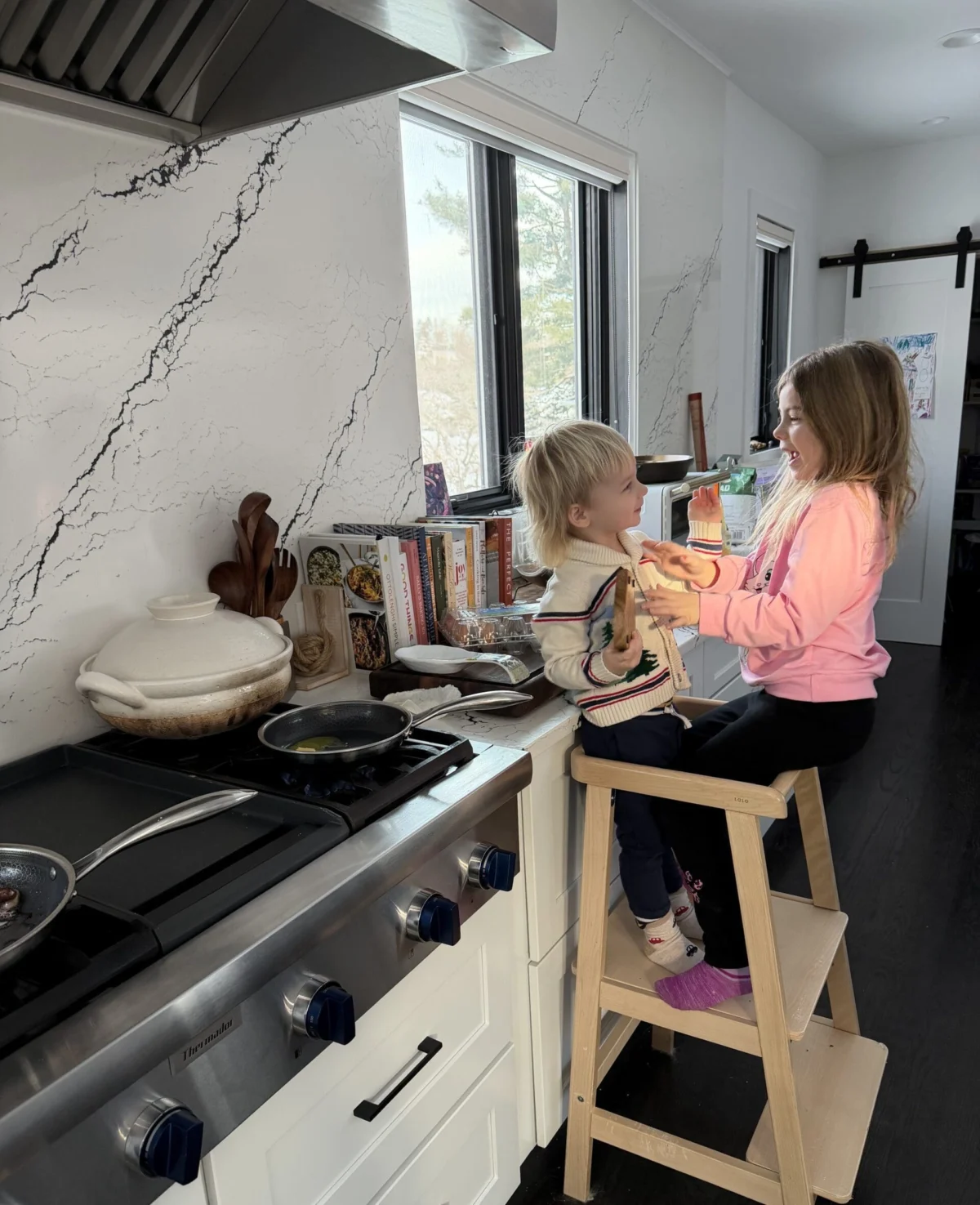
ESPN anchor Laura Rutledge, a prominent figure in sports broadcasting with a demanding professional schedule, has emerged as a vocal proponent for integrating children into the daily rituals of meal preparation. Drawing from her personal experiences with her children, Reese and Jack, Rutledge highlights how shared kitchen moments transcend mere sustenance, fostering deep family bonds, imparting crucial life skills, and offering a vital counterbalance to the fast-paced nature of modern life. Her observations resonate with a growing body of research advocating for the kitchen as a dynamic learning environment and a cornerstone of family well-being.
The Modern Family’s Quest for Connection: A Context
In an era characterized by dual-income households, extended work hours, and the omnipresence of digital distractions, finding authentic, unstructured quality time within families poses a significant challenge. Parents often grapple with balancing professional responsibilities with the desire to nurture their children’s development and maintain strong familial ties. Convenience foods and pre-packaged meals, while offering time-saving solutions, can inadvertently diminish opportunities for collaborative activities that build character and connection. It is against this backdrop that Rutledge’s insights gain particular relevance. As someone who anchors major broadcasts like NFL Live and navigates extensive production meetings, her commitment to making time for shared cooking underscores its profound value, transforming what might seem like an added chore into a cherished routine.
Rutledge recalls her earliest days of motherhood, navigating meal preparation with baby Reese perched on her hip, a testament to the innate desire to keep children close and involved. This initial, almost instinctual inclusion of her children in the kitchen evolved from a practical necessity into a deliberate and cherished family practice. She notes that both Reese and Jack were "from the very beginning, the kitchen has just been where we are," indicating a natural integration rather than a forced activity. This organic approach, beginning in infancy, set the stage for a routine that, despite its inherent mess and time consumption, has yielded invaluable returns.
1. Fostering Natural Family Connection Through Culinary Collaboration
One of the most significant benefits Rutledge identifies is the creation of "quality time that feels natural." Unlike structured activities or forced conversations, the shared space of the kitchen, with children like Jack on a step stool and Reese meticulously measuring ingredients, cultivates an environment where dialogue flows effortlessly. Topics range from the mundane details of their day to grand ideas and humorous anecdotes, such as the antics of their puppy, George. This unpressured interaction aligns with findings from numerous child development studies that emphasize the importance of unstructured play and shared tasks in strengthening familial bonds. When the focus shifts from achieving a perfect outcome to the collaborative process itself, both parents and children relax, leading to more genuine and meaningful exchanges. Rutledge even notes that this relaxed atmosphere often leads to spontaneous "song and dance moves," illustrating the joyful, uninhibited nature of these moments.
Research from institutions like the American Academy of Pediatrics consistently highlights the positive impact of regular family mealtimes, which often begin with collaborative preparation. Studies suggest that children who frequently share meals with their families tend to have higher self-esteem, better academic performance, and a lower incidence of high-risk behaviors. The kitchen, therefore, becomes a preparatory stage for these broader benefits, providing a consistent, low-stakes forum for communication and emotional connection that is difficult to replicate in other settings.
2. Cultivating Adventurous Eaters Through Ownership
A common challenge for parents is encouraging children to eat a diverse range of foods, particularly vegetables. Rutledge candidly admits to previously expending "real energy trying to convince Reese and Jack to eat what I put in front of them." However, she discovered a powerful motivator: involvement. When children actively participate in preparing a meal, they develop a sense of ownership and investment, making them significantly more inclined to consume the final product. This phenomenon, often termed the "ownership effect" or "endowment effect" in behavioral psychology, demonstrates that individuals value items more highly when they feel they have contributed to them or possess them. For preschoolers, this translates into a heightened willingness to try new flavors and textures.
Rutledge advises assigning children specific, age-appropriate tasks, no matter how small: stirring soup, sprinkling cheese, or carefully pouring pasta. Even a seemingly simple job can transform a child who minutes earlier "swore they didn’t like vegetables" into an eager taste-tester. This hands-on approach not only broadens children’s palates but also introduces them to the components of healthy eating in a positive, engaging manner, moving beyond didactic instruction to experiential learning. Nutritionists and child psychologists frequently recommend this strategy, noting that it demystifies food, reduces mealtime power struggles, and fosters a healthier relationship with eating from a young age.
3. The Kitchen as a Practical Classroom for Essential Life Skills
Beyond fostering connection and promoting healthy eating, cooking with children serves as an invaluable, informal educational setting. Rutledge observes that her children are "picking up without even realizing it" a multitude of real-life skills. These include:
- Cognitive Development: Following multi-step instructions, sequencing tasks, problem-solving (e.g., how to fix a minor mistake), and understanding cause and effect.
- Mathematical Concepts: Measuring ingredients introduces fractions, volume, and counting. Adjusting recipes later can involve multiplication and division.
- Fine and Gross Motor Skills: Activities like stirring, pouring, chopping (with kid-safe tools), and kneading dough enhance dexterity and coordination. Jack’s careful attempts at cracking an egg, even if initially messy, illustrate the development of gentleness and precision.
- Language and Literacy: Reading recipes, identifying ingredients, and discussing culinary terms expand vocabulary and comprehension.
- Confidence and Independence: Reese, for example, develops confidence in her ability to follow a recipe and create something tangible and "special for the family."
Rutledge emphasizes the importance of investing in appropriate tools – a kid-safe knife, sturdy mixing bowls, and a reliable step stool – to make the process both safe and manageable. This practical advice underscores the need for parents to adapt the environment to the child’s capabilities, reducing potential hazards and fostering a sense of autonomy. By mitigating concerns about "every sharp edge and hot surface," parents can more fully embrace the shared experience and impart a love for cooking that extends beyond childhood. Educational frameworks like Montessori pedagogy champion similar approaches, recognizing the profound learning that occurs through practical life activities.
4. Encouraging Mindfulness and Patience: A Counterbalance to Modern Demands
For professionals like Rutledge, whose career demands rapid thinking and constant readiness, the kitchen offers a therapeutic antithesis. "At ESPN, I’m wired to move fast, think faster, and be ready for anything," she states. "Cooking with kids forces me to do the opposite." The inherent slowness of a toddler carefully spooning tomato sauce, one tiny spoonful at a time, demands patience and presence. This enforced deceleration is not merely a challenge but a welcome respite.
This aspect aligns with the principles of mindful parenting, which encourages parents to be fully present in the moment with their children, appreciating small victories rather than rushing towards an outcome. When Rutledge is attuned to Jack’s pace, celebrating his remembrance to "stir slowly," her mind is freed from professional anxieties. These "tiny wins" – trying a new food, mastering a small skill – become cherished moments. In a society increasingly struggling with attention deficits and constant stimulation, these quiet, focused kitchen interactions offer a valuable opportunity for both parent and child to practice mindfulness, fostering emotional regulation and a deeper appreciation for the present. The documented moments on her phone, which often capture the chaos and joy, serve as a testament to the profound satisfaction derived from these "so dang fun" experiences, despite the inevitable mess.
5. Empowering Young Contributors and Building Self-Efficacy
Perhaps one of the most powerful outcomes of involving children in cooking is the profound sense of contribution and self-worth it instills. Rutledge observes the transformative effect of seeing a child "stand a little taller because she did something real." When Reese slices fruit or Jack enthusiastically squeezes tomatoes for a sauce, they are not engaged in pretend play; they are genuinely contributing to a family meal. This authentic responsibility is crucial for building self-efficacy, the belief in one’s capacity to execute behaviors necessary to produce specific performance attainments.
The temptation for parents to intervene and "do it right" is often strong. However, Rutledge has learned the importance of allowing children to "own their task completely," even if the result isn’t perfect. A child beaming with pride over slightly overcooked scrambled eggs, she argues, creates "a meal worth eating." This acceptance of imperfection in favor of empowerment is fundamental. Providing children with real responsibilities, distinct from symbolic play, is a cornerstone of confidence building. The kitchen, with its tangible processes and outcomes, provides an ideal environment for children to develop competence, feel valued, and understand their integral role within the family unit. This empowerment fosters independence, initiative, and a lifelong sense of capability.
Broader Implications and Expert Perspectives
Rutledge’s observations are not isolated anecdotes but reflect a growing consensus among child development experts, educators, and family therapists. The benefits she outlines — enhanced communication, improved eating habits, practical skill development, mindful engagement, and boosted self-esteem — collectively contribute to a holistic approach to child-rearing. Pediatricians often recommend family meal preparation as a way to combat childhood obesity and promote healthier lifestyles. Educational psychologists point to the hands-on learning in the kitchen as a prime example of experiential education, which is proven to be more effective for long-term retention and understanding than passive learning.
Furthermore, the act of cooking together reinforces cultural traditions and creates lasting family memories. The recipes passed down, the stories shared over a simmering pot, and the collective effort involved in preparing a meal become threads in the rich tapestry of family history. In a world increasingly fragmented by individual schedules and digital consumption, the kitchen serves as a vital anchor, drawing family members together for a shared purpose and fostering a sense of belonging.
The emphasis on process over product, the acceptance of mess as part of learning, and the commitment to slowing down encapsulate a philosophy of parenting that prioritizes connection and development over efficiency and perfection. Rutledge’s personal journey, culminating in the sharing of a kid-friendly spaghetti carbonara recipe, illustrates that even busy professionals can integrate these practices, transforming everyday tasks into extraordinary opportunities for family growth and joy. The enduring message is clear: the kitchen is far more than a place to prepare food; it is a vibrant laboratory for life, where chaos and culinary creation blend to forge resilient families and capable individuals.

