
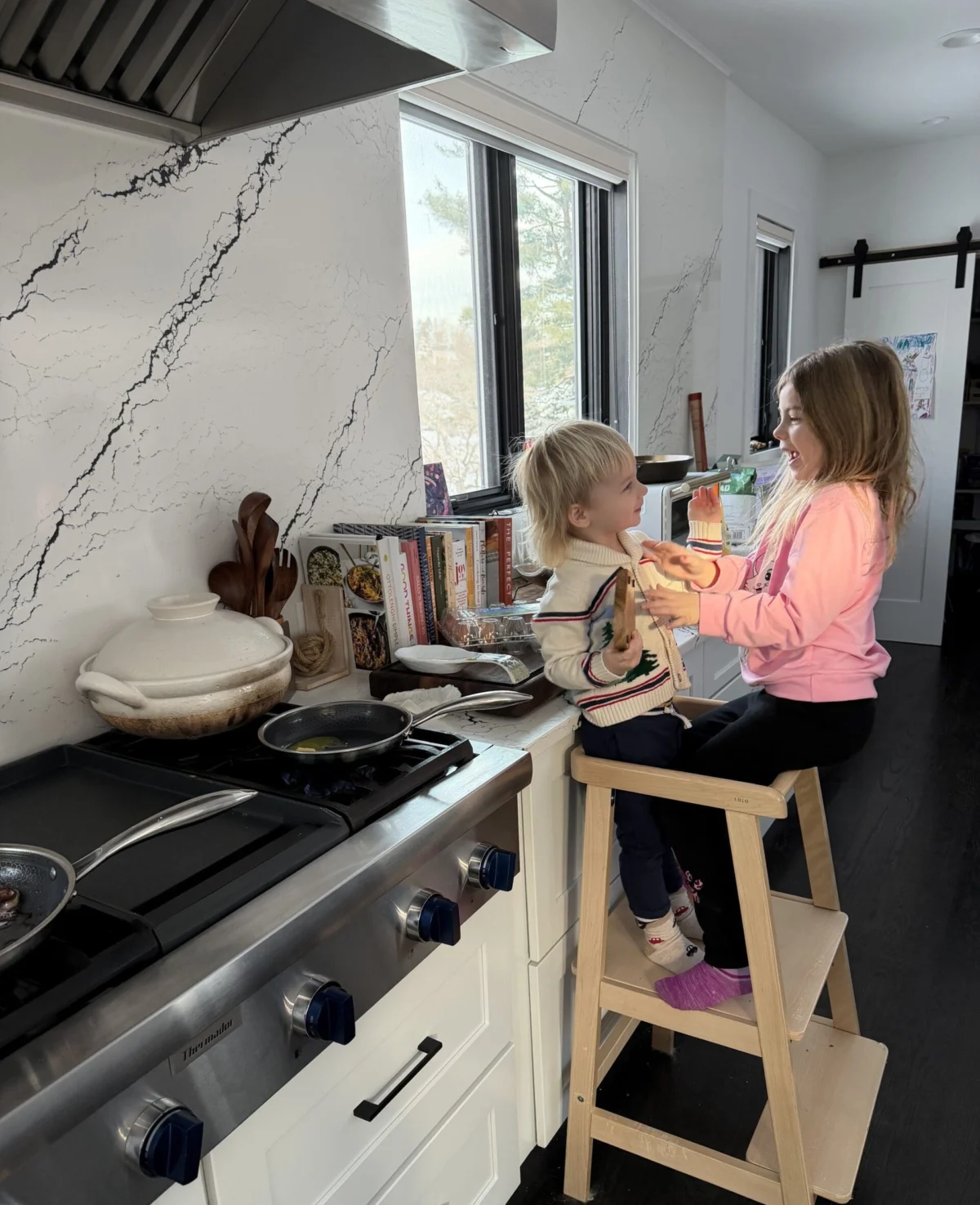
In an era increasingly dominated by digital interactions and fast-paced schedules, a quiet revolution is taking place in kitchens across the globe, as parents rediscover the profound benefits of involving their children in meal preparation. What often begins as an intuitive act of keeping a child close while managing household tasks evolves into a deliberate practice, recognized for its multifaceted contributions to child development, family bonding, and the cultivation of essential life skills. This shift underscores a growing understanding that the kitchen is far more than a place for sustenance; it is a dynamic environment for learning, connection, and empowerment.
The trend towards collaborative cooking with children, exemplified by anecdotes from busy professionals who integrate it into their routines, highlights a conscious choice to transform mundane tasks into meaningful experiences. For many parents, including those balancing demanding careers such as anchoring live television broadcasts, the kitchen offers a unique sanctuary where the pressures of external life recede, replaced by the rhythm of chopping, stirring, and shared laughter. This intentional engagement, despite the inevitable mess and added time it entails, is increasingly viewed not as a chore, but as an invaluable investment in family well-being and childhood development.
The Multifaceted Benefits of Shared Culinary Experiences
The decision to involve children in cooking yields a spectrum of benefits that extend far beyond the immediate goal of preparing a meal. These advantages span cognitive, emotional, social, and physical domains, contributing significantly to a child’s holistic growth.
Fostering Unstructured Connection and Communication
One of the most frequently cited benefits of cooking with children is its capacity to create organic, low-pressure opportunities for quality time and communication. Unlike structured activities or direct interrogations about their day, standing side-by-side at the counter, measuring ingredients or stirring a pot, allows conversation to flow naturally. Children, from toddlers perched on step stools to older siblings taking on more complex tasks, often open up about their experiences, ideas, and observations in this relaxed setting. Child development experts frequently emphasize the importance of such "unpressured presence," noting that these moments strengthen familial bonds and enhance children’s communication skills without the perceived formality of dedicated "talk time." Research from family psychology institutes consistently shows that shared activities, especially those involving creative or practical tasks, significantly contribute to family cohesion and mutual understanding, fostering an environment where children feel heard and valued.
Cultivating Healthier Eating Habits and Reducing Picky Eating
A persistent challenge for many parents is encouraging children to eat a varied and nutritious diet. The kitchen, however, offers a powerful antidote to picky eating. When children are actively involved in the preparation of a meal, they develop a sense of ownership and investment in the outcome. This psychological principle, often observed in early childhood education, translates directly to dietary choices. A child who has helped wash vegetables, stir a sauce, or sprinkle cheese is demonstrably more likely to taste and even enjoy the finished dish. Nutritionists and pediatricians advocate for this hands-on approach, explaining that it demystifies food, makes it less intimidating, and transforms eating into an achievement rather than a battle. Studies on childhood nutrition indicate that active participation in food preparation can lead to increased consumption of fruits and vegetables, broadening children’s palates and laying the groundwork for healthier eating habits into adulthood. This empowerment, even for preschoolers, proves to be a robust motivator, turning erstwhile vegetable-averse children into enthusiastic tasters.
Developing Essential Life Skills and Cognitive Abilities
Beyond the immediate satisfaction of a shared meal, cooking with children serves as an informal yet highly effective classroom for a wide array of life skills and cognitive development. From measuring ingredients to following sequential steps in a recipe, children are engaging in practical applications of mathematics, literacy, and problem-solving. A toddler learning gentleness while cracking an egg, or an older child developing confidence by successfully following a recipe, exemplifies the tangible skill acquisition occurring in real-time. Fine motor skills are refined through stirring, pouring, and slicing (with age-appropriate tools), while gross motor skills are engaged through movement around the kitchen. The process also teaches patience, attention to detail, and the understanding of cause and effect. Educational psychologists often highlight the value of experiential learning, noting that practical tasks like cooking integrate sensory input with intellectual understanding, making learning more concrete and memorable. Investing in child-safe knives, sturdy mixing bowls, and reliable step stools transforms the kitchen into a safe and manageable space for these crucial developmental lessons, allowing parents to share their passion for cooking without undue concern over hazards.
Promoting Mindfulness and Reducing Parental Stress
In a world that often demands speed and efficiency, the act of cooking with children inherently slows down the pace. This forced deceleration can be a surprising source of mindfulness for parents. A toddler meticulously spooning tomato sauce into a pot, one tiny spoonful at a time, demands a level of patience that contrasts sharply with the typical demands of a professional life. For individuals accustomed to fast-paced environments, such as those in media or high-pressure careers, this deliberate slowing can act as a crucial mental reset. It shifts focus from future deadlines or past worries to the present moment, allowing parents to fully engage with their child’s pace and celebrate small victories—remembering to stir slowly, trying a new food, or mastering a small skill. This mindful engagement is vital for parental well-being, reducing stress and fostering a deeper appreciation for the simple joys of family life. The seemingly chaotic nature of cooking with kids, with its flour dustings and sauce splatters, paradoxically becomes a space for grounding and connection, offering a much-needed counterpoint to the rush of modern existence.
Empowering Children as Valued Contributors
Perhaps one of the most profound impacts of involving children in cooking is the sense of real contribution it instills. When a child slices fruit for a salad or enthusiastically squeezes tomatoes for a sauce, they are not merely playing; they are genuinely assisting in the creation of a family meal. This authentic responsibility is a powerful builder of self-esteem and confidence. Allowing children to "own" their tasks, even if the outcome isn’t perfectly aligned with adult standards—such as slightly overcooked scrambled eggs made with beaming pride—reinforces their value and capability. Child psychologists emphasize that providing children with real, age-appropriate responsibilities is fundamental to developing their self-efficacy and independence. The kitchen, with its tangible results and immediate feedback, offers an ideal environment for children to experience the satisfaction of contributing meaningfully to their family unit, fostering a sense of pride and belonging that extends far beyond the culinary realm.
Navigating the Practicalities: Tips for a Successful Culinary Journey
While the benefits are clear, parents often face practical challenges, primarily concerns about mess, safety, and time. However, these obstacles can be mitigated with thoughtful preparation and a shift in perspective.
Chronology of Involvement: Engaging children in the kitchen can begin remarkably early. From merely observing a parent from a baby carrier or hip, sensory engagement is the first step. As toddlers, they can participate in simple tasks like washing produce, stirring ingredients in a large bowl, or mashing soft foods. Preschoolers can graduate to pouring pre-measured ingredients, cutting soft items with child-safe knives, and seasoning. School-aged children can follow simple recipes, learn basic knife skills under supervision, and take on more complex tasks like cracking eggs or kneading dough. Teenagers can plan entire meals, manage cooking times, and even experiment with recipes, developing advanced culinary independence. This gradual progression ensures tasks remain age-appropriate and skill-building.
Addressing the Mess: Acknowledging that cooking with children will be messier and take longer is the first step. Adopting a relaxed attitude towards spills and splatters, and viewing them as part of the learning process, is crucial. Strategies include using larger mixing bowls, placing newspaper or an old sheet under the workspace, and having cleaning cloths readily available.
Ensuring Safety: Prioritizing safety is paramount. This involves teaching children about hot surfaces, sharp objects, and electrical appliances from an early age. Investing in specialized child-safe kitchen tools, such as nylon knives, cut-resistant gloves, and sturdy step stools, significantly reduces risks and empowers children to participate more independently. Constant supervision, especially with younger children, remains essential.
Time Management: While cooking with kids adds time, framing it as an investment in family bonding and skill development rather than a quick meal preparation can alter perceptions. Choosing simpler recipes on busy days and reserving more elaborate projects for weekends can help manage time expectations. The goal is engagement, not culinary perfection.
Broader Impact and Implications
The widespread adoption of collaborative cooking practices has significant broader implications. On a societal level, it contributes to fostering healthier communities by instilling lifelong healthy eating habits from an early age. As children learn to cook, they are less reliant on processed foods and more inclined to make informed dietary choices. Furthermore, these practices strengthen family units, which are often cited as the bedrock of stable societies. The shared experiences and strengthened communication fostered in the kitchen contribute to more resilient and connected families. Educationally, cooking provides a practical, interdisciplinary learning environment that complements formal schooling, enhancing cognitive skills, mathematical understanding, and scientific curiosity. In an increasingly complex world, equipping future generations with practical life skills and a strong sense of self-efficacy is invaluable.
Conclusion
The simple act of inviting children into the kitchen transforms a daily necessity into a powerful vehicle for growth, connection, and learning. What begins as a practical solution for busy parents evolves into a cherished routine, enriching family life in profound ways. From fostering genuine communication and cultivating healthier eating habits to developing essential life skills, promoting mindfulness, and empowering children as valued contributors, the benefits are expansive and enduring. Despite the inevitable chaos and mess, the investment in these shared culinary moments pays dividends that extend far beyond the dinner table, shaping confident, capable, and connected individuals. The family kitchen, therefore, stands as a testament to the enduring power of hands-on engagement, proving that some of life’s most valuable lessons are learned not in textbooks, but amidst the flour, laughter, and warmth of a shared meal.

