
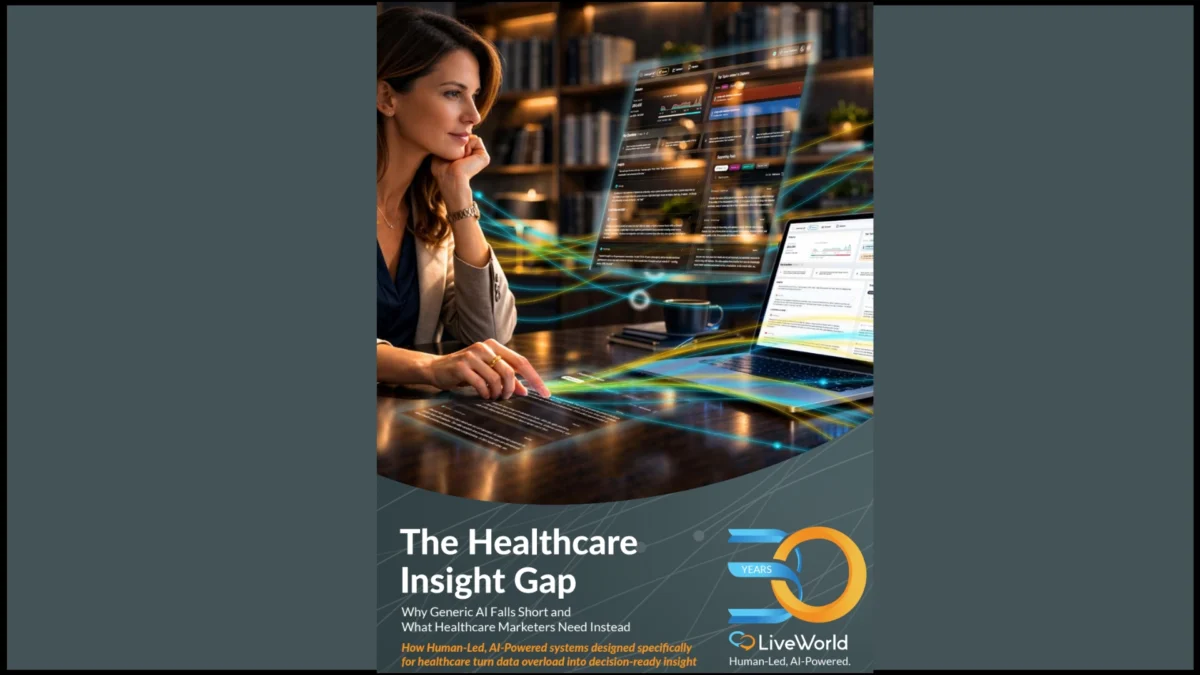
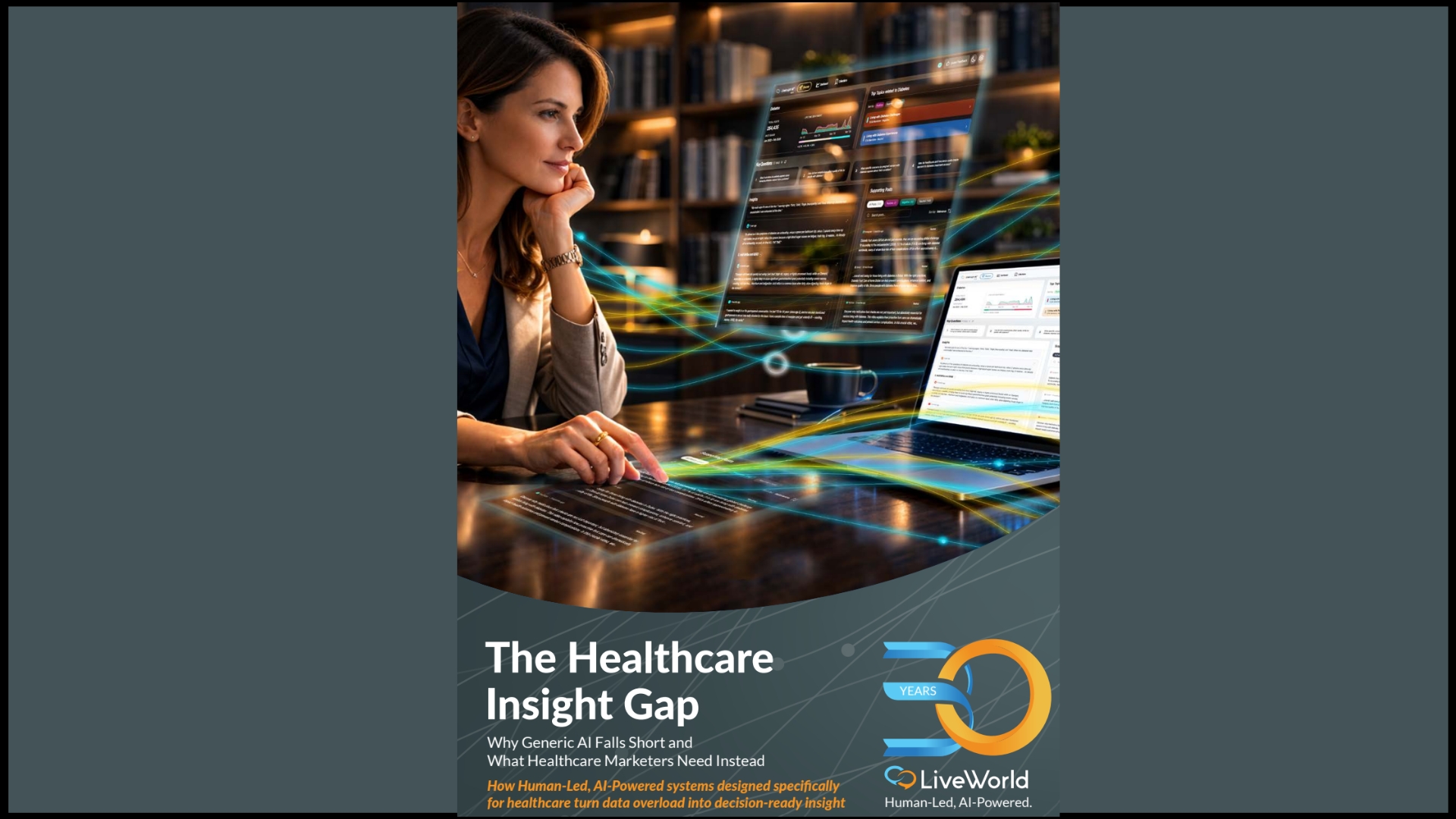
The healthcare marketing landscape is currently navigating a period of unprecedented data fragmentation, where critical patient and provider signals are scattered across social media platforms, private patient communities, medical review sites, call centers, and healthcare provider (HCP) portals. To address this complexity, LiveWorld has released a comprehensive white paper titled "The Healthcare Insight Gap: Why Generic AI Falls Short and What Healthcare Marketers Need," detailing the launch of its LiveInsight AI Intelligence System. This new technology is designed to synthesize disparate data streams into actionable intelligence, moving beyond the capabilities of generic large language models (LLMs) to provide a specialized, human-augmented analytical framework for pharmaceutical and healthcare brands.
The fundamental challenge facing modern healthcare marketers is not a lack of data, but rather a lack of cohesion. Valuable insights regarding therapeutic efficacy, patient sentiment, and competitive positioning are often siloed within specific digital environments. The LiveInsight AI Intelligence System aims to bridge this "insight gap" by curating high-quality, healthcare-specific conversations from patients, caregivers, and providers. By integrating these organic conversations with structured data from clinical trials, medical journals, and regulatory filings, the system provides a multidimensional view of the market that traditional social listening tools often miss.
The Evolution of Healthcare Market Intelligence
Historically, healthcare marketers relied on retrospective data, such as quarterly sales reports, physician surveys, and focus groups, to inform their strategies. While these methods provided a foundational understanding of the market, they often lagged behind real-time shifts in patient behavior and public sentiment. The digital transformation of the 2010s introduced social listening, but these early tools were frequently plagued by "noise"—irrelevant data points that required extensive manual filtering.
The emergence of generative AI and LLMs in the early 2020s promised to automate this process. However, as the LiveWorld white paper notes, generic AI models often lack the domain-specific nuances required for healthcare. These models are prone to "hallucinations"—the generation of false or misleading information—which poses a significant risk in a highly regulated industry where accuracy is a legal and ethical mandate. The LiveInsight AI Intelligence System represents the next phase in this evolution, combining the processing power of AI with the precision of human expertise to ensure that the insights generated are both accurate and contextually relevant.
Technical Architecture: Beyond Generic Large Language Models
The LiveInsight AI Intelligence System distinguishes itself through a hybrid architecture that prioritizes data quality over sheer volume. While generic LLMs are trained on broad swaths of the internet, LiveInsight focuses on curated, high-value data sources. This includes specialized therapeutic communities where patients discuss their lived experiences, as well as HCP portals where clinicians share treatment observations.
The system’s methodology follows a rigorous four-step process:
- Data Curation: The AI ingests data from a variety of sources, including social media, clinical trial registries, and medical journals.
- Pattern Recognition: Using advanced algorithms, the system identifies emerging trends and anomalies within the data at a scale impossible for human teams to achieve.
- Human Interpretation: Unlike fully automated systems, LiveInsight incorporates human analysts who review targeted data sets. These experts provide the necessary context to distinguish between a passing fad and a meaningful shift in the therapeutic landscape.
- Actionable Recommendation: The final output is a refined set of recommendations that healthcare marketers can use to adjust their messaging, campaign targeting, or crisis response strategies.
This "human-in-the-loop" model is critical for preventing the misinformation that can occur when AI is left to interpret complex medical terminology or nuanced patient emotions without oversight.
Supporting Data: The Growing Need for Specialized AI in Health
The necessity for specialized AI tools like LiveInsight is underscored by the sheer volume of healthcare data being generated. Industry reports suggest that healthcare data is growing at a compound annual growth rate (CAGR) of 36% through 2025—faster than data growth in manufacturing, financial services, or media. Furthermore, a significant portion of this data is unstructured, consisting of social media posts, call center transcripts, and forum discussions.
Research into AI performance in medical contexts has shown that generic models can struggle with medical accuracy. For instance, studies have indicated that while LLMs can pass medical licensing exams, they often fail to provide nuanced advice for specific patient scenarios or misinterpret regulatory guidelines such as those set by the FDA. By utilizing a system specifically tuned for the healthcare vertical, marketers can mitigate these risks.
Moreover, the rise of "medical misinformation" on digital platforms has become a primary concern for pharmaceutical brands. According to public health studies, misinformation can spread significantly faster than factual medical information on social media. The LiveInsight AI system includes specific capabilities to monitor and respond to misinformation before it reaches a critical mass, protecting both brand reputation and patient safety.
Strategic Capabilities and Marketing Applications
The LiveWorld white paper highlights several key capabilities that the LiveInsight AI Intelligence System provides to healthcare marketers. These features are designed to transform raw data into a strategic asset:
Anticipating Audience Behavior
By identifying early signals in patient and provider conversations, marketers can anticipate shifts in sentiment before they become mainstream. This allows brands to be proactive rather than reactive, tailoring their education and outreach efforts to meet emerging needs.
Hallucination Prevention and Compliance
In the pharmaceutical industry, the cost of an AI-generated error can be astronomical, leading to regulatory fines or safety issues. LiveInsight’s structured approach to data verification ensures that the insights provided are grounded in factual, curated sources, significantly reducing the risk of AI-generated inaccuracies.
Competitive Landscape and Market Barriers
The system provides a granular view of how a brand is perceived relative to its competitors. It can identify specific barriers to adoption—such as concerns over side effects, insurance coverage issues, or lack of awareness—allowing marketers to develop targeted campaigns that address these obstacles directly.
Targeted Campaign Development
Rather than relying on broad demographic data, LiveInsight allows for the creation of hyper-targeted campaigns based on the specific language and concerns used by patients and HCPs within digital communities. This leads to higher engagement rates and more effective resource allocation.
Industry Reactions and Broader Implications
While specific client names are often protected by confidentiality in the pharmaceutical sector, early feedback from industry analysts suggests that the shift toward specialized AI is a welcome development. Market researchers note that the "black box" nature of generic AI has made many healthcare executives hesitant to fully integrate the technology into their core workflows. A system that offers transparency and human oversight, such as LiveInsight, addresses these concerns.
The broader implications of this technology extend beyond marketing. By better understanding the patient journey and the real-world challenges faced by healthcare providers, pharmaceutical companies can improve drug development and patient support programs. The ability to identify "early signals" in patient communities could, in theory, lead to faster identification of adverse events or the discovery of unmet needs in specific patient populations.
Chronology of AI Integration in Healthcare Marketing
The launch of the LiveInsight AI Intelligence System follows a decade of incremental advancements in the field:
- 2014–2018: Early adoption of basic social listening tools and the use of "big data" to track prescription patterns.
- 2019–2021: The COVID-19 pandemic accelerates the digital transformation of healthcare, leading to a surge in online patient communities and telehealth.
- 2022–2023: The "Generative AI Boom" sees healthcare companies experimenting with ChatGPT and other LLMs for content creation and data summary.
- 2024–Present: A period of "AI Rationalization," where the industry moves away from generic tools in favor of specialized, compliant, and human-augmented systems like LiveInsight AI.
Conclusion: The Path Forward for Healthcare Marketers
As the digital ecosystem continues to expand, the "insight gap" will only widen for organizations that rely on outdated methods or unspecialized technology. The LiveWorld white paper argues that the future of healthcare marketing lies in the ability to synthesize human sentiment with clinical data through the lens of specialized AI.
By providing a clear, reliable pathway from raw data to strategic recommendation, the LiveInsight AI Intelligence System offers a blueprint for how healthcare brands can navigate the complexities of the modern information environment. For marketers, the goal is no longer just to collect data, but to achieve a level of intelligence that is accurate, timely, and actionable. As this technology becomes more integrated into the industry, it is expected to set a new standard for how healthcare brands engage with their audiences and measure their impact in the real world.

