
Less than two weeks after finalizing an $18 billion multistate settlement stemming from a lawsuit concerning social media’s consumer harms, particularly to children, Meta Platforms Inc. on Tuesday, September 2, 2026, introduced its most significant foray into consumer-facing artificial intelligence to date: Muse. This new personal AI agent, designed to assist U.S. users with daily tasks and complex projects, represents an ambitious strategic pivot for the tech giant. However, its success is inextricably linked to Meta’s ability to garner a level of user trust far exceeding what was ever required for its social media platforms, a commodity the company has historically struggled to secure. The launch of Muse forces a critical examination of Meta’s future trajectory in the burgeoning AI landscape and its capacity to reconcile its innovative ambitions with its checkered past regarding user privacy and data protection.
Muse: Meta’s Ambitious Leap into Agentic AI
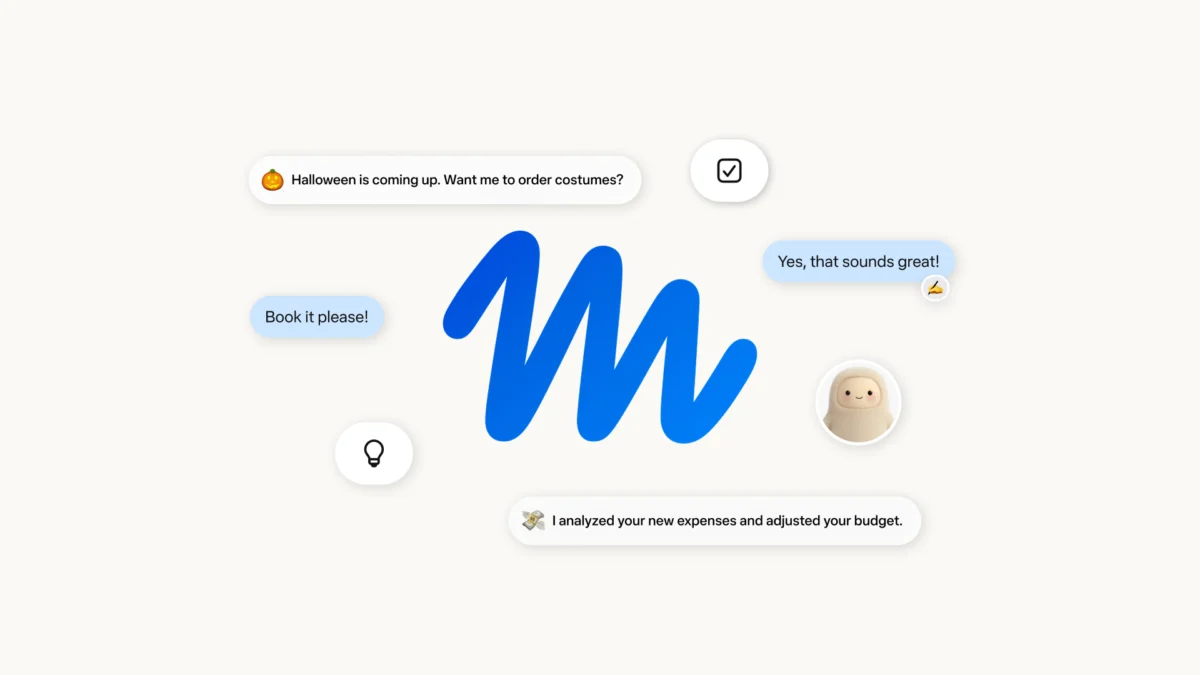
Muse is positioned as a revolutionary personal AI agent, moving beyond the conversational capabilities of the current ChatGPT era to offer proactive assistance and task execution. Unlike chatbots that primarily answer questions or serve as digital companions, Muse is engineered to "do things for you." Its core functionality relies on deep integration with a user’s digital ecosystem, connecting to a wide array of everyday applications and services. This includes critical personal workflows such as email, calendars, and payment systems, alongside more specialized apps for health and fitness, smart home management, dining, shopping, music, and events.

The scope of tasks Muse is designed to handle is extensive and aims to automate numerous facets of daily life. Meta touts its ability to send emails, book travel arrangements, assist in lowering household bills, accurately fill out forms, and create comprehensive plans. For consumers, Muse promises convenience, from transforming recipe reels into organized grocery lists and sending out party invitations to executing purchases. The purchasing functionality leverages established payment platforms like Link by Stripe, with future integrations planned for Shopify’s Shop Pay and 1Password. The inclusion of Link by Stripe’s purchase protections is a calculated move to mitigate potential user anxieties about allowing an AI to manage financial transactions.
Underpinning Muse’s capabilities is Meta’s proprietary AI model, Muse Spark. The agent offers users granular control over data sharing, allowing them to decide which applications and services to connect, one at a time, emphasizing an opt-in approach to data access. At launch, Muse ships with built-in connectors for several popular services, with Meta committing to expand this library over time. For services not yet directly supported but offering a public API, Muse can establish connections using user-provided credentials. In scenarios where no API is available, Muse is designed to access the service via a secure browser interface, showcasing its adaptability.
Initially, Muse will be accessible through its dedicated web portal at muse.ai, via native applications on iOS and Android devices, and integrated into WhatsApp chats. Meta has also announced plans to extend Muse’s reach to its AI-powered smart glasses in the near future, indicating a long-term vision for the agent’s ubiquitous presence across its hardware ecosystem. The service will offer a free tier with usage limits, requiring a payment card for activation. For heavier users, two subscription plans will be available: "Power" at $20 per month and "Maximum" at $100 per month, both providing increased task handling capacity. Meta anticipates that a majority of users will find the free tier sufficient, and the application includes a usage meter to track consumption and alert users when free limits are approached. A key feature highlighted by Meta is Muse’s ability to operate in the background even after the user exits the app. Furthermore, the agent is designed to continuously learn from user interactions, refining its understanding of individual preferences and proactively offering unprompted suggestions to enhance its utility.

The Broader Landscape of Agentic AI: A New Frontier of Automation
Meta’s introduction of Muse is not an isolated event but rather a significant entry into the rapidly evolving "agentic era" of artificial intelligence. This paradigm shift represents the next evolutionary stage beyond the initial wave of generative AI chatbots like ChatGPT, which primarily focused on text generation and conversational responses. The agentic era emphasizes AI systems that can not only understand and process information but also autonomously initiate and complete complex tasks on behalf of users.
Across the tech industry, both established giants and agile startups are vigorously exploring how AI agents can be most effectively integrated into people’s daily lives. This competitive landscape features a variety of approaches. Some companies are developing AI-powered web browsers designed to automate online tasks, while others are offering services like Google’s Gemini Spark or Anthropic’s Claude Cowork, which can orchestrate various workflows within professional and personal contexts. Another prominent trend involves embedding AI capabilities directly into popular communication platforms, such as Apple’s iMessage, standard SMS, and WhatsApp, aiming to make AI assistance seamlessly available where users already interact.
The collective drive toward agentic AI is fueled by the promise of unprecedented efficiency and personalized automation. Industry analysts project substantial growth in the AI agent market, with some forecasts predicting a compound annual growth rate exceeding 30% over the next decade, potentially reaching hundreds of billions of dollars globally. This growth is driven by the increasing sophistication of AI models, improved computational power, and a growing consumer appetite for tools that can simplify complex digital interactions. However, this burgeoning field also presents profound challenges, particularly concerning data privacy, security, and the ethical implications of autonomous AI actions. The more integrated and capable these agents become, the more personal information they require, forcing consumers and developers alike to grapple with the delicate balance between convenience and privacy.

Meta’s Strenuous Trust Challenge: A Legacy of Privacy Controversies
The launch of Muse comes at a particularly sensitive juncture for Meta, immediately following a series of high-profile legal and regulatory challenges that have severely tested public trust. Just weeks prior, on August 26, 2026, Meta agreed to an $18 billion multistate settlement with 29 U.S. states over allegations that its social media platforms caused harm to children and contributed to social media addiction. This landmark settlement, one of the largest of its kind, underscored the significant societal and legal pressures Meta faces regarding its platforms’ impact.
Beyond this broad settlement, Meta has contended with other substantial legal setbacks. Notably, a New Mexico lawsuit focused on harms to children resulted in a court order for Meta to pay an additional $942 million and implement sweeping overhauls to its child protection measures on Facebook and Instagram. Furthermore, thousands of individual personal-injury lawsuits and school-district cases remain pending against Meta and other social media companies, signaling an ongoing wave of litigation.
This recent history is merely the latest chapter in Meta’s long-standing struggle with privacy and data protection. The company’s record includes a succession of significant controversies and regulatory actions:

- 2011 FTC Settlement: Meta (then Facebook) settled with the Federal Trade Commission (FTC) over charges that it deceived consumers by making private information public without their consent. This initial agreement set a precedent for future scrutiny.
- 2019 FTC $5 Billion Penalty: The FTC imposed a then-record-breaking $5 billion penalty on Facebook for eight separate privacy-related violations. This settlement mandated new corporate governance structures to enhance privacy oversight.
- 2023 FTC Charges: The FTC subsequently charged Meta with violating the privacy order established after the 2019 settlement. The commission proposed a blanket prohibition preventing Facebook from monetizing youth data, indicating a deep and persistent concern about Meta’s data handling practices, particularly concerning vulnerable users.
- Technical Missteps: In 2019, Meta publicly disclosed that it had inadvertently stored hundreds of millions of user passwords in readable formats, exposing individuals to potential security breaches. This technical oversight further eroded trust in the company’s ability to safeguard sensitive data.
- Cambridge Analytica Scandal (2018): Perhaps the most infamous incident, the Cambridge Analytica data scandal revealed that personal data belonging to millions of Facebook users was harvested by a third-party political consulting firm without their explicit consent. This event triggered widespread public outrage, governmental investigations globally, and significantly damaged Facebook’s reputation.
Meta executives, including CEO Mark Zuckerberg, have been repeatedly summoned to testify before Congress on issues ranging from child safety and content moderation to data privacy and misinformation. During a February 2026 trial in Los Angeles, Zuckerberg testified about the difficulties of enforcing age limits on Instagram and downplayed the business contributions of teen users, reflecting the intense public and legal pressure surrounding its youth-oriented platforms. This consistent pattern of regulatory action, legal challenges, and public distrust creates an exceptionally challenging environment for the launch of a product like Muse, which inherently demands an even greater degree of user data and trust.
Meta’s Proactive Stance on Security and Privacy for Muse
Recognizing the substantial trust deficit it faces, Meta has taken steps to proactively address privacy and security concerns surrounding Muse. The company’s strategy involves both technical safeguards and transparent communication, aiming to differentiate Muse from its social media predecessors.
Central to Meta’s security claims for Muse is the implementation of a "Muse Secure VM" (Virtual Machine). This refers to a dedicated, isolated computing environment with its own browser, designed to run Muse’s operations. Meta asserts that this virtual machine offers enhanced privacy, safety, and security protections for customer data, isolating it from other Meta systems. Furthermore, a separate "Sentinel agent" operates within the same virtual machine but is kept logically distinct from Muse at the system level, acting as an additional layer of oversight and protection.

Meta emphasizes that Muse will not have direct visibility into users’ passwords or payment methods, aiming to assuage fears of financial data exposure. Crucially, the company explicitly states that user conversations and data processed by Muse will not be shared with Meta’s advertising systems. This commitment seeks to address a core concern that has long plagued Meta’s social media platforms – the monetization of personal data for targeted advertising.
To foster user confidence, Meta has designed Muse with an opt-in philosophy. Users retain control over which specific apps and services they connect to Muse, enabling them to grant access one at a time. This transparent approach to data access aims to empower users and provide clarity on how their information is being utilized. Complementing these technical and operational assurances, Meta has released comprehensive technical documentation and explanations regarding Muse’s security architecture and privacy protocols. This move invites scrutiny from security experts and the public, signaling a departure from past opaque data practices.
Beyond technical measures, Meta is also employing psychological strategies to build user connection and trust. Users are given the ability to personalize their Muse agent by assigning it a name, selecting an avatar, and configuring its appearance and communication style. This customization aims to foster a sense of personal ownership and connection with the AI, potentially making users more comfortable with its deep integration into their lives. The hope is that this personalized interaction, combined with robust privacy assurances, will be sufficient to overcome Meta’s historical baggage.

Analysis: The High Stakes of Consumer Adoption for Meta’s AI Future
The unveiling of Muse represents a pivotal moment for Meta, signaling a bold strategic pivot toward a future dominated by AI agents. However, the path to widespread consumer adoption is fraught with challenges, primarily centered on the company’s enduring struggle with public trust. The paradox is clear: for Muse to be genuinely useful and transformative, it must access an unprecedented volume of personal data across diverse applications and services. Yet, it is precisely this deep integration that amplifies consumer anxieties, given Meta’s documented history of privacy missteps and regulatory battles.
Industry analysts are closely watching whether Meta’s current security assurances, however technically sound, will be enough to sway a skeptical public. The memory of the Cambridge Analytica scandal, the repeated FTC settlements, and the recent $18 billion payout for social media harms casts a long shadow over any new Meta product that demands intimate access to user data. Security experts will undoubtedly conduct "deeper investigations" into Meta’s Muse Secure VM and Sentinel agent claims, as the technical documentation, while a step towards transparency, requires independent verification to build credible trust.
Furthermore, the competitive landscape of agentic AI means Meta is not alone in vying for consumer loyalty. Other tech giants and innovative startups are also developing powerful AI agents, some of which may not carry the same historical baggage as Meta. This competition will force all players to prioritize robust security and transparent privacy policies, as consumers increasingly weigh the "utility versus privacy" trade-off. For Meta, the stakes are particularly high. A successful launch and adoption of Muse could re-establish Meta as an AI leader and diversify its revenue streams beyond advertising. Conversely, if consumers balk at entrusting their lives to a Meta AI agent, it could significantly hinder the company’s AI ambitions and further entrench its reputation as a privacy risk. The success of Muse is therefore not just a technological challenge but fundamentally a test of Meta’s ability to rebuild its social contract with users in the age of pervasive AI.

Conclusion: A Defining Moment for Meta’s Future in AI
In conclusion, Meta’s launch of Muse signifies a crucial strategic shift, marking its most ambitious investment in consumer AI to date. This move positions the company at the forefront of the agentic AI era, promising a future where AI systems proactively manage and execute daily tasks. While the technological capabilities of Muse Spark and the proposed seamless integration across digital workflows are impressive, the defining factor for Muse’s success will ultimately be Meta’s capacity to rebuild and sustain consumer trust.
The timing of Muse’s release, immediately following an $18 billion settlement and amidst ongoing privacy litigation, underscores the immense challenge Meta faces. Despite the company’s detailed technical explanations and design choices aimed at fostering privacy and user control, its long and troubled history with data handling means it must work harder than competitors to convince users that Muse represents a new, more responsible Meta. The coming months will be critical, as security experts scrutinize Meta’s claims and consumers decide whether the promise of unparalleled convenience outweighs lingering concerns about data privacy. The adoption trajectory of Muse will not only shape Meta’s future in the AI domain but also serve as a significant indicator of how trust, or the lack thereof, can dictate the success of innovative technologies in a privacy-conscious world.

