
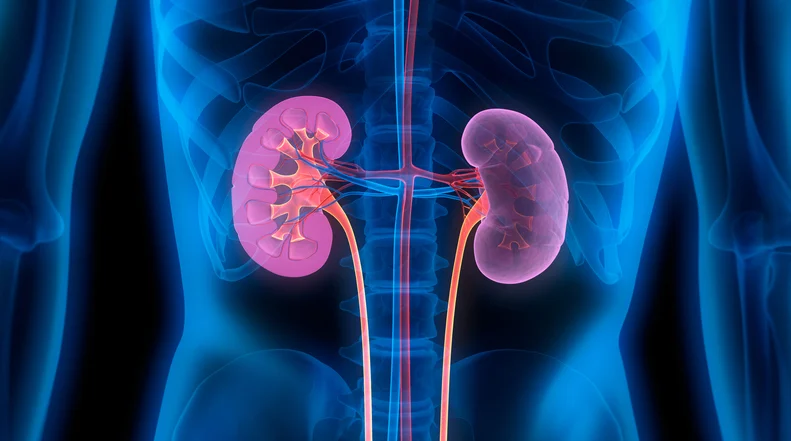
The Icahn School of Medicine at Mount Sinai has been awarded a five-year, $4 million grant from the National Institutes of Health (NIH) to spearhead a groundbreaking research initiative aimed at mitigating one of the most prevalent and costly complications in modern surgery: post-operative acute kidney injury (AKI). This ambitious project seeks to leverage the power of artificial intelligence and machine learning to identify high-risk patients before they ever enter the operating room, allowing for a paradigm shift from reactive treatment to proactive, personalized prevention.
Post-operative AKI is characterized by a sudden decline in kidney function following a surgical procedure. It is a condition that currently affects approximately 12% of the 50 million patients who undergo noncardiac surgeries in the United States annually. Despite its frequency, AKI remains a difficult challenge for clinicians, as its onset is often subtle, and its consequences can be devastating, ranging from prolonged hospital stays to permanent organ damage and death. By utilizing a massive dataset comprising more than 320,000 patients across 15 different hospitals, the Mount Sinai team aims to build a predictive model that is both more accurate and more generalizable than any tool currently available to the medical community.
The Clinical and Pathophysiological Challenge of AKI
Acute kidney injury is not a single disease but a clinical syndrome that occurs when the kidneys are unable to filter waste products from the blood effectively. During surgery, the body undergoes significant physiological stress. Fluctuations in blood pressure, heart rate, and respiratory function can lead to periods of reduced blood flow to the kidneys, known as ischemia. Additionally, the inflammatory response triggered by surgical trauma and the administration of certain medications can further tax renal function.
For many patients, the kidneys are able to recover once the stress of surgery has passed. However, for those with underlying vulnerabilities—such as pre-existing heart disease, diabetes, or chronic kidney disease—the insult can lead to a formal AKI diagnosis. The current standard of care is largely supportive; there is no "magic pill" to reverse AKI once it has begun. Instead, clinicians must manage fluid balance, maintain blood pressure, and avoid further nephrotoxic insults while waiting for the kidneys to heal.
The difficulty in managing AKI lies in its timing. Traditional markers of kidney function, such as serum creatinine levels, are "lagging indicators," meaning they often do not show significant changes until 24 to 48 hours after the initial injury has occurred. This delay creates a critical window of missed opportunity where preventive measures could have been implemented if the risk had been identified earlier.
The Economic Burden on the Healthcare System
The financial implications of post-operative AKI are staggering. Beyond the clinical toll on the patient, the condition represents a massive drain on hospital resources. According to data cited by the research team, the risk-adjusted average cost of care for a surgical patient who develops AKI is nearly $16,000 higher than for a patient who does not.
When extrapolated across the millions of surgical cases performed each year, the cumulative cost to the U.S. healthcare system reaches into the billions of dollars. These costs are driven by several factors, including the need for more intensive monitoring, the use of expensive medications, the potential requirement for renal replacement therapy (dialysis), and significantly longer inpatient stays. Furthermore, patients who suffer from AKI are at a higher risk for readmission and the development of chronic kidney disease, which creates long-term financial and health burdens for both the patient and the payer.
Dr. Ira Hofer, an anesthesiologist and clinical informaticist at Mount Sinai and the study’s principal investigator, emphasized that the goal is not just to improve health outcomes but to make hospital operations more efficient. "Better models to predict AKI will allow hospitals to be more proactive and save while making sure patients do better," Hofer noted.
Technological Innovation: Federated Learning and AI
The cornerstone of the Mount Sinai project is the use of "federated learning," a sophisticated AI training technique that addresses one of the primary hurdles in medical research: data privacy. Historically, building large-scale AI models required moving sensitive patient data from various hospitals into a single, centralized database. This process is often fraught with legal, ethical, and security challenges, particularly under strict HIPAA regulations.
Federated learning bypasses these issues by allowing the AI model to be trained locally at each participating hospital. Instead of sharing raw patient records, the hospitals share only the mathematical "weights" or insights the model has learned. These insights are then aggregated into a global model that benefits from the diversity of the entire dataset without any individual patient’s information ever leaving its home institution.
The study will draw on the expertise of a multidisciplinary team from Mount Sinai, Vanderbilt University, and the University of California, Los Angeles (UCLA). This collaboration brings together specialists in anesthesiology, nephrology, biomedical informatics, and health data science. By training the model on data from 15 diverse hospitals, the researchers ensure that the AI is exposed to a wide variety of patient demographics, surgical types, and clinical practices, making the final tool applicable to a broad range of healthcare settings.
A Five-Year Roadmap Toward Personalized Medicine
The $4 million NIH grant provides the necessary runway for a multi-phased research approach over the next five years. The project is structured to move from data analysis to clinical implementation in a controlled, scientific manner.
- Data Aggregation and Model Training: The initial phase involves the implementation of the federated learning infrastructure across the participating sites. Researchers will analyze electronic health records (EHRs) to identify patterns and biomarkers that correlate with post-operative AKI.
- Validation and Refinement: Once the initial models are developed, they will be tested against historical data to determine their predictive accuracy compared to existing risk-assessment tools. The team will look for specific variables—such as intraoperative blood pressure volatility or pre-operative fluid status—that may serve as early warning signs.
- Identification of Interventions: A critical component of the study is determining which preventive strategies work best for specific patient profiles. For example, the model might suggest that a high-risk patient requires a specific fluid management protocol or the avoidance of certain non-steroidal anti-inflammatory drugs (NSAIDs) during the perioperative period.
- Clinical Trials: The final stages of the grant will focus on moving the models into the clinical environment. This involves pilot programs where the AI’s risk scores are provided to anesthesiologists and surgeons in real-time, allowing them to adjust their care plans based on the machine’s recommendations.
Shifting from One-Size-Fits-All to Targeted Care
The ultimate objective of Dr. Hofer and his team is to dismantle the "one-size-fits-all" approach to surgical care. Currently, many hospitals use generalized protocols for fluid management and blood pressure control. While these protocols are effective for the average patient, they may be insufficient for those at high risk of AKI or unnecessarily restrictive for those at low risk.
"Our goal is to use the wealth of information available in electronic health records to identify patients at risk before surgery and move toward prevention strategies that are better matched to each patient," Hofer stated.
By providing a precise risk profile, the AI model will enable clinicians to practice "precision perioperative medicine." For a patient identified as high-risk, the surgical team might opt for more invasive hemodynamic monitoring, such as an arterial line, to ensure blood pressure remains within a very narrow, safe range. Conversely, for a low-risk patient, the team could avoid unnecessary interventions, thereby reducing the risk of other minor complications and speeding up the recovery process.
Broader Implications and Future Outlook
The success of this project could serve as a blueprint for how AI is integrated into hospital workflows across the country. If Mount Sinai can demonstrate that federated learning can successfully produce a high-performing predictive model for AKI, the same methodology could be applied to other surgical complications, such as post-operative pneumonia, myocardial infarction, or sepsis.
Furthermore, the involvement of the NIH underscores a national priority to modernize healthcare through digital transformation. As hospital systems become increasingly digitized, the ability to turn "passive" EHR data into "active" clinical intelligence is seen as the next frontier in patient safety.
The Mount Sinai initiative arrives at a time when the healthcare industry is under immense pressure to improve quality while reducing costs. By targeting AKI—a complication that sits at the intersection of high clinical risk and high financial cost—the research team is addressing one of the most significant "pain points" in hospital administration.
As the five-year study progresses, the medical community will be watching closely to see if the promise of AI can be translated into a tangible reduction in kidney injuries. If successful, the project will not only save lives and kidneys but will also usher in a new era where the data already existing within hospital walls is used to protect patients from the very complications that have long been considered an unavoidable risk of surgery.

