
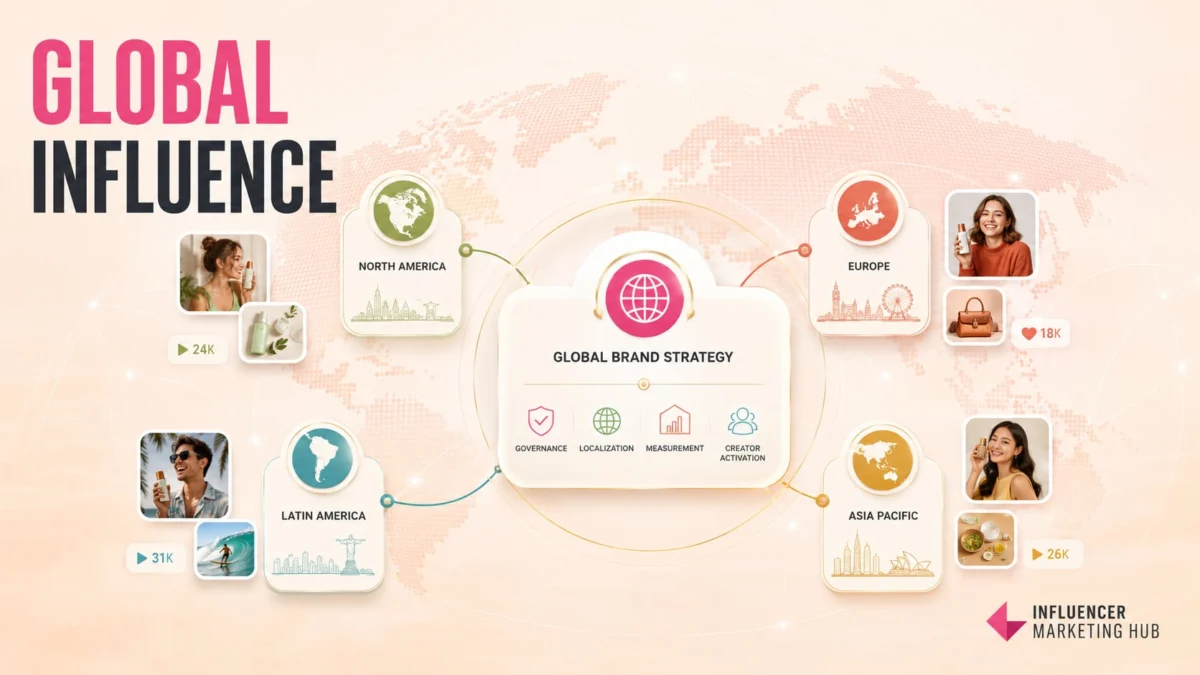
Influencer marketing has transitioned from an experimental tactic to an established infrastructure for global consumer brands, fundamentally reshaping how companies connect with audiences worldwide. Recent research by the World Federation of Advertisers (WFA) underscores this paradigm shift, revealing that a staggering 99% of surveyed multinational brands now leverage influencers in their marketing strategies. Of these, 66% engage influencers frequently across multiple international markets, indicating a deep integration into global marketing operations. This widespread adoption is further evidenced by the fact that six in ten brands now maintain dedicated influencer marketing budgets, and among those utilizing external partners, a significant 79% collaborate with specialist influencer agencies.
The Evolution and Escalation of the Global Influencer Landscape
The journey of influencer marketing to its current global prominence reflects a broader transformation in advertising and consumer engagement. What began as an organic, often grassroots phenomenon has rapidly professionalized, driven by consumer trust in authentic voices over traditional advertisements. As brands recognized the unparalleled reach and engagement potential of creators, investment surged. This evolution has, however, amplified the management challenge, particularly for multinational corporations operating across diverse cultural, linguistic, and regulatory landscapes.
A global brand orchestrating creator campaigns across numerous countries faces an intricate web of coordination requirements. This includes aligning strategic frameworks, meticulously selecting creators, managing multi-market budgets, standardizing measurement, upholding brand standards, navigating local cultural nuances, adapting to varied platform behaviors, managing complex contracting and usage rights, and consolidating reporting. Each new market added to the portfolio introduces an additional layer of complexity and decision-making, demanding a sophisticated and robust operational model.
Addressing the Management Challenge: A Clear Operating Model
The most successful global influencer programs are characterized by a clear operating model that delineates responsibilities and streamlines processes. Typically, global teams are tasked with establishing the overarching strategic framework and setting universal measurement standards. Local teams then translate this framework into culturally relevant and market-specific execution, ensuring resonance with local audiences. Crucially, performance data must flow back into a shared system, enabling leadership to compare market performance, identify emerging patterns, and make data-driven investment decisions that optimize global impact.
For Chief Marketing Officers (CMOs), global social leads, and procurement teams, four core capabilities form the bedrock of this effective operating model: embedded local-market expertise, clearly defined global and local decision rights, robust cross-market measurement infrastructure, and platform-native localization. Without these foundational elements, the potential for fragmentation and inefficiency rises significantly, often undermining the global value of otherwise successful local campaigns.
Why Multi-Country Influencer Programs Encounter Roadblocks
Despite the widespread adoption, many international influencer programs struggle to deliver cohesive global value. The primary culprit is often a fragmented operating structure that becomes increasingly unwieldy as the number of markets expands. While individual campaigns might achieve success within specific countries, their collective impact at a global level can be limited. This fragmentation manifests in several ways: local teams may employ disparate creator-selection criteria, reporting frameworks often vary wildly, and campaign objectives can shift from one country to another. The result is often a deluge of local results at headquarters, devoid of a consistent methodology for understanding why one market excelled while another lagged.
This breakdown typically stems from three recurring structural problems: unclear accountability, weak coordination between global and local teams, and fragmented measurement systems.
Local Execution with Unclear Accountability
Creator marketing’s efficacy is deeply intertwined with local knowledge. Teams operating within a specific market possess invaluable insights: they understand which creators are gaining traction, how local audiences interpret various content styles, the prevailing competitive creator rates, and which cultural signals hold significant sway. This granular understanding is paramount for effective execution.
However, this critical local knowledge must be clearly integrated into the operating model. Global teams need explicit clarity on who evaluates cultural fit, who approves creator shortlists, who manages local escalations, and who ultimately owns market-level performance. Ambiguous handoffs in these crucial areas inevitably compromise speed, consistency, and the quality of decision-making. During agency evaluations, a probing question quickly exposes this vulnerability: "Who within your organization decides whether this specific creator is right for this market?" A truly capable multi-country partner should be able to articulate precisely the individuals, processes, and criteria underpinning such a decision, demonstrating a clear chain of accountability.
Global Strategy with Weak Local Decision Rights
The tension between global strategic oversight and local operational autonomy is a perpetual challenge in multinational marketing. Global teams typically assert control over critical elements such as brand positioning, overarching campaign objectives, audience frameworks, measurement standards, brand-safety requirements, contracting principles, and budget governance. Conversely, local teams are the custodians of market intelligence, essential for nuanced creator selection, linguistic adaptation, optimal platform mix, cultural alignment, negotiation, precise timing, and content execution.
This division of labor must be a deliberate and well-defined architectural choice. WFA’s extensive research into global media organizations has consistently highlighted this organizational challenge. A study involving 56 major companies, collectively representing $52 billion in annual media spend, revealed significant capability and infrastructure gaps across multinational marketing organizations. A mere 25% of respondents felt they possessed adequate resources and capabilities, while only 26% were confident in their technology infrastructure. For influencer marketing, this translates to a critical need for a global strategy to be complemented by a corresponding local decision architecture. Brands must proactively determine which decisions reside with headquarters, which are delegated to local markets, and which necessitate shared ownership before any campaign commences.
Measurement Systems Fragmented by Market
The absence of standardized measurement across markets is a pervasive issue, leading to a wealth of data but a paucity of comparable insights. One market might prioritize sales conversion, while another focuses on engagement rates or brand lift. Attribution windows can differ, creator fees may be categorized inconsistently, and reporting cadences can vary significantly. This patchwork approach leaves leadership with fragmented data, severely limiting their ability to draw meaningful cross-market comparisons.
Further underscoring this challenge, a July 2026 report by WFA and Ebiquity indicated that while eight out of ten surveyed advertisers already utilize marketing mix modeling and brand lift studies, only 13% rate themselves as proficient in quickly translating data into actionable insights. Even more concerning, fewer than 3% expressed full confidence in their ability to differentiate short-term performance from long-term brand-building impact.
This problem is mirrored in influencer marketing. A multi-country program necessitates shared definitions and a unified framework before the first campaign launch. Leadership must be able to ascertain which markets yield the strongest incremental business impact, identify creator segments that consistently perform across geographies, pinpoint areas where costs are escalating disproportionately to performance, and determine which successful campaign ideas warrant broader international rollout. In this context, a well-structured measurement system transforms into a powerful budget-allocation tool, enabling strategic investment decisions based on comparable, actionable insights.
The Four Pillars of a Scalable Multi-Country Program
Building a truly scalable and effective multi-country influencer program requires a strategic overhaul, focusing on embedding key capabilities that bridge global strategy with local execution.
1. Embedded Local-Market Expertise: The Cultural Navigator
The landscape of creator discovery has undergone significant technological advancement. Sophisticated tools can now identify creators based on audience demographics, brand affinity, historical performance, engagement behavior, and content signals, providing a valuable starting point. However, these technological capabilities are merely the foundation.
Local-market specialists are indispensable for adding the critical context required to interpret these signals accurately. They possess the nuanced understanding of whether a creator currently holds cultural relevance, how their tone is perceived by local audiences, their positioning within the local creator ecosystem, how their pricing compares to similar talent, and whether their content style aligns with local consumption patterns on social platforms. This human element is particularly vital at enterprise scale, where a creator associated with aspirational fashion in one country might occupy a distinctly different cultural niche in another. Concepts like humor, expertise, status, authenticity, and product discovery carry varied cultural meanings across markets, demanding local interpretation.
For each priority market, brands must clearly establish who owns the discovery process, who validates cultural fit, who evaluates brand safety risks, who negotiates creator fees, and who grants final approval. Once these responsibilities are explicitly defined, local knowledge transforms from an intangible asset into a repeatable operational capability, driving consistent and culturally appropriate execution.
2. Central Strategy with Distributed Local Execution: The Balance of Power
The most effective global programs master the delicate balance between strategic consistency and localized execution. This involves a clear delineation of responsibilities:
- Global Teams typically control the core campaign objective, overarching brand positioning, audience framework, creative platform, measurement methodology, brand-safety standards, usage-rights strategy, and overall budget governance. These elements ensure a unified brand message and consistent strategic direction.
- Local Teams are empowered to shape creator selection, cultural adaptation of content, linguistic nuances, optimal platform mix, content execution, campaign timing, responsiveness to local trends, and creator negotiation. This distributed execution ensures relevance and resonance within specific markets.
This deliberate division allows a campaign to maintain a singular strategic identity while dynamically adapting to the unique realities of each market. The distinction is critical because global scale inherently pressures standardization. Brand objectives, measurement frameworks, contracting standards, and reporting definitions undeniably benefit from consistency. However, creator selection, cultural interpretation, language, platform behavior, and campaign timing thrive on local intelligence and adaptability. Senior marketers must proactively define these decision rights through a clear governance model before execution begins, outlining where authority resides across strategy, creative, creator approval, budget allocation, measurement, and optimization.
A simplified governance model might look like this:
| Decision Area | Global Team | Local Team | Shared |
|---|---|---|---|
| Campaign objective | ✔ | ||
| Core creative territory | ✔ | ✔ | |
| Creator shortlist | ✔ | ✔ | |
| Creator approval | ✔ | ✔ | |
| Local messaging | ✔ | ✔ | |
| Measurement framework | ✔ | ✔ | |
| Budget allocation | ✔ | ✔ | |
| Local optimization | ✔ | ✔ |
The precise structure will inevitably vary by organization, but the inherent value lies in making these responsibilities explicit and agreed upon before a campaign ever launches.
3. Robust Cross-Market Measurement Infrastructure: From Data to Strategic Insight
Effective cross-market measurement begins with universally shared definitions. A global dashboard only becomes truly useful when every market reports against a common framework, ensuring comparability and coherence.
At the business level, this might encompass metrics like incremental revenue, sales lift, customer acquisition cost (CAC), conversion rates, or return on influencer investment (ROI). At the brand level, teams might monitor awareness, consideration, purchase intent, brand lift, or share of conversation. Campaign-specific metrics can include qualified reach, engagement quality, video completion rates, website traffic, and creator-level performance.
Beyond these traditional metrics, a crucial fourth layer often receives insufficient attention: operational performance. This includes metrics such as campaign lead time, creator cost efficiency, cost per deliverable, approval cycle times, creator retention rates, and content reuse. These measures are vital indicators of organizational efficiency, as a strong influencer program generates value not only through media performance but also through optimized execution.
For senior leadership, the ideal reporting view integrates: Market → Platform → Creator → Content → Investment → Outcome. This comprehensive structure empowers teams to answer critical, budget-implicating questions: Why did a particular creative concept perform better in Germany than in France? Which creator tier consistently delivers the strongest efficiency in a specific market? Which markets continue to generate incremental returns as spend increases? And crucially, which local successes are compelling enough to warrant testing or broader rollout elsewhere? This holistic measurement system transforms data into an indispensable tool for strategic investment decisions.
4. Platform-Native Localization: Beyond Language Barriers
Global creator programs increasingly navigate complex, multi-platform ecosystems. While platforms like Instagram, TikTok, and YouTube hold significant sway across many international markets, local platform behavior and preferences can still vary dramatically by region and target audience.
China serves as a prime example, where creator strategies must often encompass platforms like Xiaohongshu, Douyin (the local version of TikTok), and WeChat, alongside unique local social-commerce behaviors that dictate specific content and conversion patterns. Other markets present different platform priorities. Professional or B2B-adjacent consumer categories, for instance, may place a greater emphasis on LinkedIn. Younger demographics often necessitate distinct combinations of emerging platforms. Furthermore, social-commerce adoption rates, the effectiveness of paid amplification strategies, preferred creator content formats, and consumer buying behaviors all exhibit significant variations by country.
This necessitates two distinct, yet intertwined, forms of localization:
- Cultural localization focuses on who should communicate the campaign idea and how that message should be expressed to resonate authentically with local audiences.
- Platform localization determines where that message belongs and which native content behaviors and formats should shape its execution to maximize impact on specific platforms.
Effective global programs require both, ensuring messages are not only culturally appropriate but also optimally delivered within the native environment of each chosen platform.
Real-World Application: Case Studies in Global Influencer Execution
The theoretical framework for multi-country influencer marketing is best understood through practical application. Brands like MINI and Nespresso offer compelling examples of how these principles translate into sustained international success.
MINI: Sustained Engagement Across Continents
MINI, the iconic automotive brand, provides a robust example of sustained international creator execution. According to Pulse Advertising, a specialist agency, they have partnered with MINI since 2018, spanning campaigns across the US, Asia, and Europe. This long-standing relationship has reportedly generated over 150 million impressions and facilitated more than 200 creator collaborations. The work extends across MINI Automotive, MINI Living, and MINI Fashion, encompassing a diverse range of activations from niche influencers and artists to brand ambassadors, events, and physical installations.
The sheer scale of this partnership is notable, but its broader value lies in the extensive range of audiences and environments covered. MINI Automotive, MINI Living, and MINI Fashion each demand distinct creator profiles and content approaches, with geographic markets adding further layers of differentiation. Over multiple campaign cycles, this consistent engagement allows MINI to build a powerful evidence base. They can identify which creator profiles consistently resonate with specific audiences, which creative ideas successfully transfer between countries, where deeper localization yields improved performance, and which creators merit longer-term relationships. This accumulated knowledge becomes a significant competitive advantage.
The industry trend supports this approach; 40% of multinational brands now engage influencers through extended relationships, an increase from 29% in 2020, while 38% work with influencers on an "always-on" basis. Longer, more strategic relationships cultivate richer performance histories at the creator, audience, content, and market levels. The same principle applies to agency partnerships. After years of measured execution, an agency and brand can develop proprietary knowledge regarding creator pricing benchmarks, audience response dynamics, creative performance across cultures, optimal campaign timing, platform-specific behaviors, negotiation patterns, and critical local market differences. This leads to a crucial question for senior marketers: "How much smarter does the program become after every campaign?" The answer lies in this continuous cycle of learning and optimization.
Nespresso: The Value of Operational Integration
![How Global Consumer Brands Should Structure Influencer Marketing in 2026 [+ Free Checklist]](https://influencermarketinghub.com/wp-content/uploads/2026/07/27e78c49-chatgpt-image-jul-29-2026-02_47_11-pm.jpg)
Nespresso, another global brand, demonstrates the value of operational efficiency in multi-country influencer programs. Pulse Advertising’s work with Nespresso unified more than 62 markets under a single global strategy, seamlessly combining global planning with localized market execution. A key highlight of this collaboration was a reported 40% reduction in campaign lead times.
This figure is highly significant because lead time is a powerful indicator of organizational performance, a metric often overlooked in traditional influencer marketing reports. At a global scale, faster execution translates into numerous strategic advantages: it improves responsiveness to rapidly evolving trends, reduces internal workload, creates more time for crucial optimization efforts, and facilitates more agile budget movement between markets. Consequently, a global influencer program must rigorously measure not only campaign performance but also the efficiency of its underlying operating system.
For senior marketers, three distinct views of performance are paramount:
- Campaign-level performance: Traditional metrics like reach, engagement, conversions.
- Business-level impact: Incremental sales, ROI, customer acquisition.
- Organizational learning and efficiency: Lead times, cost-per-deliverable, cross-market insights.
The third category, organizational learning, is where international programs can forge lasting strategic value, ensuring every market contributes actionable intelligence to the wider organization.
Selecting a Multi-Country Influencer Agency: Key Questions for Strategic Due Diligence
While international reach is easily showcased in a pitch deck, the operational structure underpinning that reach demands meticulous examination. Senior marketers and procurement teams must challenge prospective agencies on several specific areas to ensure a truly capable and integrated partnership. A "Global Influencer Marketing Readiness Checklist" can be an invaluable tool in this process.
1. Accountability and Team Structure:
- Question: Who physically executes the work in each market? Where are these teams based, who manages each market, how are partner agencies or freelancers utilized, and who ultimately owns the final outcome?
- Implication: This line of questioning aims to map the chain of accountability, ensuring transparency and clarity on who is responsible for deliverables and performance in each region.
2. Cultural Validation Process:
- Question: Who validates a creator’s cultural fit? How is this decision made, what data informs it, and how does local context genuinely enter the approval process?
- Implication: Creator discovery tools provide a starting point, but local judgment is indispensable for determining whether a creator authentically resonates with the brand and market. Understanding this process ensures cultural relevance and mitigates brand risk.
3. Decision Rights and Governance:
- Question: How are global and local decisions divided? Can the agency articulate precisely who controls strategy, creative direction, creator selection, approvals, budget allocation, measurement frameworks, and ongoing optimization?
- Implication: A well-defined operating model is non-negotiable. Agencies should clearly outline their governance structure, demonstrating how global consistency is balanced with local autonomy.
4. Standardized Measurement and Reporting:
- Question: How is performance compared across countries? Can the agency demonstrate its measurement architecture, including how KPIs are standardized, how attribution windows are handled, how creator fees are classified, and whether performance can be compared by market, creator, platform, and objective?
- Implication: Fragmented measurement cripples strategic insight. A robust agency should provide a clear framework for cross-market data comparability, enabling informed investment decisions.
5. Platform Expertise and Local Nuances:
- Question: Which platforms can the agency execute natively, and can they provide market-specific examples?
- Implication: A mere list of platform logos is insufficient. What truly matters is the agency’s deep understanding of local creator ecosystems, prevalent content formats, specific social commerce behaviors, and platform-specific performance patterns in each target market.
6. Legal, Compliance, and Usage Rights Management:
- Question: How are contracts, compliance, and usage rights managed across different jurisdictions?
- Implication: At enterprise scale, these processes dictate campaign velocity and legal risk. WFA’s 2025 influencer research highlights the growing formalization of the channel, with 70% of brands always signing contracts, 66% having formal influencer policies, and nine out of ten ensuring proper partnership disclosure. Brands need to understand who manages contracting, local disclosure requirements, content licensing, paid amplification rights, exclusivity clauses, creator payments, and local regulatory compliance.
7. Knowledge Accumulation and Continuous Improvement:
- Question: What knowledge accumulates over time from multi-country campaigns, and how is it leveraged?
- Implication: This is a key indicator of an agency’s potential as a strategic partner. Agencies should demonstrate how creator performance histories, pricing benchmarks, creative learnings, platform insights, and market-level data are systematically captured and applied to inform future campaigns, ensuring the program becomes progressively smarter and more precise with each cycle.
The Strategic Advantage of Cross-Market Learning
Beyond simplifying contracts, procurement, reporting, governance, and communication, global consolidation in influencer marketing unlocks a far greater opportunity: cross-market learning. This continuous feedback loop is where the true strategic advantage lies.
A creator format that proves highly effective in Germany can be strategically tested in another market. Pricing data gleaned from one region can sharpen negotiation strategies in another. A successful creator archetype identified in Italy can inform discovery efforts in Spain. A nuanced local cultural insight can be scaled up to shape the next global brief, enriching the overall brand narrative. Each campaign, therefore, contributes not just to immediate marketing objectives but to a wider, evolving knowledge system.
WFA’s broader agency research indicates that multinational organizations are already proactively redesigning their external operating models, with two-thirds of surveyed brands having changed their agency model within the previous four years. Influencer marketing is integral to this broader strategic shift. As investment in the channel continues to surge, global brands will increasingly prioritize partners capable of seamlessly connecting overarching global strategy with granular local intelligence, efficient creator execution, standardized measurement, and invaluable cross-market learning.
This compounding cycle is where multi-country influencer marketing generates exponential value. The most sophisticated programs consistently equip the organization with superior data, sharper market intelligence, stronger creator relationships, and more confident, optimized budget decisions after every single campaign, solidifying their competitive edge in the global marketplace.
About the Author
Nadica Naceva writes, edits, and wrangles content at Influencer Marketing Hub, where she keeps the wheels turning behind the scenes. She’s reviewed more articles than she can count, making sure they don’t go out sounding like AI wrote them in a hurry. When she’s not knee-deep in drafts, she’s training others to spot fluff from miles away (so she doesn’t have to).
Navigating the Complexities of Global Influencer Marketing: A Strategic Imperative for Multinational Brands
Influencer marketing has transitioned from an experimental tactic to an established infrastructure for global consumer brands, fundamentally reshaping how companies connect with audiences worldwide. Recent research by the World Federation of Advertisers (WFA) underscores this paradigm shift, revealing that a staggering 99% of surveyed multinational brands now leverage influencers in their marketing strategies. Of these, 66% engage influencers frequently across multiple international markets, indicating a deep integration into global marketing operations. This widespread adoption is further evidenced by the fact that six in ten brands now maintain dedicated influencer marketing budgets, and among those utilizing external partners, a significant 79% collaborate with specialist influencer agencies.
The Evolution and Escalation of the Global Influencer Landscape
The journey of influencer marketing to its current global prominence reflects a broader transformation in advertising and consumer engagement. What began as an organic, often grassroots phenomenon has rapidly professionalized, driven by consumer trust in authentic voices over traditional advertisements. As brands recognized the unparalleled reach and engagement potential of creators, investment surged. This evolution has, however, amplified the management challenge, particularly for multinational corporations operating across diverse cultural, linguistic, and regulatory landscapes.
A global brand orchestrating creator campaigns across numerous countries faces an intricate web of coordination requirements. This includes aligning strategic frameworks, meticulously selecting creators, managing multi-market budgets, standardizing measurement, upholding brand standards, navigating local cultural nuances, adapting to varied platform behaviors, managing complex contracting and usage rights, and consolidating reporting. Each new market added to the portfolio introduces an additional layer of complexity and decision-making, demanding a sophisticated and robust operational model.
Addressing the Management Challenge: A Clear Operating Model
The most successful global influencer programs are characterized by a clear operating model that delineates responsibilities and streamlines processes. Typically, global teams are tasked with establishing the overarching strategic framework and setting universal measurement standards. Local teams then translate this framework into culturally relevant and market-specific execution, ensuring resonance with local audiences. Crucially, performance data must flow back into a shared system, enabling leadership to compare market performance, identify emerging patterns, and make data-driven investment decisions that optimize global impact.
For Chief Marketing Officers (CMOs), global social leads, and procurement teams, four core capabilities form the bedrock of this effective operating model: embedded local-market expertise, clearly defined global and local decision rights, robust cross-market measurement infrastructure, and platform-native localization. Without these foundational elements, the potential for fragmentation and inefficiency rises significantly, often undermining the global value of otherwise successful local campaigns.
Understanding the Pitfalls: Why Multi-Country Programs Encounter Roadblocks
Despite the widespread adoption, many international influencer programs struggle to deliver cohesive global value. The primary culprit is often a fragmented operating structure that becomes increasingly unwieldy as the number of markets expands. While individual campaigns might achieve success within specific countries, their collective impact at a global level can be limited. This fragmentation manifests in several ways: local teams may employ disparate creator-selection criteria, reporting frameworks often vary wildly, and campaign objectives can shift from one country to another. The result is often a deluge of local results at headquarters, devoid of a consistent methodology for understanding why one market excelled while another lagged.
This breakdown typically stems from three recurring structural problems: unclear accountability, weak coordination between global and local teams, and fragmented measurement systems.
Local Execution with Unclear Accountability
Creator marketing’s efficacy is deeply intertwined with local knowledge. Teams operating within a specific market possess invaluable insights: they understand which creators are gaining traction, how local audiences interpret various content styles, the prevailing competitive creator rates, and which cultural signals hold significant sway. This granular understanding is paramount for effective execution.
However, this critical local knowledge must be clearly integrated into the operating model. Global teams need explicit clarity on who evaluates cultural fit, who approves creator shortlists, who manages local escalations, and who ultimately owns market-level performance. Ambiguous handoffs in these crucial areas inevitably compromise speed, consistency, and the quality of decision-making. During agency evaluations, a probing question quickly exposes this vulnerability: "Who within your organization decides whether this specific creator is right for this market?" A truly capable multi-country partner should be able to articulate precisely the individuals, processes, and criteria underpinning such a decision, demonstrating a clear chain of accountability.
Global Strategy with Weak Local Decision Rights
The tension between global strategic oversight and local operational autonomy is a perpetual challenge in multinational marketing. Global teams typically assert control over critical elements such as brand positioning, overarching campaign objectives, audience frameworks, measurement standards, brand-safety requirements, contracting principles, and budget governance. Conversely, local teams are the custodians of market intelligence, essential for nuanced creator selection, linguistic adaptation, optimal platform mix, cultural alignment, negotiation, precise timing, and content execution.
This division of labor must be a deliberate and well-defined architectural choice. WFA’s extensive research into global media organizations has consistently highlighted this organizational challenge. A study involving 56 major companies, collectively representing $52 billion in annual media spend, revealed significant capability and infrastructure gaps across multinational marketing organizations. A mere 25% of respondents felt they possessed adequate resources and capabilities, while only 26% were confident in their technology infrastructure. For influencer marketing, this translates to a critical need for a global strategy to be complemented by a corresponding local decision architecture. Brands must proactively determine which decisions reside with headquarters, which are delegated to local markets, and which necessitate shared ownership before any campaign commences.
Measurement Systems Fragmented by Market
The absence of standardized measurement across markets is a pervasive issue, leading to a wealth of data but a paucity of comparable insights. One market might prioritize sales conversion, while another focuses on engagement rates or brand lift. Attribution windows can differ, creator fees may be categorized inconsistently, and reporting cadences can vary significantly. This patchwork approach leaves leadership with fragmented data, severely limiting their ability to draw meaningful cross-market comparisons.
Further underscoring this challenge, a July 2026 report by WFA and Ebiquity indicated that while eight out of ten surveyed advertisers already utilize marketing mix modeling and brand lift studies, only 13% rate themselves as proficient in quickly translating data into actionable insights. Even more concerning, fewer than 3% expressed full confidence in their ability to differentiate short-term performance from long-term brand-building impact.
This problem is mirrored in influencer marketing. A multi-country program necessitates shared definitions and a unified framework before the first campaign launch. Leadership must be able to ascertain which markets yield the strongest incremental business impact, identify creator segments that consistently perform across geographies, pinpoint areas where costs are escalating disproportionately to performance, and determine which successful campaign ideas warrant broader international rollout. In this context, a well-structured measurement system transforms into a powerful budget-allocation tool, enabling strategic investment decisions based on comparable, actionable insights.
The Four Pillars of a Scalable Multi-Country Program
Building a truly scalable and effective multi-country influencer program requires a strategic overhaul, focusing on embedding key capabilities that bridge global strategy with local execution.
1. Embedded Local-Market Expertise: The Cultural Navigator
The landscape of creator discovery has undergone significant technological advancement. Sophisticated tools can now identify creators based on audience demographics, brand affinity, historical performance, engagement behavior, and content signals, providing a valuable starting point. However, these technological capabilities are merely the foundation.
Local-market specialists are indispensable for adding the critical context required to interpret these signals accurately. They possess the nuanced understanding of whether a creator currently holds cultural relevance, how their tone is perceived by local audiences, their positioning within the local creator ecosystem, how their pricing compares to similar talent, and whether their content style aligns with local consumption patterns on social platforms. This human element is particularly vital at enterprise scale, where a creator associated with aspirational fashion in one country might occupy a distinctly different cultural niche in another. Concepts like humor, expertise, status, authenticity, and product discovery carry varied cultural meanings across markets, demanding local interpretation.
For each priority market, brands must clearly establish who owns the discovery process, who validates cultural fit, who evaluates brand safety risks, who negotiates creator fees, and who grants final approval. Once these responsibilities are explicitly defined, local knowledge transforms from an intangible asset into a repeatable operational capability, driving consistent and culturally appropriate execution.
2. Central Strategy with Distributed Local Execution: The Balance of Power
The most effective global programs master the delicate balance between strategic consistency and localized execution. This involves a clear delineation of responsibilities:
- Global Teams typically control the core campaign objective, overarching brand positioning, audience framework, creative platform, measurement methodology, brand-safety standards, usage-rights strategy, and overall budget governance. These elements ensure a unified brand message and consistent strategic direction.
- Local Teams are empowered to shape creator selection, cultural adaptation of content, linguistic nuances, optimal platform mix, content execution, campaign timing, responsiveness to local trends, and creator negotiation. This distributed execution ensures relevance and resonance within specific markets.

