
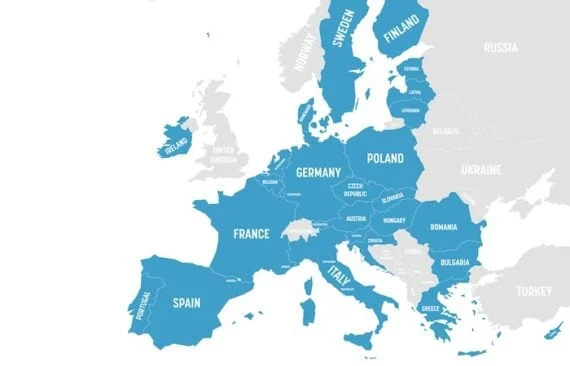
The world of online shopping, a dynamic and ever-expanding frontier, presents a complex challenge for retailers operating across international borders. A critical, yet often overlooked, aspect of this global e-commerce ecosystem is the stark contrast in product return policies between the European Union and the United States. These differences, rooted in distinct legal frameworks and consumer protection philosophies, necessitate careful strategic planning for any business aiming to succeed in both markets. While the EU mandates a comprehensive "right of withdrawal" for consumers, the U.S. market operates on a more decentralized model where individual retailers largely dictate their own return protocols. Understanding these fundamental divergences is paramount for mitigating compliance risks and optimizing operational efficiency.
The European Union’s Statutory Right of Withdrawal: A Consumer-Centric Framework
At the heart of the European Union’s approach to online purchasing is the legally enshrined "right of withdrawal." This consumer protection measure, harmonized across all 27 member states, grants individuals a statutory period of 14 days, commencing from the date of delivery, to cancel an online purchase. Crucially, this right can be exercised without the need to provide any justification, a testament to the EU’s commitment to empowering consumers in distance selling scenarios. This broad right is a cornerstone of e-commerce transactions within the Union, fostering a sense of security and trust for online shoppers.
However, this broad protection is not without its limitations. The right of withdrawal is subject to specific exceptions, designed to balance consumer rights with the practical realities of retail. These typically include goods that are personalized or custom-made to the consumer’s specifications, perishable items that have a limited shelf life, and sealed items that have been opened after delivery and are not suitable for return due to health protection or hygiene reasons. Furthermore, digital content that has been downloaded or accessed by the consumer, and services that have been fully performed, may also fall outside the scope of the withdrawal right, provided the consumer has been informed in advance.
The legal underpinning for this right is the EU’s Consumer Rights Directive. This directive, implemented into national legislation by each member state, dictates that upon notification of withdrawal, EU merchants are obligated to issue a full refund to the consumer. This refund must be processed within 14 days of receiving the consumer’s withdrawal notification. However, a key nuance allows merchants to temporarily withhold the refund until they have either received the returned goods or have obtained evidence from the consumer that the goods have been dispatched. This provision offers a degree of protection for retailers against fraudulent claims, while still emphasizing the promptness of the refund process. Moreover, the directive mandates that refunds be processed using the same payment method as the original transaction, ensuring a seamless financial reversal for the consumer.
The United States’ Decentralized Return Policies: A Market-Driven Approach
In stark contrast to the EU’s unified legal mandate, the United States lacks a federal law governing online product returns. This absence of a universal regulatory framework means that the responsibility for establishing return policies falls squarely on the shoulders of individual retailers. Consequently, the landscape of return policies in the U.S. is characterized by considerable diversity, with rules varying significantly from one merchant to another and often differing across product categories. This decentralized model is largely shaped by the forces of market competition and evolving customer expectations.
Retailers in the U.S. possess considerable flexibility in determining the terms and conditions of their return processes. This includes setting the timeframe within which returns are accepted, specifying the condition in which products must be returned, and deciding who bears the cost of return shipping. Some retailers may offer generous return windows and free return shipping as a competitive differentiator, aiming to attract and retain customers by minimizing perceived risk. Others may adopt more restrictive policies, such as shorter return periods, requiring customers to pay for return shipping, or imposing restocking fees, particularly for certain types of products or in specific market segments.
The absence of a statutory requirement for refund timing in the U.S. further underscores this flexibility. While most retailers aim to process refunds promptly, typically within a few business days of receiving returned items, there is no legal obligation to adhere to a specific deadline. Payment networks, which facilitate financial transactions and often play a role in dispute resolution, also do not impose universal timeframes for refund settlements. This allows U.S. merchants to align their refund processing with their internal operational capacities and cash flow management, while also striving to meet customer expectations to remain competitive.
Examining Return Volumes: A Tale of Two Continents
The differing policy approaches are reflected in the volume of returns experienced by e-commerce businesses in each region. In the United States, the National Retail Federation projected that in 2025, approximately 19.3% of all online sales would be returned. This figure highlights a substantial proportion of e-commerce transactions that involve a subsequent return process, representing a significant logistical and financial consideration for retailers.
The European Union, while experiencing generally lower overall return rates as a percentage of total e-commerce revenue, exhibits considerable national variation. Statista reported that in 2024, EU customers returned around 7% of overall e-commerce revenue. However, this aggregated figure masks significant differences between member states. Germany, for instance, stands out with a particularly high return rate, where an estimated 55% of online buyers reported returning at least one product. This high incidence of returns in certain EU countries, particularly in categories where the legally mandated withdrawal right is frequently exercised, contributes to a predictable but significant cost layer for businesses operating within the Union.
The legally mandated withdrawal right in the EU, especially in high-return product categories, creates a foundational cost structure that businesses must account for. While this predictability can be beneficial for financial planning, it also represents an inherent operational expense. In contrast, U.S. merchants, by having the discretion to set their own policies, theoretically have greater latitude to manage and potentially limit their exposure to return-related costs. However, this flexibility can also lead to a more volatile and unpredictable return environment, driven by individual retailer strategies and competitive pressures.

The Nuances of Shipping Costs and Deductions
A key area of divergence lies in the allocation of return shipping costs. In the European Union, while consumers are generally responsible for the cost of returning items, this responsibility must be clearly disclosed to them before the purchase is completed. This transparency is a critical component of the EU’s consumer protection ethos. Merchants are, however, obligated to reimburse the original delivery cost of the order to the consumer, regardless of whether the consumer chooses to return items.
Furthermore, EU merchants have the right to reduce the refund amount if the returned product’s value has diminished due to handling or use by the consumer beyond what is necessary to establish the nature, characteristics, and functioning of the goods. This provision acknowledges that consumers should not be able to use products extensively before returning them and then expect a full refund.
In the United States, the flexibility afforded to retailers extends to the handling of return shipping costs. Merchants can choose to absorb these costs as a customer acquisition and retention strategy, or they can pass them on to the consumer. This decision is often influenced by competitive pressures. For example, e-commerce giant Amazon has set a precedent by offering free return shipping on a vast array of products, a policy that has influenced customer expectations across the market. Retailers may also choose to impose restocking fees or deductances from refunds, particularly for opened or used items, or for products that are returned outside of their standard return window. The absence of a federal mandate means that these decisions are strategic, aimed at balancing customer satisfaction with profitability.
Despite these distinct legal frameworks, competitive dynamics in both regions can sometimes lead to surprisingly similar outcomes in terms of customer experience. Retailers in the U.S., in order to remain competitive with market leaders offering generous return policies, may find themselves offering similar conveniences, even without a legal obligation. Conversely, in the EU, while the legal framework is robust, the practical execution of return policies by individual businesses can vary, and failure to clearly disclose return conditions can shift cost responsibility back to the merchant.
Beyond Shipping: The Broader Cost of Returns
It is essential to recognize that the financial impact of returns extends far beyond the cost of shipping. Across both the EU and the U.S., the reverse logistics process involves a multitude of expenses. These include the cost of inspecting returned items to verify their condition and authenticity, the expense of repackaging products for resale, the administrative costs associated with restocking inventory, and the potential for markdowns on items that can no longer be sold as new. These ancillary costs can significantly add to the overall financial burden of managing returns, irrespective of the regional regulatory environment.
Strategic Imperatives for Global E-commerce Expansion
For merchants operating or planning to expand into both the European Union and the United States, the divergence in return policies presents a critical strategic consideration. Implementing a single, overarching global return policy is fraught with risk. Such an approach could lead to non-compliance with the stringent regulations in the EU, exposing businesses to legal penalties and reputational damage. Conversely, adopting an EU-style, highly regulated policy in the U.S. might result in unnecessary operational costs and a competitive disadvantage if competitors offer more lenient terms.
Therefore, the development of distinct return strategies tailored to each market is not merely advisable but essential.
For the European Union, the strategic priority is unequivocally disclosure. Merchants must ensure that their withdrawal rights, including the 14-day cancellation period, the consumer’s responsibility for return shipping costs (if applicable and clearly communicated), and the refund timelines, are prominently and transparently communicated to consumers before the point of sale. Maintaining up-to-date documentation and refining refund workflows to consistently adhere to the statutory 14-day window is crucial. This proactive approach to transparency builds trust and minimizes the risk of disputes and regulatory scrutiny.
In the United States, the strategic focus shifts to optimization. Retailers should benchmark their return policies against industry averages within their specific product categories. This involves a careful analysis of how their return generosity correlates with conversion rates and customer acquisition costs. Furthermore, modeling the potential costs associated with returns into their pricing strategies is a prudent measure. This proactive financial planning allows businesses to absorb the inherent costs of returns without compromising profitability. Competitive analysis is also vital, as understanding what leading competitors offer in terms of return flexibility can inform strategic decisions.
Ultimately, businesses that meticulously model return costs as an integral part of their expansion planning and operational strategy will invariably be better positioned than those who treat returns as an afterthought. The ability to effectively manage the complex and costly process of product returns, while adhering to diverse international regulations, is becoming an increasingly critical determinant of success in the global e-commerce arena. As consumer expectations continue to evolve and online retail penetration deepens worldwide, a nuanced and adaptable approach to returns will be a key differentiator for businesses aiming for sustainable international growth.

