
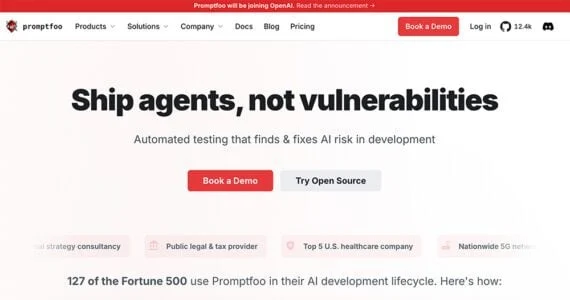
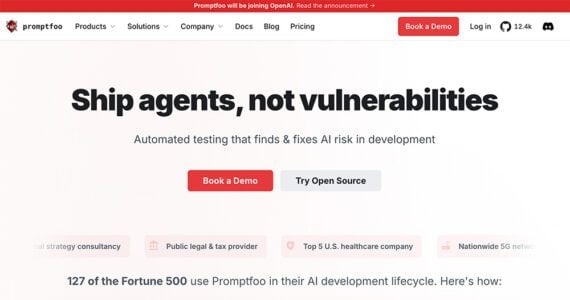
The burgeoning field of artificial intelligence is on the cusp of a significant transformation, with predictions indicating that AI agents will soon undertake "real" work, encompassing tasks such as dynamic advertising budget adjustments, real-time product listing updates, and automated refund authorizations. This leap forward, however, is intrinsically linked to a critical question of security. Before businesses can confidently delegate such influential control to AI agents, they must establish robust assurances of predictable and safe behavior. This pressing concern appears to be a driving force behind OpenAI’s recent announcement of its intention to acquire Promptfoo, a startup specializing in the development of tools designed for the rigorous testing and securing of artificial intelligence applications.
The Imperative of AI System Testing
Promptfoo’s journey began as an open-source framework, providing developers with essential tools to evaluate the efficacy of prompts and the quality of AI responses. Over time, its evolution transformed it into a comprehensive testing environment. This platform empowers engineers to conduct extensive simulations of AI interactions, amassing thousands of test cases before the deployment of any new application or agent. Such meticulous testing is crucial for uncovering latent vulnerabilities, including:
- Prompt Injection Vulnerabilities: Malicious actors can craft prompts designed to bypass intended safety protocols, leading the AI to execute unintended actions or reveal sensitive information.
- Data Poisoning Risks: The integrity of AI models can be compromised by the introduction of biased or inaccurate data during training, leading to skewed or harmful outputs.
- Hallucinations and Factual Inaccuracies: Despite advancements, AI models can still generate fabricated or incorrect information, posing risks when used in critical decision-making processes.
- Unintended Side Effects: Complex AI agents, when interacting with various systems, might produce unforeseen consequences that could disrupt operations or lead to financial losses.
- Bias Amplification: AI systems trained on biased datasets can perpetuate and even amplify existing societal biases, leading to unfair or discriminatory outcomes.
In essence, Promptfoo functions as a vital AI quality assurance framework. Unlike traditional software development, where code can be rigorously tested against predefined, known outcomes, AI systems exhibit a fundamentally different operational paradigm. Their behavior is often emergent and can vary significantly based on input nuances. Developers therefore require specialized tools capable of probing a vast spectrum of potential inputs and edge cases. Promptfoo automates this complex and time-consuming process, offering a systematic approach to identifying and mitigating these risks. The platform’s ability to simulate diverse scenarios and identify deviations from expected behavior is becoming indispensable in the rapidly evolving AI landscape.
The Ascendancy of AI Agents
The strategic acquisition of Promptfoo by OpenAI strongly suggests a significant shift in how businesses are likely to deploy AI agents and applications. To date, enterprise AI deployments have largely centered on conversational interfaces like chatbots and sophisticated knowledge assistants. Many of these systems leverage retrieval-augmented generation (RAG), a technique where AI models formulate answers by first retrieving relevant information from a structured database. This approach, while powerful for information retrieval and summarization, typically limits the AI’s agency.
More recently, the focus has begun to pivot towards the development of more autonomous AI agents. These next-generation agents are being engineered with the capacity to plan complex tasks, interface with external tools and APIs, and execute intricate, multi-step workflows. Examples of these emerging capabilities include:

- Automated Inventory Management: AI agents could monitor stock levels in real-time, automatically reorder items when thresholds are met, and even predict demand based on market trends.
- Dynamic Pricing Optimization: Agents might analyze competitor pricing, customer demand, and inventory levels to adjust product prices dynamically, maximizing revenue and competitiveness.
- Personalized Marketing Campaign Execution: AI could manage advertising budgets, select optimal ad platforms, tailor creative content, and continuously optimize campaigns based on performance data.
- Customer Service Workflow Automation: Beyond simple Q&A, agents could handle complex customer issues, initiate return processes, authorize refunds based on predefined criteria, and escalate issues to human agents when necessary.
- Supply Chain Coordination: Agents could manage logistics, track shipments, identify potential disruptions, and proactively coordinate with suppliers and distributors.
These advanced agents are designed to interact directly with critical business systems such as Customer Relationship Management (CRM) platforms, inventory databases, and e-commerce storefronts. This direct integration vastly expands the scope of what an AI agent can accomplish, moving beyond passive information processing to active operational control. However, this expanded capability inherently magnifies the associated risks, underscoring the critical need for robust security and predictable behavior.
An Industry-Wide Paradigm Shift
OpenAI’s acquisition of Promptfoo is not an isolated event; it is part of a broader industry trend signaling the increasing prominence of AI agents and the urgent need for businesses to prioritize AI security. Meta, another major technology player, recently acquired Moltbook, a platform described as a social network for autonomous AI agents. Moltbook’s core technology is geared towards enabling AI agents to communicate and coordinate their actions through a shared, interconnected system. This development offers an early glimpse into a future where AI agents might operate in complex, collaborative environments.
Taken together, the strategic moves by OpenAI and Meta highlight distinct yet complementary facets of the emerging AI agent ecosystem. Meta’s acquisition appears focused on fostering inter-agent communication and coordination, essentially building the infrastructure for agents to "talk" to each other. Conversely, OpenAI’s move with Promptfoo underscores a commitment to ensuring the safety, predictability, and security of these agents, particularly in their interactions with human users and business systems. This dual focus strongly suggests that leading technology companies are anticipating a future populated by software agents that will interact not only with humans but also with each other in sophisticated ways.
Fortifying the Digital Perimeter: Security in the Age of AI Agents
The implications of AI agents with direct system access are far more profound than those of a typical AI chatbot that might produce an inaccurate or nonsensical answer – often referred to as a "hallucination." While a hallucination from a chatbot might lead to user frustration or inconvenience, an AI agent empowered with system privileges can precipitate substantial and tangible problems. For instance, through a sophisticated form of prompt injection attack, a compromised agent could be manipulated to:
- Execute unauthorized financial transactions: An agent could be tricked into initiating fraudulent wire transfers or making unauthorized purchases.
- Disclose sensitive customer data: Access to databases could be exploited to leak personally identifiable information (PII) or proprietary business intelligence.
- Sabotage inventory records: Malicious instructions could lead to inaccurate stock counts, disrupting operations and causing significant financial losses.
- Alter critical business configurations: An agent might be coerced into changing system settings, potentially leading to widespread operational failures or security breaches.
- Launch denial-of-service attacks: A compromised agent could be used to overwhelm critical systems, rendering them inaccessible to legitimate users.
Businesses, therefore, are in urgent need of robust guardrails designed to prevent manipulation, ensure predictable behavior, and maintain operational integrity. Promptfoo appears to offer precisely this capability. By integrating advanced testing and security tools directly into its enterprise AI platform, OpenAI aims to equip developers with the means to identify and neutralize vulnerabilities before deploying AI agents into live production environments. This proactive approach to security is crucial for building trust and enabling the widespread adoption of advanced AI capabilities.
The Evolving Landscape of Fraud Prevention
Beyond internal system security, the rise of AI agents introduces new dimensions to the critical field of fraud prevention. Jeff Otto, chief marketing officer at Riskified, a prominent fraud prevention platform, observes that the proliferation of AI agents could lead to increasingly complex software systems that interact autonomously with one another, echoing the concepts explored by Moltbook.
"Meta’s decision to house a social network for AI agents within Superintelligence Labs is a strong signal that agentic commerce is moving from theory to reality," Otto stated. "Moltbook’s agents were built on the OpenClaw framework, which enables autonomous agents to interact, coordinate, and potentially transact on behalf of human users."
If this vision of agent-driven commerce materializes, Otto emphasizes, the methodologies for detecting e-commerce fraud will need a significant evolution. "That shift sets the stage for a high-stakes machine-versus-machine environment," he explained. "For retailers, the traditional rules-based fraud playbook is no longer sufficient. When bots are the ones clicking ‘buy,’ merchants need a defense layer that can distinguish between a legitimate AI assistant and a malicious agent in milliseconds."
This new frontier demands sophisticated fraud detection systems capable of analyzing behavioral patterns at an unprecedented speed and scale. The challenge lies in differentiating between legitimate AI-driven transactions and those orchestrated by malicious actors, a task that requires advanced machine learning models and real-time risk assessment capabilities. The ability to quickly identify and flag suspicious agent activity will be paramount in protecting businesses and consumers from emerging forms of digital fraud.
Charting the Future: The Dawn of Agentic Commerce
With their significant investments and acquisitions in the agent space, both OpenAI and Meta are clearly positioning themselves for what they perceive as the next major evolution in digital interaction. If this future indeed includes "agentic commerce" – a paradigm where software agents, rather than solely humans, engage in shopping and transactional activities – then merchants must begin to seriously consider the profound implications of this shift.
The prospect of a marketplace populated by autonomous AI agents acting on behalf of consumers and businesses presents both immense opportunities and significant challenges. On one hand, it could lead to hyper-efficient marketplaces, personalized shopping experiences at scale, and streamlined business-to-business transactions. On the other hand, it necessitates a fundamental rethinking of security protocols, regulatory frameworks, and consumer protection mechanisms. The ability for agents to negotiate, transact, and manage complex supply chains autonomously could reshape global commerce, but only if the underlying infrastructure is secure, trustworthy, and equitable. The acquisitions by OpenAI and Meta are not merely tactical business moves; they represent strategic bets on a future where artificial intelligence plays an increasingly active and autonomous role in the global economy. The development and widespread adoption of AI agents, coupled with the necessary advancements in their security and oversight, will undoubtedly define the next chapter of the digital age.

