
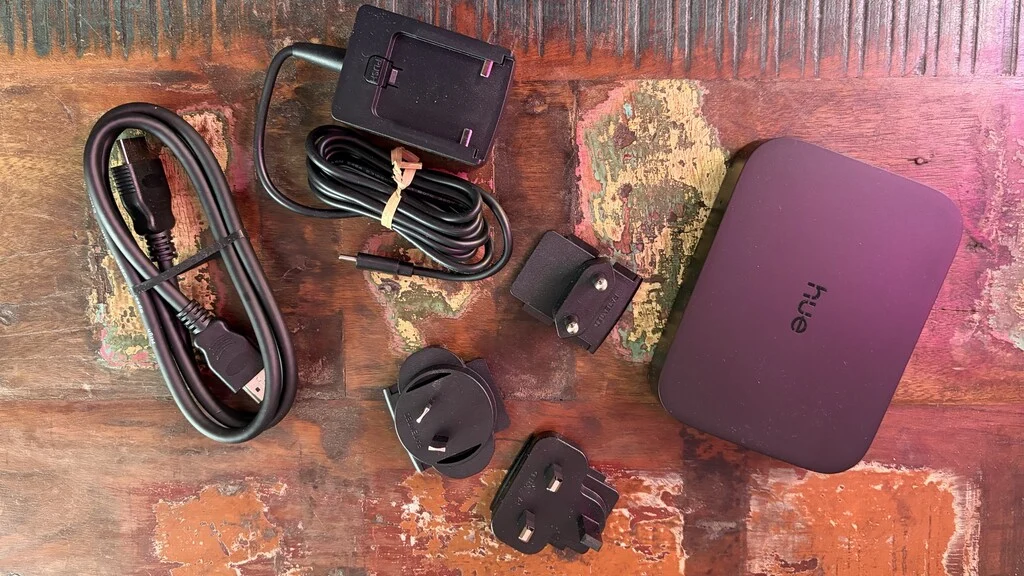
The Philips Hue Play HDMI Sync Box 4K emerges as a strategic move by Signify, the parent company of the renowned Philips Hue smart lighting ecosystem, aiming to democratize its advanced screen-syncing technology. Launched at IFA in September 2026, this latest iteration of the popular HDMI Sync Box significantly lowers the entry price for consumers seeking to elevate their home entertainment experiences with dynamic, reactive lighting. While it pares back some of the high-end specifications of its predecessor, the 8K flagship model, the 4K version offers a compelling proposition for a broader audience, prioritizing accessibility and core functionality over cutting-edge gaming performance.
A Strategic Price Reduction for Wider Adoption

The initial Philips Hue HDMI Sync Box, introduced in 2019, established the groundwork for synchronizing smart lights with on-screen content without the need for external cameras. It supported 4K resolution at 60Hz, a standard that remained relevant for many years. The subsequent 2024 flagship upgrade, the Hue Play HDMI Sync Box 8K, pushed the boundaries with HDMI 2.1 support, enabling 4K at 120Hz and even resolutions up to 8K. However, this enhanced capability came with a substantial price tag, launching at approximately $350, a considerable investment for a device primarily focused on aesthetic enhancement.
Recognizing the market’s appetite for more affordable solutions, Signify’s unveiling of the Hue Play HDMI Sync Box 4K at IFA 2026 signaled a clear shift in strategy. The new model is positioned to capture a larger segment of the market by offering Philips Hue’s signature immersive lighting at less than half the price of the 8K variant. This strategic pricing aims to make the technology more attainable for existing Hue users and newcomers alike, focusing on enhancing movie nights and general entertainment viewing rather than catering exclusively to the elite gaming community.
Streamlined Design and Simplified Functionality

The most striking physical change in the Hue Play HDMI Sync Box 4K is its significantly reduced size. Measuring a compact 117 x 87 x 23mm, it presents a more minimalist aesthetic, resembling a modern streaming device rather than a bulky piece of AV hardware. This smaller footprint allows for easier integration into existing entertainment setups, often being discreetly placed alongside other components. The package includes a USB-C power adapter and an HDMI cable, offering convenience for immediate setup. Users also have the flexibility to utilize their own compatible USB-C power supplies if preferred.
Installation follows the established principle of the Sync Box: it acts as an intermediary between the HDMI source device and the television. By intercepting the video signal, it translates on-screen colors into commands for compatible Philips Hue lights. Unlike camera-based systems, this method of synchronization relies entirely on the digital signal, eliminating the need for the device to visually interpret the television’s display.
The Single HDMI Input: A Key Trade-off

The most significant functional divergence from previous models is the reduction from four HDMI inputs to a single input on the new 4K Sync Box. This decision directly impacts its utility as an HDMI switcher. Older models offered the convenience of connecting multiple devices—such as gaming consoles, streaming boxes, and cable receivers—and switching between them directly through the Sync Box. The new model necessitates either manual cable swapping or the use of an external HDMI switcher for users with multiple connected sources.
However, Signify’s rationale for this simplification is rooted in market analysis and user behavior. For a substantial portion of consumers, particularly those who primarily rely on a single streaming device like an Apple TV or a dedicated streaming stick for their entertainment, the multi-input functionality of previous models may have been underutilized. By focusing on a single input, Signify has been able to reduce manufacturing costs, thereby passing those savings onto the consumer in the form of a lower price point. This makes the 4K Sync Box an ideal solution for individuals who prioritize the immersive lighting experience for their main streaming device without the need for complex AV management.
Video Capabilities: Tailored for the Mainstream

The Philips Hue Play HDMI Sync Box 4K adheres to the HDMI 2.0 standard, supporting 4K video at 60Hz and 1440p at 120Hz. While this represents a step back from the HDMI 2.1 capabilities of the 8K model, it aligns perfectly with the video output of the vast majority of streaming content and many gaming consoles. Most streaming services deliver content at frame rates such as 24, 25, 30, or 60 frames per second. For these use cases, the 4K/60Hz support is more than adequate, ensuring a vibrant and responsive lighting experience that enhances movie nights and casual viewing.
The absence of 4K/120Hz support is a notable limitation for a specific segment of users: hardcore gamers with high-end gaming PCs, PlayStation 5, or Xbox Series X consoles paired with 120Hz-capable displays. For these individuals, the ability to experience games at their maximum potential frame rates is paramount, and the 8K Sync Box remains the superior choice. However, for the broader audience whose gaming habits or display capabilities do not necessitate 4K/120Hz, the 4K Sync Box offers sufficient performance.
Integration into the Philips Hue Ecosystem

As with all Philips Hue products, the Sync Box seamlessly integrates into the broader Hue ecosystem. The setup process has been significantly streamlined, moving away from a dedicated Hue Sync app to a fully integrated experience within the main Philips Hue app. Users can add the Sync Box as they would any other Hue device, such as a bulb or lightstrip.
The core of the setup involves creating an "entertainment area" within the app. This feature allows users to map the physical placement of their Hue lights relative to their television. By designating whether a light is positioned at floor level, alongside the screen, or near the ceiling, users provide the system with crucial spatial information. The app guides users through identifying individual lights and calibrating their positions by flashing them. It then uses on-screen colors to check the arrangement and allows for fine-tuning. This interactive mapping process ensures that the light effects are accurately projected into the room, enhancing the sense of immersion.
A Hue Bridge is typically required to manage multiple lights within an entertainment area, supporting up to 10 lights. The Bridge also unlocks the full potential of the Hue ecosystem, enabling advanced automation and control. For users looking to dip their toes into screen-synced lighting without committing to a Bridge, the new Sync Box offers a limited Bluetooth connectivity option for a single compatible Hue light. While this provides a low-barrier entry point, it lacks the expandability and advanced features of a Bridge-connected setup. Signify acknowledges that for users intending to build a more comprehensive Hue lighting system, investing in a Bridge remains the recommended path.

Performance: Capturing the Essence of Immersion
In practical performance, the Hue Play HDMI Sync Box 4K largely delivers on its promise of an immersive lighting experience. During testing, using compatible Hue lights and watching 4K/60Hz content, the lighting effects were observed to be virtually indistinguishable from those produced by the more expensive 8K model. The system effectively captures the colors from the HDMI signal and dynamically mirrors them around the viewing area. The responsiveness is impressive, with lights quickly adapting to shifts in color, brightness, and on-screen action, creating a fluid and engaging visual spectacle.
The impact of this technology is particularly pronounced during content with vibrant color palettes, such as animated films and action-packed blockbusters. The expansion of on-screen colors into the living space genuinely enhances the atmosphere, making scenes feel more dynamic and involving. Explosions, sweeping landscapes, and dramatic visual transitions are faithfully reproduced in the ambient lighting, fostering a deeper connection with the on-screen narrative.

However, the intensity of the lighting effects can be a double-edged sword. While full-blast synchronization can be spectacular for high-octane sequences, it can also become distracting during more subdued scenes or less visually dynamic content. The reviewer noted that for everyday viewing or less dramatic films, a more restrained approach, with brightness set around 60% and intensity at a lower level, provided a softer, more natural integration of light that complemented the on-screen action without pulling attention away. This adaptability is a key strength, allowing users to tailor the experience to their preferences and the content being consumed.
For regular television programming, such as news broadcasts, the synchronization feature is less suited. The rapid, often unpredictable color shifts in commercials can lead to jarring visual interruptions. Consequently, the Sync Box is best reserved for movies, select TV shows, and gaming, rather than continuous all-day use. The core functionality, however, remains robust, providing a lighting experience that closely matches its premium counterpart, within the defined video limitations.
Broader Implications and Competitive Landscape

The introduction of the Hue Play HDMI Sync Box 4K is significant not only for Philips Hue users but also for the wider smart home market. It directly addresses a growing consumer demand for ambient and reactive lighting solutions that enhance entertainment. This move intensifies competition with brands like Govee and AiDot, which offer their own screen-mirroring lighting systems. However, Philips Hue’s established reputation, extensive product range, and robust smart lighting ecosystem provide a distinct advantage.
Signify also introduced the Philips Hue Play Screen Sync at IFA, a camera-based system designed to capture on-screen colors directly. While this alternative offers broader compatibility, including with native smart TV apps and broadcast channels, the HDMI Sync Box remains a preferred option for users who wish to avoid external cameras pointing at their screens. This distinction highlights Signify’s strategy of offering diverse solutions to cater to different user preferences and technical setups.
Furthermore, the existence of the Philips Smart Lighting HDMI Sync Box 2.1, which bundles a TV backlight strip and supports HDMI 2.1 at a similar price point to the new 4K Sync Box, presents an interesting alternative. However, this model operates outside the Hue ecosystem, forcing consumers to weigh the gaming advantages and bundled lighting against the benefits of integration within the established Hue ecosystem.

Conclusion: An Accessible Entry Point to Immersive Lighting
The Philips Hue Play HDMI Sync Box 4K successfully achieves its primary objective: making the acclaimed screen-synchronized lighting experience more accessible. Its compact design, straightforward installation, and impressive performance at compatible resolutions make it a compelling option for a wide range of users. While the single HDMI input and the absence of 4K/120Hz support represent trade-offs for the lower price, these limitations are manageable for many consumers whose primary focus is enhancing movie nights and general entertainment.
For existing Philips Hue users, this device offers a sensible and cost-effective way to extend their smart lighting setup to their television. The ability to create immersive ambiances without the premium price tag of flagship models is a significant draw. Even without an 8K television or an elite gaming rig, the visual impact of synchronized lighting can be profoundly enjoyable.

The Philips Hue Play HDMI Sync Box 4K stands as an entry-level offering in terms of both specifications and price, and therein lies its primary appeal. It delivers the core functionality of screen-syncing lighting effectively, providing an engaging and atmospheric enhancement to home entertainment without the need for intrusive cameras. For those seeking to bring their lights to life in response to their screen, this new Sync Box offers a well-executed and more attainable solution.

