
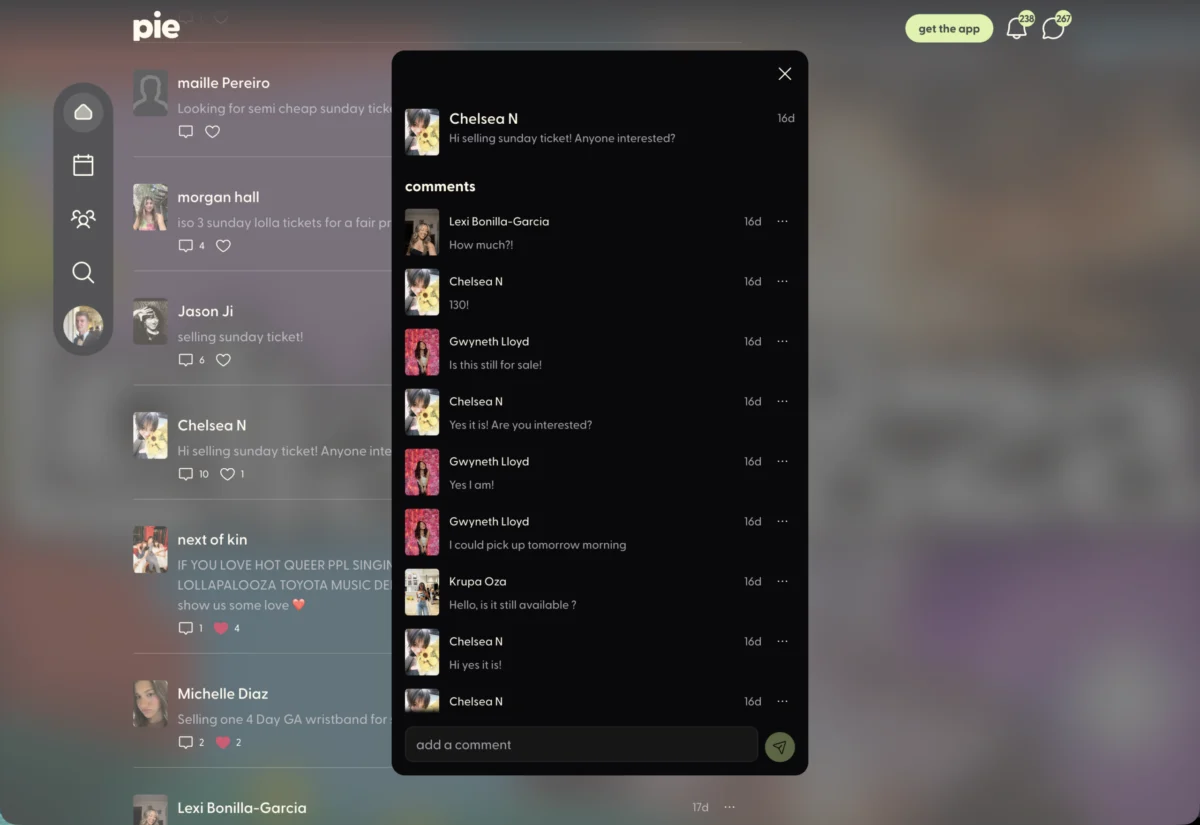
Pie, the innovative social application founded by Bonobos co-founder Andy Dunn, has unveiled its new "Community Homes" feature, marking a significant evolution in its mission to facilitate authentic real-life connections by providing dedicated digital spaces for social groups, offering a robust alternative to fragmented group texts and broad social media platforms like Facebook Groups. This strategic pivot, announced on Tuesday, aims to cultivate more permanent social structures within the app, shifting the focus from ephemeral events to enduring community building, at a time when younger generations are increasingly seeking meaningful offline interactions.
The Genesis of Pie: A Founder’s Vision to Bridge Social Gaps
The inception of Pie is deeply rooted in the personal experience of its founder, Andy Dunn. After relocating from the bustling social landscape of New York to Chicago, Dunn encountered firsthand the challenges of establishing new social circles and finding a sense of belonging. This personal struggle, coupled with a broader societal observation of rising social isolation, particularly among younger demographics, catalyzed his vision for Pie. Initially launched as an event-focused application in Chicago, Pie quickly gained traction by addressing a palpable need for spontaneous, local meetups. The platform’s early success, attracting approximately 300,000 users, underscored the widespread yearning for tools that genuinely connect people in the physical world rather than merely online.
Pie has garnered substantial backing from a consortium of prominent investors, including venture capital firms like Forerunner, Lightspeed, and Accel, alongside notable angel investors such as Twitter co-founder Ev Williams. This financial support highlights the perceived market opportunity and the strategic importance of an app designed to combat the pervasive issue of loneliness in an increasingly digital world. The investment community’s confidence reflects a growing recognition that while digital platforms have revolutionized communication, they have simultaneously, and perhaps inadvertently, contributed to a decline in authentic, face-to-face social interactions.
Addressing a Modern Epidemic: The Rise of Social Isolation
The launch of Community Homes comes at a critical juncture, coinciding with a pronounced cultural movement towards re-emphasizing real-world connections, particularly among Generation Z and younger millennials. Extensive research and public health advisories have increasingly highlighted the growing epidemic of loneliness and social isolation across various age groups. A report by the U.S. Surgeon General, for instance, has characterized loneliness as a public health crisis, linking it to detrimental health outcomes comparable to smoking and obesity. Studies by organizations like the Pew Research Center consistently indicate that younger adults, despite being digital natives, report higher levels of loneliness and a desire for more meaningful in-person relationships.

For years, digital platforms were touted as the solution to connection, enabling individuals to maintain vast networks and access information instantaneously. However, the paradox of modern social media is that while it connects us digitally, it often leaves many feeling more isolated in reality. Users, especially younger ones, are increasingly expressing fatigue with performative online interactions and a strong preference for digital tools that serve as conduits to genuine offline engagement, rather than substitutes for it. This societal shift creates a fertile ground for applications like Pie, which explicitly aim to bridge the digital-to-IRL gap. The demand for "IRL" activities – from local run clubs and book clubs to craft groups and community watch parties – has seen a resurgence, demonstrating a collective desire to rebuild community structures that may have eroded over time or were disrupted by global events like the COVID-19 pandemic.
Pie’s Evolution: From Event-Centric to Enduring Connections
Pie’s journey has been one of continuous adaptation and refinement, driven by user feedback and a deepening understanding of the nuances of social connection. Initially, the app functioned primarily as an events aggregator, helping users discover and attend local gatherings. While effective in its initial scope, the team observed that focusing solely on events might lead to transient interactions rather than the deep, lasting connections they envisioned.
A pivotal moment in this evolution occurred last December when Pie redesigned its activity feed. Instead of merely showcasing available events, the updated feed prioritized displaying who a user knew was attending an event. This seemingly minor tweak had a profound impact: user engagement, measured by time spent on the app, surged from an average of 2 minutes to a remarkable 10 minutes. This data provided crucial validation for the hypothesis that personal connections, rather than just event listings, were the true drivers of engagement and value. Following this, Pie introduced a "favorites" feature, allowing users to enrich their public profiles with personal interests, further facilitating the discovery of like-minded individuals beyond the context of a single event. These iterative changes laid the groundwork for the most significant transformation yet: the introduction of Community Homes.
Introducing Community Homes: A Deeper Dive into the Feature Set
The new "Community Homes" feature represents a fundamental shift in Pie’s strategy, moving beyond its identity as merely an events app to establish itself as a comprehensive platform for sustained community building. The core idea is to provide a "permanent home" within the app for social groups, offering a centralized and organized space for members to interact, plan, and foster relationships that extend far beyond a single meetup.
Each Community Home is designed as a digital village square, equipped with a suite of tools engineered to facilitate seamless group management and vibrant interaction. Key features include:

- Dedicated Community Feed: A central hub where members can share updates, photos, discussions, and ideas relevant to their group’s interests. This replaces the often-chaotic nature of group texts or the less private environment of broader social media platforms.
- Admin and Membership Controls: Empowering group organizers with robust tools to manage who joins their community, set guidelines, and maintain a positive environment. This ensures a sense of exclusivity and shared purpose, critical for fostering trust and genuine connection.
- Shareable Homepage: Each community receives a unique, shareable link, making it easy for existing members to invite new ones and for the community to grow organically.
- Event-Planning Resources: While the focus shifts from events as the primary draw to events as a natural outcome of community, the platform still provides intuitive tools for organizing and promoting gatherings. This ensures that the practical aspects of meeting up remain streamlined.
- Decentralized Event Sharing: A crucial design choice allows any member, not just administrators, to propose and share events within the group’s feed. This democratizes event creation, encouraging more spontaneous and member-driven activities, aligning with the goal of natural networking.
Furthermore, Pie has outlined plans for future enhancements to Community Homes, including the integration of group chats for real-time conversations and a feature allowing members to post "casual bids for connection." This latter addition is particularly insightful, enabling users to express interest in informal activities, such as "anyone want to hang out and craft together?" or "who’s watching the Love Island reunion tonight?", without the pressure of a fully planned event. These casual prompts are vital for fostering the kind of spontaneous, low-stakes interactions that often form the bedrock of deeper friendships.
Shifting Paradigms: From Event-Centric to Community-Driven
This strategic pivot by Pie reflects a deeper understanding of human social dynamics. As co-founder and CMO Nadya Okamoto articulates, "Rather than leading with events, which is what so many other great platforms do, I think events are more a product of having a great community-building ecosystem on the app." This philosophy posits that genuine connection thrives not on isolated occurrences, but within the sustained context of a shared community. Events, in this framework, become organic manifestations of an active and engaged group, rather than isolated instances that require constant, top-down organization.
Andy Dunn likens Pie to a "Reddit for IRL," emphasizing its potential to become a vibrant ecosystem where individuals can "run into other people and belong to communities and start to have deeper connections." Okamoto further refines this analogy, suggesting Pie embodies "the original promise of Facebook and Reddit – if it wasn’t anonymous and toxic." This comparison highlights Pie’s aspiration to combine the community-building power of platforms like Reddit with a focus on real-world interaction, transparency, and a positive social environment, deliberately sidestepping the anonymity and potential for toxicity that can plague other online forums.
The Competitive Landscape and Market Opportunity
In an increasingly crowded social app market, Pie’s Community Homes feature positions it distinctively. While platforms like Meetup.com have long served as event discovery tools, and Discord excels in niche online communities, Pie aims to carve out a unique space by blending the best aspects of both: robust community management with a clear directive towards real-world interaction. Traditional social media giants like Facebook, despite offering Groups, often lack the focused, intentional design for IRL meetups and suffer from broader privacy concerns and algorithmic noise that can dilute genuine engagement. Group texts, while ubiquitous, quickly become unmanageable for larger groups, lack discoverability, and offer no structured framework for ongoing community building.
Pie is tapping into a significant market opportunity driven by demographic shifts and evolving social needs. The rising popularity of social clubs, grassroots movements, and interest-based groups, particularly among Gen Z, indicates a strong demand for tools that facilitate these connections. By providing a dedicated digital infrastructure, Pie empowers organizers to manage their communities more effectively and enables members to find and engage with groups that align with their passions, from "run clubs" like Okamoto’s "Zoomies" in New York to "art markets" and "watch parties." This focus on niche, interest-driven communities, with a clear pathway to offline engagement, differentiates Pie from more generalized social platforms.

Leadership and Strategic Direction
The addition of Nadya Okamoto as co-founder and CMO underscores Pie’s commitment to community-driven growth. Okamoto, known for founding the popular "Zoomies" run club in New York, brings invaluable firsthand experience in building and scaling real-world communities. Her insights into what makes groups thrive, from fostering inclusivity to encouraging organic interaction, are directly integrated into Pie’s product development and strategic direction. Her perspective reinforces the app’s core philosophy: that robust community building naturally leads to dynamic events, rather than the other way around. This leadership strengthens Pie’s authenticity in its mission to address social isolation.
The Road Ahead: Growth, Impact, and Future Prospects
While Pie is available globally, its current traction is most pronounced in major urban centers such as Chicago, New York, and Los Angeles. These cities, characterized by high population density and a vibrant array of cultural and social activities, present ideal environments for Pie’s model to flourish. The concentration of users in these markets allows for more frequent and diverse event offerings, which in turn strengthens community bonds. As the platform matures, expanding its reach and deepening its presence in more diverse geographic areas will be a key challenge and opportunity.
The success of Community Homes will hinge on its ability to cultivate genuine engagement and foster a sense of belonging among its users. The ability for members to post casual invites, beyond formal events, is crucial for simulating the organic, spontaneous interactions that define real-world friendships. By continuously iterating on features that encourage low-friction, high-value interactions, Pie aims to become an indispensable tool for anyone seeking to build or join meaningful communities in their local area.
In an era grappling with the complexities of digital connectivity versus real-world presence, Pie’s evolution with Community Homes represents a compelling effort to harness technology for positive social good. By creating dedicated digital spaces that intentionally drive people offline and into shared experiences, Pie is not just building an app; it is attempting to rebuild the social fabric, one community at a time. The implications of such a platform, if successful, extend beyond mere app usage, potentially contributing to a healthier, more connected society less burdened by the silent epidemic of loneliness.

