
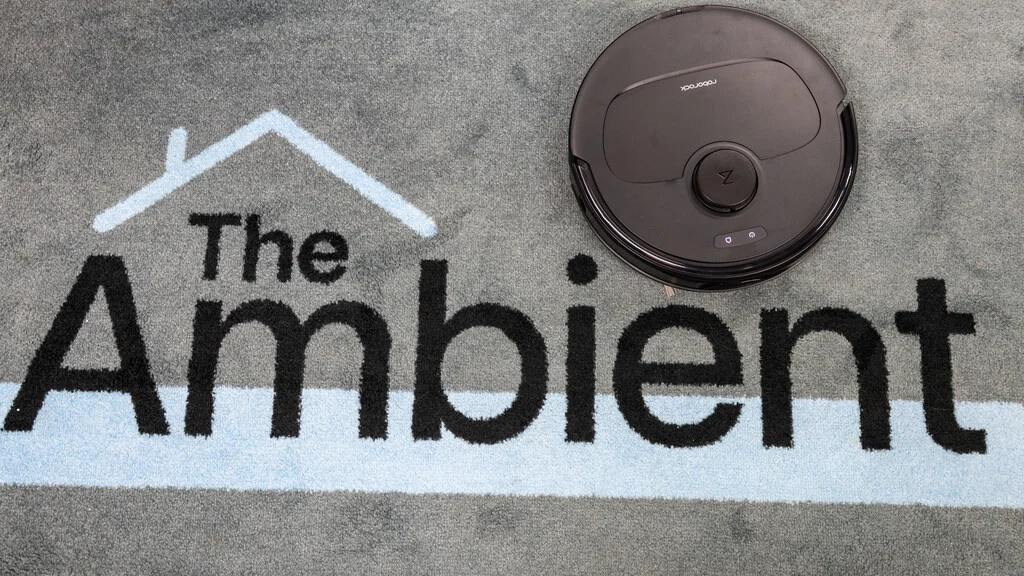
The landscape of home automation is rapidly evolving, and with it, the capabilities and accessibility of robotic cleaning devices. Not long ago, budget robot vacuums were largely relegated to a basic wet mopping function, often leaving more to be desired than accomplished. However, the introduction of the Roborock Qrevo S Pro marks a significant leap forward in the affordable segment, offering a feature set that rivals more premium models at a fraction of the cost. Launched with a suggested retail price of $699.99 in the US and £549.99 in the UK, and frequently available for even less, this device challenges the notion that advanced functionality must come with a prohibitive price tag.
At its core, the Roborock Qrevo S Pro is designed to provide a comprehensive cleaning solution for the modern home, boasting a sophisticated self-emptying and self-cleaning dock, capable vacuuming, and effective mopping for everyday messes. While it is not without its limitations, particularly in handling long hair on carpets and deeply ingrained sticky stains, its overall performance and feature set make it a compelling proposition, especially for households that primarily feature hard flooring. This review delves into the design, features, performance, and overall value of the Roborock Qrevo S Pro, providing a detailed analysis for potential consumers.
Design and Features: A Premium Experience on a Budget

Upon unboxing, the Qrevo S Pro’s docking station immediately evokes the impression of a higher-end device. It bears a strong resemblance to the docks found on Roborock’s more expensive offerings, such as the Roborock Saros 20. This similarity is not merely aesthetic; the dock is equipped with a robust suite of automated maintenance functions. It autonomously empties the robot’s dustbin, thoroughly washes the dual microfiber mop pads using 75°C hot water, and subsequently dries them with 45°C warm air. This level of self-sufficiency in a budget-friendly model is a significant differentiator.
However, the dock’s design does present a more utilitarian appearance compared to some premium models, primarily due to its exposed water tanks. It features a substantial 4-liter clean water tank and a 3.5-liter dirty water tank, facilitating extended cleaning cycles without frequent refilling or emptying. Notably, it omits a separate detergent dispenser, meaning any cleaning solutions would need to be added manually to the clean water tank, a common compromise in this price bracket.
The dust collection system utilizes a 3-liter dust bag, designed to hold accumulated debris for approximately two months before requiring replacement. When full, the bag is engineered to seal itself upon removal, simplifying disposal and minimizing user contact with dust.
The robot itself measures 9.65cm in height, largely due to its fixed LiDAR navigation dome. While this dimension may prevent it from accessing extremely low-clearance furniture, it remains slim enough to navigate the majority of domestic environments effectively. For households with exceptionally low furniture, alternative models with retractable domes or a lower profile might be necessary.

A notable feature for its price point is the inclusion of a front-mounted camera dedicated to object detection and avoidance. This advanced capability, typically found in more premium robots, allows the Qrevo S Pro to identify and steer clear of common household obstacles such as shoes and cables, enhancing its autonomy and reducing the likelihood of it getting stuck or damaging items.
Despite the automatic bin emptying feature, regular maintenance of the robot’s onboard dustbin and filter remains crucial for optimal suction performance. A monthly cleaning is recommended to ensure the longevity and efficiency of the vacuuming system.
Beneath the robot, users will find two rotating microfiber mop pads, a single side brush for edge cleaning, and a primary rubber brush bar. A key design consideration is that neither the mop pads nor the side brush extend outwards to specifically target edges and corners. This can sometimes result in a fine line of debris being left along baseboards or in tight angles. Roborock claims its brush bar design channels hair towards its ends, theoretically preventing entanglement. However, the effectiveness of this feature in practice will be explored further in the performance section.
The dock’s ability to lift the mop pads by 10mm when transitioning onto carpet is a practical inclusion. This height is generally sufficient for most short-pile carpets, but may prove less effective for thicker, deeper pile carpets, where the mop pads could still make contact. For vacuum-only runs, the dock cannot automatically remove the mop pads; they remain attached to the robot.

Physical controls on the robot are minimal, with two intuitive buttons allowing users to initiate cleaning cycles and send the robot back to its dock. For all other operational parameters and advanced customization, users will rely on the Roborock mobile application. This app mirrors the user-friendly interface found across Roborock’s higher-tier product line, offering a comprehensive suite of control options.
The app facilitates an initial mapping run, during which the robot identifies and delineates rooms within the home. Users have the flexibility to merge or split these identified zones as needed. The inclusion of no-go zones provides granular control over areas the robot should avoid. Furthermore, furniture markers can be set, which double as convenient shortcuts for localized cleaning around specific pieces of furniture, such as a sofa or dining table.
Users can choose to clean the entire home, specific rooms, or targeted zones. The cleaning modes offer significant versatility, including vacuum-only, mop-only, simultaneous vacuuming and mopping, and a sequential vacuum-then-mop approach. Suction power can be adjusted across four distinct levels, while mop saturation can be set at three different levels. Additionally, cleaning coverage can be configured, with options for one or two passes over an area, catering to different cleaning needs and levels of dirtiness.
Performance: Capable, with Caveats

The Roborock Qrevo S Pro was subjected to rigorous testing in a controlled lab environment. While its stated 18,500Pa suction power falls short of the absolute highest figures seen in flagship models, it represents a substantial level of suction that was considered top-tier just a couple of years ago. In practical terms, this translates to very good dust collection on hard floors, with the robot efficiently gathering fine particles like flour. However, a closer inspection of carpeted surfaces revealed that some deeply embedded dust might be left behind, indicating that the suction, while strong, may not agitate and lift all particulate matter from carpet fibers.
Edge cleaning proved to be an area where the Qrevo S Pro showed its limitations. The absence of an extending side brush or mops meant that a thin, consistent line of debris was left along the kitchen plinth during testing. This is a common trade-off in many robot vacuums that aim for a more compact design.
The long hair test on carpet yielded mixed results. While the robot’s brush bar design appears to have prevented significant tangling, a considerable amount of hair was left on the carpet. This suggests that the brush bar, while designed to manage hair, may not agitate the carpet fibers sufficiently to dislodge and collect all long strands effectively.
In terms of mopping performance for everyday messes, the Qrevo S Pro performed admirably. Common household stains such as coffee, red wine, and mud were successfully removed within two passes. However, more challenging, dried-on stains, such as ketchup, presented a greater hurdle. Even after two passes, the stain remained largely intact. A subsequent attempt, involving the application of a cleaning solution and allowing it to soak before another two mopping passes, showed improvement but still left a noticeable residue, indicating that stubborn, dried-on food matter may require manual intervention.

Navigation was generally robust. The robot demonstrated an ability to avoid unexpected obstacles like a stray shoe and simulated pet waste. However, it did encounter issues with more flexible items, such as bag straps left on the floor, and exhibited a reluctance to venture under low-lying furniture, such as the test sofa, likely due to its fixed LiDAR dome height.
Battery life proved to be more than adequate for the testing environment, successfully completing two full passes of the entire lab space on a single charge. Furthermore, its operational noise level was measured at a relatively quiet 57.2dB, making it unobtrusive enough to operate in the same room without causing significant disruption to daily activities.
Analysis of Implications: Value Proposition and Target Audience
The Roborock Qrevo S Pro emerges as a device that punches significantly above its weight class, particularly when considering its aggressive pricing. The inclusion of a self-emptying, self-cleaning dock with hot water mop washing is a feature typically reserved for premium models costing upwards of $1,000. This makes the Qrevo S Pro an incredibly attractive option for consumers seeking advanced automation without the associated high cost.

The performance metrics, while not setting new benchmarks in every category, are more than sufficient for the average household. The excellent dust collection on hard floors, combined with effective everyday mopping, addresses the primary cleaning needs of many homes. The limitations in edge cleaning and heavy-duty stain removal, along with the challenges with long hair on carpets, are understandable compromises given the price point. These are areas where consumers might expect to see a step down in performance compared to significantly more expensive alternatives.
The target audience for the Roborock Qrevo S Pro appears to be clear: budget-conscious consumers who primarily have hard floors and are looking for a highly automated and convenient cleaning solution. It represents a substantial upgrade from basic robot vacuums and offers a taste of premium features at an accessible price. For those with extensive carpeting or particularly demanding cleaning requirements, investing in a higher-tier model might be more appropriate. However, for the vast majority of users, the Qrevo S Pro strikes an excellent balance between cost and capability.
Roborock’s strategy with the Qrevo S Pro appears to be one of market disruption, making advanced robotic cleaning accessible to a broader segment of the population. By offering a feature-rich product at a competitive price, the company is likely aiming to capture a significant share of the mid-range market, compelling consumers to reconsider their budget expectations for robotic cleaning technology.
The implications of such offerings are significant for the broader smart home industry. As more manufacturers follow suit, the pressure to reduce prices while maintaining or improving feature sets will increase, ultimately benefiting consumers with more choices and better value. The Qrevo S Pro is a testament to the fact that sophisticated home automation no longer needs to be an exclusive luxury.

The testing methodology employed by The Ambient, which involves "living with" devices for extended periods, ensures that reviews are comprehensive and reflect real-world usage. This approach provides valuable context, allowing consumers to understand how a particular device performs not just in isolation, but in comparison to other options available on the market. The objective and fact-based nature of these reviews, free from direct sponsorship, further bolsters their credibility.
Final Thoughts: An Exceptional Bargain
The Roborock Qrevo S Pro stands out as a remarkable example of value in the robotic vacuum cleaner market. While it’s important to acknowledge its limitations – such as its inability to fit under all furniture, less sophisticated mopping for tough stains, challenges with long hair on carpets, and the fixed mop pads during vacuum-only runs – these are acceptable trade-offs considering its highly competitive price point. For homes predominantly featuring hard floors and with a relatively straightforward layout, this robot presents an excellent and highly convenient cleaning solution. Its self-emptying and self-cleaning dock alone provides a level of convenience that significantly simplifies household chores.
For consumers seeking a more powerful or specialized cleaning experience, particularly for deep-pile carpets or extremely stubborn stains, exploring higher-end models might be warranted. However, for the average user prioritizing automation, ease of use, and an impressive feature set at an accessible price, the Roborock Qrevo S Pro is an outstanding choice and a true bargain.

How We Test: A Commitment to Real-World Evaluation
At The Ambient, our review process is grounded in extensive, long-term testing. We believe that to provide a truly accurate and useful assessment of any smart home device, it must be integrated into a daily living environment. This "living with" approach allows us to uncover nuances in performance, usability, and reliability that short-term testing simply cannot reveal.
Robot cleaners, in particular, are designed to be part of an interconnected ecosystem and offer a range of cleaning options. Evaluating them effectively requires understanding how they perform across different scenarios, over extended periods, and in comparison to other products consumers might be considering. Our team, immersed in testing smart home technology daily, possesses the expertise to identify critical features, potential drawbacks, and benchmark performance against the current market. Our reviews are crafted to be comprehensive, objective, and fair, ensuring that our readers receive unbiased information to make informed purchasing decisions. It is important to note that we are never directly paid to review a device, maintaining our editorial independence. For a more in-depth understanding of our rigorous testing protocols, please refer to our guide on how we test robot vacuum cleaners.
Frequently Asked Questions:

Does the Roborock Qrevo S Pro empty itself?
Yes, the Qrevo S Pro features a self-emptying dock. The robot’s internal dustbin is emptied into a 3-liter dust bag within the dock. Additionally, the dock automatically washes the mop pads with 75°C hot water and dries them with 45°C warm air, providing a comprehensive self-maintenance cycle.
Can the Roborock Qrevo S Pro clean carpets?
Yes, the Qrevo S Pro is capable of cleaning carpets. When it detects a carpeted surface, its mop pads automatically lift by 10mm. This height is generally suitable for most short-pile carpets. However, for deeper pile carpets, there is a possibility of the mop pads making contact. In our testing, the robot left a significant amount of long hair on carpet, suggesting its agitation might not be sufficient for all carpet types.
Will the Roborock Qrevo S Pro fit under my furniture?
The robot’s fixed LiDAR dome contributes to its height of 9.65cm. This means it may not be able to fit under very low-profile furniture. During testing, it was observed that the robot would not venture beneath a standard sofa, indicating a limitation for homes with extremely low clearance furniture.
Roborock Qrevo S Pro: Specifications

Type (Colors and style): Robot vacuum and mop
UK RRP: £549.99
US RRP: $699.99
Size (Dimensions): Robot: 350 x 353 x 96.5mm; dock: 340 x 487 x 519mm
Weight: 11.6kg (robot and dock combined)
Release Date: 2026 (Note: This appears to be a placeholder or future release date in the original article; actual release would be earlier.)
Smart home Ecosystems: Amazon Alexa, Google Home, Siri compatibility
Suction Power: 18,500Pa
Bin Capacity: 3L dust bag in dock
Water Tank Size: 4L clean water tank, 3.5L dirty water tank
Cleaning Modes: Vacuum, mop, vacuum and mop, vacuum then mop
Dock Type: Self-empty, self-clean, 75°C mop washing, 45°C air drying
Charge Time: Approximately 4 hours
Battery Size: 5200mAh

