
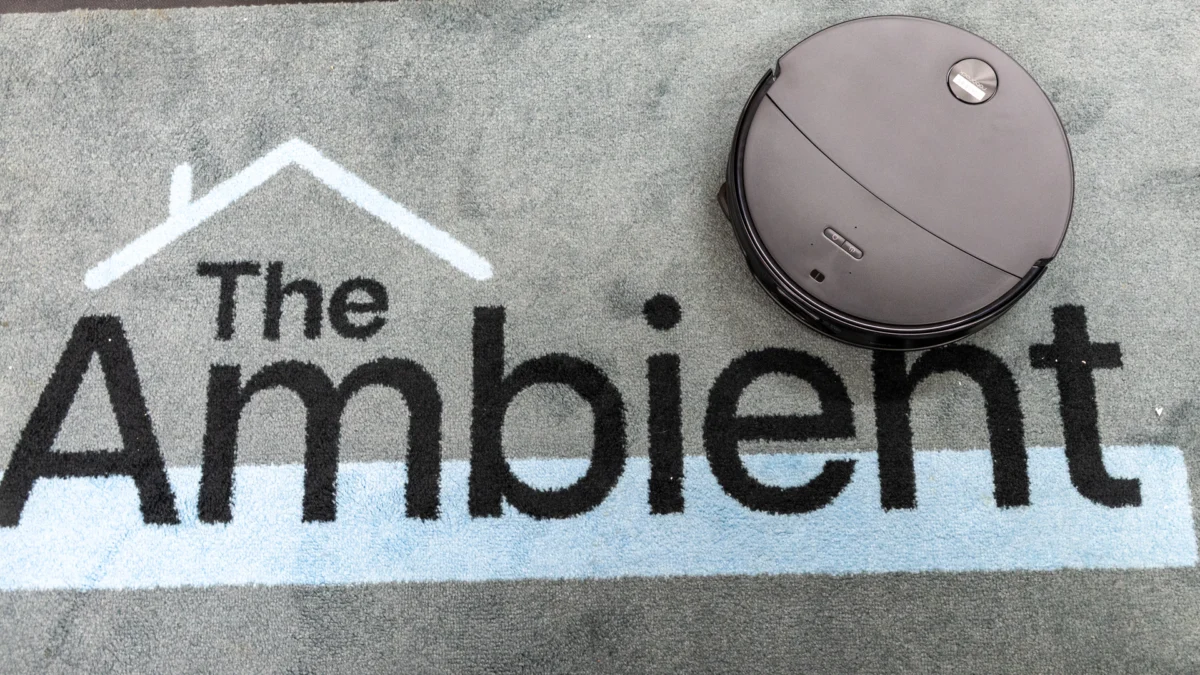
Roborock, a prominent player in the competitive robotic vacuum cleaner market, has introduced its latest offering, the Saros 20 Neo. This new model aims to democratize high-end cleaning performance by providing features comparable to its flagship Saros 20, but at a more attractive price. While the Neo achieves this by making minor trade-offs in its docking station design and navigation subtlety, it ultimately presents a compelling value proposition for a broad spectrum of households seeking advanced automated cleaning solutions.
The Saros 20 Neo’s positioning within Roborock’s product lineup is a strategic move designed to capture a segment of consumers who desire premium cleaning capabilities without the premium price tag associated with the absolute top-tier models. This approach mirrors trends seen across various consumer electronics categories, where manufacturers introduce "lite" or "neo" versions to broaden market appeal. The Saros 20 Neo, therefore, represents a calculated recalibration of features and cost, aiming to strike a balance that resonates with a wider consumer base.
Navigating the Saros Family: A Tale of Two LiDARs

The naming convention for Roborock’s robot vacuums has historically aimed for clarity, but the introduction of the Saros 20 Neo introduces a nuanced distinction. While its name might suggest a direct successor or a more advanced iteration of the Saros 20, the Neo is, in fact, a thoughtfully engineered variant. The primary divergence lies in its navigation system. The Saros 20 employs the front-facing StarSight Autonomous System 2.0, which integrates advanced visual recognition capabilities. In contrast, the Saros 20 Neo utilizes a retractable LiDAR dome.
This change in navigation technology is the cornerstone of the Neo’s cost-saving strategy. LiDAR (Light Detection and Ranging) is a well-established and highly effective navigation method for robots, enabling precise mapping and obstacle avoidance. By opting for a retractable LiDAR dome, Roborock has managed to reduce manufacturing costs while still delivering robust spatial awareness. The LiDAR dome retracts into the robot’s body, allowing it to achieve a low profile of 79.8mm, a dimension that matches the regular Saros 20 and facilitates easier passage under furniture. However, the integrated nature of the StarSight system on the Saros 20 may offer a marginal advantage in real-time object detection and avoidance, particularly in complex environments.
Docking Station: Convenience Versus Accessibility
The docking station of the Saros 20 Neo shares a design aesthetic reminiscent of Roborock’s Qrevo models, featuring a sleek, curved black finish. This station is the hub of the Neo’s automated operation, diligently handling several key functions. It empties the robot’s dustbin, washes the mop pads, and maintains their freshness through a hot-air drying system. This comprehensive self-maintenance capability significantly reduces the manual intervention required from the user, positioning the Saros 20 Neo as a truly hands-off cleaning companion for extended periods.

The dock houses substantial water tanks: a 4-liter clean water reservoir and a 3-liter dirty water tank. This generous capacity ensures that the robot can undertake extensive mopping cycles without frequent refills. For hygienic and odor-free mopping, the dock employs a sophisticated system that heats water to a scalding 100°C for thorough pad washing, followed by a 55°C hot-air drying process. This dual-action approach is crucial for preventing the buildup of bacteria and unpleasant smells, a common concern with traditional mopping systems.
Complementing the water management is a substantial 2.7-liter dust bag, capable of storing up to 65 days’ worth of debris. This extended capacity further enhances the robot’s autonomy, minimizing the frequency of dustbin emptying. The detergent is housed in a separate, easily accessible tank.
However, the dock’s design introduces a minor inconvenience. Unlike the Saros 20, accessing the dust bag and detergent tank on the Neo requires the user to first remove the water tanks. This is a small but noticeable difference in user experience, particularly during routine maintenance. While the Saros 20 provides more direct access to these consumables, the Neo’s configuration necessitates an additional step. This design choice is likely a contributing factor to the Neo’s more accessible price point.
Under the Hood: Performance and Engineering Prowess

Beneath its refined exterior, the Saros 20 Neo is engineered for formidable cleaning performance. It boasts an impressive suction power of 36,000Pa, a figure that places it among the most powerful robotic vacuums on the market. This raw suction capability allows it to effectively tackle a wide range of debris, from fine dust and pet hair to larger particles, across both hard floors and carpets.
The Duo Divide roller brush, a signature Roborock innovation, is designed to prevent hair tangles. Its central design draws hair towards the middle, where it is efficiently vacuumed up, minimizing the need for manual detangling, a common frustration with many robot vacuums. This feature is particularly beneficial for households with pets or individuals with long hair.
The mopping system is equally robust. Two microfiber mop pads apply a downward pressure of 14N, a slight increase from the previous model, enhancing their ability to scrub away stains. The FlexiArm mop system is a noteworthy addition, extending to reach into corners and along edges, areas that often prove challenging for less sophisticated robots. A secondary FlexiArm extends the side brush, further improving the collection of debris from tight spots. While the mop’s reach is commendable, it doesn’t quite match the extreme extension capabilities of some ultra-premium competitors, such as the Dreame X60 Pro Ultra Complete.
For carpet cleaning, the Saros 20 Neo offers intelligent adaptability. It can either lift its mop pads entirely or leave them in the dock for a vacuum-only run, ensuring that carpets are not inadvertently dampened. The AdaptiLift climbing system is another testament to Roborock’s engineering, enabling the robot to ascend thresholds of up to 8.7cm (split between two steps of 4.4cm and 4.3cm). This capability allows it to transition seamlessly between different floor types and overcome minor obstacles within the home. Furthermore, it can raise its body to effectively clean deep-pile carpets.

Intelligent Navigation and Obstacle Avoidance
The Saros 20 Neo’s navigation capabilities are a critical aspect of its performance. While it utilizes LiDAR, the retractable dome does introduce a slight behavioral difference compared to robots with permanently exposed navigation sensors. When encountering low-clearance furniture, such as sofas, the Neo must intelligently plan its approach and retract the LiDAR dome. This process, while efficient, can lead to a marginally slower navigation speed in such scenarios. The Saros 20, with its permanently slim profile and potentially more advanced visual recognition, might exhibit a slight edge in immediate under-furniture navigation.
However, in practical testing, the Saros 20 Neo demonstrated confident obstacle avoidance. Equipped with cameras, it effectively identifies and maneuvers around objects in its path. The inclusion of 3D sensors alongside cameras, as seen in the Saros 20, might offer a marginal advantage in differentiating between floor and objects in very complex or low-light conditions, but the Neo’s performance in this regard was largely uncompromised. The ability to map the home and set up virtual no-go zones, along with the placement of virtual furniture on the map for targeted cleaning, provides users with granular control over the cleaning process.
App Control: A Hub of Customization

The Roborock app serves as the central command for the Saros 20 Neo, offering a comprehensive suite of controls that go beyond basic start and stop functions. Upon initial setup, the robot performs a swift mapping run, and the app intelligently suggests room divisions, which users can easily modify by splitting or merging areas to accurately reflect their home layout.
Users can define specific cleaning zones, no-go areas, and even designate furniture on the map to guide the robot’s cleaning path. The cleaning options are extensive, allowing users to select whole-home cleaning, specific rooms, or custom zones. The robot can be programmed for vacuuming only, mopping only, a sequential vacuum-then-mop cycle, or a combination of both.
The level of customization extends to the cleaning parameters themselves. While the robot can autonomously determine optimal settings, users have the flexibility to adjust suction power, water flow levels, route speed, and the number of cleaning passes. There are four primary vacuum modes, with an additional high-power option for vacuum-only tasks. The mopping functionality offers an impressive 30 selectable water levels, providing a granular approach to tackle different types of spills and floor surfaces. While this extensive customization is a hallmark of Roborock’s user-centric design, it might present a slight learning curve for users who prefer a more simplified interface.
Performance Benchmarks: Delivering on the Promise

In rigorous testing, the Roborock Saros 20 Neo consistently delivered excellent cleaning results. Its 36,000Pa suction power proved highly effective on both carpets and hard floors, effortlessly clearing deep-seated debris. In vacuum-only mode, it exhibited a slight tendency to leave some residue along skirting boards, a minor limitation that was effectively mitigated when mopping was incorporated into the cleaning cycle.
The Duo Divide roller brush lived up to its anti-tangle promise, with no hair entanglement observed after extensive testing on carpets laden with human hair. This is a significant advantage for maintaining the robot’s long-term performance and reducing user maintenance.
The mopping performance was equally impressive. The robot successfully removed common stains such as coffee and red wine in just two passes. For more challenging messes like dried mud, it first vacuumed up loose particles before efficiently mopping away the remaining residue. While dried ketchup proved to be a tougher adversary, the Neo significantly reduced the stain with multiple passes, especially when stain recognition was activated. A targeted application of household cleaner followed by a subsequent clean by the robot effectively removed the stain entirely, highlighting the importance of pairing automated cleaning with appropriate pre-treatment for stubborn messes.
Navigation proved to be highly reliable. The Saros 20 Neo adeptly maneuvered around various obstacles, including a deliberately placed shoe, simulated pet mess, and cables. Its ability to navigate under furniture, albeit with the necessary LiDAR retraction, was satisfactory.

Battery life is rated at up to 256 minutes. In lab tests simulating a large floor area, the Neo completed two full cleaning passes and still retained sufficient charge for additional spot cleaning, indicating ample power for most residential environments. The measured noise level of 58.3dB positions it as a relatively quiet performer, allowing for operation without excessive disturbance.
Implications and Future Considerations
The introduction of the Roborock Saros 20 Neo has several implications for the robotic vacuum market. Firstly, it sets a new benchmark for value in the premium segment. By offering a cleaning performance that rivals higher-priced models, it compels competitors to re-evaluate their pricing strategies. The Neo’s success could accelerate the trend of feature-rich robotic vacuums becoming more accessible to a broader consumer base.
Secondly, the Neo’s design choices highlight the trade-offs inherent in product development. The decision to use a retractable LiDAR dome and a slightly less convenient dock design, while impactful on user experience in specific instances, has clearly enabled Roborock to achieve a more competitive price point. This underscores the importance of understanding individual consumer priorities – for some, cost savings will outweigh minor inconveniences, while others may still opt for the slightly more refined Saros 20 for its subtle advantages.

The existence of the Saros 20 Neo also suggests that Roborock is committed to a tiered product strategy, catering to different budget levels without compromising on core cleaning effectiveness. This approach allows the company to capture market share across a wider spectrum of consumers, from those seeking the absolute best to those looking for a highly capable yet more affordable solution.
Looking ahead, the performance of the Saros 20 Neo will likely influence future product development not only for Roborock but also for its competitors. The focus on powerful suction, effective mopping, and intelligent navigation, even with minor compromises, demonstrates that high-end features are becoming increasingly attainable. The market can expect to see continued innovation aimed at optimizing this balance between advanced functionality and consumer affordability.
Conclusion: A Smart Choice for the Savvy Consumer
The Roborock Saros 20 Neo stands as a testament to intelligent product design and strategic market positioning. It successfully bridges the gap between high-end performance and affordability, delivering a cleaning experience that closely mirrors its more expensive sibling, the Saros 20. The minor inconveniences associated with its docking station and the slightly more deliberate navigation under low furniture are, for most users, a small price to pay for the substantial cost savings.

The Neo is an easy recommendation for households seeking a robust, automated cleaning solution that excels in both vacuuming and mopping. While the Saros 20 might offer a marginally more nimble experience and competitors like the Dreame X60 Pro Ultra Complete might boast a few niche cleaning features, the Saros 20 Neo strikes an exceptional balance. It provides the vast majority of the cleaning prowess expected from a premium robot vacuum, making it an outstanding choice for a wide range of homes. For consumers looking to invest in advanced home cleaning technology without breaking the bank, the Roborock Saros 20 Neo presents a compelling and practical solution.

