
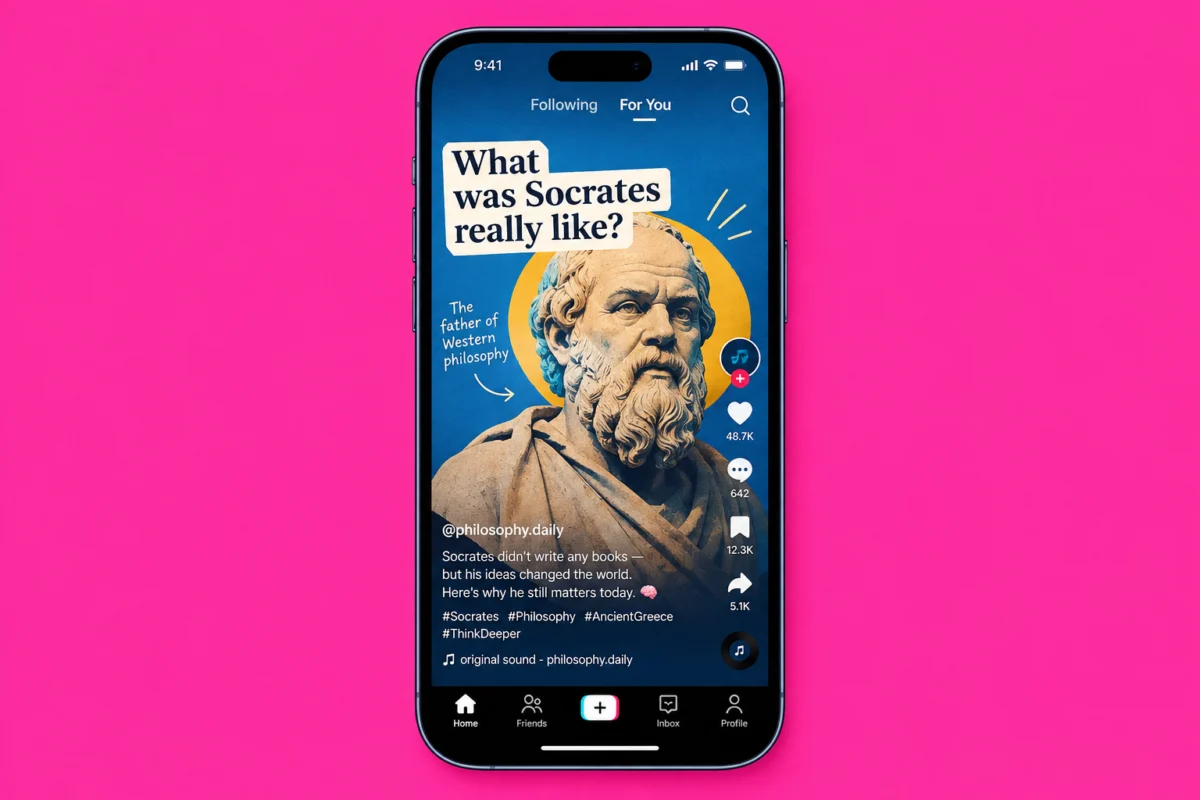
Palo Alto, CA – Society has long lamented the erosion of attention spans and the prevalence of "doomscrolling," often pointing to digital habits as the culprit behind our collective inability to engage with lengthy texts or concentrate on academic pursuits. This pervasive narrative suggests that the solution lies in detaching from screens. However, a nascent startup, ScrollEd, challenges this conventional wisdom, proposing an audacious alternative: what if the key isn’t to stop scrolling, but to fundamentally rethink the content we scroll through?
This innovative premise is the cornerstone of ScrollEd, a Palo Alto-based company set to make its debut in the highly competitive TechCrunch Disrupt Startup Battlefield 200 competition. Their core proposition is elegantly simple yet potentially transformative: if students are increasingly reluctant to open traditional textbooks, then the textbooks themselves should adapt, opening up to students in a format that mirrors their entrenched digital consumption habits – as an engaging, interactive scroll.
The Genesis of ScrollEd: Confronting the Digital Dileapse
The journey of ScrollEd began not in a boardroom, but from a shared personal frustration experienced by its co-founders, Utsav Gupta and Rebecca Neff. Both were students – Gupta pursuing a degree in AI and human purpose at Stanford, and Neff studying computer science at the University of Pennsylvania. They found themselves, like countless others, caught in the late-night ritual of "doomscrolling," an activity that often left them feeling dissatisfied and disengaged rather than informed or uplifted. This personal experience catalyzed a profound question: could the very mechanism of endless scrolling, so often associated with mindless consumption, be repurposed for meaningful learning?
"The younger generation is increasingly going short form, vertical feed only (especially the 18-year-olds we’ve spoken to!), and this poses challenges for any kind of media that requires depth," Utsav Gupta explained in an email to TechCrunch, articulating the core problem ScrollEd seeks to address. This observation is corroborated by numerous studies indicating a significant shift in media consumption, particularly among Gen Z, who spend an average of 3-4 hours daily on short-form video platforms like TikTok and Instagram Reels. This dramatic shift highlights a growing chasm between traditional educational delivery methods and contemporary student engagement patterns. Textbooks, often dense and static, struggle to compete for attention against the dynamic, personalized, and instantly gratifying content streams students are accustomed to.
Gupta elaborated on their philosophy: "We want to meet them where they are… We just have to be deliberate about how we use it and choose not to maximize engagement on the platform." This distinction is critical. Unlike traditional social media platforms designed to maximize screen time through addictive algorithms, ScrollEd aims to harness the familiarity of the scroll interface not for endless consumption, but for efficient, targeted learning. "A short video can make you curious; following that curiosity can mean searching for another explanation or leaving the app," Gupta noted. "We wanted going deeper to be as easy as moving to the next video." This design ethos directly addresses the common problem of information fragmentation, where initial curiosity sparked by short-form content often dissipates due to the effort required to delve deeper.
How ScrollEd Works: A Deep Dive into the Interactive Learning Platform
ScrollEd has developed an innovative application that transforms any text file – from cumbersome PDFs and academic papers to comprehensive textbooks – into a dynamic, interactive feed that bears a striking resemblance to popular platforms like Instagram Reels or TikTok. The user experience is designed to feel intuitive and familiar: as one scrolls, educational content is presented in a multi-modal format, leveraging AI to generate video, audio, text snippets, and even interactive quizzes. This adaptive presentation aims to cater to diverse learning styles and maintain engagement.
The navigation system is equally user-friendly. A simple swipe up introduces a new topic, allowing learners to progress through a curriculum or explore related subjects. Crucially, a sideways swipe offers a mechanism for deeper exploration within a current topic, providing supplementary information, examples, or alternative explanations, often culminating in a short, formative quiz to assess comprehension. This layered approach allows students to control the depth of their learning experience, moving quickly through familiar material or lingering on complex concepts until mastery is achieved.
The technological backbone of ScrollEd is its sophisticated AI engine. This AI is responsible for parsing vast amounts of text, identifying key concepts, generating concise summaries, and converting these into engaging multimedia formats. For instance, a paragraph explaining a historical event might be transformed into a short animated video, accompanied by an audio narration, with key terms highlighted as interactive text overlays. The AI also plays a pivotal role in personalizing the learning path, potentially adapting content presentation based on a user’s interaction history, quiz performance, and stated preferences. This level of personalization, driven by artificial intelligence, represents a significant leap forward in making digital learning truly adaptive and responsive to individual needs, moving beyond static, one-size-fits-all digital textbooks.
The Broader Context: Education in the Digital Age and the Need for Innovation
ScrollEd emerges at a critical juncture for education. The global EdTech market, valued at approximately $254.8 billion in 2022, is projected to reach over $600 billion by 2030, driven by the accelerating digitalization of learning and the persistent demand for more engaging and accessible educational tools. Within this burgeoning market, AI in education is a rapidly expanding segment, with projections suggesting its market size will grow from $3.3 billion in 2023 to $17.6 billion by 2028. This growth underscores a widespread recognition among educators and policymakers that technology, particularly AI, holds immense potential to address long-standing challenges in learning.
One of the most pressing challenges is student engagement. A 2022 survey by Chegg found that 75% of Gen Z students believe social media platforms are more effective for learning new skills than traditional educational institutions. This stark preference highlights a disconnect. While traditional pedagogy emphasizes deep reading and sustained concentration, modern digital natives are accustomed to consuming information in bite-sized, visually rich, and interactive formats. Reports from Common Sense Media indicate that teenagers spend an average of 7-8 hours a day on screens, not including schoolwork, with a significant portion dedicated to social media and short-form video. This constant exposure shapes cognitive habits, making sustained engagement with dense, linear texts increasingly difficult.
Educators, grappling with these shifts, are constantly seeking innovative methods to capture and retain student attention. The pandemic-induced acceleration of online learning further exposed the limitations of simply digitizing traditional materials; static PDFs and lengthy video lectures often failed to replicate the dynamic engagement of in-person classrooms, leading to "Zoom fatigue" and decreased motivation. ScrollEd’s approach directly confronts this by translating academic content into the very language and interface students are most comfortable with, potentially bridging the gap between passive consumption and active learning. It acknowledges that the challenge isn’t merely a lack of content, but a mismatch in its delivery mechanism.
Business Model and Target Markets: A Strategic Approach to Growth
ScrollEd is pursuing a robust freemium business model designed to cater to a diverse range of users and institutions. At its core is a free consumer feed, allowing individual learners to access a curated library of educational content and experience the platform’s unique interface without an upfront cost. This free tier serves as a powerful acquisition tool, enabling widespread adoption and organic growth through word-of-mouth.
For users seeking a more comprehensive and personalized experience, ScrollEd offers a paid "ScrollEd Pro" subscription. This premium tier is expected to unlock advanced features such as access to a larger, more specialized content library, enhanced AI personalization, ad-free learning, and potentially tools for custom content creation or deeper analytical insights into one’s learning progress.
The primary revenue driver, however, is projected to be annual institutional licenses. ScrollEd is actively targeting educational institutions – from K-12 schools and universities to vocational training centers – as well as corporate training programs. For these organizations, ScrollEd offers a powerful platform to deliver their proprietary educational materials in an engaging, modern format. The value proposition for institutions extends beyond mere content delivery; in exchange for their annual license fees, institutions gain access to comprehensive reports on student engagement, lesson progress, and other crucial learning analytics. This data can empower educators and trainers to identify areas where students struggle, assess the effectiveness of their curricula, and tailor interventions, thereby enhancing overall learning outcomes.
Utsav Gupta also highlighted a broader market segment: individuals who "just want something better to scroll on." This speaks to a demographic tired of the often-toxic or superficial nature of traditional social media but still drawn to the convenience and immediacy of the scroll interface. ScrollEd aims to provide a meaningful alternative, transforming idle scrolling time into productive learning opportunities, positioning itself as a "healthy" social media experience. This broad appeal across individual consumers, academic institutions, and corporate training programs positions ScrollEd for significant scalability and market penetration.
Strategic Vision and Future Development: Building a "Social Network That’s Better for You"
ScrollEd’s immediate future is packed with ambitious plans, particularly centered around its consumer launch at TechCrunch Disrupt. "We’re hoping to ‘disrupt’ social media and short form!" Gupta quipped, underscoring the company’s bold aspirations. This launch will be crucial for establishing its initial user base and gathering vital feedback.
In the coming months, the startup intends to aggressively build out its lesson library, expanding the breadth and depth of available educational content. A critical component of this expansion will be the development of a robust "source-checking workflow." Given the reliance on AI-generated content, ensuring the accuracy, reliability, and academic rigor of the material is paramount to maintaining credibility and effectiveness, especially for institutional adoption. This workflow will likely involve a combination of automated verification tools and human expert review to uphold educational standards.
Simultaneously, ScrollEd plans to develop pilot programs with educational institutions. These pilots will be instrumental in demonstrating the platform’s efficacy in real-world learning environments, gathering testimonials, and refining features based on educator and student feedback. Such partnerships are vital for validating the institutional licensing model and proving the platform’s value proposition.
Looking further ahead, ScrollEd has an even grander vision: to build infrastructure that will one day allow educators to not only assess individual learners but also adapt to their specific needs in real-time. This adaptive learning capability, powered by advanced AI, could revolutionize personalized education, moving beyond static curricula to dynamically adjusting content difficulty, pace, and presentation style based on each student’s progress and learning patterns. This aligns with the broader trend towards individualized learning paths, a holy grail for many educational reformers.
Ultimately, Gupta articulated the company’s overarching ambition: "The ambition is a social network that’s better for you." This statement transcends merely being an EdTech tool; it positions ScrollEd as a new paradigm for digital interaction, one where the familiar engagement mechanisms of social media are redirected towards intellectual growth and positive personal development. This vision suggests potential future features like collaborative learning environments, peer-to-peer knowledge sharing, and even educator-led communities, all within a curated, learning-centric ecosystem that deliberately avoids the pitfalls of traditional engagement-maximizing social platforms.
TechCrunch Disrupt: A Launchpad for Innovation and Validation
ScrollEd’s participation in the TechCrunch Disrupt Startup Battlefield 200 is a significant milestone. TechCrunch Disrupt is one of the most prestigious technology conferences globally, renowned for showcasing groundbreaking startups and attracting a vast audience of investors, industry leaders, and media. The Startup Battlefield, in particular, is a highly selective competition where promising early-stage companies present their innovations to a panel of expert judges, vying for significant prize money, invaluable exposure, and validation within the tech community.
For ScrollEd, Disrupt serves multiple strategic purposes. Firstly, it provides an unparalleled platform for its consumer launch, generating immediate buzz and attracting early adopters. Secondly, the competition offers a crucial opportunity to pitch directly to influential venture capitalists and potential strategic partners, which could be instrumental in securing future funding rounds necessary for scaling operations. Thirdly, the rigorous vetting process by TechCrunch’s editorial team lends credibility to ScrollEd’s innovation, signaling its potential to genuinely disrupt the EdTech and social media landscapes. Being selected for the Battlefield 200 places ScrollEd among a curated group of promising startups, enhancing its visibility and competitive standing.
Analysis of Implications and Potential Challenges
The implications of ScrollEd’s approach are profound for the future of education and digital engagement. If successful, it could:
- Democratize Learning: By making complex educational content accessible and engaging through a familiar interface, ScrollEd could significantly lower barriers to learning for diverse populations.
- Enhance Engagement: It offers a potent solution to the perennial problem of student disengagement, transforming passive consumption into active, self-directed learning.
- Redefine Digital Interaction: By offering a "social network that’s better for you," ScrollEd could pave the way for a new category of digital platforms that prioritize well-being and intellectual growth over mere entertainment and engagement maximization.
- Accelerate Personalized Learning: Its AI-driven adaptive learning infrastructure holds the promise of truly individualized education, tailoring content to each learner’s pace, style, and needs.
However, ScrollEd also faces significant challenges and considerations:
- Academic Rigor vs. Short-Form: Striking the right balance between the concise, engaging nature of short-form content and the depth required for rigorous academic understanding will be critical. Over-simplification could undermine its educational value.
- AI Accuracy and Bias: The reliance on AI for content generation necessitates a robust and continuous source-checking workflow to prevent the propagation of misinformation, factual errors, or algorithmic biases inherent in AI models.
- Digital Divide: While making learning more accessible, the platform still requires access to smartphones and reliable internet, potentially exacerbating the digital divide for underserved communities.
- Competition: The EdTech market is crowded. ScrollEd will need to differentiate itself not only from traditional learning platforms but also from other innovative startups and established tech giants entering the education space.
- User Adoption and Habit Formation: While the interface is familiar, shifting user habits from entertainment-focused scrolling to education-focused scrolling requires a compelling value proposition and sustained engagement strategies.
- Data Privacy: As an institutional tool, managing student data, particularly engagement and progress reports, will require stringent adherence to privacy regulations and ethical data handling practices.
Expert and Educator Reactions (Inferred)
Initial reactions from educators and EdTech analysts are likely to be a mix of cautious optimism and keen interest. Progressive educators might welcome ScrollEd as a much-needed tool to meet students where they are, viewing it as an innovative bridge between modern digital habits and academic goals. They might see its potential to reignite curiosity and make traditionally dry subjects more palatable. However, some traditionalists might express concerns about the "gamification" of learning or the potential for short-form content to detract from the development of critical deep-reading and analytical skills.
EdTech analysts are likely to highlight ScrollEd’s novelty and market potential, particularly its unique approach to leveraging AI and social media mechanics for educational purposes. They would likely emphasize the importance of its source-checking workflow and the ethical considerations of its "engagement" model, ensuring it remains focused on learning outcomes rather than addictive design. Venture capitalists, recognizing the massive addressable market and the pain points ScrollEd addresses, would likely view it as a high-potential investment, especially given the founders’ strong academic backgrounds and the innovative use of AI. Students, particularly those in the target demographic, are expected to respond positively to an app that intuitively blends their digital lifestyle with their educational needs.
As ScrollEd prepares to make its mark at TechCrunch Disrupt, its journey represents more than just the launch of a new app; it signifies a bold reimagining of what learning can look like in an increasingly digital-first world. By transforming the much-maligned act of scrolling into a purposeful pathway to knowledge, ScrollEd offers a compelling vision for a future where digital engagement genuinely contributes to intellectual growth. The challenge ahead will be to translate this innovative vision into a robust, academically sound, and widely adopted platform that truly lives up to its promise of building a "social network that’s better for you."

