
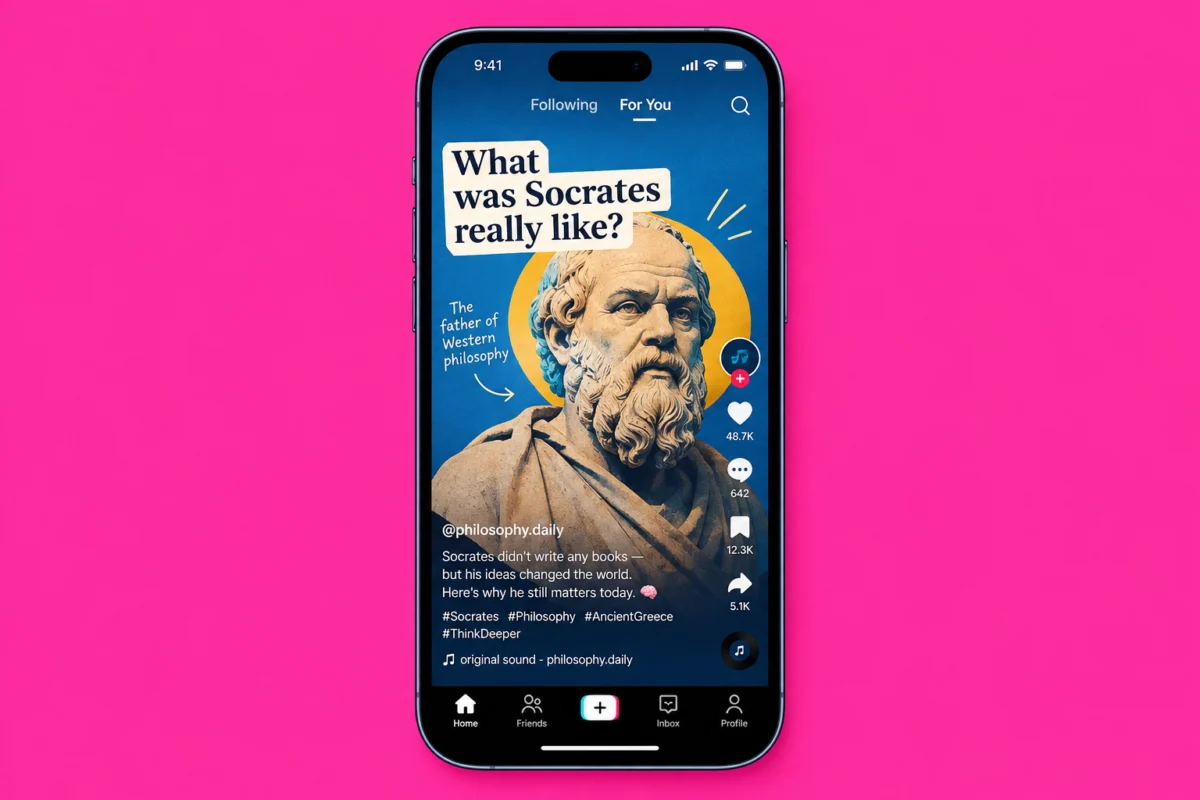
Palo Alto-based startup ScrollEd is set to challenge conventional notions of digital engagement and education, pitching its innovative platform at the prestigious TechCrunch Disrupt Startup Battlefield 200 competition. The company proposes a radical solution to the widespread concern over diminishing attention spans and the pervasive influence of short-form digital content: instead of fighting the scroll, harness it for learning. By converting traditional textual materials, from dense PDFs to comprehensive textbooks, into dynamic, AI-generated multimedia feeds reminiscent of TikTok or Instagram Reels, ScrollEd aims to bridge the gap between contemporary consumption habits and the demands of deep learning.
For years, educators, parents, and social commentators have lamented the perceived decline in human attention spans, frequently attributing it to the rise of "doomscrolling" and the constant barrage of digital distractions. This pervasive concern suggests that modern minds, accustomed to rapid-fire content delivery, struggle with the sustained focus required for tasks like reading a book or studying for examinations. ScrollEd, however, posits that the problem isn’t the act of scrolling itself, but rather the nature of the content being scrolled through. Their bet is that if students are reluctant to engage with traditional textbooks, the learning material must adapt to them, presenting itself in a format that is both familiar and compelling.
The Digital Attention Crisis and the Need for Innovation
The global shift towards digital content consumption has profoundly reshaped how individuals, particularly younger generations, interact with information. Data from various studies underscores this transformation. A 2015 Microsoft study, often cited, suggested that the average human attention span had dropped from 12 seconds in 2000 to 8 seconds, surpassing that of a goldfish. While the precise figures are debated, the trend towards shorter, more fragmented engagement is undeniable. Platforms like TikTok, with its addictive algorithm and 15-60 second video formats, have capitalized on this, creating a generation accustomed to rapid content cycling and instant gratification. According to recent reports, users spend an average of 95 minutes per day on TikTok, consuming a constant stream of vertical video. This immersive, often passive, consumption model presents a significant challenge for traditional educational paradigms that rely on sustained cognitive effort and linear information processing.
Educators worldwide grapple with an "engagement gap," finding it increasingly difficult to hold students’ attention in classrooms and with traditional study materials. Textbooks, often perceived as dry and static, struggle to compete with the dynamic, personalized experiences offered by social media. This environment necessitates a fundamental rethinking of how educational content is delivered and consumed, pushing innovators to explore new interfaces that align with evolving user behaviors without compromising on depth or pedagogical rigor.
ScrollEd’s Transformative Learning Interface
At the heart of ScrollEd’s offering is a proprietary application designed to reimagine textual learning. The app ingeniously transforms any text file – be it an academic journal, a corporate training manual, or a complex textbook – into a vertical feed. This feed is far from static; as users scroll, content manifests through a rich tapestry of AI-generated video clips, explanatory audio narratives, concise textual summaries, and interactive quizzes. The user experience is intuitively designed to mimic popular social media feeds: a swipe upwards introduces a new topic or concept, while a sideways swipe allows for a deeper dive into the current subject matter, often culminating in an assessment or quiz to reinforce learning.
Utsav Gupta, co-founder of ScrollEd, elaborated on the core philosophy behind their design. "The younger generation is increasingly going short form, vertical feed only (especially the 18-year-olds we’ve spoken to!), and this poses challenges for any kind of media that requires depth," he told TechCrunch. "We want to meet them where they are… We just have to be deliberate about how we use it and choose not to maximize engagement on the platform [for its own sake]." This distinction is crucial: ScrollEd aims to harness the engagement mechanics of social media, but with the explicit goal of fostering meaningful learning, rather than merely maximizing screen time or passive consumption. Gupta emphasized, "A short video can make you curious; following that curiosity can mean searching for another explanation or leaving the app. We wanted going deeper to be as easy as moving to the next video." This design choice directly addresses the friction points often encountered when students attempt to transition from a stimulating digital environment to a more demanding academic one.
The Genesis of an Idea: From Personal Dissatisfaction to Entrepreneurial Vision
The journey of ScrollEd began not in a corporate boardroom, but from the personal experiences of its co-founders, Utsav Gupta and his wife, Rebecca Neff. Both are students themselves – Gupta is pursuing studies in AI and human purpose at Stanford University, while Neff is immersed in computer science at the University of Pennsylvania. Their shared dissatisfaction with "doomscrolling" before bed, a common modern predicament where endless feeds leave users feeling unfulfilled, sparked the initial idea. They recognized the power of these platforms to capture attention, but also their potential for misuse and the psychological toll they can exact.
Bootstrapping the company this year, their academic backgrounds provided a strong foundation. Gupta’s focus on AI and human purpose directly informs ScrollEd’s ethical approach to technology, ensuring that AI is used as a tool for empowerment and learning, not just engagement. Neff’s expertise in computer science is critical for building the robust and intuitive platform that can seamlessly transform complex text into digestible multimedia. Their combined vision is not just about creating another app, but about building a "social network that’s better for you," a space where digital interaction genuinely contributes to personal growth and knowledge acquisition. This aligns with a growing movement advocating for "tech for good" and more mindful digital consumption.
Navigating the Ed-Tech Landscape: Market Opportunity and Strategic Positioning
The global education technology (Ed-Tech) market has experienced explosive growth, particularly accelerated by the COVID-19 pandemic, which forced a rapid transition to digital learning. Valued at over $120 billion in 2022, it is projected to exceed $400 billion by 2030, according to various market research reports. This burgeoning sector is ripe for innovation, especially in areas addressing engagement and personalized learning.
ScrollEd is strategically positioning itself within this dynamic market by targeting three distinct yet interconnected segments:
- Educational Institutions: Universities, K-12 schools, and vocational colleges represent a significant market. These institutions can license ScrollEd to deliver curriculum content, lectures, and supplementary materials in a format more appealing to digitally native students. The platform’s ability to provide engagement reports, lesson progress tracking, and other data offers valuable insights to educators, enabling them to adapt teaching methodologies and identify areas where students might be struggling.
- Corporate Training Programs: Businesses are constantly seeking effective ways to train employees, onboard new hires, and facilitate continuous professional development. ScrollEd offers a compelling alternative to traditional, often tedious, corporate training modules. By transforming policy documents, product manuals, and training courses into interactive, scrollable feeds, companies can enhance employee engagement, improve knowledge retention, and reduce training costs.
- Individual Consumers: Beyond formal institutions, ScrollEd also targets individuals "who just want something better to scroll on," as Gupta puts it. This segment includes lifelong learners, hobbyists, and anyone seeking to utilize their screen time more productively. The freemium model for consumers is designed to attract a broad user base, offering a taste of enriched learning before inviting them to subscribe to ScrollEd Pro for advanced features and content.
While the Ed-Tech landscape includes established players offering online courses, learning management systems, and AI-powered tutoring, ScrollEd differentiates itself by focusing on the format and delivery mechanism itself. Rather than simply digitizing content or providing a new platform for existing content types, ScrollEd fundamentally re-engineers how information is packaged and consumed, making it natively compatible with modern digital behaviors.
TechCrunch Disrupt: A Launchpad for Innovation
ScrollEd’s participation in the TechCrunch Disrupt Startup Battlefield 200 is a pivotal moment for the nascent company. TechCrunch Disrupt is one of the most prestigious technology conferences globally, renowned for showcasing groundbreaking startups and serving as a launchpad for companies that go on to achieve significant success. The Startup Battlefield, in particular, is a highly competitive pitch competition where selected startups present their innovations to a panel of venture capitalists, tech luminaries, and media. Winning or even just participating prominently can provide invaluable exposure, attract potential investors, and generate significant media buzz.
The decision to launch their consumer business at Disrupt underscores the founders’ confidence in their product and their ambition to make an immediate impact. "We’re hoping to ‘disrupt’ social media and short form!" Gupta quipped, highlighting their aspiration to not just enter the market, but to redefine a segment of it. This strategic launch aims to capitalize on the concentrated attention of the tech world, garnering early adopters and critical feedback.
Business Model and Ambitious Future Roadmap
ScrollEd operates on a freemium model, a popular strategy for digital products seeking broad adoption. The free consumer feed allows individuals to experience the platform’s unique learning approach without upfront commitment, serving as an effective marketing tool. For those seeking more robust features or extensive content, a paid ScrollEd Pro subscription will be available.
The institutional segment, however, forms a crucial part of ScrollEd’s revenue strategy. Educational bodies and corporate entities will pay for annual licenses to integrate ScrollEd into their learning ecosystems. In return, they gain access to a platform that can transform their proprietary content, alongside detailed reports on user engagement, lesson progress, and other analytical data. This data is invaluable for institutions to assess the effectiveness of their curricula and tailor learning experiences.
Looking ahead, ScrollEd has an ambitious roadmap for the coming months and years. Immediate priorities include:
- Consumer Launch: Building momentum and user base for the public-facing application.
- Lesson Library Expansion: Continuously growing the repository of ready-to-learn content, both proprietary and user-generated (with robust vetting).
- Source-Checking Workflow: Implementing stringent processes to ensure the accuracy, reliability, and pedagogical quality of all content on the platform, a critical factor for any educational tool.
- Institutional Pilot Programs: Collaborating with early adopter institutions to refine the platform, gather feedback, and demonstrate its efficacy in real-world educational settings.
- Adaptive Learning Infrastructure: A long-term vision involves developing sophisticated AI infrastructure capable of assessing individual learners’ needs, learning styles, and progress, then adapting content delivery and difficulty levels dynamically. This would move ScrollEd closer to a truly personalized learning experience, a holy grail in education technology.
Ultimately, Gupta articulates the overarching ambition: "The ambition is a social network that’s better for you." This vision extends beyond merely delivering content; it speaks to creating a digital environment where the interactions, algorithms, and content are all geared towards positive cognitive outcomes and personal enrichment, rather than just maximizing engagement for its own sake.
Broader Implications for Education and Digital Literacy
ScrollEd’s approach carries significant implications for the future of education and our relationship with digital media. If successful, it could fundamentally alter pedagogical methodologies, encouraging educators to think creatively about how they package and present information. It might also influence curriculum design, pushing for modular, adaptable content that can be easily transformed into dynamic formats.
Moreover, ScrollEd could play a role in fostering a new form of digital literacy – one where users are trained to consume short-form, scrollable content not just passively, but actively and productively for learning. In an age where digital distractions are ubiquitous, repurposing the very mechanisms of distraction for educational gain is a powerful concept. The challenge, of course, will lie in maintaining the balance between engaging format and academic rigor, ensuring that the simplified delivery does not inadvertently dilute the depth of complex subjects.
The ethical deployment of AI in education is another critical area that ScrollEd’s model highlights. Ensuring that AI-generated content is accurate, unbiased, and pedagogically sound will be paramount. The company’s focus on "human purpose" in AI suggests a conscious effort to address these concerns, aiming to build a platform that serves human flourishing rather than merely algorithmic efficiency. As ScrollEd takes its first steps onto the global stage at TechCrunch Disrupt, it offers a glimpse into a future where our digital habits and our pursuit of knowledge might, surprisingly, converge.

