
The question of whether to invest in a smart thermostat or smart radiator valves for home heating control often leads to confusion, with many consumers finding themselves asking which is the right choice for their needs. While both technologies aim to enhance comfort and efficiency, they address distinct aspects of a home’s heating system. In numerous households, the most effective solution, and indeed the honest answer, is often to implement both. For those embarking on the smart home journey for the first time, a comprehensive review of available smart thermostat options is a prudent first step before committing to a particular technology. Understanding the precise function of each device and where their operational boundaries lie can significantly simplify the decision-making process.
The Role of the Smart Thermostat: Whole-Home Command
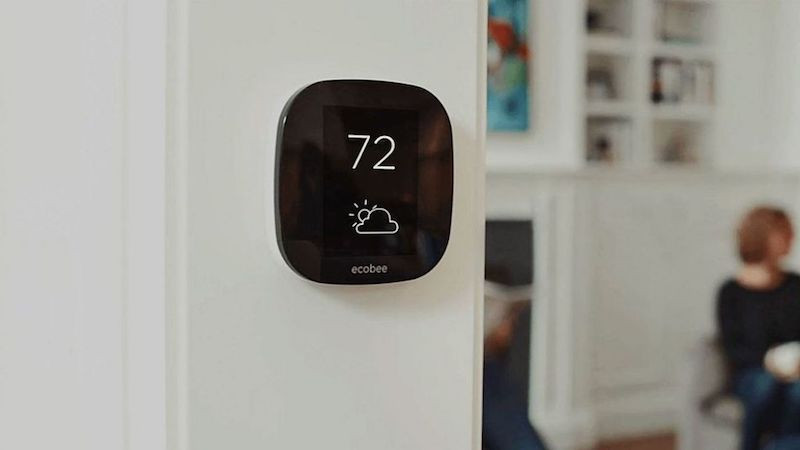
A smart thermostat functions as the central brain for an entire home’s heating system. Typically installed in a primary living area, such as a hallway or lounge, it monitors the ambient temperature at that single location. This localized reading then dictates when the central heating boiler activates or deactivates. When the thermostat detects that the target temperature has been reached, it signals the boiler to shut down. Conversely, if the temperature drops below the set point, the boiler is instructed to fire up. This process results in the heating of all radiators simultaneously, regardless of the individual temperature variations in different rooms.
Prominent examples of smart thermostats include models like Ecobee’s SmartThermostat and Tado’s Smart Thermostat. These devices build upon the fundamental functionality of traditional thermostats by integrating advanced features such as programmable scheduling, geofencing (which adjusts heating based on the presence of occupants), and remote control via smartphone applications. However, the core principle remains unchanged from older, dial-based systems: a single sensor governs the entire heating operation, based on one set of parameters. This centralized approach means that while convenient for overall system management, it lacks the granular control necessary to optimize comfort and energy usage on a room-by-room basis.
The Smart Radiator Valve: Precision Room-by-Room Regulation
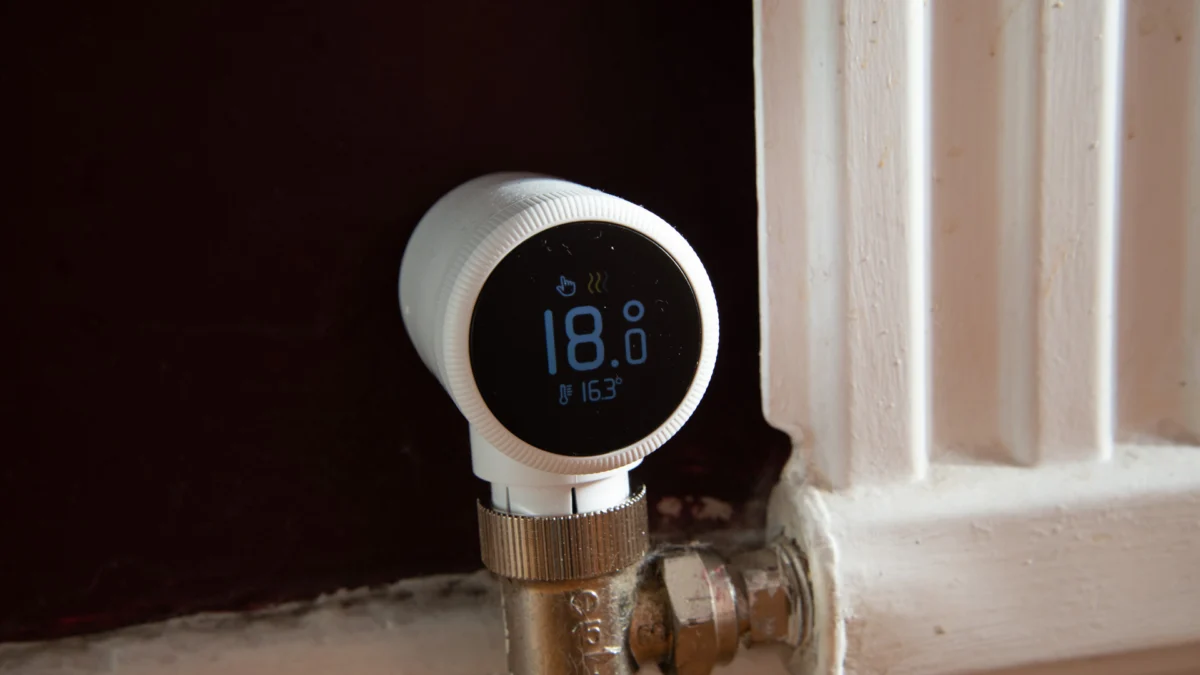
In contrast to the whole-home approach of a smart thermostat, a smart radiator valve, often referred to as a smart TRV (Thermostatic Radiator Valve), operates at the individual radiator level. These devices replace the manual or standard thermostatic valves found on radiators, allowing for independent temperature control within each specific room. This capability enables users to set and maintain different temperature levels in various parts of the house, catering to individual preferences and occupancy patterns.

The operational capacity of a smart TRV can vary depending on the overall heating system configuration. In many advanced setups, a smart TRV can directly communicate with and control the central heating boiler, a function known as "calling for heat." For instance, systems like the Tado X are designed so that when a specific room’s temperature falls below its set point, the smart TRV in that room will open, signaling the boiler to activate and supply hot water. Once the room reaches its desired temperature, the TRV will close, informing the boiler to shut down. When smart TRVs are installed on multiple radiators throughout the house, each room can independently manage its heating schedule. This granular control offers significant potential for energy savings, as households can choose to heat only the rooms that are actively being used.
However, some smart TRVs, such as the Aqara Radiator Thermostat W600, can also function in a mode that does not directly control the boiler. In such scenarios, a central thermostat is still responsible for initiating the heating cycle. Nevertheless, while the main heating system is operational, the smart TRV provides nuanced control over the temperature within its designated room. This secondary mode is particularly beneficial for renters who may not have the authority to alter the primary heating system but still wish to achieve more precise temperature management in individual rooms. For homeowners with full control over their heating infrastructure, a system with comprehensive boiler control capabilities is generally recommended for optimal performance and efficiency.
The Question of System Integration: Smart TRVs Without a Smart Thermostat
A common query is whether a smart thermostat is an indispensable component when installing smart radiator valves. The answer, for many modern systems, is no. With offerings like the Tado X, smart TRVs can operate as the sole intelligent control for the heating system, managing all functions without the need for a separate smart thermostat.
However, the utility of smart TRVs can be further enhanced by the addition of wireless temperature sensors. These devices, which may superficially resemble wireless thermostats, are designed to continuously monitor the temperature within a specific room. Their primary function is to communicate with and manage the smart TRVs in that area, allowing for adjustments based on actual room temperature rather than solely on the valve’s internal sensor. This is particularly useful in situations where a smart TRV’s reading might be compromised, for example, if it is located in a drafty area or obscured by furniture. These wireless sensors provide an additional layer of accuracy and can help prevent overheating or underheating in individual rooms.
The Need for Comprehensive Coverage: Smart TRVs on Every Radiator
To achieve the most effective and granular control over home heating, it is generally advisable to install a smart TRV on every radiator. Without this comprehensive coverage, a smart TRV in one room could initiate a heating cycle, causing all radiators, including those without smart valves, to heat up. This can lead to the room without a smart TRV becoming excessively warm. While older heating systems sometimes benefited from leaving one radiator without a TRV to prevent excessive pressure buildup when the boiler was active, modern boilers and smart TRV systems are designed to manage these scenarios efficiently, rendering this older practice unnecessary.
Assessing the Value Proposition: Are Smart Radiator Valves Worth the Investment?
The decision to invest in smart radiator valves hinges on the desired level of control and potential for savings. For households prioritizing the ability to maintain specific temperature settings in each room, smart TRVs offer a compelling solution. Furthermore, the ability to heat only occupied rooms can lead to significant reductions in energy consumption and, consequently, lower utility bills. Anecdotal evidence and system performance data suggest that when only one radiator is active, hot water circulates more rapidly to that specific unit, leading to faster and more efficient heating of the space.
Cost and Installation Considerations: A Comparative Analysis
When examining the financial and installation aspects, smart thermostats often present a more accessible entry point into smart home heating. Installation is typically a straightforward process, often manageable within an afternoon, though professional installation by a plumber can be an option for those seeking complete assurance.
Smart radiator valves, while individually straightforward to install as a DIY task – often involving a simple unscrewing and replacement of the existing valve followed by app pairing – can incur substantial costs when equipping an entire home. For a typical residence with eight to ten or more radiators, the cumulative expense of purchasing and installing smart TRVs, along with the necessary hub or bridge required by most systems, can easily escalate into the thousands of pounds or equivalent currency. This cost is further amplified by the fact that many TRV manufacturers design their systems to function optimally, or exclusively, within their own ecosystems. Consequently, the choice of a smart TRV brand often dictates the compatible thermostat or hub, reinforcing the importance of a holistic approach to system selection.
Ecosystems and Interoperability: The Matter Standard and Beyond
The full potential of smart heating systems, including advanced scheduling and personalized climate control, is typically unlocked through the manufacturer’s dedicated application. However, the increasing adoption of the Matter standard is fostering greater interoperability between different smart home devices. This can enable sophisticated automations, such as automatically turning off the heating in a room when occupancy sensors detect that no one is present. The integration of Matter-compatible devices, including presence sensors, allows for more intelligent and responsive heating management across the entire smart home ecosystem.
Addressing Underfloor Heating: A Separate but Related Concern
While smart TRVs are designed for traditional radiator systems, they do not directly control underfloor heating. However, many comprehensive smart heating systems that support TRVs also offer solutions for underfloor heating. For most underfloor heating installations, a smart relay is required to manage the system. This relay typically controls the two-port zone valve associated with the underfloor heating manifold and also communicates with the central heating boiler to call for heat when necessary.

The Enduring Relevance of the Smart Thermostat: Simplicity and Cost-Effectiveness
Given the advanced capabilities of smart TRVs, a pertinent question arises: what is the continued purpose of a smart thermostat? Smart thermostats retain their value as a simpler, more cost-effective solution, particularly for smaller homes. Their reduced complexity translates to less maintenance; for instance, battery replacement is typically confined to a single device, unlike smart TRVs, each of which has its own power source. Furthermore, the initial purchase price of a smart thermostat is generally significantly lower than that of a multi-TRV system, making it an attractive option for budget-conscious consumers or those seeking a less involved smart heating upgrade.
The evolution of home heating technology offers a spectrum of choices, from centralized control to granular room-by-room management. Understanding the distinct roles of smart thermostats and smart radiator valves is crucial for consumers seeking to optimize their home comfort, energy efficiency, and overall living experience. The optimal solution often lies in a thoughtful assessment of individual needs, dwelling size, and budget, potentially leading to a hybrid approach that leverages the strengths of both technologies.

